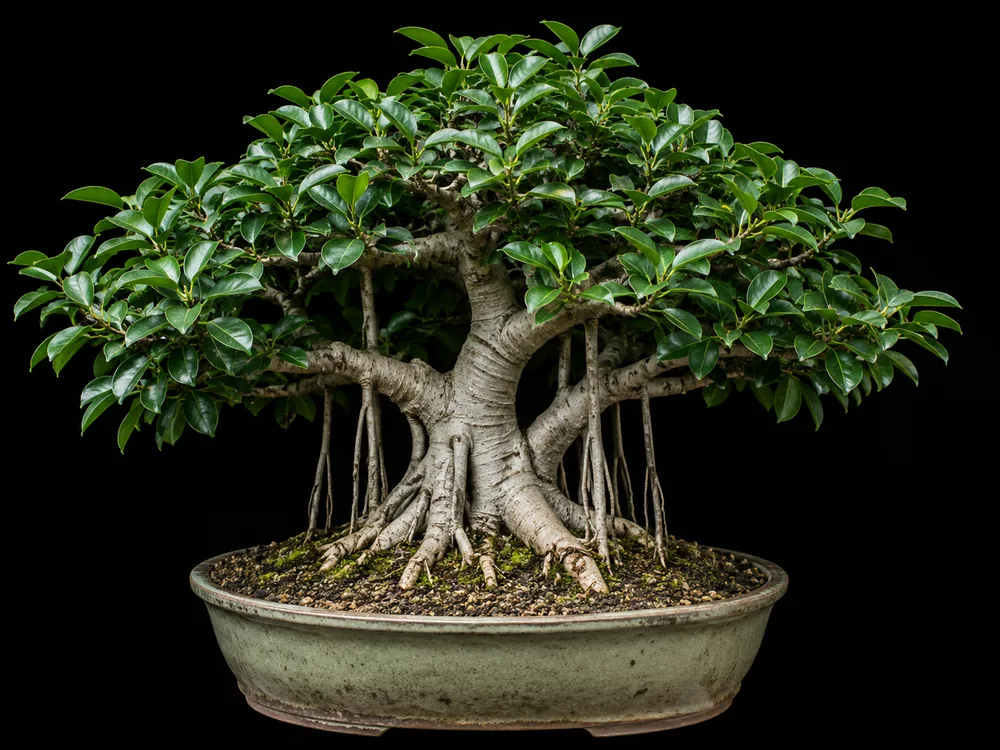
Ficus Bonsai Care
Ficus retusa
13 Ficus bonsai in stock, from $48.95 Shipped direct from our nursery partners, with a 48-hour live-arrival guarantee. See the trees
Zones 9b to 11, indoor. The most popular and forgiving species in bonsai, and the de facto "beginner's bonsai" worldwide. Most are lost to overwatering.
Moraceae (mulberry/fig family) · Broadleaf evergreen, tropical/subtropical; tender (indoor in cold climates)
Ficus quick reference
| USDA zones | 9b–11 outdoors year-round (most reliably 10a–12); indoor elsewhere |
|---|---|
| Indoor / outdoor | Indoor in any climate with frost; can summer outdoors above ~60°F (15°C) |
| Light | Bright; as much direct sun as possible. The single biggest indoor failure point |
| Water | Moderately dry — water generously only when the top inch of soil is slightly dry. Dislikes wet, soggy soil |
| Soil | Free-draining bonsai mix (e.g. akadama/pumice/lava, or commercial inorganic mix); tolerant but must not stay waterlogged |
| Repot | Every 2 years (young trees), every 3–5 years (older specimens), early spring/summer |
| Frost | None — damage below ~50°F (10°C); never expose to frost |
| Mature height (as bonsai) | Tree to 30 m; kept 25-70 cm as bonsai |
| Growth rate | Fast |
| Season of interest | Year-round evergreen, aerial roots and banyan forms |
| Leaf reduction | Good with defoliation |
| #1 cause of death | Overwatering / root rot, often compounded by too little light |
Overview & Character
The Ficus is the most popular and forgiving species in bonsai, and the de facto "beginner's bonsai" worldwide. Of the many figs used, Ficus retusa and Ficus microcarpa are by far the most common in the trade. The mass-produced "ginseng ficus" is a Ficus microcarpa grown with a swollen, pot-bellied aerial root system that looks like a ginseng root, usually topped with grafted small-leaf foliage — a curiosity rather than a refined bonsai, but a robust and rewarding tree.
Figs back-bud freely, tolerate heavy pruning, heal wounds quickly, and can produce dramatic aerial roots in warm, humid conditions — the classic "banyan" look. The milky white latex they bleed when cut is a hallmark of the genus. Their forgiveness of irregular care and tolerance of indoor life make them the rare bonsai that genuinely thrives on a windowsill.
Identification
Foliage: Alternate, simple leaves that are elliptic to ovate, thickly leathery, and distinctly glossy dark green with a smooth (untoothed) margin and a short petiole. On the small-leaf cultivars used in bonsai the leaves are roughly 2–5 cm; on vigorous trees they can be larger. New growth emerges from a pointed reddish-to-orange stipule sheath that drops as the leaf unfurls — a useful fig "tell."
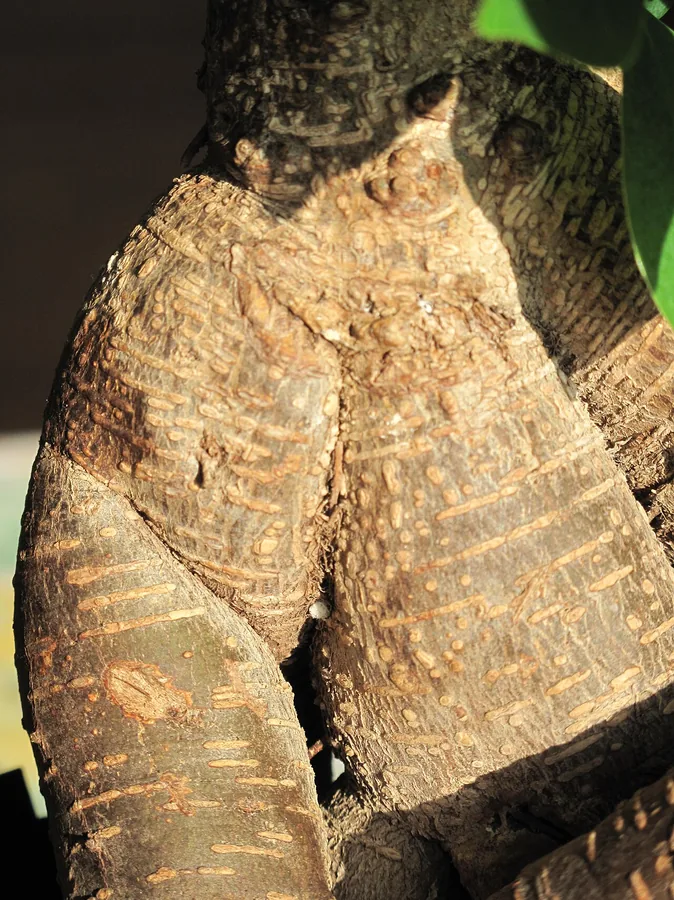
Bark & trunk: Smooth and pale grey when young, becoming lightly mottled and roughened with age. The "tiger bark" Ficus microcarpa shows characteristic horizontal pale lenticel banding. Trunks fatten readily and the ginseng form has a swollen, bulbous, root-like base.
Growth habit / form: Broadleaf evergreen with a spreading, banyan-like crown; back-buds freely and throws aerial roots from branches in warm, humid conditions that can thicken into accessory trunks (prop roots) — the signature banyan look.
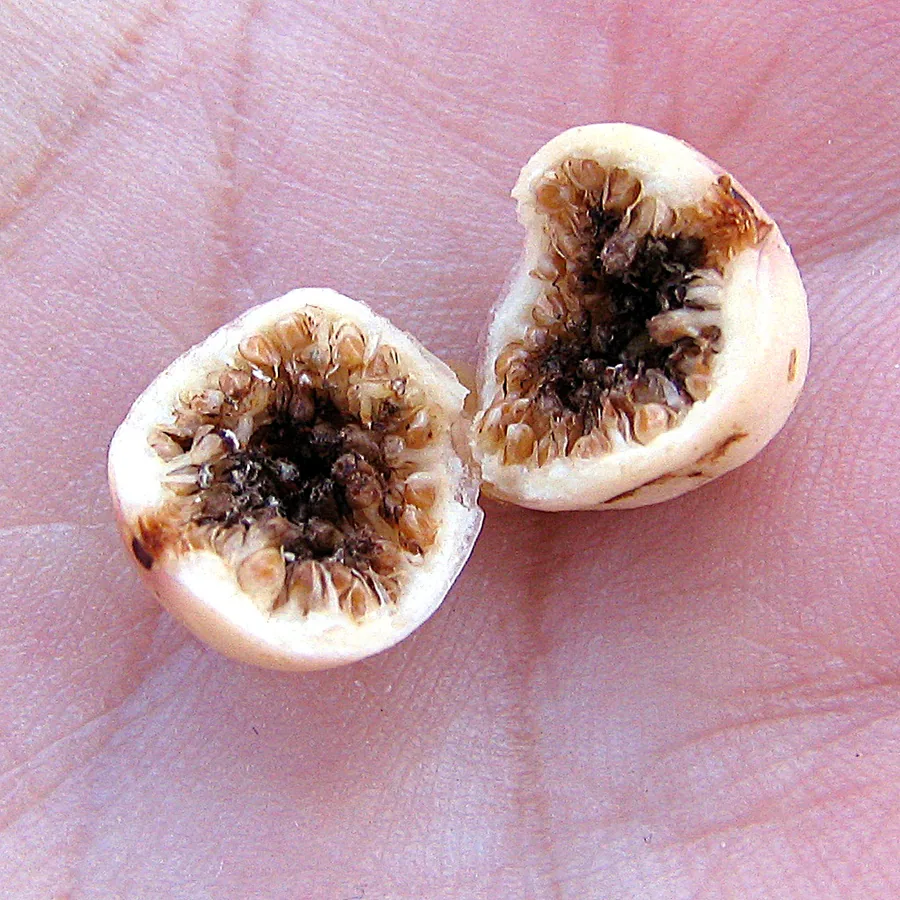
Flowers / fruit: Figs flower inside the fruit (a syconium), so there are no showy blooms; mature trees may bear small green-to-reddish figs, rarely indoors.
Look-alikes & how to tell them apart: The decisive test is the milky white latex that bleeds from any cut leaf, stem, or root — no other species in this guide does this. Combined with aerial roots, glossy untoothed leaves, and the dropped reddish stipule, this separates Ficus from Fukien Tea (tiny matte-dark leaves with white dots, no latex), Privet (soft fast oval leaves, no latex), and the thorny/berried Rosaceae (Cotoneaster, Pyracantha, Hawthorn).
Climate & USDA Zone
Ficus are tropical to subtropical and frost-tender. They can live outdoors all year only in USDA zones 9b–11 (most safely 10a and warmer). In any climate that sees frost they must be grown as indoor bonsai, brought inside before night temperatures fall below about 50°F (10°C). They enjoy a summer outdoors once nights are reliably above 60°F (15°C), which boosts vigor and ramification — but acclimate them gradually to avoid leaf scorch, and bring them in well before the first cold snap.
Light
Light is the make-or-break factor for indoor Ficus. They want as much direct light as you can give them — a south- or west-facing window, ideally with several hours of direct sun. Insufficient light causes weak, leggy growth, pale or undersized leaves, and the slow decline that masquerades as "mysterious" leaf drop. In dim rooms or northern winters, supplement with a grow light. Outdoors in summer they take full sun happily once acclimated.
Watering
Lean toward the dry side. Despite being tropical, Ficus are sensitive to constantly wet soil and far more often killed by overwatering than by drought. Water generously and thoroughly only when the top inch (2–3 cm) of soil feels slightly dry, then let it approach dryness again before the next watering. In warm, bright conditions this may mean watering several times a week; in cool or dim indoor conditions it may be only once a week or less. Never let the pot sit in a saucer of standing water. Figs tolerate low household humidity thanks to their thick, waxy leaves, but they prefer higher humidity — misting or a humidity tray helps, especially in dry winter heating, though good light matters far more.
Soil & Root Care
Use a free-draining bonsai substrate. A standard inorganic mix (akadama, pumice, lava rock) works excellently; figs are not fussy and tolerate a bit more organic content than many species, but drainage is non-negotiable given their dislike of wet feet. Repot young, vigorous trees every 2 years and older specimens every 3–5 years, in late spring or summer when they are growing strongly and the warmth speeds recovery. Ficus tolerate aggressive root pruning well — up to a third of the root mass can be removed. Repotting is also the time to expose and develop nebari (surface roots) and aerial roots.
Feeding
Feed regularly through the active growing season — roughly weekly with a balanced liquid fertilizer, or every 3–4 weeks with a solid organic fertilizer. Indoors, where Ficus may grow year-round, you can feed lightly even in winter if the tree is actively growing under good light; reduce or stop feeding if growth slows in low winter light. Avoid heavy feeding immediately after repotting.
Pruning & Styling
Ficus are exceptionally responsive to pruning and back-bud readily on old wood, which makes them forgiving to style. Prune back to 2–4 leaves after a shoot has extended 6–10 leaves to build ramification and keep the silhouette tight. Expect milky latex to ooze from cuts — this is normal and seals quickly. Defoliation (removing leaves to force a smaller second flush) can be used on healthy, vigorous trees to reduce leaf size. They wire well, but bark is easily marked, so check wire often as branches thicken fast. Aerial roots can be encouraged with high humidity and used to create banyan-style plantings. Most informal styles suit them; thick trunks and surface roots are the species' strength.
Propagation & Cuttings
Ease: Very easy. Best methods: cuttings; air-layering.
Ficus (retusa and relatives) roots from cuttings almost effortlessly — take stem or even thick trunk cuttings any time in warmth, and they root fast with or without hormone. Air-layering is extremely reliable and the best way to get instant trunk size with good aerial-root character. Seed is rarely used in cultivation. Keep everything warm (tropical). For bonsai this is one of the most forgiving subjects: cuttings and layers develop quickly, tolerate heavy pruning, fuse readily, and produce aerial roots for banyan styling.
Pests
Indoor Ficus are most often troubled by scale insects, spider mites (especially in dry winter air with poor airflow), mealybugs, and occasionally aphids on soft new growth. Spider mites announce themselves with stippled, yellowing leaves and fine webbing. Inspect the undersides of leaves and leaf axils regularly. Treat with insecticidal soap, neem oil, or a suitable systemic, and improve humidity and airflow to discourage mites. A monthly preventive spray with a mild horticultural oil helps keep indoor populations down.
Disease, Fungus & Infection
Ficus have few true diseases in cultivation; nearly all problems trace to culture rather than pathogens. Root rot from overwatering and poor drainage is the dominant issue — soft, dark, foul-smelling roots and sudden leaf yellowing/drop are the signs. Sudden environmental change (a move from a sunny nursery to a dim room, a draft, a temperature swing) triggers stress leaf drop, which is alarming but usually recoverable once conditions stabilize. Fungal leaf spots are uncommon and generally a symptom of chronically wet foliage and poor airflow.
Most Common Causes of Death
1. Overwatering / root rot. The top killer; let the soil approach dry, then water — never leave it soggy, especially in low indoor light. 2. Cold / draft shock. Tropical; sudden cold or cold drafts cause leaf drop and dieback — keep above ~55°F (13°C). 3. Sudden light change. Big moves (e.g., outdoors→indoors in fall) trigger leaf drop; acclimate gradually and give the brightest light. 4. Underwatering / very low humidity. Fine roots dry quickly; don't let it bone-dry; raise humidity in dry indoor air. 5. Pests under stress. Scale, mealybug, and spider mites exploit weak/low-light trees — keep vigor up and inspect.
Seasonal Calendar
- Spring: Repot if due; resume feeding; prune to shape — it back-buds readily and bleeds latex when cut.
- Summer: Best growth; outdoors in warmth is ideal; water when surface dries; develop aerial roots in high humidity.
- Autumn: Bring indoors before nights drop below ~55°F; acclimate to the brightest indoor spot.
- Winter: Indoors warm and bright; water less; avoid cold drafts and wet feet.
Close-up photo reference
Compare your tree against these to confirm the species and spot problems early.


Sources
Buy a Ficus bonsai
- Variegated Ficus Triangularis Bonsai, 10 Years Old (Ficus triangularis 'Variegata') — $48.95
- Ficus Retusa Bonsai, Straight Trunk, 9 Years Old (Ficus retusa) — $54.95
- Small Ficus Retusa Bonsai, Curved Trunk, 6 Years Old (Ficus retusa) — $54.95
- Ficus in a Water Land Container Bonsai, Coiled Trunk, 6 Years Old (Ficus 'Orientalis') — $56.95
- Large Pre Ficus Retusa Bonsai, Curved Trunk, 8 Years Old (Ficus retusa) — $59.95
- Medium Ficus Retusa Bonsai, Curved Trunk, 8 Years Old (Ficus retusa) — $85.95
- Ficus Retusa Bonsai, Cascade, 12 Years Old (Ficus retusa) — $137.95
- Extra Large Ficus Retusa Bonsai, Curved Trunk, 13 Years Old (Ficus retusa) — $143.95
- All species
- Shop bonsai trees, tools & supplies
- How to Water a Bonsai (Without Killing It)
- Bonsai Soil: What to Buy, What to Mix, and What It Costs
- Why Bonsai Die After Repotting: Diagnosing a Failed Repot
- Pruning vs. Pinching: Shaping Your Bonsai
- Overwintering Bonsai: Cold-Season Care
- Indoor Bonsai Light and Humidity: Making a Windowsill Actually Work
- Root Rot on bonsai
- Overwatering on bonsai
- Underwatering (Drought Stress) on bonsai
- Winter / Frost Damage on bonsai
- Leaf Scorch / Sunburn on bonsai
- Weeping Fig bonsai care
- Ginseng Ficus bonsai care
- Willow Leaf Ficus bonsai care
- Mistletoe Fig bonsai care