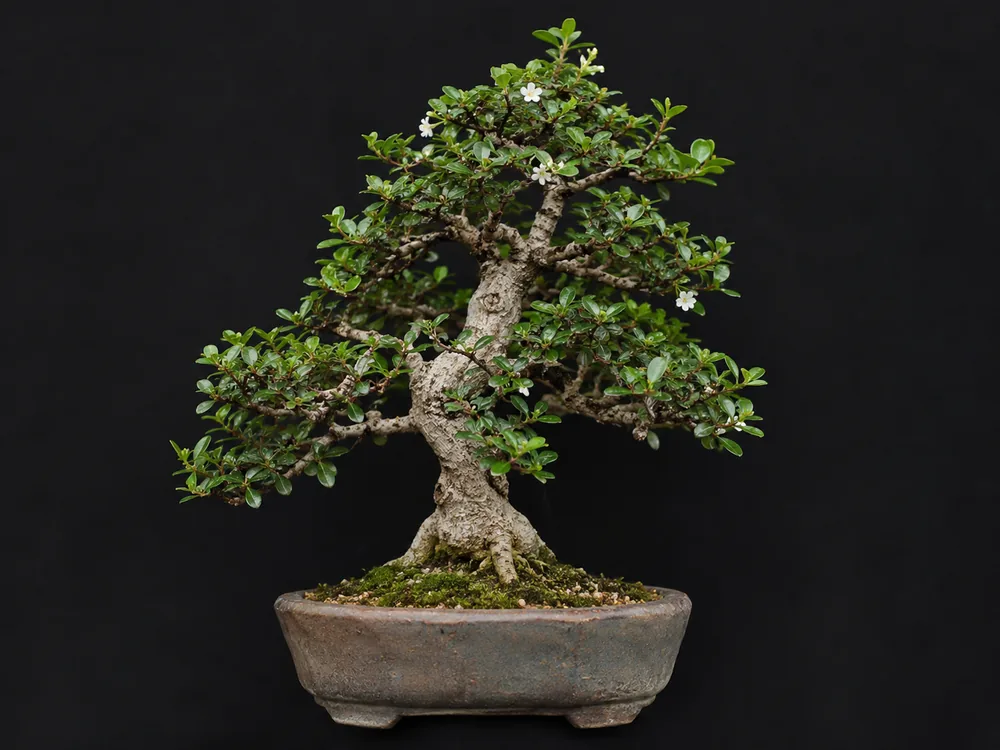
Fukien Tea Bonsai Care
Carmona retusa
11 Fukien Tea bonsai in stock, from $39.95 Shipped direct from our nursery partners, with a 48-hour live-arrival guarantee. See the trees
Zones 10 to 11, indoor. A small-leaved tropical evergreen prized for its tiny, glossy. Most are lost to drying out.
Boraginaceae (borage family) — sometimes placed in Ehretiaceae · Broadleaf evergreen, tropical/subtropical; tender (indoor in cold climates)
Fukien Tea quick reference
| USDA zones | 10–11 outdoors year-round; indoor everywhere else |
|---|---|
| Indoor / outdoor | Indoor in any climate with frost; summer-only outdoors when warm |
| Light | Very bright; needs maximum light but protect from harsh midday scorch indoors behind glass |
| Water | Evenly moist — neither soggy nor bone-dry. Narrow margin for error |
| Soil | Free-draining but moisture-retentive bonsai mix; must not stay waterlogged |
| Repot | Every 2 years (young), 3–4 years (older), spring |
| Frost | None — suffers below ~50°F (10°C); frost is fatal |
| Mature height (as bonsai) | Shrub to 3 m; 15-40 cm as bonsai |
| Growth rate | Moderate |
| Season of interest | Tiny white flowers, red berries year-round indoors |
| Leaf reduction | Good - naturally small glossy leaves |
| #1 cause of death | Watering mistakes (root rot from overwatering, or shriveling from drying out), worsened by low light and dry indoor air |
Overview & Character
The Fukien Tea is a small-leaved tropical evergreen prized for its tiny, glossy, dark green leaves dotted with fine white flecks, its delicate white flowers that can appear year-round, and the small red-to-black berries that follow. Named for the Fujian (Fukien) province of China, it is a staple of imported "mall bonsai" — often sold cheaply and, unfortunately, often killed quickly.
Be honest about this species: the Fukien Tea is notoriously finicky and is widely considered one of the trickier bonsai to keep alive indoors. It is unforgiving of inconsistent watering, reacts to almost any environmental change by dropping leaves, and demands more light and humidity than a typical room provides. It is not a beginner-proof tree despite being marketed to beginners. Given stable warmth, bright light, steady humidity, and disciplined watering, it is a beautiful, characterful bonsai that can flower and fruit indoors — but it punishes neglect and overcorrection alike.
Identification
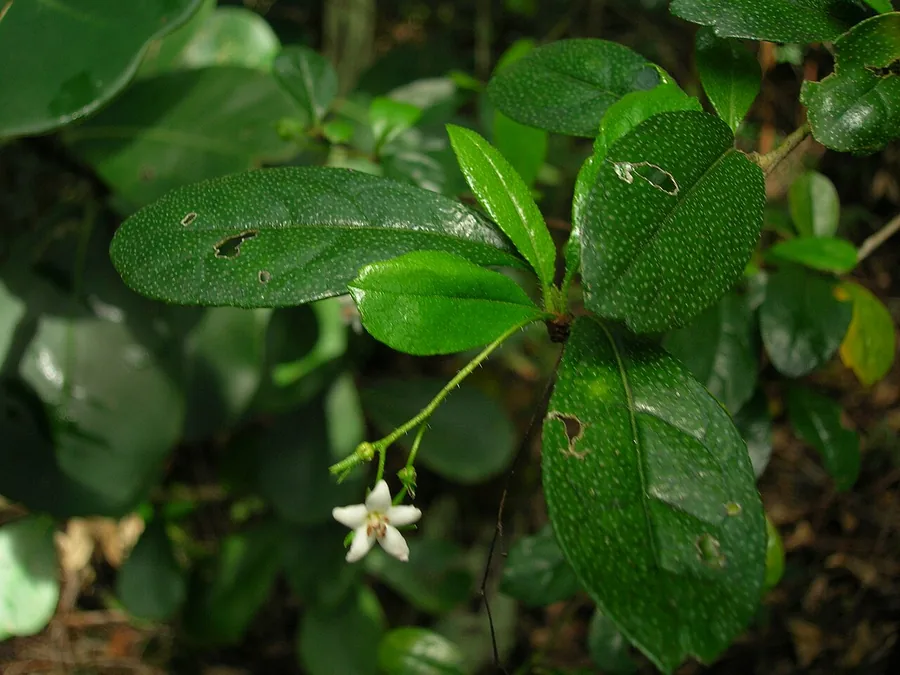
Foliage: Very small, dark green leaves (typically under 2 cm), obovate to spoon-shaped and clustered on short spurs. The upper surface is glossy and noticeably rough, dotted with tiny raised white flecks (fine hairs/glands) that give a stippled, almost sandpapery look — the species' most reliable identifier. Evergreen, with toothed tips toward the leaf end.
Bark & trunk: Pale grey-brown, smooth on young wood, becoming finely flaky and roughened with age; trunks stay relatively slender and twiggy.
Growth habit / form: Dense, fine, twiggy evergreen shrub habit with congested short shoots — naturally ramified, which is why it suits refined small bonsai.
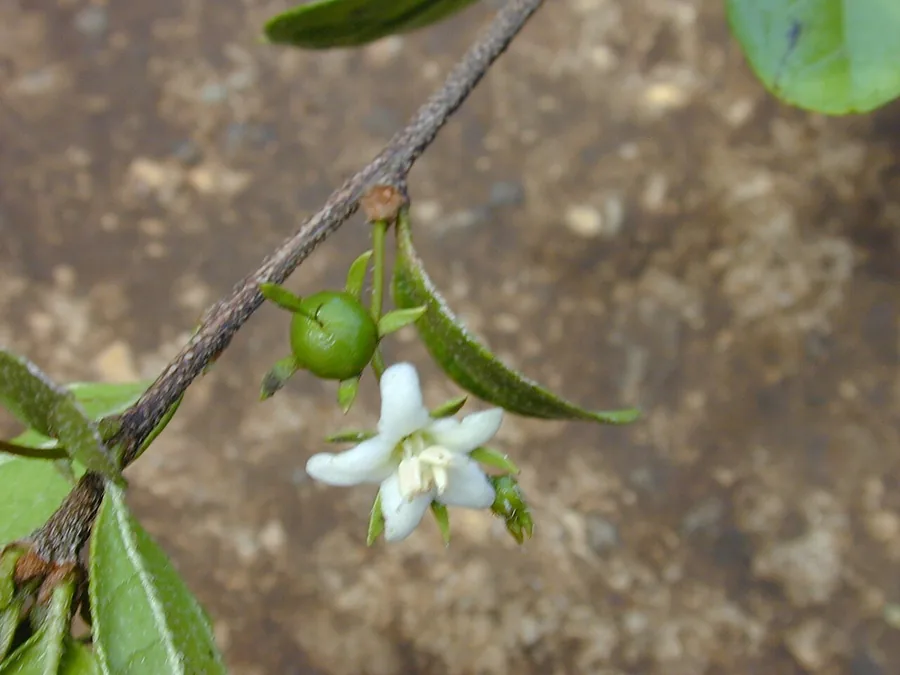
Flowers / fruit: Small white five-petalled flowers, often borne intermittently year-round in good conditions, followed by tiny berries that ripen green to red and then black/dark.
Look-alikes & how to tell them apart: The combination of tiny dark glossy leaves speckled with white dots plus small white flowers and red-to-black berries is distinctive. No milky latex (rules out Ficus). Unlike Privet, the leaves are much smaller, rougher, and white-flecked rather than smooth soft ovals. It is thornless, separating it from Cotoneaster, Pyracantha, and Hawthorn; and unlike those Rosaceae its berries are small and turn black, not borne in showy red/orange clusters.
Climate & USDA Zone
Tropical and strictly frost-tender, the Fukien Tea can live outdoors year-round only in USDA zones 10–11. Anywhere that frosts, it must be grown as an indoor bonsai. It thrives around 70°F (20°C) and resents cold drafts, sudden temperature swings, and anything below about 50°F (10°C). It can spend summer outdoors in a bright, sheltered spot once nights are reliably warm, but should be brought back inside well before temperatures drop in autumn.
Light
Provide as much bright light as possible — this is one of its key demands and a common reason it fails indoors. A south-facing window is ideal. In low light it grows weak, drops leaves, and declines. In dim rooms or short winter days, a grow light is strongly recommended. Outdoors in summer, give bright light with protection from the harshest, hottest midday sun in very hot climates.
Watering
Aim for evenly, consistently moist — this is the hardest balance to strike and the reason so many Fukien Teas die. The soil should stay lightly damp but never waterlogged, and it must not be allowed to dry out completely. Overwatering rots the roots; underwatering shrivels the foliage. Check the soil daily and water thoroughly when the surface begins to feel slightly dry, ensuring the whole rootball is moistened and excess drains away freely. Consistency matters more than any fixed schedule — erratic wet/dry swings are what the tree reacts to most badly. Pair careful watering with good humidity (a humidity tray or regular misting) to counter the dry air of heated rooms.
Soil & Root Care
Use a free-draining bonsai mix that still retains some moisture — the tree wants steady dampness without sogginess. An inorganic base (akadama/pumice/lava) with a modest organic component suits it. Repot young trees every 2 years and older specimens every 3–4 years, in spring as growth resumes. Be conservative with root pruning; the Fukien Tea has somewhat brittle, sensitive roots and recovers more slowly than a Ficus. Always keep the freshly repotted tree warm, lightly moist, and out of harsh sun while it re-establishes.
Feeding
Feed regularly but gently during active growth — a balanced fertilizer every 2–4 weeks, or a weak liquid feed more frequently. Because indoor Fukien Teas may grow much of the year, light feeding can continue when the tree is actively growing under good light, tapering off in low-light winter conditions. Avoid strong, concentrated feeds, which can scorch the fine root system; dilute and feed lightly rather than heavily.
Pruning & Styling
Fukien Tea has naturally small leaves and dense, twiggy growth that lends itself to fine ramification. Pinch and trim new shoots back to maintain shape throughout the growing season; it back-buds reasonably well on younger wood but can be reluctant on very old wood. The wood is fairly hard and somewhat brittle, so wire carefully and avoid sharp bends on older branches; styling is often done as much by directional pruning as by wiring. Its small white flowers and red berries are an asset — light, frequent trimming preserves bloom-bearing shoots. Expect some leaf drop after heavy work; keep conditions stable to aid recovery.
Propagation & Cuttings
Ease: Moderate. Best methods: cuttings; seed; air-layering.
Carmona retusa roots from semi-hardwood cuttings in warm, humid conditions with hormone at moderate rates — patience and steady warmth help, as cuttings can be slow. Fresh seed from the red fruit germinates warm. Air-layering works on suitable branches. Keep everything tropical-warm and bright; Fukien tea sulks in cold or dry air. For bonsai the tiny glossy leaves and white flowers are the draw; cuttings preserve the fine-leaved form, and the plant back-buds on old wood.
Pests
In dry indoor air the Fukien Tea is prone to spider mites (yellowing leaves with fine webbing), scale, mealybugs, and whiteflies. Dry, stagnant indoor conditions in winter are the classic trigger for mite outbreaks. Inspect leaf undersides and stems regularly. Treat with insecticidal soap, neem, or an appropriate miticide/systemic, and raise humidity and airflow to make the environment less hospitable to mites.
Disease, Fungus & Infection
The dominant "disease" is cultural: root rot from overwatering or poor drainage, which presents as wilting despite wet soil, blackened roots, and rapid leaf loss. Chlorosis (yellowing) can stem from overwatering, poor light, or nutrient issues. Sudden, dramatic leaf drop is most often environmental shock — a change in light, temperature, location, humidity, or watering rhythm — rather than infection. Fungal leaf spots may appear where foliage stays wet with poor air movement. Stabilize conditions, correct watering, and improve airflow before reaching for chemicals.
Most Common Causes of Death
1. Improper watering (the #1 killer). Notoriously fussy — narrow margin between too wet (root rot) and too dry (collapse); keep evenly moist and never let it fully dry or stay soggy. 2. Cold / draft / location shock. Tropical and sensitive; cold, drafts, or sudden moves cause rapid leaf drop and decline — keep warm (>55°F) and stable. 3. Low humidity and poor light indoors. Dry, dim rooms stress it badly; give bright light and raise humidity. 4. Pest infestations. Prone to scale, mealybug, whitefly, and spider mites — inspect often and treat early. 5. Root rot from poor drainage. Use a free-draining mix and a pot that drains well.
Seasonal Calendar
- Spring: Repot if due (sparingly); resume feeding; light pruning.
- Summer: Warmth and bright light (can go outdoors in warm weather); keep evenly moist; watch pests.
- Autumn: Bring indoors before cool nights; keep the brightest, warmest, draft-free spot.
- Winter: Indoors warm and bright; steady moisture; maintain humidity; minimal feeding.
Close-up photo reference
Compare your tree against these to confirm the species and spot problems early.
.jpg)
.jpg)
Sources
Buy a Fukien Tea bonsai
- Small Fukien Tea Bonsai, Straight Trunk, 6 Years Old (Ehretia microphylla) — $39.95
- Medium Flowering Fukien Tea Bonsai, Upright, 12 Years Old (Ehretia microphylla) — $56.95
- Small Flowering Fukien Tea Bonsai, Curved Trunk, 9 Years Old (Ehretia microphylla) — $59.95
- Small Flowering Fukien Tea Group Bonsai, Three Tree Forest, 5 Years Old (Ehretia microphylla) — $74.95
- Medium Flowering Fukien Tea Bonsai, Curved Trunk, 15 Years Old (Ehretia microphylla) — $81.95
- Large Flowering Fukien Tea Group Bonsai, Three Tree Forest, 12 Years Old (Ehretia microphylla) — $91.95
- Flowering Fukien Tea Bonsai, Cascade, 14 Years Old (Ehretia microphylla) — $137.95
- Extra Large Fukien Tea Flowering Bonsai, Curved Trunk, 18 Years Old (Ehretia microphylla) — $155.00
- All species
- Shop bonsai trees, tools & supplies
- How to Water a Bonsai (Without Killing It)
- Bonsai Soil: What to Buy, What to Mix, and What It Costs
- Why Bonsai Die After Repotting: Diagnosing a Failed Repot
- Pruning vs. Pinching: Shaping Your Bonsai
- Overwintering Bonsai: Cold-Season Care
- Indoor Bonsai Light and Humidity: Making a Windowsill Actually Work
- Root Rot on bonsai
- Overwatering on bonsai
- Underwatering (Drought Stress) on bonsai
- Winter / Frost Damage on bonsai
- Leaf Scorch / Sunburn on bonsai
- Dwarf Umbrella Tree (Dwarf Schefflera) bonsai care
- Sea Grape bonsai care
- Weeping Fig bonsai care
- Bahama Berry bonsai care