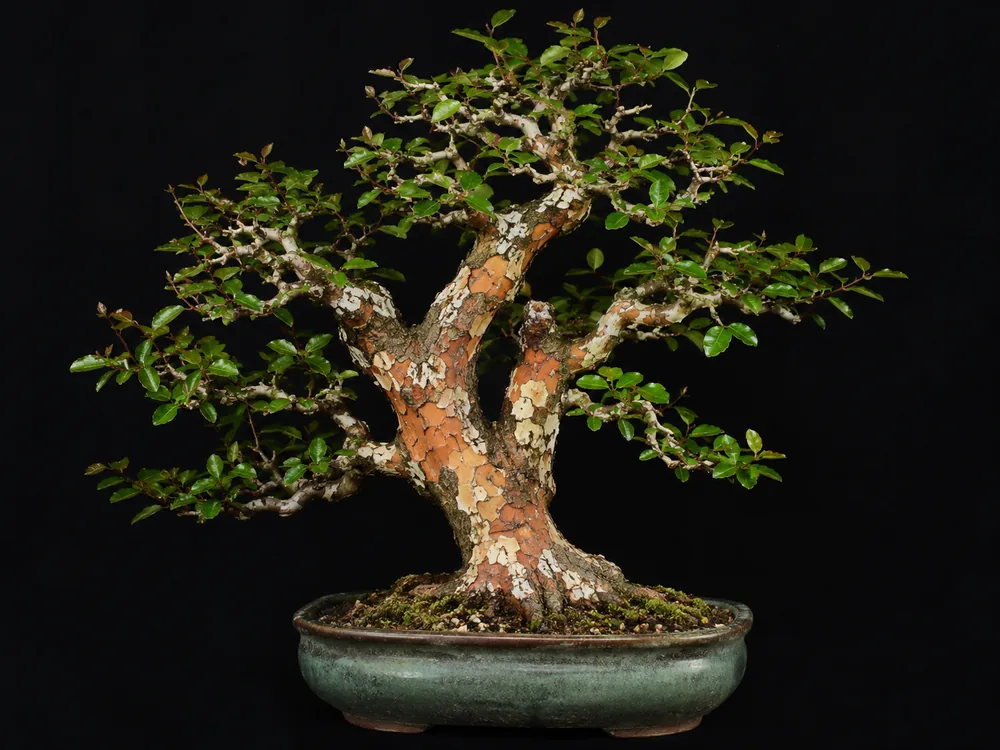
Sageretia / Sweet Plum Bonsai Care
Sageretia thea
3 Sageretia / Sweet Plum bonsai in stock, from $87.95 Shipped direct from our nursery partners, with a 48-hour live-arrival guarantee. See the trees
Indoor. The Sweet Plum, Sageretia thea, is one of the most popular indoor bonsai species, valued for its small, glossy. Most are lost to drying out.
Rhamnaceae (Buckthorn family) · Semi-tropical broadleaf evergreen shrub; popular indoor bonsai
Sageretia / Sweet Plum quick reference
| USDA zones | Roughly 9–11 (tender; grown indoors over winter in most of North America/Europe) |
|---|---|
| Indoor / outdoor | Indoor bonsai — can summer outdoors in a semi-shaded spot, kept indoors roughly Sept–May |
| Light | Bright light; a south/west window with protection from intense direct sun |
| Water | Keep the rootball moist — lean wet. Never let it dry out, but never waterlogged either |
| Soil | Well-draining, moisture-retentive bonsai mix; slightly acidic to neutral |
| Repot | Young trees every 1–2 years; older every 2–3 years, spring |
| Frost | Survives just below freezing briefly but is tender — keep above ~50°F/10°C in winter |
| Mature height (as bonsai) | Shrub to 3m in nature; bonsai often 15-40cm. |
| Growth rate | Fast (indoor tropical, buds readily). |
| Season of interest | Year-round glossy foliage; flaky bark; small blooms. |
| Leaf reduction | Good; small leaves reduce well with regular pinching. |
| #1 cause of death | Drying out — leaves and twigs desiccate fast and the whole tree can die quickly; also over-watering/root issues |
Overview & Character
The Sweet Plum, Sageretia thea, is one of the most popular indoor bonsai species, valued for its small, glossy, fresh-green leaves, its fast growth and willingness to ramify, and its attractive flaking bark that exfoliates to reveal lighter patches beneath, giving even young trees an aged look. It is a semi-tropical evergreen from Asia that does not tolerate frost and is therefore grown as an indoor tree in temperate climates.
It is a forgiving, fast-developing species in many respects, but it has two pronounced demands: it must not dry out — its fine foliage and twigs desiccate very quickly — and it likes high humidity. Meet those and it grows readily; neglect watering for even a short spell in warm conditions and it can collapse.
Identification
Foliage: Small, glossy, oval, bright-to-deep-green leaves with finely toothed margins, evergreen, borne densely on fine twigs. The small leaf size reduces well and makes it excellent for ramification.
Bark & trunk: Reddish-brown to gray bark that flakes and exfoliates in patches, exposing paler tissue beneath — a hallmark feature that lends an aged, mottled appearance even to young trunks.
Growth habit / form: Twiggy, densely branching evergreen shrub with somewhat zig-zag, wiry growth; fast-growing and quick to back-bud.
Flowers / fruit: Small, fragrant whitish flower spikes can appear on healthy mature plants, followed by tiny dark bluish "bird plum" fruits — usually minor and infrequent on indoor bonsai.
Look-alikes & how to tell them apart: Sometimes confused with Chinese Elm (Ulmus parvifolia), Fukien Tea (Carmona / Ehretia microphylla), and box (Buxus). Tell Sageretia apart by its glossy, finely toothed, fresh-green leaves combined with its distinctive flaking, mottled bark and wiry zig-zag twigging — Chinese Elm has rougher, alternately-set leaves with a characteristically asymmetric leaf base and different bark; Fukien Tea has small dark leaves with tiny white dots (rough, bristly surface) and white flowers but non-flaking bark; box has opposite, untoothed leaves with a notched tip and no flaking bark.
Climate & USDA Zone
Sageretia is tender, roughly USDA zones 9–11. It will survive temperatures just below freezing for short periods, but it is strongly recommended to keep it in conditions that rarely drop below about 50°F (10°C). In practice, for most of North America and Europe this means growing it as an indoor bonsai from about September to May, moving it to a semi-shaded outdoor position only during the warm summer months. In winter indoors keep it between roughly 53–72°F (12–22°C).
Light
Give it bright light. Indoors, place it at a south- or west-facing window, with some protection from the most intense direct sun, which can scorch the foliage through glass. Good light keeps growth compact and foliage healthy; too little light causes weak, leggy growth and leaf loss. In summer outdoors, a bright but semi-shaded position is ideal.
Watering
Lean wet — keep the rootball consistently moist, but not waterlogged, and never let the roots dry out completely. This is the single most important rule for Sageretia: its leaves and twigs desiccate quickly and the whole tree can die easily from a single lapse in watering during warm weather. Check the soil daily, especially indoors near heating or in summer. At the same time, avoid the opposite extreme — brown leaf tips usually indicate over-watering, and soggy, poorly drained soil causes root problems and yellowing leaves. The target is evenly, reliably moist.
Sageretia also loves high humidity — mist the foliage often with lime-free water and/or stand it on a humidity tray, particularly indoors where heated air is dry.
Soil & Root Care
Use a well-draining bonsai mix that still retains moisture well — a standard akadama/pumice/lava blend with an organic component suits its constant-moisture needs. Slightly acidic to neutral soil is fine. Drainage matters because, despite its love of moisture, stagnant waterlogged soil will rot the roots.
Repot young, fast-growing trees every 1–2 years and older specimens every 2–3 years, in spring. Root-prune moderately; the species recovers well and grows back vigorously.
Feeding
Feed regularly through the growing season to support its fast growth — a balanced fertilizer every couple of weeks (liquid) or via organic cakes works well. Because it is more or less evergreen and can grow much of the year indoors, continue light feeding through the cooler months at a reduced rate when the tree is still actively growing. Do not feed a stressed, recently repotted, or dormant tree.
Pruning & Styling
Sageretia is fast-growing and back-buds readily, so it tolerates and rewards frequent trimming. Let new shoots extend to several pairs of leaves, then cut back to 1–2 pairs to build dense ramification; repeat through the growing season. Its wiry, flexible young shoots wire easily, though they also thicken and set quickly, so check wire often to avoid scarring.
Because flowering is minor and not the point of the species, you can prune freely for shape without sacrificing display. The combination of small glossy leaves, fast ramification and flaking bark makes it well suited to informal upright, broom, and clump styles. Some seasonal leaf drop of older leaves is normal and not a cause for alarm.
Propagation & Cuttings
Ease: Easy. Best methods: cuttings; air-layering; seed.
Sageretia thea (sweet plum) roots readily from softwood and semi-hardwood cuttings in the warm season with light hormone under humidity, and it air-layers well. Fresh seed germinates warm. Keep it warm and humid (subtropical; it dislikes cold, dry air). For bonsai the tiny glossy leaves, flaky bark, and fast fine ramification make it a classic Chinese indoor bonsai; cuttings and layers develop quickly, and the plant back-buds strongly and tolerates frequent trimming.
Pests
- Aphids — cluster on soft new growth; rinse off or treat with insecticidal soap.
- Scale insects — on stems and leaf undersides; treat with horticultural oil.
- Spider mites — a frequent indoor problem in dry, warm air; look for stippling and fine webbing — raise humidity and treat with miticide.
- Mealybugs and whitefly — occasional indoor pests; treat with oil or soap.
Indoor culture and dry heated air make spider mites especially likely, so inspect leaf undersides regularly.
Disease, Fungus & Infection
Sageretia is relatively disease-resistant when well cared for. The notable issues are:
- Powdery mildew — in rare cases a white powdery coating appears on leaves; treat with an appropriate fungicide and, importantly, improve air circulation rather than lowering humidity (do not reduce the humidity it needs — increase airflow instead).
- Root rot — from chronically waterlogged, poorly drained soil; prevent with a free-draining mix and balanced watering.
- Leaf yellowing — usually a symptom of over-watering or poor drainage rather than infection; correct watering and drainage.
Most Common Causes of Death
1. Drying out. The number-one killer — fine leaves and twigs desiccate fast and the whole tree can die quickly from a single missed watering in warm conditions. Prevention: keep the rootball reliably moist, check daily, never let it go dry. 2. Over-watering / waterlogged roots. The opposite extreme rots roots and yellows leaves (brown leaf tips signal over-watering). Prevention: use free-draining soil and water to "evenly moist," not "sodden." 3. Cold exposure. As a tender semi-tropical it is damaged by frost and chilling. Prevention: keep above ~50°F (10°C); grow indoors through the cold months. 4. Low humidity and dry heated indoor air. Causes leaf drop and invites spider mites. Prevention: mist with lime-free water, use a humidity tray, keep away from radiators and hot drafts. 5. Insufficient light indoors. Causes weak, leggy growth and leaf loss. Prevention: a bright south/west window, supplemental grow light if needed. 6. Untreated spider mite infestation. Thrives in indoor warmth and quietly weakens the tree. Prevention: regular inspection of leaf undersides and prompt treatment, plus higher humidity.
Seasonal Calendar
- Winter (Dec–Feb): Indoors in bright light, 53–72°F (12–22°C); keep evenly moist (never dry); mist for humidity; watch for spider mites in heated air; light feeding only if still growing.
- Spring (Mar–May): Growth accelerates; repot if due; resume full feeding; begin trim-and-grow ramification; can move outdoors to a semi-shaded spot once nights are reliably warm.
- Summer (Jun–Aug): Peak growth, ideally outdoors in semi-shade; heavy water demand — keep moist, never let it dry; feed regularly; prune frequently; monitor for aphids, scale and mites.
- Autumn (Sep–Nov): Bring back indoors before cold arrives; reduce feeding as growth slows; some seasonal leaf drop is normal; maintain consistent moisture and humidity.
Sources
- Care guide for the Sweet Plum (Sageretia bonsai) — Bonsai Empire
- Sweet Plum Bonsai Care Guide — Bonsai Craft
- Chinese Sweet Plum Indoor Bonsai Care Sheet — Bonsai Direct
- Sageretia theezans / Chinese Bird Plum Bonsai — Bonsai4Me
Buy a Sageretia / Sweet Plum bonsai
- All species
- Shop bonsai trees, tools & supplies
- How to Water a Bonsai (Without Killing It)
- Bonsai Soil: What to Buy, What to Mix, and What It Costs
- Why Bonsai Die After Repotting: Diagnosing a Failed Repot
- Pruning vs. Pinching: Shaping Your Bonsai
- Overwintering Bonsai: Cold-Season Care
- Indoor Bonsai Light and Humidity: Making a Windowsill Actually Work
- Root Rot on bonsai
- Overwatering on bonsai
- Underwatering (Drought Stress) on bonsai
- Winter / Frost Damage on bonsai
- Leaf Scorch / Sunburn on bonsai
- Bahama Berry bonsai care
- Calamondin Orange bonsai care
- Dwarf Umbrella Tree (Dwarf Schefflera) bonsai care
- Fukien Tea bonsai care