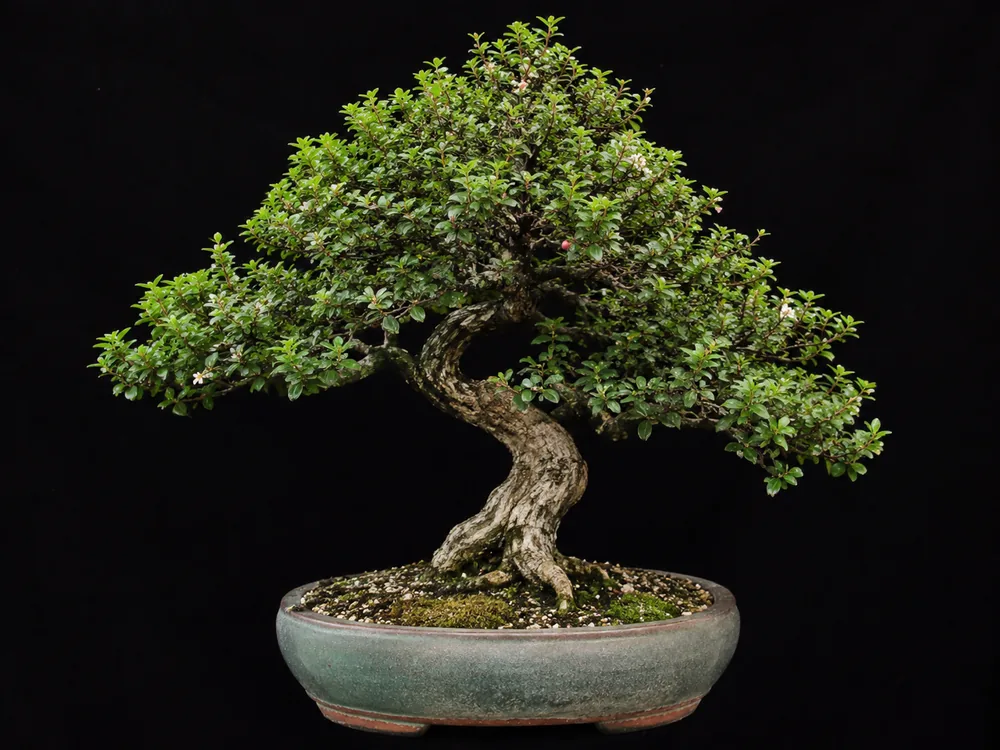
Bahama Berry Bonsai Care
Nashia inaguensis
Zones 10 to 11, indoor or out. A tropical Caribbean shrub beloved for tiny, fragrant. Most are lost to drying out.
Verbenaceae (verbena family) · Tropical evergreen flowering shrub
Bahama Berry quick reference
| USDA zones | 10–11 (grow indoors / under glass in cooler zones) |
|---|---|
| Indoor / outdoor | Indoor-capable — tropical; needs warmth + high humidity |
| Light | Bright, full light — 4–6+ hours direct |
| Water | Never let it dry — 'I dry, I die'; keep evenly moist |
| Soil | Moisture-retentive yet aerated mix (akadama + organics) |
| Repot | Frequently (fast roots) — don't let it get root-bound |
| Frost | None — keep above ~50 °F / 10 °C |
| Mature height (as bonsai) | Shrub to 4 m; 15-40 cm as bonsai |
| Growth rate | Moderate |
| Season of interest | Fragrant white flowers, tiny leaves year-round |
| Leaf reduction | Excellent - naturally tiny leaves |
| #1 cause of death | Drying out (rapid, often unrecoverable); cold |
Overview & Character
The Bahama Berry is a tropical Caribbean shrub beloved for tiny, fragrant, crinkled leaves (pineapple/vanilla-scented when brushed), miniature white flowers, small orange berries, and naturally fine twigging that makes excellent small bonsai. It is a connoisseur's tropical — beautiful, fragrant, and characterful.
Its defining trait is an absolute intolerance of drying out — a common nickname is 'I dry, I die' — so it demands constant, even moisture, plus warmth and high humidity. It also grows fast roots and dislikes being root-bound. It is not a beginner plant, but for those who can keep it reliably moist and warm it is uniquely rewarding.
Identification
Foliage: Tiny, rough-textured, crinkled dark-green leaves in clusters, intensely aromatic (pineapple/vanilla) when touched — a key ID and charm; naturally small, ideal for shohin.
Bark & trunk: Light grey-brown, finely textured, developing a delicate aged look on slim trunks.
Growth habit / form: Twiggy, dense, fine-branched shrub; ideal for small/shohin informal upright and naturalistic styles.
Flowers / fruit: Tiny, fragrant white star flowers, followed by small orange berries; can flower repeatedly in warmth.
Look-alikes & how to tell them apart: The combination of tiny crinkled pineapple-scented leaves and miniature white flowers is distinctive; superficially resembles other small-leaved tropicals (e.g. Fukien Tea), but the strong sweet fragrance when the foliage is brushed is the instant tell.
Climate & USDA Zone
Hardy outdoors only in frost-free USDA zones 10–11. Elsewhere it is an indoor/greenhouse bonsai needing warmth (ideally ~65–75 °F) and high humidity, summered outdoors in warmth and kept above ~50 °F. It has no frost tolerance and rarely sees temperature extremes in its native maritime habitat.
Light
Bright, full light — 4–6+ hours of direct sun, more is better. It needs strong light alongside high humidity; give the brightest window and supplement with grow lights in dim conditions.
Watering
Keep evenly moist at all times — never, ever let it dry out.
- Nicknamed 'I dry, I die': even a few hours of drought can start a decline it never recovers from.
- Keep the rootball consistently moist while in growth; pair with high humidity (tray/misting).
- Maintain aeration/drainage so it is moist, not stagnant.
Soil & Root Care
Soil: A moisture-retentive but aerated mix — akadama with some organics (composted bark/peat) works well to hold the constant moisture it needs.
Repotting:
- It has a fast-growing root system and dislikes being root-bound — repot before it gets pot-bound, more often than most species.
- Keep it warm, humid, and unfailingly moist after repotting.
- Aftercare: never let it dry while recovering.
Feeding
Feed with a balanced fertilizer weekly through spring and summer, then about monthly over winter (it keeps growing in warmth). Don't feed a dried-out or stressed plant.
Pruning & Styling
- Trimming: it twiggs up readily and back-buds well — frequent light trimming builds dense fine ramification ideal for shohin.
- Wiring: thin branches are workable; wire gently and briefly; much shaping is by clip-and-grow.
- Above all, never combine styling stress with any dryness — work only a well-watered plant.
- Suits small/shohin informal upright and naturalistic styles.
Propagation & Cuttings
Ease: Easy. Best method: softwood/semi-hardwood cuttings.
Nashia roots easily from cuttings, which is fortunate because seed is rarely available in cultivation. Take semi-hardwood tip cuttings in warm weather, strip lower leaves, dip in rooting hormone (0.1–0.3% IBA) and keep warm and humid; they root in a few weeks. It also layers readily. As a frost-tender tropical, propagate in the warm season and keep young plants above ~10 °C. For bonsai, cuttings let you build the fine, twiggy pads this species is loved for and to replace the small aromatic leaves quickly.
Pests
- Spider mites (dry indoor air — keep humidity up)
- Aphids and mealybugs
- Whitefly
- Scale insects
Treat with horticultural oil, insecticidal soap, or appropriate systemics; catch infestations early.
Disease, Fungus & Infection
Generally healthy if kept moist, humid, and warm; problems are mostly cultural:
- Drought collapse — the dominant failure (cultural but effectively fatal).
- Root rot — only from genuine stagnation; balance constant moisture with aeration.
- Leaf drop — from drying, cold, or low humidity (stress).
Prevention: constant moisture, high humidity, warmth, bright light, and good aeration.
Most Common Causes of Death
1. Drying out. The classic killer — even brief drought can be unrecoverable; never let it dry. 2. Cold. No frost tolerance — keep above ~50 °F and avoid cold drafts. 3. Low humidity / dry indoor air. Causes leaf drop and mites; use a humidity tray/misting. 4. Becoming root-bound. Fast roots — repot before it chokes the pot. 5. Stagnant, airless soil. Keep moist but aerated to avoid rot.
Seasonal Calendar
- Spring: Resume heavier feeding; trim to ramify; keep constantly moist and humid; move outdoors in warmth.
- Summer: Bright sun + high humidity; never let it dry (often daily water); repot if needed; feed weekly.
- Autumn: Bring indoors before cool nights; maintain warmth, light, humidity, moisture.
- Winter: Warm, bright, humid spot; keep evenly moist; feed monthly; never let it dry.
Sources
Where to buy a Bahama Berry bonsai
We don’t stock Bahama Berry at the moment. These species need similar care and we have them now — they are the closest match in our catalogue.
- Ming Aralia — similar care, in stock now
- Parrot's Beak — similar care, in stock now
- Sea Grape — similar care, in stock now
Browse all bonsai trees for sale or find a species matched to your climate and space.
- All species
- Shop bonsai trees, tools & supplies
- How to Water a Bonsai (Without Killing It)
- Bonsai Soil: What to Buy, What to Mix, and What It Costs
- Why Bonsai Die After Repotting: Diagnosing a Failed Repot
- Pruning vs. Pinching: Shaping Your Bonsai
- Overwintering Bonsai: Cold-Season Care
- Indoor Bonsai Light and Humidity: Making a Windowsill Actually Work
- Root Rot on bonsai
- Underwatering (Drought Stress) on bonsai
- Winter / Frost Damage on bonsai
- Spider Mites on bonsai
- Scale Insects on bonsai
- Ming Aralia bonsai care
- Parrot's Beak bonsai care
- Sea Grape bonsai care
- Black Olive bonsai care