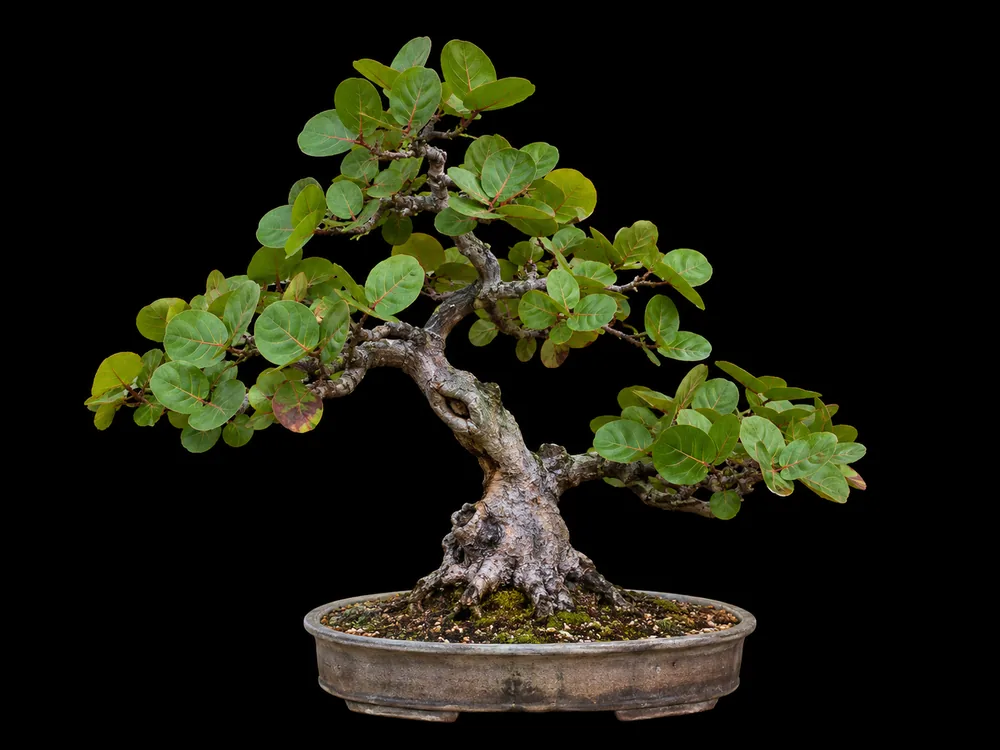
Sea Grape Bonsai Care
Coccoloba uvifera
1 Sea Grape bonsai in stock, from $84.95 Shipped direct from our nursery partners, with a 48-hour live-arrival guarantee. See the trees
Zones 10 to 11, indoor or out. A coastal tropical native of the beaches of Florida, the Caribbean, Bermuda. Most are lost to cold damage.
Polygonaceae (buckwheat/knotweed family) · Tropical evergreen broadleaf tree/shrub
Sea Grape quick reference
| USDA zones | 10 to 11 |
|---|---|
| Indoor / outdoor | Indoor-capable: tropical; must come inside below ~10 °C / 50 °F |
| Light | Full sun: the more direct light the better, both outdoors and at a bright window |
| Water | Moderate, evenly moist: drought-tolerant once established but grows best kept lightly moist |
| Soil | Fast-draining, gritty inorganic mix; tolerates sandy, saline substrate |
| Repot | Every 2 to 3 years in spring/early summer while warm |
| Frost | None: leaves damaged near 4 °C / 40 °F, killed by frost |
| Mature height | Tree to 8m in nature; bonsai usually 30-60cm. |
| Growth rate | Moderate (tropical, tender). |
| Season of interest | Year-round bold round leaves with red veins. |
| Leaf reduction | Poor; large leaves resist reduction, stay big. |
| #1 cause of death | Cold exposure / frost: a single freezing night can defoliate or kill it |
Overview & Character
Sea grape is a coastal tropical native of the beaches of Florida, the Caribbean, Bermuda, and the Atlantic coasts of tropical America, where it grows as a sprawling salt- and wind-tolerant shrub or small tree right at the dune line. Its signature feature for bonsai is the foliage: large, round to kidney-shaped leathery leaves up to 20 cm across in the wild, with prominent red veins on new growth, riding on a pale, smooth, mottled trunk. Reducing those big leaves is the central artistic challenge, but a mature specimen with a fat, peeling trunk and cloud-like pads of glossy leaves has a bold, unmistakably tropical presence that few other species offer.
The care keys are simple but non-negotiable: keep it warm, give it as much sun as possible, use a free-draining substrate, and never let it experience frost. It is genuinely tough about salt, wind, drought, and poor sandy soil; its weakness is cold, not neglect. Treat it as a warm-climate patio tree in summer and a bright-window houseplant in winter and it is forgiving and vigorous.
Identification
Foliage: Alternate, simple, round to reniform (kidney-shaped) leaves, thick and leathery, 8 to 25 cm across, glossy green with a distinctive red midrib and veins that are especially vivid on new flushes. Old leaves turn red before dropping.
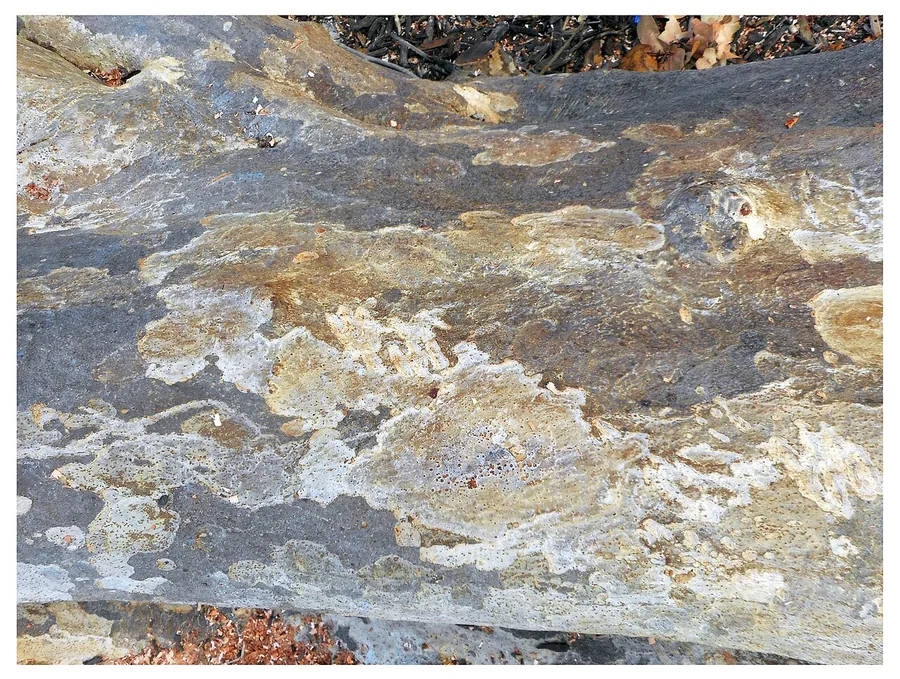
Bark & trunk: Smooth when young, becoming mottled and flaky with age; the outer bark peels in thin patches to reveal pale tan, gray and whitish underbark, an attractive, almost sycamore-like character that develops well in older bonsai.
Growth habit / form: Naturally a low, spreading, multi-stemmed shrub or a small tree to 8 m; branches are stout and somewhat sinuous. Responds to pruning with dense new growth.
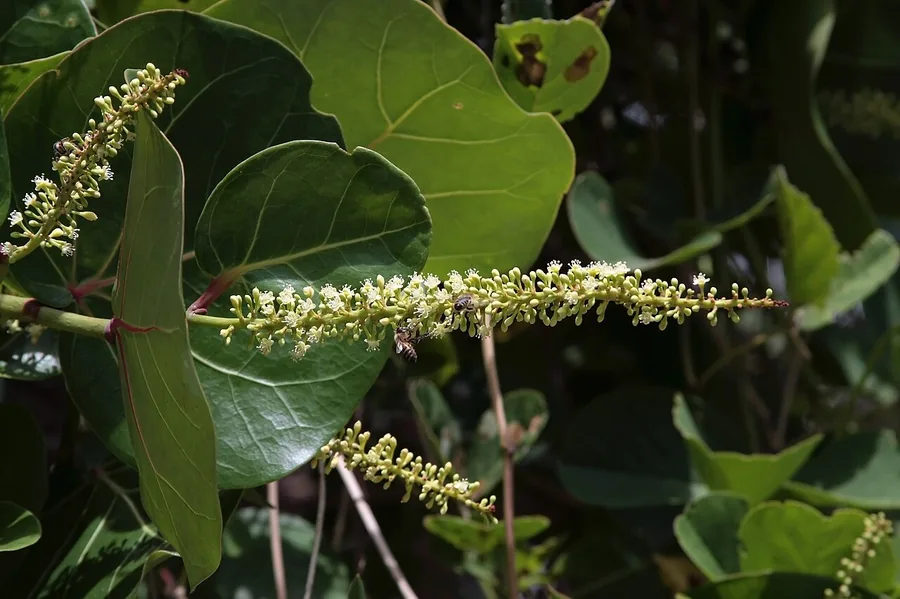
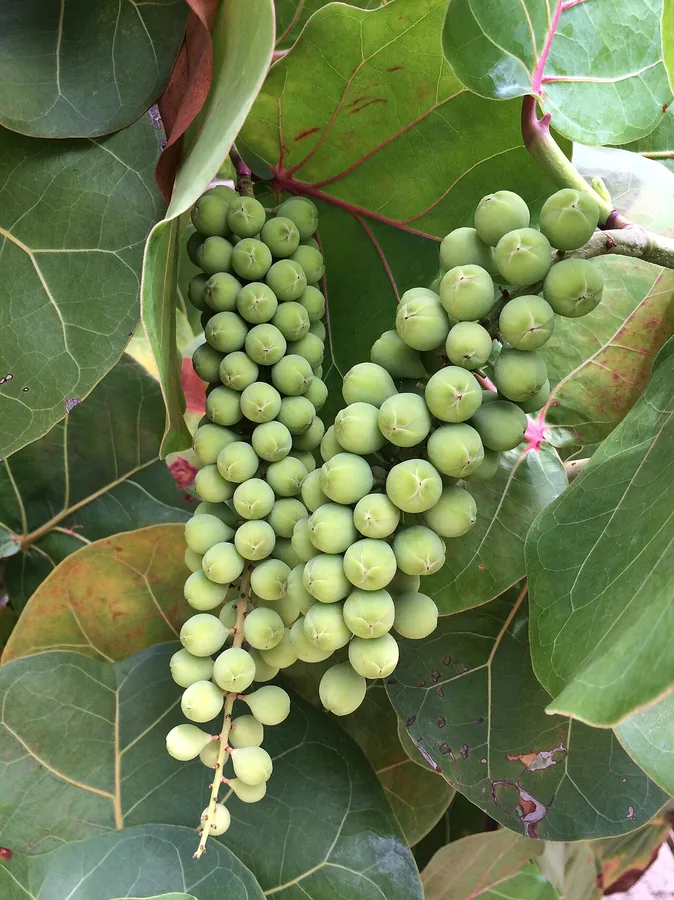
Flowers / fruit: Small, fragrant, creamy-white flowers in dangling racemes; dioecious (separate male and female plants). Females bear grape-like clusters of green fruit ripening to purple, edible and used for jelly, hence the name.
Look-alikes & how to tell them apart: Often confused with Coccoloba pubescens (grandleaf sea grape), which has even larger, more rounded leaves with velvety undersides. The reliable tell for C. uvifera is the combination of glossy (not fuzzy) leaf undersides, the red-veined round leaves, and the grape-like fruit clusters. Round-leaf tropical figs (Ficus) can superficially resemble it, but figs exude milky latex when cut, which sea grape does not.
Climate & USDA Zone
Sea grape is strictly tropical to subtropical, hardy only in USDA zones 10 to 11. It is happiest between 21 to 32 °C (70 to 90 °F). Leaf damage begins as temperatures approach 4 °C (40 °F), and any frost (0 °C / 32 °F or below) will defoliate it and can kill smaller trees outright. Bring it indoors well before the first cold snap: use a 10 °C (50 °F) minimum as your safe threshold. Everywhere outside frost-free coastal climates it must be an indoor/greenhouse tree in the cold months and can summer outside once nights are reliably above 15 °C (59 °F).
Light
Give sea grape the brightest position you have; it is a full-sun beach plant and never really gets "too much" light. Outdoors, site it in unobstructed sun. Indoors it needs a south- or west-facing window; a supplemental full-spectrum grow light greatly improves winter growth and helps keep internodes short and leaves smaller. Insufficient light causes leggy shoots, oversized leaves, and leaf drop.
Watering
Keep the soil evenly, lightly moist in the growing season; let the top of the substrate dry slightly between waterings, but do not let the rootball fully desiccate.
- In warm active growth, water thoroughly whenever the surface begins to dry, often daily in summer heat.
- It tolerates brief drought and even salt spray, so occasional missed waterings are survivable.
- Reduce watering in winter when growth slows and light is low; overwatering a cool, dim tree causes root rot.
- Excellent drainage matters more than frequency; never let the pot sit in standing water.
Soil & Root Care
Soil: A fast-draining, mostly inorganic bonsai mix, for example akadama, pumice and lava in roughly equal parts, or a gritty commercial mix. Sea grape naturally grows in sand and tolerates saline, nutrient-poor substrate, so err toward sharp drainage over water retention.
Repotting:
- Repot every 2 to 3 years for younger trees, less often as they mature.
- Time it for late spring to early summer, when the tree is warm and in vigorous growth; never repot a cold, dormant tropical.
- It tolerates moderate root pruning; remove up to about one-third of the root mass and rake out old soil.
- Aftercare: keep warm, out of harsh direct sun for a couple of weeks, water carefully (not soggy), and withhold fertilizer until new growth appears.
Feeding
Feed regularly through the warm growing season, roughly every two weeks with a balanced liquid fertilizer or monthly with a slow-release organic pellet. Sea grape is a strong grower when warm and light is good, so it responds well to feeding, but ease off in autumn and stop over the low-light winter rest when the plant is barely growing. A slightly reduced-nitrogen feed can help keep leaves smaller and internodes tighter.
Pruning & Styling
- Suitable styles include informal upright (moyogi), broom, clump/multi-trunk, and slanting forms that echo its wind-blown coastal habit; its bold round leaves suit larger-size bonsai best.
- The main challenge is leaf size; reduce it with strong light, restrained nitrogen, and partial defoliation of the largest leaves during the growing season to force smaller replacement foliage.
- Prune back new shoots to 2 to 3 leaves to build ramification; it back-buds readily on old wood, so hard structural cuts are well tolerated.
- Wire young, still-flexible shoots; older branches are stout and stiff, so set structure early and use guy wires for thick limbs.
- Seal larger cuts; the coarse wood can die back if left open in dry indoor air.
Propagation & Cuttings
Ease: Moderate. Best methods: seed; cuttings; air-layering.
Coccoloba uvifera grows from fresh seed sown warm (clean from the grape-like fruit; doesn't store). Semi-hardwood cuttings root at moderate rates in warm, humid conditions with hormone, and air-layering works on suitable branches. Keep everything tropical-warm and salt-tolerant though it is, frost-free. For bonsai the big round leaves reduce only somewhat, so it's grown more as a novelty coastal species; cuttings and layers build trunk, and it back-buds after hard pruning.
Pests
- Scale insects (soft and armored); cluster on stems and leaf undersides; treat with horticultural oil and remove heavy infestations by hand.
- Mealybugs: white cottony masses in leaf axils, common on indoor-wintered trees; dab with alcohol or spray with insecticidal soap.
- Spider mites: thrive in dry indoor winter air, causing fine stippling and webbing; raise humidity and treat with miticidal soap or oil.
- Whiteflies: sap-suckers on the leaf undersides; control with insecticidal soap and yellow sticky traps.
Treatment line: for all of these, start with insecticidal soap or horticultural oil applied to both leaf surfaces, repeat at 7 to 10 day intervals, and improve air circulation.
Disease, Fungus & Infection
- Root rot (Phytophthora / Pythium), the main real threat, caused by wet, poorly drained soil especially in cool conditions; roots turn brown and mushy. Prevented by gritty substrate and careful winter watering.
- Leaf spot / anthracnose fungi: dark blotches in humid, stagnant air; remove affected leaves and improve airflow.
- Sooty mold: black film growing on the honeydew left by scale, mealybugs, or whiteflies; not a direct pathogen but a sign of a pest problem; clear the pests and it fades.
Prevention: sharp drainage, restrained watering in cool months, good air movement, and prompt pest control together prevent nearly all disease on sea grape.
Most Common Causes of Death
1. Cold / frost exposure: the number-one killer; a single night near or below freezing defoliates or kills it. Bring it indoors before temperatures drop below 10 °C / 50 °F. 2. Root rot from overwatering in winter: cool, dim, soggy roots collapse. Cut water back sharply in the low-light season and use free-draining soil. 3. Insufficient light indoors: chronic low light causes weak, leggy growth, huge leaves, and slow decline. Give it the brightest window or a grow light. 4. Repotting/root work while cold or dormant: tropicals resent root disturbance when not warm. Repot only in late spring/summer during active growth. 5. Untreated scale/mealybug infestations: sap loss plus sooty mold weakens a tree over months. Inspect regularly and treat early.
Seasonal Calendar
- Spring: Move outdoors once nights stay above 15 °C / 59 °F; repot in late spring, resume feeding, begin structural pruning and wiring as growth accelerates.
- Summer: Peak growth: full sun, generous water and feeding; partial-defoliate large leaves and pinch shoots to build ramification and reduce leaf size.
- Autumn: Slow feeding, reduce watering, and bring the tree indoors well before the first cold nights; check thoroughly for pests before it goes inside.
- Winter: Keep warm and as bright as possible (grow light ideal); water sparingly, do not feed, and watch for spider mites and mealybugs in dry indoor air.
Close-up photo reference
Compare your tree against these to confirm the species and spot problems early.


_fruit_at_Playa_Lucia,_Yabucoa,_Puerto_Rico.jpg)
Sources
- Wikipedia: *Coccoloba uvifera*
- Missouri Botanical Garden: *Coccoloba uvifera*
- University of Florida IFAS: Sea Grape
Buy a Sea Grape bonsai
- All species
- Shop bonsai trees, tools & supplies
- How to Water a Bonsai (Without Killing It)
- Bonsai Soil: What to Buy, What to Mix, and What It Costs
- Why Bonsai Die After Repotting: Diagnosing a Failed Repot
- Pruning vs. Pinching: Shaping Your Bonsai
- Overwintering Bonsai: Cold-Season Care
- Indoor Bonsai Light and Humidity: Making a Windowsill Actually Work
- Root Rot on bonsai
- Overwatering on bonsai
- Winter / Frost Damage on bonsai
- Insufficient Light (Etiolation) on bonsai
- Spider Mites on bonsai
- Bahama Berry bonsai care
- Black Olive bonsai care
- Buttonwood bonsai care
- Dwarf Umbrella Tree (Dwarf Schefflera) bonsai care