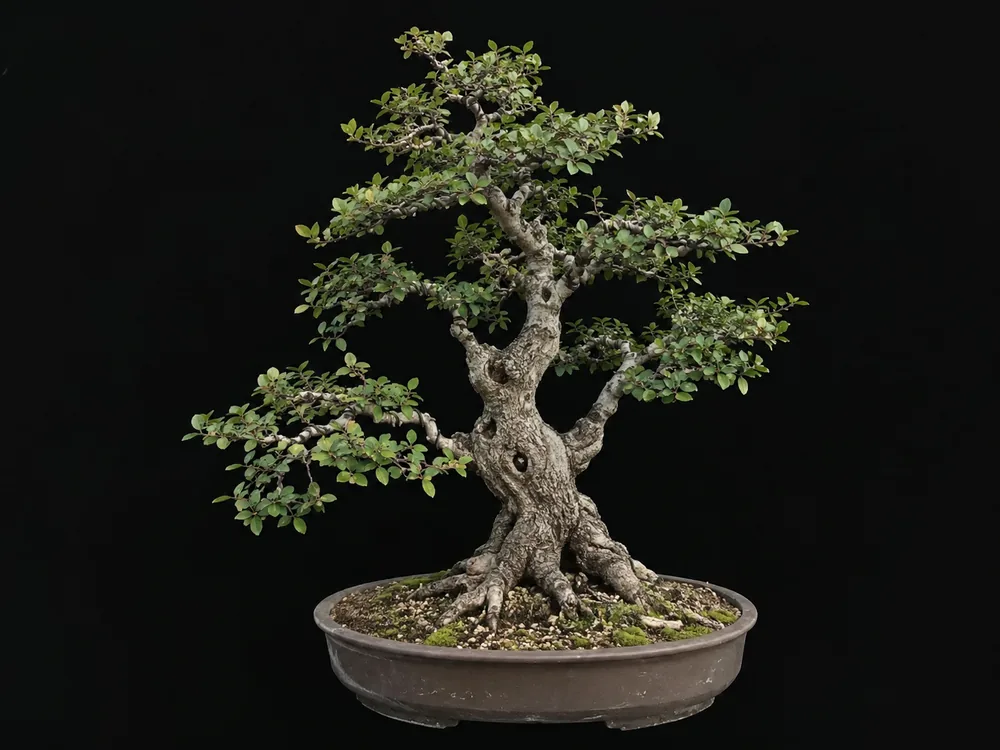
Black Olive Bonsai Care
Bucida buceras
1 Black Olive bonsai in stock, from $85.95 Shipped direct from our nursery partners, with a 48-hour live-arrival guarantee. See the trees
Zones 10 to 11, indoor or out. Not a true olive at all; it is a tropical hardwood of the Caribbean, southern Florida. Most are lost to overwatering.
Combretaceae (the white-mangrove / tropical-almond family) · Tropical evergreen broadleaf tree
Black Olive quick reference
| USDA zones | 10 to 11 |
|---|---|
| Indoor / outdoor | Indoor-capable: a true tropical; outdoors only in frost-free climates, otherwise indoors in bright warmth over winter. |
| Light | Full sun / light-loving: the brightest position possible; a warm sunny window or grow light indoors. |
| Water | Moisture-loving: likes consistent moisture and humidity, but let the surface dry slightly between waterings. |
| Soil | Well-draining, moisture-retentive tropical mix. |
| Repot | Every 2 to 3 years, in the warmth of late spring/summer. |
| Frost | None: damaged below about 4 to 7 °C (40 to 45 °F); killed by frost. |
| Mature height | Tree to 15 m; kept 30-60 cm as bonsai |
| Growth rate | Slow-moderate |
| Season of interest | Year-round evergreen, zig-zag branching |
| Leaf reduction | Good - small leaves reduce further |
| #1 cause of death | Cold exposure / chilling below ~10 °C: followed by root rot from cold wet soil. |
Overview & Character
The black olive is not a true olive at all; it is a tropical hardwood of the Caribbean, southern Florida, Central America and northern South America, named for its dark bark and small dark fruit. As bonsai it is a Florida favorite, valued for tiny, spoon-shaped blue-green leaves that form dense, layered, cloud-like pads, a naturally tiered branch structure, and rugged bark that gives instant age. It ramifies beautifully and takes to the flat-topped, spreading tropical-tree styling that shows off its horizontal layering. Mature specimens develop wonderful character and the fine twigging that makes convincing miniatures.
Care keys: this is a heat-loving tropical that must never get cold: keep it above about 10 °C (50 °F), in the brightest light available, warm and humid, with consistent moisture and steady feeding through its long growing season. Indoors in temperate regions it needs a very bright, warm spot or supplemental light. Watch for the leaf-galling mite that is its trademark pest. Handle with a little care: the tree carries sharp thorns and its sap can irritate skin.
Identification
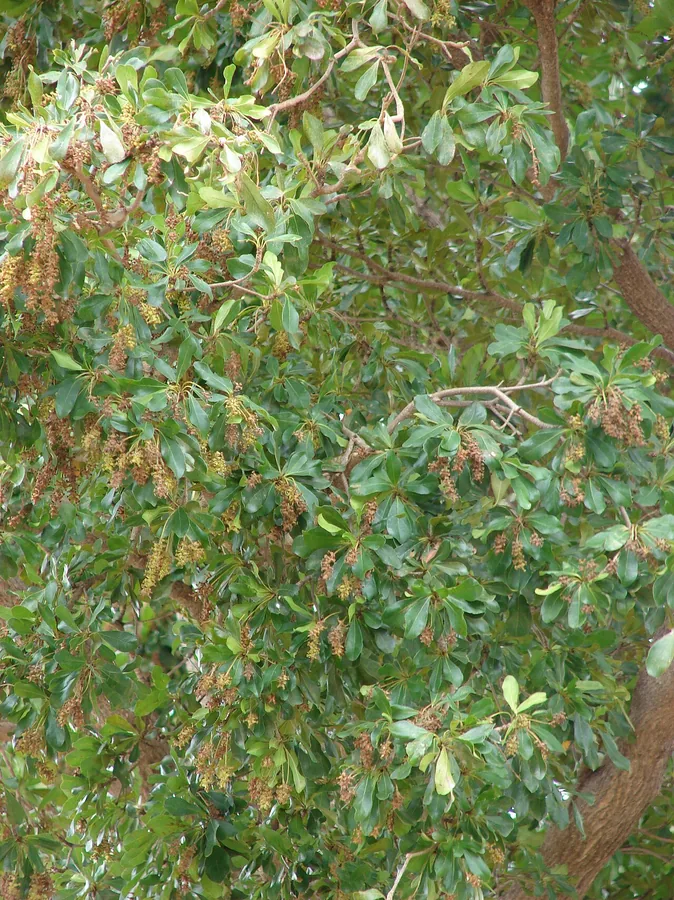
Foliage: Small, obovate to spoon-shaped (spatulate) leaves 2 to 7 cm long, clustered in rosettes at the branch tips, leathery, blue-green to dark green, giving a fine, dense texture ideal for small bonsai. New growth is often bronze-tinged.
Bark & trunk: Dark gray to blackish, rough and somewhat scaly bark that fissures with age; the trunk is often buttressed and gnarled. Branches bear spines/thorns.
Growth habit / form: A naturally spreading, horizontally tiered tree with a flat-topped, layered crown, the classic tropical "cloud layer" silhouette.
Flowers / fruit: Small, greenish-yellow, fragrant flowers in slender spikes, followed by small, dark, olive-like, five-angled fruits (the "black olive" of the name), not edible olives.
Look-alikes & how to tell them apart: Often confused with the true olive (Olea europaea), but the true olive has opposite, narrow, silvery-backed lance-shaped leaves and belongs to the Oleaceae, whereas black olive has alternate/rosetted spoon-shaped blue-green leaves and belongs to Combretaceae. It is also related to and can be confused with tropical almond (Terminalia catappa), which has much larger leaves. The rosetted small spatulate leaves, dark scaly bark, spines, and tiered tropical habit identify black olive.
Climate & USDA Zone
Black olive is a strictly tropical/subtropical tree, hardy only in USDA zones 10 to 11. It has essentially no frost tolerance and suffers chilling injury when temperatures fall below roughly 4 to 7 °C (40 to 45 °F); it is killed outright by frost. It thrives in heat and humidity and grows year-round where warmth persists. Outside frost-free climates it must be grown as an indoor/greenhouse bonsai and moved inside before nights drop below about 10 °C (50 °F). Keep it in the warmest, brightest indoor spot in winter, ideally above 15 °C (59 °F), and never place it against a cold window or in a draft.
Light
Give it the brightest light you can: black olive is a full-sun tropical. Outdoors in warm climates grow it in full sun for the tightest, densest foliage. Indoors, place it directly at the sunniest south-facing window and supplement with a grow light in winter; inadequate light causes leggy growth, leaf drop, and sparse pads.
Watering
Keep it consistently moist and humid, a moisture-loving tropical, but let the surface dry slightly between waterings so the roots never sit sodden.
- Water thoroughly when the top of the soil begins to feel dry; in warmth and full growth this is frequent.
- Do not let it dry out completely, which triggers leaf drop.
- Avoid waterlogging, especially in cooler indoor conditions where cold wet soil causes root rot.
- Raise humidity indoors with a humidity tray or misting, particularly in dry, heated winter air.
Soil & Root Care
Soil: A well-draining but moisture-retentive tropical mix: akadama or a general bonsai aggregate with added pumice/lava and a portion of organic matter (composted bark or coir) to hold moisture in the warmth.
Repotting:
- Repot every 2 to 3 years while developing, less often when mature.
- Timing: in the warm growing season, late spring into summer, when the tropical tree is in active growth and recovers fast; never in cold conditions.
- Root-work tolerance is good in warmth; it accepts moderate root pruning of up to a third when actively growing.
- Aftercare: keep warm, humid, and brightly shaded out of harsh midday sun and wind, water carefully, and withhold fertilizer for 3 to 4 weeks while new roots form.
Feeding
Feed steadily through its long growing season. In warm conditions black olive grows almost year-round and is a strong feeder; use a balanced fertilizer regularly from spring through autumn, and lightly through winter if the tree is kept warm and actively growing under good light. Reduce or stop feeding if the tree slows or is being held cool over winter. Regular feeding supports the vigorous ramification and dense pads the species is grown for. A micronutrient supplement helps prevent chlorosis in container culture.
Pruning & Styling
- Pinch and trim the new shoots regularly through the growing season; black olive back-buds readily and ramifies well, rewarding frequent light pruning with fine twigging.
- Build the characteristic flat-topped, tiered "cloud" pads: the natural layered tropical habit suits informal upright, broom, and banyan/spreading styles.
- Prune structural branches in the warm season when healing is fast; seal larger cuts.
- Wire carefully: young shoots are flexible but older wood stiffens; and mind the thorns and the mildly irritating sap when handling.
- It tolerates hard pruning in active growth and will push new growth from old wood, making it forgiving to restyle.
Propagation & Cuttings
Ease: Moderate. Best methods: cuttings; seed.
Bucida (Florida black olive) is propagated from semi-hardwood cuttings taken in the warm season, treated with rooting hormone and kept humid and warm; rooting is moderate and can be slow. Fresh seed germinates when available. The dwarf 'Shady Lady' type is grown from cuttings to stay true. As a tropical, keep all propagation warm (above ~13 °C) and never let cuttings chill. For bonsai the zig-zag ramification is best built by cutting-grown stock or collected nursery material rather than seed.
Pests
- **Black olive gall mite / eriophyid mite (Eriophyes/Aceria spp.)**: the signature pest, causing distorted, thickened, curled "witches'-broom" galled new growth; prune out galled tips and treat with miticide or horticultural oil.
- Scale insects: brown or soft scales on stems and leaf undersides; scrape off and treat with horticultural oil.
- Mealybugs: white cottony clusters in leaf axils, common indoors; treat with alcohol swabs or insecticidal soap/oil.
- Spider mites: stippling and webbing in dry indoor air; raise humidity and apply miticide.
For all of these, catch early; horticultural oil addresses scale, mealybug and mite eggs, while the gall mite specifically needs galled tissue removed and repeated miticide treatment.
Disease, Fungus & Infection
- Root rot (Phytophthora / Pythium): the main disease risk, from cold, wet, poorly draining soil, a particular danger indoors in winter; ensure good drainage and reduce watering when cool.
- Leaf spot / anthracnose fungi: dark blotches on leaves in overly wet, still, humid conditions; improve airflow and remove affected leaves.
- Sooty mold: black film on leaves growing on the honeydew of scale/mealybug; control the sap-sucking pests and the mold clears.
- Tip dieback: often a symptom of cold stress or root problems rather than a primary pathogen; correct the underlying culture.
Prevention: warmth, bright light, good airflow, sharp drainage, and prompt control of sap-sucking pests keep black olive largely disease-free.
Most Common Causes of Death
1. Cold exposure / chilling below ~10 °C (50 °F): the number-one killer; this tropical is damaged by chilling and killed by frost. Bring it indoors before nights get cold and keep it warm and above 10 °C. 2. Root rot from cold, wet soil: often follows the first; cold overwatered roots rot fast. Reduce watering when cool and use a free-draining mix. 3. Insufficient winter light indoors: causes leaf drop, weak leggy growth and slow decline; give the brightest window plus a grow light. 4. Drying out completely: a full dry-out triggers heavy leaf drop and can kill; keep the soil consistently moist. 5. Untreated gall mite / pest infestation: heavy galling and sap-sucking weaken the tree over time; prune out galls and treat promptly.
Seasonal Calendar
- Spring: Growth accelerates with warmth, the window to repot into fresh mix, resume full feeding, begin regular pinching, and move outdoors only once nights stay reliably above ~12 °C (54 °F).
- Summer: Peak growth; keep in full sun, water and feed generously, prune and wire freely while healing is fast, and watch for gall mite and scale.
- Autumn: Growth continues in warmth; begin reducing feeding, and bring the tree indoors before nights fall below about 10 °C (50 °F).
- Winter: Keep warm (above ~15 °C ideally) in the brightest possible light with supplemental lighting; water sparingly to avoid cold wet soil, raise humidity, and protect absolutely from cold and drafts.
Close-up photo reference
Compare your tree against these to confirm the species and spot problems early.
.jpg)
Sources
- Bonsai Empire: Bonsai tree species guide
- Wikipedia: *Bucida buceras*
- University of Florida IFAS: *Bucida buceras* (black olive) fact sheet
Buy a Black Olive bonsai
- All species
- Shop bonsai trees, tools & supplies
- How to Water a Bonsai (Without Killing It)
- Bonsai Soil: What to Buy, What to Mix, and What It Costs
- Why Bonsai Die After Repotting: Diagnosing a Failed Repot
- Pruning vs. Pinching: Shaping Your Bonsai
- Overwintering Bonsai: Cold-Season Care
- Indoor Bonsai Light and Humidity: Making a Windowsill Actually Work
- Root Rot on bonsai
- Overwatering on bonsai
- Underwatering (Drought Stress) on bonsai
- Winter / Frost Damage on bonsai
- Spider Mites on bonsai
- Orange Jasmine bonsai care
- Powder Puff bonsai care
- Sea Grape bonsai care
- Arabian Jasmine bonsai care