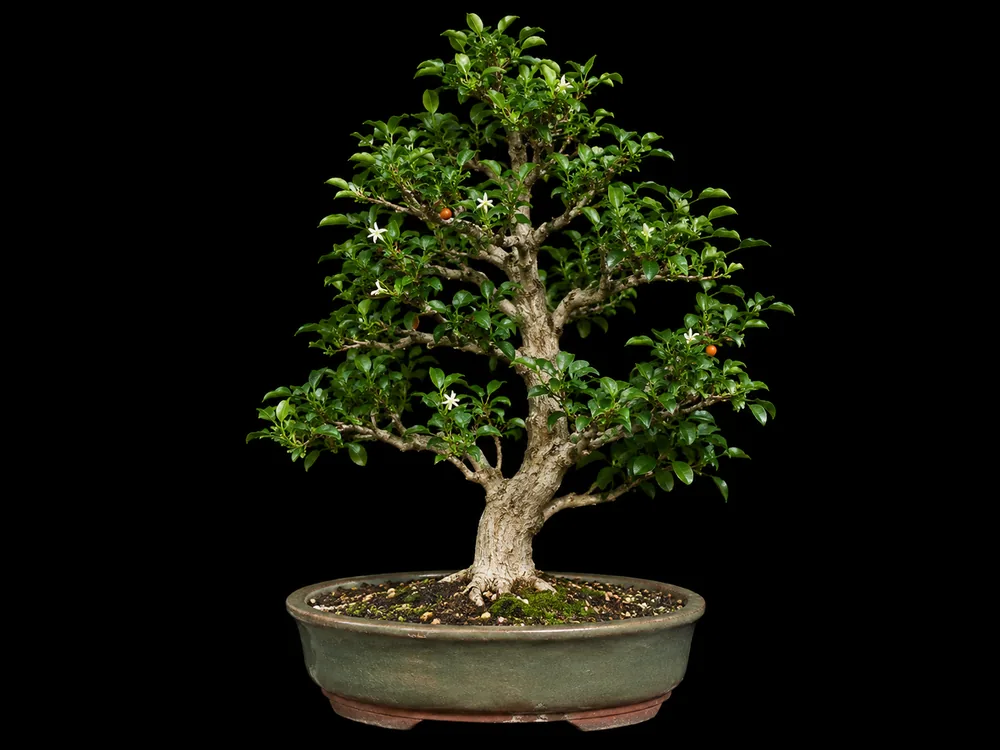
Orange Jasmine Bonsai Care
Murraya paniculata
1 Orange Jasmine bonsai in stock, from $225.00 Shipped direct from our nursery partners, with a 48-hour live-arrival guarantee. See the trees
Zones 10 to 11, indoor or out. A tropical evergreen in the citrus family, grown for glossy dark-green compound leaves. Most are lost to drying out.
Rutaceae (citrus family) · Evergreen broadleaf tropical tree/shrub
Orange Jasmine quick reference
| USDA zones | 10–11 (grow indoors / under glass in cooler zones) |
|---|---|
| Indoor / outdoor | Indoor-capable — outdoors in warmth, protected from frost |
| Light | High light — 4–6+ hours; full sun outdoors |
| Water | Keep evenly, slightly moist — never fully dry, never waterlogged |
| Soil | Free-draining, moisture-retentive bonsai mix |
| Repot | Every 3–5 years (slow-rooting evergreen) |
| Frost | None — protect below ~45 °F / 7 °C |
| Mature height (as bonsai) | 3-6m wild; 25-50cm as bonsai |
| Growth rate | Moderate; tropical, frost-tender |
| Season of interest | Fragrant white flowers; red berries; glossy leaves |
| Leaf reduction | Small leaflets reduce well with pruning |
| #1 cause of death | Cold damage; root rot from overwatering; drying out |
Overview & Character
Orange Jasmine is a tropical evergreen in the citrus family, grown for glossy dark-green compound leaves, smooth pale bark, and clusters of intensely fragrant white flowers (scented like orange blossom) that can appear in flushes through the year, followed by small red berries. Its dense, fine foliage and willingness to flower make it one of the best indoor flowering bonsai for warm, bright spots.
It wants warmth, bright light, and even moisture, with no frost tolerance. It is relatively slow to establish roots, so it is repotted infrequently. The wood is hard and the bark smooth, so it is shaped largely by patient trimming.
Identification
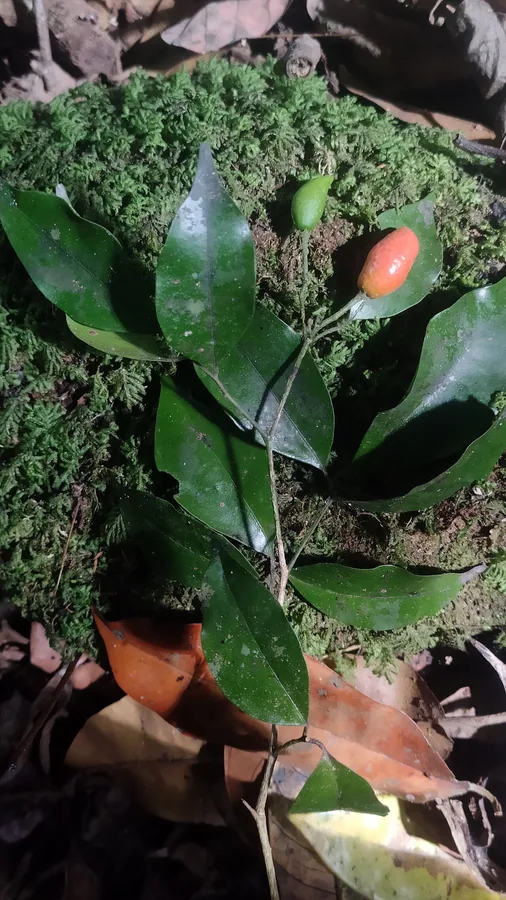
Foliage: Glossy, dark green, pinnately compound leaves with several small oval leaflets; aromatic (citrus-family oils) when crushed.
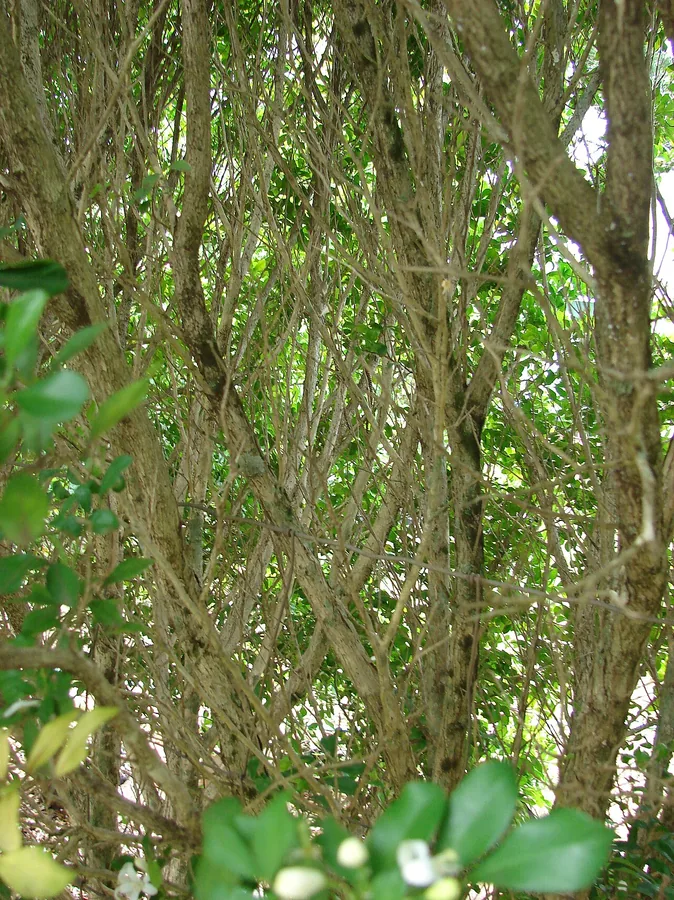
Bark & trunk: Smooth, pale grey to creamy bark (the "satinwood" look), maturing to a fine, clean trunk.
Growth habit / form: Dense, twiggy, upright evergreen shrub/small tree; suits informal upright and broom styles.
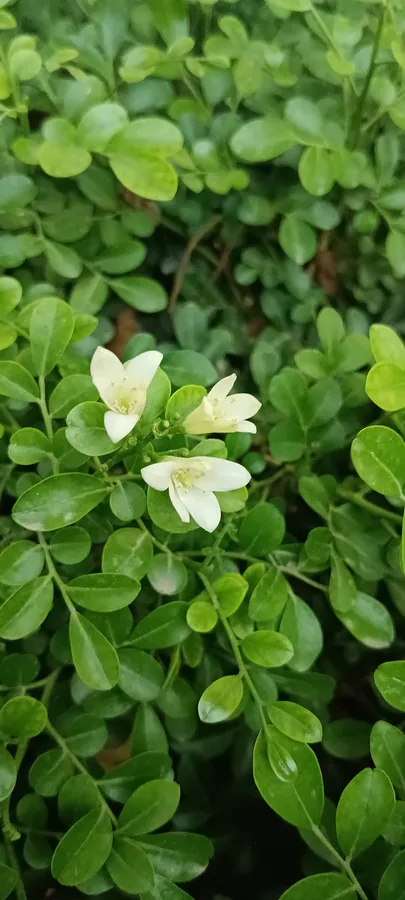
Flowers / fruit: Clusters of small, white, five-petalled, powerfully fragrant flowers resembling orange blossom, borne in flushes (often after warm rains); followed by small oval red-orange berries.
Look-alikes & how to tell them apart: Sometimes confused with **Fukien Tea (Carmona/Ehretia) as an indoor flowering bonsai, but Fukien Tea has simple, stiff, dark leaves with tiny white dots and white star flowers, whereas Orange Jasmine has compound citrus-scented leaves and intensely fragrant blossom. Also resembles small citrus**, but the dense compound foliage and powderpuff-free fragrant clusters distinguish it.
Climate & USDA Zone
Hardy outdoors only in USDA zones 10–11 (frost-free, warm). Everywhere cooler it is an indoor/greenhouse bonsai, summered outdoors and brought in before nights fall below ~45 °F / 7 °C. It loves warmth and humidity and has no frost tolerance.
Light
High light — 4–6+ hours, full sun outdoors. Strong light keeps growth compact and drives the fragrant flowering. Indoors, give the brightest south-facing window (east/west second best); a north window needs grow-light supplementation. Insufficient light brings leggy growth and few flowers.
Watering
Keep the soil evenly, slightly moist — never let it dry out completely, never waterlogged.
- Water before the surface dries, soaking until it runs from the drainage holes.
- Avoid both extremes: drought causes leaf drop; constant sogginess rots roots.
- Indoors in winter heat, watch for drying; a humidity tray helps offset dry indoor air.
Soil & Root Care
Soil: A free-draining but moisture-retentive bonsai mix (e.g. akadama / pumice / lava). Good drainage prevents the root rot it is prone to if kept wet.
Repotting:
- Frequency: roughly every 3–5 years — it is a slow-rooting evergreen; repot when roots fill the pot.
- Remove no more than ~1/4–1/3 of the root mass; it resents heavy root disturbance.
- Aftercare: keep warm, bright-but-sheltered, and evenly moist while re-establishing.
Feeding
Feed at least monthly during active growth (essentially year-round if kept warm and growing indoors), easing off only in a cool winter rest. A balanced fertilizer supports foliage and repeat flowering. Don't feed freshly repotted or stressed plants.
Pruning & Styling
- Trimming: Pinch and trim new growth back to shape; it back-buds well and ramifies with regular trimming.
- Flowering: blooms on new growth in flushes; trimming stimulates new shoots and subsequent flower flushes (but constant shearing limits bloom — let some growth extend if you want flowers).
- Wiring: the wood is hard and bark smooth/marks easily — wire carefully and protect the bark; much shaping is done by directional pruning.
- Suits informal upright and broom styles.
Propagation & Cuttings
Ease: Moderate. Best methods: seed; semi-hardwood cuttings.
Murraya paniculata grows from fresh seed sown warm (polyembryonic, so mostly true to type); it doesn't store, so sow promptly. Semi-hardwood cuttings root at moderate rates in warm, humid conditions with hormone, and it air-layers. Keep everything tropical-warm. For bonsai the tiny glossy leaves, fragrant white flowers, and red berries are the draw; cuttings and layers keep good forms, and the plant back-buds and ramifies well under a warm, bright regime.
Pests
- Aphids and mealybugs (especially indoors)
- Scale insects
- Spider mites (hot, dry indoor air)
- Whitefly in greenhouses
Treat with insecticidal soap or horticultural oil; maintain humidity indoors to deter mites.
Disease, Fungus & Infection
Generally healthy in good culture; problems are mostly cultural:
- Root rot — from overwatering/poor drainage (the main disease risk).
- Sooty mold — growing on honeydew from aphids/scale/whitefly; control the pests to clear it.
- Leaf yellowing (chlorosis) — from cold, overwatering, or nutrient deficiency rather than infection.
Prevention: warmth, bright light, even moisture with sharp drainage, and prompt pest control.
Most Common Causes of Death
1. Cold / frost damage. No frost tolerance — protect below ~45 °F / 7 °C and avoid cold drafts. 2. Root rot from overwatering. Keep evenly moist but sharply drained; never standing wet. 3. Drying out. Full dry-outs cause leaf drop and dieback; keep lightly moist. 4. Low light indoors. Leggy, weak, flowerless growth; give the brightest spot. 5. Heavy root disturbance. Slow-rooting; repot gently and infrequently.
Seasonal Calendar
- Spring: Resume/continue feeding; trim to shape; repot if due; move outdoors after frost.
- Summer: Full sun/warmth outdoors; even moisture; feed; fragrant flower flushes.
- Autumn: Taper outdoor care; bring indoors before nights drop below ~45 °F.
- Winter: Bright, warm window; keep lightly moist; humidity tray; light feeding if growing.
Close-up photo reference
Compare your tree against these to confirm the species and spot problems early.
.jpg)
.jpg)

Sources
Buy a Orange Jasmine bonsai
- All species
- Shop bonsai trees, tools & supplies
- How to Water a Bonsai (Without Killing It)
- Bonsai Soil: What to Buy, What to Mix, and What It Costs
- Why Bonsai Die After Repotting: Diagnosing a Failed Repot
- Pruning vs. Pinching: Shaping Your Bonsai
- Overwintering Bonsai: Cold-Season Care
- Indoor Bonsai Light and Humidity: Making a Windowsill Actually Work
- Root Rot on bonsai
- Overwatering on bonsai
- Underwatering (Drought Stress) on bonsai
- Winter / Frost Damage on bonsai
- Insufficient Light (Etiolation) on bonsai
- Black Olive bonsai care
- Powder Puff bonsai care
- Sea Grape bonsai care
- Bahama Berry bonsai care