Money Tree Bonsai Care
Pachira aquatica
2 Money Tree bonsai in stock, from $39.95 Shipped direct from our nursery partners, with a 48-hour live-arrival guarantee. See the trees
Zones 10 to 12, indoor. One of the most recognizable houseplants in the world. Most are lost to overwatering.
Malvaceae (formerly Bombacaceae) · Tropical broadleaf semi-evergreen — indoor bonsai/houseplant in cold climates
Money Tree quick reference
| USDA zones | 10–12 outdoors year-round; indoor in any cooler climate |
|---|---|
| Indoor / outdoor | Indoor in cold climates; outdoors only in zones 10–12 (no frost) |
| Light | Bright indirect light; tolerates medium light. Avoid harsh, scorching direct midday sun on indoor plants |
| Water | Dry-leaning — let the soil dry out almost completely before watering. Easily rots; the most overwatering-sensitive tree in this group. |
| Soil | Very free-draining bonsai mix; standing moisture is fatal |
| Repot | Every 2–3 years; has a delicate, rot-prone root system |
| Frost | None — will not survive frost or even most early-fall cold |
| Mature height (as bonsai) | 6-18m wild; 30-60cm as indoor bonsai |
| Growth rate | Fast; braided trunks common |
| Season of interest | Glossy palmate leaves; green year-round indoors |
| Leaf reduction | Large palmate leaves reduce poorly |
| #1 cause of death | Root rot from overwatering (delicate roots, mushy trunk base) |
Overview & Character
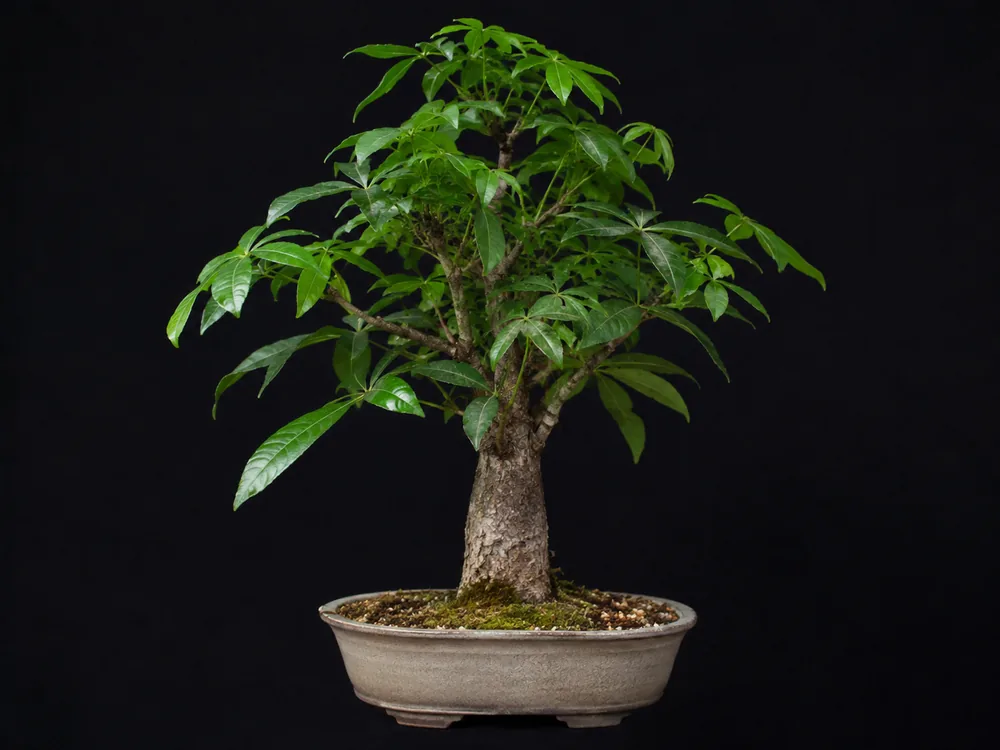
The Money Tree is one of the most recognizable houseplants in the world — usually sold with multiple slender trunks braided together and topped by glossy, hand-shaped palmate leaves. It carries strong associations with luck and prosperity in feng shui, which is largely why it became a commercial staple. Native to Central and South American swamps and wetlands, it is an easy, tolerant indoor plant in good light.
Two honest notes for the bonsai-minded grower. First, the braided trunk is a commercial/decorative gimmick, not a bonsai virtue. Braiding is done on young, whippy stems to sell a novelty look; as the trunks thicken with age they crush and constrict one another, and the braid prevents the development of a single, tapering, characterful trunk that defines good bonsai. Serious bonsai work with Pachira usually starts from a single thick trunk or a fat-based seedling (the swollen "stump" form) rather than a braid.
Second, despite its swamp origins, in a pot it is acutely sensitive to overwatering. Its root system is delicate and rots readily, and a soft, mushy trunk base is the classic death symptom. The cardinal rule is to let it dry out well between waterings — it tolerates drought far better than wet feet.
Identification
FOLIAGE: Large palmate compound leaves — typically 5–7 (sometimes up to 9) glossy, lance-shaped/oblong leaflets radiating from a single point at the end of a long petiole, like fingers from a hand or spokes of an umbrella. Bright to deep green, leathery. Leaves are large for bonsai and reduce only modestly.
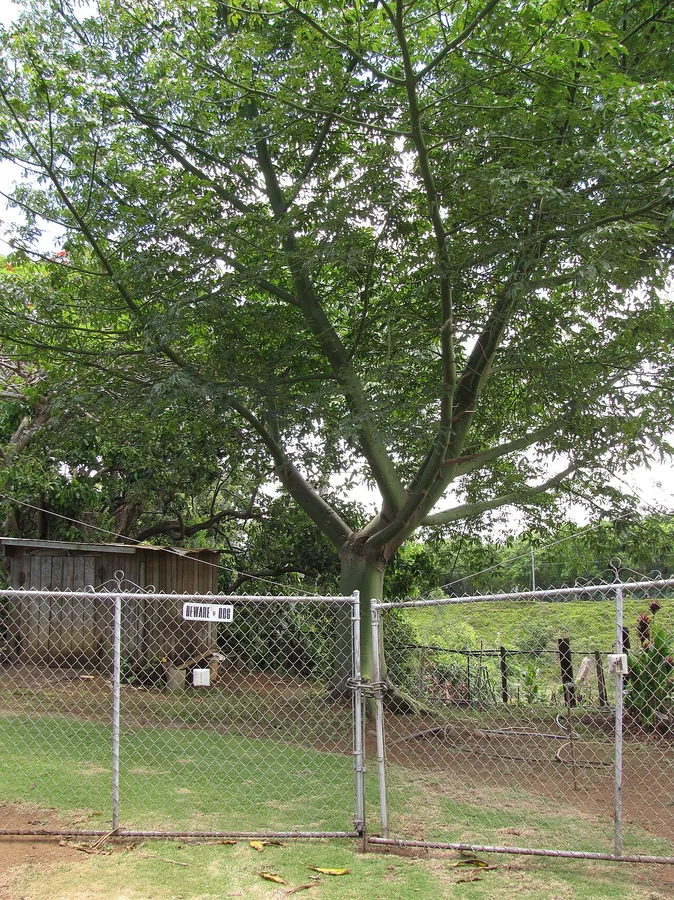
BARK & TRUNK: Smooth green-to-grey-brown bark; trunks are soft and pliable when young (hence braiding) and can develop a swollen, bottle-like base that stores water. Commercial plants show several thin trunks plaited together.
GROWTH HABIT/FORM: Upright, fast, somewhat sparse and "topknot" in habit unless pruned for density; backbuds when cut back. Single-trunk specimens with a fat base make the most convincing bonsai.
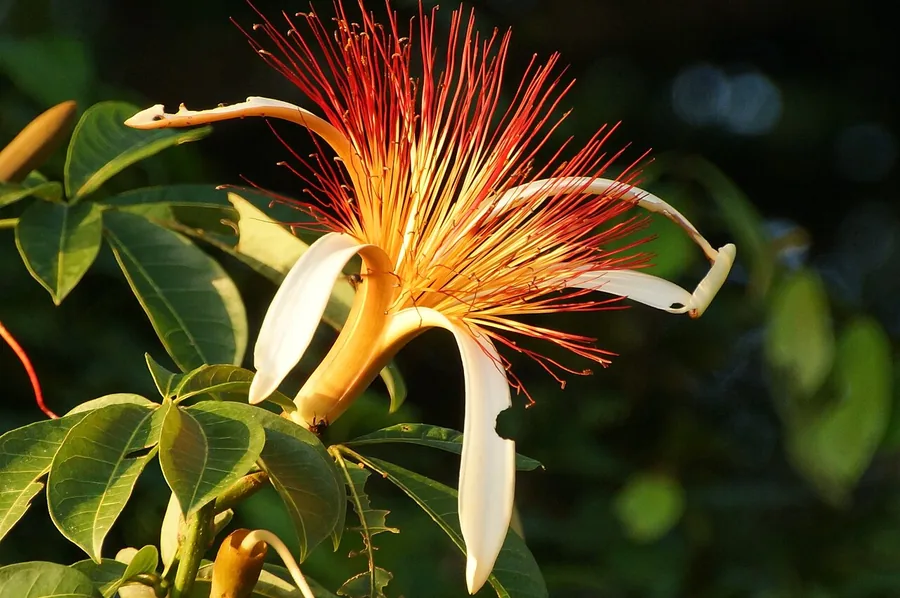
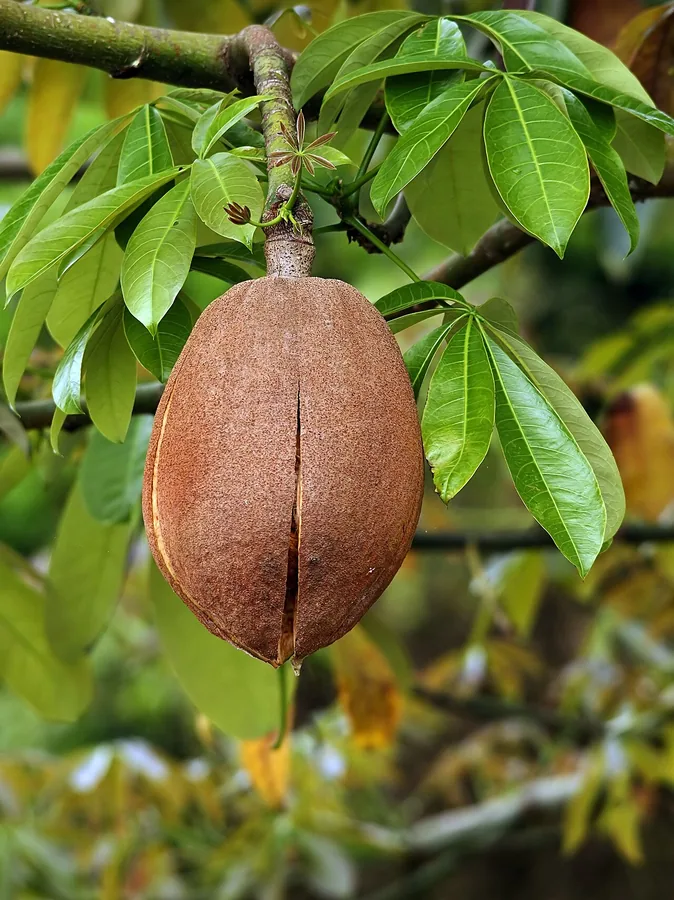
FLOWERS/FRUIT: In the wild, large showy flowers with long cream-to-reddish stamens, followed by big woody seed pods containing edible nuts (the "Malabar chestnut") — essentially never seen on indoor bonsai.
Look-alikes & how to tell them apart: Its palmate compound leaf can resemble the Dwarf Schefflera at a glance, but Money Tree leaflets are larger, fewer, and lance-shaped, and the trunk is much thicker and often braided. The swollen, water-storing trunk base and the braided multi-stem form are the quickest tells. Distinct from any Ficus (single simple leaves, milky latex) — Pachira leaves are compound and the plant has no milky sap.
Climate & USDA Zone
Hardy outdoors only in USDA zones 10–12. It will not survive frost — and in fact suffers in most early-fall cold, well before a hard freeze. In every cooler climate it is grown as an indoor bonsai/houseplant, optionally summered outside once nights stay reliably warm (above ~55–60°F / 13–15°C). Keep it above 50°F (10°C) and away from cold drafts and cold glass.
Light
Bright, indirect light is ideal indoors; it also tolerates medium light reasonably well, which adds to its houseplant popularity. Avoid harsh, scorching direct midday sun on an indoor plant (can scorch the large leaves), though acclimated outdoor plants in the tropics take more sun. In low light expect leggy, stretched growth and sparse foliage; supplement with a grow light for a fuller, more compact crown. Rotate periodically for even growth.
Watering
Decidedly dry-leaning — this is the most overwatering-sensitive tree in this group. Let the soil become nearly or completely dry, then water thoroughly and let it drain fully. Typically that means watering only every 1–2 weeks (often less in winter), but always test the soil first — never water on a fixed schedule. Its delicate root system rots quickly in wet conditions, and the warning signs of overwatering are yellowing leaves and a soft, mushy trunk base — by the time the trunk is mushy, the tree is often beyond saving. When in doubt, wait and water less. Do not let the pot sit in a saucer of water. Despite the name "aquatica," in a container it strongly prefers to dry out between drinks.
Soil & Root Care
Use a very free-draining bonsai substrate (inorganic mix such as pumice/lava/akadama, or a gritty commercial bonsai mix). Dense, moisture-retentive potting soil is dangerous for this rot-prone species. Repot every 2–3 years, handling the delicate roots gently and removing any soft, dark, or foul-smelling roots. Repot in spring/early summer during warm active growth. After repotting, keep it on the dry side and warm while it recovers — do not "baby" it with extra water, which is the opposite of what it needs.
Feeding
Feed lightly during active growth — a balanced liquid fertilizer roughly every 2–4 weeks, or a slow-release feed, from spring through early autumn. It is not a heavy feeder; over-fertilizing produces weak, leggy growth. Reduce or stop feeding in winter or whenever growth slows in cooler/dimmer conditions, and don't feed a freshly repotted or stressed plant.
Pruning & Styling
- Braiding — skip it for bonsai. Maintaining a braid means continually tucking in new shoots, and thickening trunks eventually crush each other. For genuine bonsai, grow a single trunk (or a fat-based stump) and build taper and movement instead.
- Pruning: Cut back leggy shoots to encourage backbudding and a denser crown; Pachira responds to pruning with new shoots below the cut. Prune in the warm growing season. The large leaves can be thinned to open the canopy and improve light.
- Leaf size: Leaves reduce only modestly, so this species suits larger bonsai sizes rather than tiny shohin.
- Wiring: Young green shoots are flexible and can be wired, but the soft bark marks easily — wire loosely, pad if needed, and remove before it bites in. Most shaping is done by directional pruning.
Propagation & Cuttings
Ease: Easy from seed and cuttings. Best methods: seed (for braiding/trunk); cuttings.
Pachira aquatica grows fast from fresh seed sown warm — the large seeds germinate quickly and give the plump trunks used for braided specimens. Stem/tip cuttings root in warm, humid conditions with hormone but form thinner trunks. Air-layering works. Keep everything warm (tropical) and not waterlogged. For bonsai, seedlings give the best trunk base; the plant tolerates pruning and back-buds, and multiple seedlings can be grown together and their trunks fused or braided.
Pests
Usually trouble-free, but dry indoor air invites:
- Spider mites — fine webbing and stippled, dull leaves in dry heated air; rinse foliage, raise humidity, treat with insecticidal soap/neem.
- Mealybugs — white cottony clusters in leaf axils and on stems.
- Scale insects — bumps on stems and leaf undersides with sticky honeydew.
Treat with neem oil or insecticidal soap, repeating until clear, and isolate affected plants.
Disease, Fungus & Infection
The overwhelming health issue is root rot from overwatering — yellowing leaves, a soft/mushy trunk base, and foul-smelling roots. Prevention is everything: free-draining soil and a strict dry-down between waterings. If caught early (before the trunk softens), unpot, cut away all rotted roots, repot into fresh dry mix, and withhold water until recovery. Fungal leaf spotting can occur in stagnant, humid, low-airflow conditions; improve airflow and avoid wetting foliage excessively. Sooty mold grows on pest honeydew — control the pests to clear it. Leaf yellowing/drop is most often a watering problem (usually too much, sometimes too little) rather than a primary disease.
Most Common Causes of Death
1. Overwatering / root rot — by far the top killer; delicate roots rot fast and the trunk base turns mushy. Prevention: let the soil dry almost completely before watering; use very free-draining soil; never leave it in standing water. 2. Dense, water-holding soil — keeps roots wet and triggers rot even with careful watering. Prevention: repot into a gritty, fast-draining bonsai mix. 3. Cold / frost exposure — won't survive frost or even early-fall chill. Prevention: keep above 50°F (10°C); bring indoors well before autumn cold; avoid drafts and cold glass. 4. Braided-trunk decline — over years, braided trunks crush and strangle each other and can rot at contact points. Prevention: for bonsai, grow single-trunk/fat-base forms; if keeping a braid, monitor for constriction and dieback. 5. Standing water / no drainage — the fastest route to a mushy base. Prevention: always empty the saucer; ensure free drainage. 6. Prolonged low light — produces weak, leggy growth that is more prone to collapse. Prevention: bright indirect light or a supplemental grow light. 7. Pests left unchecked — spider mites/mealybugs in dry indoor air can weaken a plant. Prevention: inspect regularly, raise humidity, treat early.
Seasonal Calendar
- Spring (Mar–May): Growth resumes. Repot now if due, handling roots gently. Resume light feeding. Begin pruning for shape and density. Move outdoors only once nights are reliably warm (above ~55–60°F / 13–15°C).
- Summer (Jun–Aug): Strongest growth — but still water only when the soil has dried; feed lightly; prune to build a denser crown. Watch for sun scorch on large leaves if moved into intense direct sun.
- Autumn (Sep–Nov): Bring indoors early, before any cold nights. Reduce watering further; taper off feeding.
- Winter (Dec–Feb): Keep warm (above 50°F/10°C, ideally warmer) and bright. Water very sparingly — only when thoroughly dry — as overwatering risk is highest in cool, low-light, low-growth conditions. No feeding. Watch for spider mites in dry heated air.
Close-up photo reference
Compare your tree against these to confirm the species and spot problems early.
.jpg)
.jpg)
_edit1.jpg)
Sources
- Bonsai Empire — Money tree (Pachira aquatica) care guide
- Gardenia.net — Pachira aquatica (Money Tree)
- The Sill — How to Care for a Money Tree Plant
- Florgeous — Money Tree Bonsai (Pachira aquatica) Care Guide
Buy a Money Tree bonsai
- All species
- Shop bonsai trees, tools & supplies
- How to Water a Bonsai (Without Killing It)
- Bonsai Soil: What to Buy, What to Mix, and What It Costs
- Why Bonsai Die After Repotting: Diagnosing a Failed Repot
- Pruning vs. Pinching: Shaping Your Bonsai
- Overwintering Bonsai: Cold-Season Care
- Indoor Bonsai Light and Humidity: Making a Windowsill Actually Work
- Root Rot on bonsai
- Overwatering on bonsai
- Underwatering (Drought Stress) on bonsai
- Winter / Frost Damage on bonsai
- Leaf Scorch / Sunburn on bonsai
- Black Olive bonsai care
- Bougainvillea bonsai care
- Clusia bonsai care
- Dracaena bonsai care