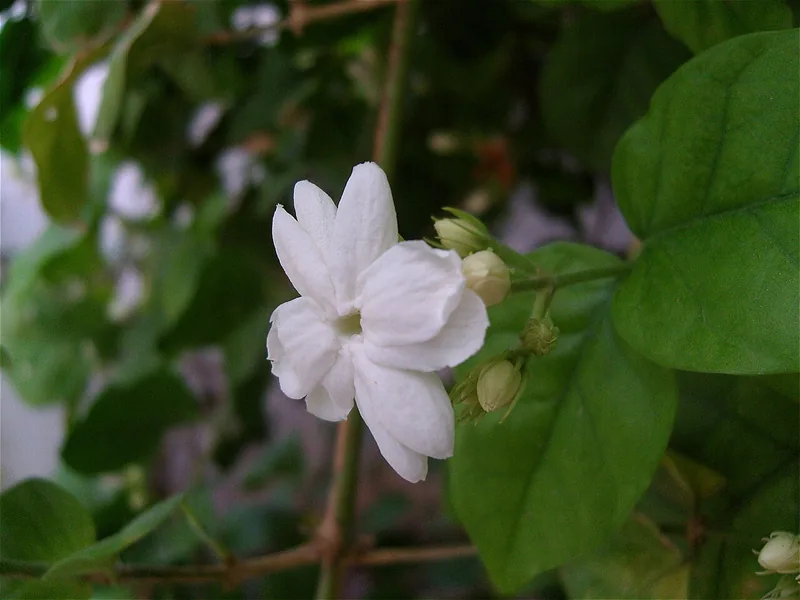
Arabian Jasmine Bonsai Care
Jasminum sambac
1 Arabian Jasmine bonsai in stock, from $54.95 Shipped direct from our nursery partners, with a 48-hour live-arrival guarantee. See the trees
Zones 9 to 11, outdoor. Grown for its scent, and the scent genuinely is remarkable. Most are lost to overwatering.
Oleaceae (olive family) · Tropical evergreen flowering shrub or scrambling vine; tender
Overview & Character
Arabian Jasmine is grown for its scent, and the scent genuinely is remarkable — waxy white flowers that release their perfume most strongly in the evening and early morning. It is the national flower of the Philippines, where it is called sampaguita, and it is the jasmine used to scent tea.
As bonsai it is a scrambling shrub rather than a natural tree form, which means the work is in building and maintaining structure. It flowers on and off through the warm season rather than in one flush, so a healthy plant in good light gives you scent repeatedly rather than for two weeks in spring.
Identification
Foliage: Opposite, simple, glossy dark green leaves, elliptical to ovate, roughly 4–10 cm. Smooth and hairless — this is the key difference from Downy Jasmine.
Growth habit: Shrubby and scrambling; will climb if given support.
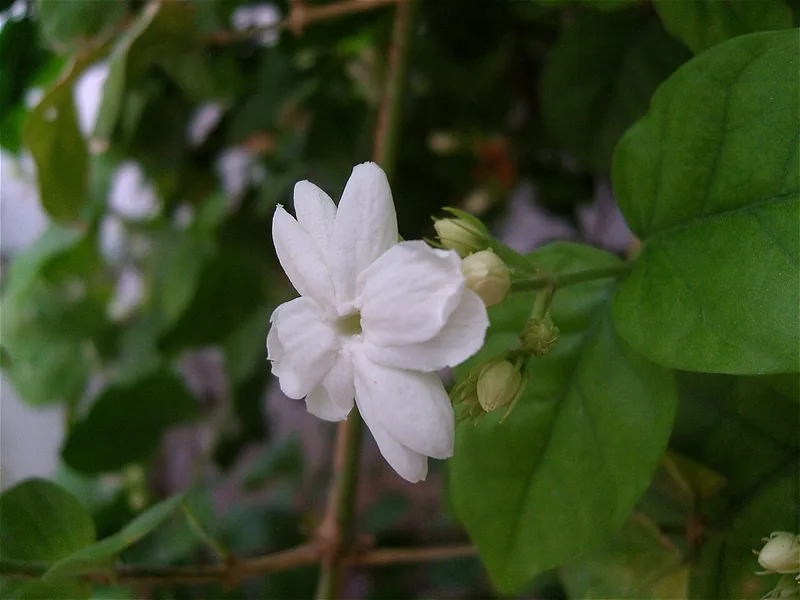
Flowers: White, waxy, intensely fragrant, five to nine petals, in clusters of three to twelve at shoot tips. Continuous in warmth.
Look-alikes:
- J. multiflorum (Downy Jasmine) — soft-hairy grey-green leaves and stems, and near-scentless flowers. If it has no scent and downy leaves, it is not sambac.
- J. nudiflorum (Winter Jasmine) — deciduous, yellow-flowered, hardy. Unmistakable.
- Note that "jasmine" is also used for unrelated and genuinely toxic plants such as Carolina jessamine (Gelsemium). Confirm the genus.
Climate & USDA Zone
Zones 9–11 outdoors year-round. Elsewhere, outdoors in summer and indoors in winter. It wants warmth and humidity — 65–90°F is the comfortable band — and begins to decline below about 55°F. It has no frost tolerance whatever.
Light
Bright light, with four to six hours of direct sun ideally. Morning sun with afternoon shade suits it well in hot climates. Indoors, a south-facing window; in a dim room it will survive and simply not flower, which rather defeats the purpose.
Watering
Let the surface dry slightly, then water thoroughly. Keep it evenly moist without ever letting the mix stay soggy — this species is specifically noted as sensitive to overwatering, and root rot is its commonest cause of death.
Slightly drier conditions actually improve flowering. Underwatering, on the other hand, suppresses it. The target is damp and airy, checked often rather than watered on a schedule.
Soil & Root Care
Well-draining, loamy, slightly acid to neutral. A fast-draining bonsai mix reduces the rot risk considerably. Repot every two to three years in spring, and resist the urge to move it into a much larger pot — it dislikes excess soil volume around its roots, which stays wet and works against it.
Feeding
Feed monthly through the warm growing season with a balanced fertiliser. A high-phosphorus feed supports flowering. Stop or reduce sharply in winter when growth slows and light is short.
Pruning & Styling
Timing matters. Prune to shape immediately after a flowering flush finishes — late summer into early autumn for the main cut. Pruning in late winter risks removing the buds that would have given you the first flush of the year.
Cut just above a node. Through the season, pinch extending shoots to keep the scrambling habit under control and to build structure. Because it flowers repeatedly rather than once, light frequent trimming costs you less than one hard annual cut.
Propagation & Cuttings
Ease: Easy. Best methods: semi-hardwood cuttings; air-layering.
Semi-hardwood stem cuttings root readily in warm humid conditions. Air-layering also works well. Both preserve the parent's form and flowering habit.
Pests
Aphids, spider mites, whiteflies, mealybugs and scale — the full indoor set, and all of them worse in dry heated air over winter. Inspect leaf undersides weekly through the heating season.
Disease, Fungus & Infection
Root rot from overwatering is the dominant problem. Fungal leaf spotting occurs where foliage stays wet with poor air movement. Improve drainage and airflow before reaching for chemicals.
Most Common Causes of Death
1. Overwatering and root rot. The documented number one. This species is specifically noted as sensitive to soggy soil. 2. Cold. Decline below 55°F, death from frost. A close second, and often the finishing blow after a wet winter has weakened the roots. 3. Winter pest collapse. Mites and whitefly in dry indoor air. 4. Poor light. Not usually fatal, but it removes the flowering, which is the entire point of the plant.
Seasonal Calendar
- Spring: Repot if due; resume feeding; outdoors once nights are reliably above 60°F.
- Summer: Bright light, even moisture, monthly feed. Flowering flushes; prune after each.
- Autumn: Main structural prune after the last flush; indoors before nights approach 55°F.
- Winter: Brightest available spot in a warm room, reduced water, little feed. Watch humidity and mites.
Toxicity, Safety & Handling
The ASPCA lists true Jasminum species as non-toxic to dogs, cats and horses. One caution: the common name "jasmine" is attached to several unrelated and genuinely poisonous plants — Carolina jessamine (Gelsemium sempervirens) in particular. That rating applies to the genus Jasminum, not to everything called jasmine.
Close-up photo reference
Compare your tree against these to confirm the species and spot problems early.

Sources
- Jasminum sambac — Missouri Botanical Garden Plant Finder
- Jasmine — ASPCA Toxic and Non-toxic Plants
- Arabian jasmine — Invasive Plant Atlas of the United States
- Jasminum sambac — Wikipedia
Buy a Arabian Jasmine bonsai
- All species
- Shop bonsai trees, tools & supplies
- How to Water a Bonsai (Without Killing It)
- Bonsai Soil: What to Buy, What to Mix, and What It Costs
- Why Bonsai Die After Repotting: Diagnosing a Failed Repot
- Pruning vs. Pinching: Shaping Your Bonsai
- Overwintering Bonsai: Cold-Season Care
- Indoor Bonsai Light and Humidity: Making a Windowsill Actually Work
- Root Rot on bonsai
- Overwatering on bonsai
- Underwatering (Drought Stress) on bonsai
- Winter / Frost Damage on bonsai
- Spider Mites on bonsai
- Downy Jasmine bonsai care
- Natal Plum bonsai care
- Bahama Berry bonsai care
- Barbados Cherry bonsai care