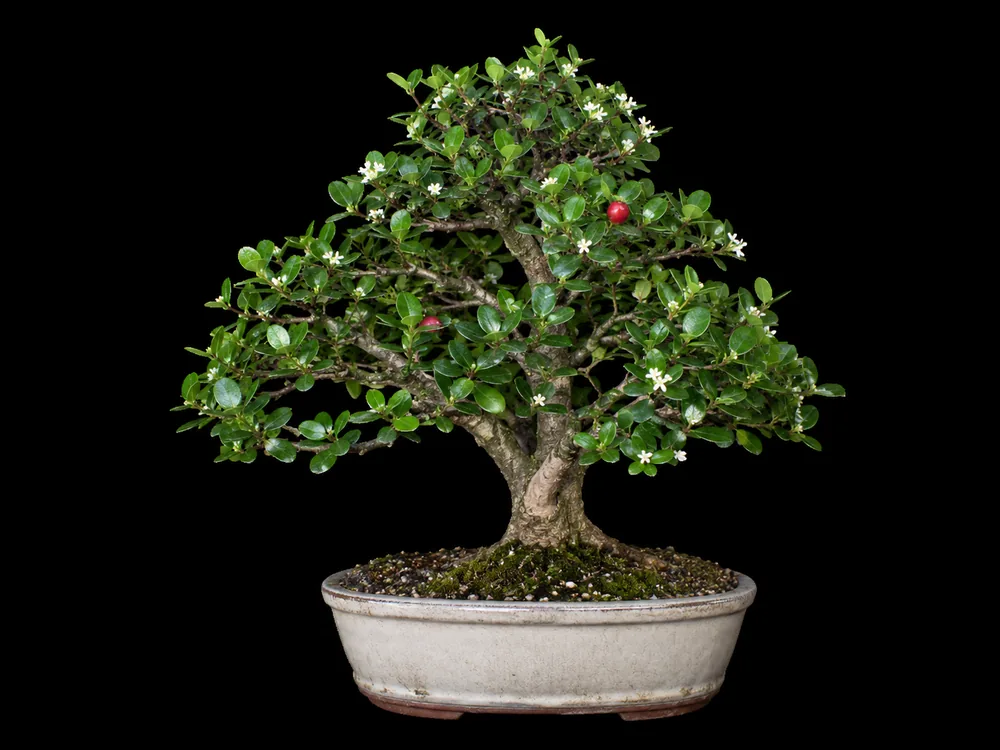
Natal Plum Bonsai Care
Carissa macrocarpa
2 Natal Plum bonsai in stock, from $37.95 Shipped direct from our nursery partners, with a 48-hour live-arrival guarantee. See the trees
Zones 9 to 11, outdoor. Native to coastal southern Africa, the Natal Plum is a tough. Most are lost to overwatering.
Apocynaceae · Tropical/subtropical evergreen flowering & fruiting shrub (tender — indoor in cold climates)
Natal Plum quick reference
| USDA zones | 9–11 (tender; may die back in zone 9 in a cold winter) |
|---|---|
| Indoor / outdoor | Outdoors in warm climates/seasons; bright indoor over winter in cold regions |
| Light | Full sun for best flowering and fruiting; bright light indoors |
| Water | Moderate / dry-leaning — let the soil dry slightly between waterings; drought-tolerant once established; rots if kept soggy |
| Soil | Free-draining bonsai mix (akadama, pumice, bark/grit); tolerates a range of soils, even sandy/coastal |
| Repot | Every 2–3 years; spring/early summer in warmth |
| Frost | Low — protect below ~28–30°F; tender new growth damaged by cold |
| Mature height (as bonsai) | 2-4m wild; 20-45cm as bonsai |
| Growth rate | Moderate; spiny, frost-tender |
| Season of interest | Fragrant white flowers; red edible fruit |
| Leaf reduction | Small glossy leaves reduce well with pruning |
| #1 cause of death | Root rot from overwatering/waterlogging, plus cold damage in winter |
Overview & Character
Native to coastal southern Africa, the Natal Plum is a tough, glossy-leaved evergreen shrub that makes a charming, resilient bonsai — often recommended for beginners. It offers a year-round display: dark, leathery, glossy green leaves; fragrant, pure-white, star-shaped (jasmine-scented) flowers; and bright red, plum-like edible fruit, frequently all present at once. Its dense growth, small leaves, ease of care, and coastal/drought toughness make it forgiving and rewarding.
One distinctive (and hazardous) feature is its forked thorns — sharp, Y-shaped (bifurcate) spines along the stems, so handle and place it carefully. As a tropical it needs warmth and good light, but it asks far less water than many flowering species and actually prefers to dry out a little between drinks.
Identification
FOLIAGE: Opposite, small, oval, thick, leathery, glossy dark-green leaves with a neat waxy sheen; evergreen and dense.
BARK & TRUNK: Pale grey-brown bark; stems exude a milky white sap when cut (typical of the dogbane family, Apocynaceae). Trunks thicken slowly into a sturdy, shrubby form.
GROWTH HABIT / FORM: Dense, twiggy, mounding evergreen shrub; armed with forked (bifurcate, Y-shaped) thorns up to ~3–4 cm. Suits informal upright, shrub/clump, and broom styles; the dense foliage clips well into tight pads.
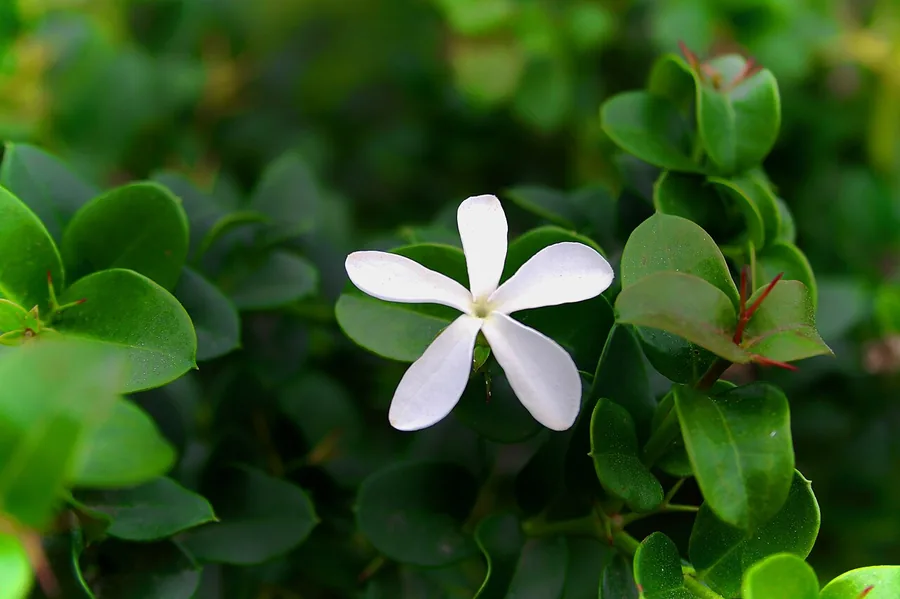
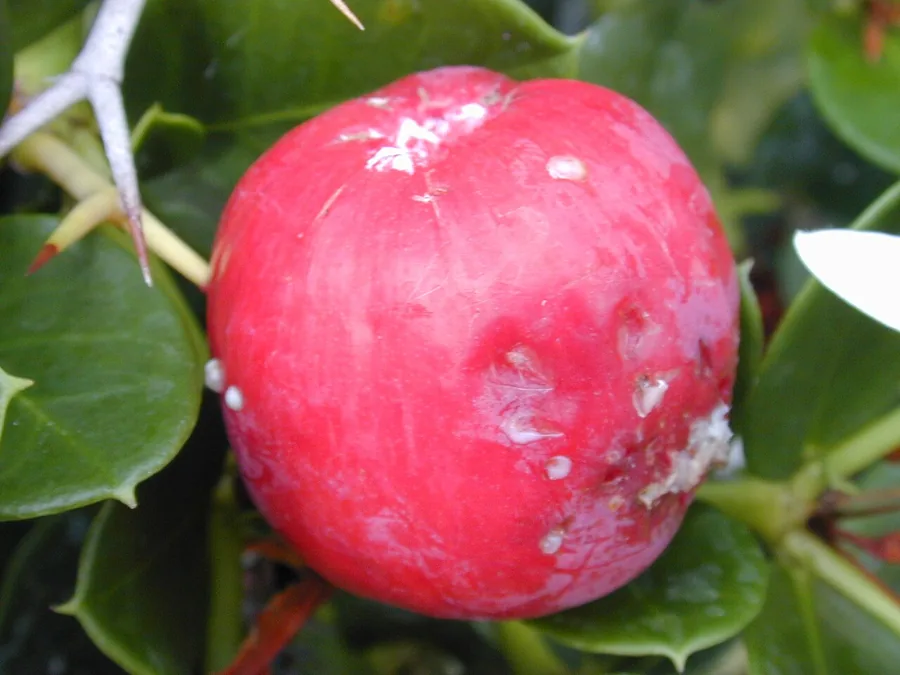
FLOWERS / FRUIT + season: Fragrant, waxy, five-petalled, pure-white, star-shaped flowers (jasmine-scented), produced over a long period in warmth, often nearly year-round. They are followed by oval red, plum-like, edible fruit. Flowers and fruit frequently appear simultaneously. Blooming is most prolific in full sun and warm conditions.
Look-alikes & how to tell them apart: Star jasmine and other glossy white-flowered shrubs lack the stout forked thorns and red plum-like fruit. The combination of forked Y-shaped thorns + milky sap + glossy opposite leaves + fragrant white star flowers + red edible fruit is diagnostic for Natal Plum. (Note: the fruit is edible when ripe, but the leaves and unripe fruit/sap are toxic, as with many Apocynaceae.)
Climate & USDA Zone
Hardy only in USDA zones 9–11, the Natal Plum is tender and may die back to the ground in zone 9 during a hard winter. It thrives in warm, sunny, even coastal conditions and tolerates salt and wind well. In cold climates grow it outdoors through the warm months and overwinter it indoors in a bright spot, keeping it above roughly 28–30°F (-2 to -1°C). Protect tender new growth from cold snaps.
Light
Give it as much light as possible. Full sun outdoors produces the densest growth and the heaviest flowering and fruiting. Indoors, place it at the brightest available window and supplement with a grow light if needed; in low light it grows leggy and flowers poorly.
Watering
This is a moderate, dry-leaning species — the opposite of a bog plant. Water thoroughly, then allow the soil to dry out slightly before watering again. Once established it is notably drought-tolerant, reflecting its tough coastal origins, and it does not tolerate waterlogged soil — soggy roots quickly rot. Increase frequency in hot weather and active growth; reduce markedly in winter when growth slows. When in doubt, err on the drier side.
Soil & Root Care
Use a free-draining bonsai mix (akadama with pumice and grit, or similar); it is adaptable and even handles sandy, lean, coastal soils. Sharp drainage is more important than richness. Repot every 2–3 years in spring or early summer when warmth supports recovery, removing a moderate portion of the roots and refreshing the mix. Wear gloves and take care of the forked thorns and the milky sap when working on the tree.
Feeding
Feed regularly through the warm growing season with a balanced fertilizer to support its long flowering and fruiting period; a slightly higher-potassium feed encourages bloom and fruit. Reduce feeding in winter when growth slows, especially for trees kept in lower indoor light.
Pruning & Styling
Natal Plum responds very well to pruning and clips densely, making it easy to develop tight foliage pads and fine ramification. Trim and pinch new growth through the growing season to maintain shape; it back-buds readily on healthy wood, including older wood, so it tolerates fairly hard cutbacks. Because it flowers over a long season on the dense twiggy growth, light, frequent trimming keeps both form and bloom — avoid one drastic shearing that removes all flower-bearing tips at once. Wire young, flexible shoots; mind the forked thorns and wear gloves, and avoid getting the milky sap on skin or in eyes. Wire does not need to stay on long on vigorous growth.
Propagation & Cuttings
Ease: Moderate. Best methods: cuttings; seed.
Carissa macrocarpa roots from semi-hardwood cuttings in the warm season with hormone under humidity at moderate rates, and air-layers. Fresh seed from the red fruit germinates warm and fairly easily. It has milky sap and spines, so handle carefully. Keep propagation warm/frost-free. For bonsai the glossy leaves, white star flowers, and edible fruit are the draw; cuttings keep dwarf forms true, and the plant back-buds and shears into dense pads.
Pests
Generally pest-resistant, but indoors or when stressed it may attract aphids, mealybugs, spider mites, and scale. Spider mites are most likely in dry indoor air. Treat with insecticidal soap or neem oil, remove scale and mealybugs by hand or with alcohol on a cotton swab, and increase humidity/airflow to discourage mites. Inspect regularly, especially over winter indoors.
Disease, Fungus & Infection
Few serious diseases. The principal risk is root rot from overwatering or poor drainage — by far the most common cause of decline. Fungal leaf spots can appear in stagnant, overly wet conditions; improve airflow and avoid keeping the foliage and soil constantly damp. Keep tools clean and make tidy cuts. Because the plant prefers to dry between waterings, most disease problems are avoided simply by not overwatering.
Most Common Causes of Death
1. Root rot from overwatering / waterlogged soil. The leading killer; this species wants to dry out a bit. Prevention: free-draining mix, let the soil dry slightly between waterings, never let the pot stand in water. 2. Cold / frost damage. Tender; injured below ~28–30°F. Prevention: keep warm, bring indoors before cold nights, protect new growth from cold snaps. 3. Chronic overwatering / staying soggy (short of full rot). Causes yellowing, dark/slimy roots, and slow decline. Prevention: water only when the soil has begun to dry. 4. Insufficient light. Produces leggy, weak, non-flowering growth and invites pests. Prevention: full sun outdoors, brightest window (or grow light) indoors. 5. Dry indoor air over winter (spider mites/leaf drop). A common winter decline indoors. Prevention: raise humidity, keep away from heaters, inspect for mites. 6. Letting it bone-dry repeatedly. Though drought-tolerant, a small bonsai pot can still desiccate fatally. Prevention: check pots in heat; "slightly dry," not "bone dry." 7. Aggressive root work in cool conditions. Slow recovery when cold. Prevention: repot in warm months and provide warm, bright aftercare.
Seasonal Calendar
- Winter (Dec–Feb): Indoors in cold climates — brightest spot, kept warm (above ~28–30°F). Water sparingly, letting soil dry between waterings; little/no feeding. Watch for spider mites and scale.
- Spring (Mar–May): Growth resumes with warmth. Best repotting window. Resume feeding; begin/continue light trimming. Flowering ramps up. Move outdoors once nights are warm.
- Summer (Jun–Aug): Peak growth, heavy flowering and fruiting in full sun. Water thoroughly but let it dry slightly between; feed for bloom/fruit. Trim regularly to keep dense pads. Mind the thorns.
- Autumn (Sep–Oct): Continued flowering/fruiting in warmth. Begin reducing water and feed as temperatures fall. Bring indoors before cold nights.
- Late autumn (Nov): Transition fully indoors in cold climates; acclimate to lower light and reduce watering accordingly.
Close-up photo reference
Compare your tree against these to confirm the species and spot problems early.

.jpg)
Sources
- Bonsai Empire — Natal Plum Bonsai care guide
- Bonsai Tree Gardener — Natal Plum Bonsai Tree Care Guide
- North Carolina Extension Gardener Plant Toolbox — Carissa macrocarpa
- Gardening Know How — Carissa Plant Care / Growing a Natal Plum Bush
Buy a Natal Plum bonsai
- All species
- Shop bonsai trees, tools & supplies
- How to Water a Bonsai (Without Killing It)
- Bonsai Soil: What to Buy, What to Mix, and What It Costs
- Why Bonsai Die After Repotting: Diagnosing a Failed Repot
- Pruning vs. Pinching: Shaping Your Bonsai
- Overwintering Bonsai: Cold-Season Care
- Indoor Bonsai Light and Humidity: Making a Windowsill Actually Work
- Root Rot on bonsai
- Overwatering on bonsai
- Underwatering (Drought Stress) on bonsai
- Winter / Frost Damage on bonsai
- Insufficient Light (Etiolation) on bonsai
- Sea Grape bonsai care
- Bahama Berry bonsai care
- Barbados Cherry bonsai care
- Black Olive bonsai care