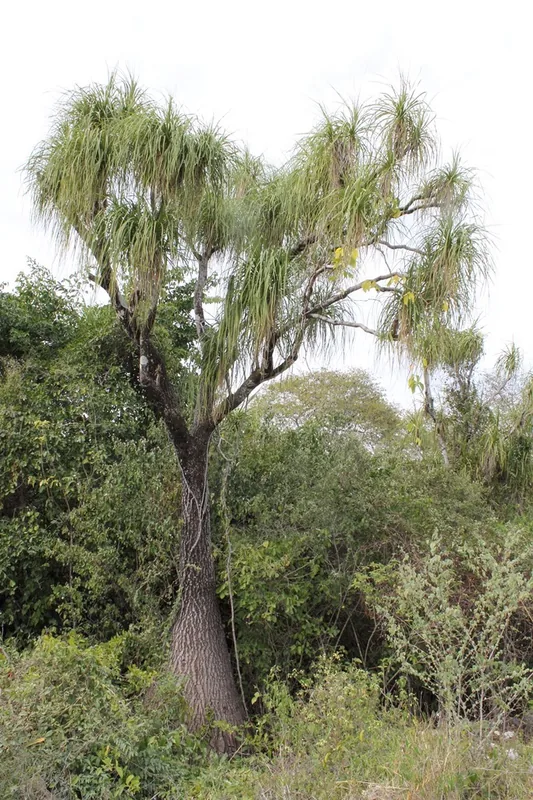
Ponytail Palm Bonsai Care
Beaucarnea recurvata
2 Ponytail Palm bonsai in stock, from $65.95 Shipped direct from our nursery partners, with a 48-hour live-arrival guarantee. See the trees
Zones 10a to 11b, indoor. Not a palm. Most are lost to overwatering.
Asparagaceae (older books: Nolinaceae or Agavaceae) · Succulent caudiciform — not a palm, and not a conventional bonsai subject
Ponytail Palm quick reference
| USDA zones | 10a–11b outdoors year-round; indoors everywhere else |
|---|---|
| Indoor / outdoor | Indoors, with a summer holiday outside once nights are above 50°F |
| Light | The brightest position you have — full sun to bright indirect |
| Water | Let it dry out completely between waterings. The swollen base stores its own water |
| Soil | Fast-draining mineral cactus or succulent mix. Nothing water-retentive |
| Repot | Rarely — every 3 years or more, spring, disturbing the caudex as little as possible |
| Frost | None to speak of. Damage below about 40°F; keep it above that |
| Mature height (as bonsai) | 15–30 ft in the wild in Mexico; 30–90 cm as a container specimen |
| Growth rate | Slow |
| Season of interest | The caudex, year-round. Flowering is rare indoors |
| Leaf reduction | Not applicable — strap-like monocot leaves do not reduce through technique |
| #1 cause of death | Overwatering, rotting the roots and then the caudex itself |
Overview & Character
The Ponytail Palm is not a palm. It is a caudiciform succulent from south-eastern Mexico, a relative of agaves and yuccas, and the swollen grey base that everyone finds charming is a water-storage organ, not a trunk in the woody sense.
It is also not bonsai in the technical sense. There is no branch structure to ramify, no leaf size to reduce, and nothing to wire — the caudex is rigid and the foliage is strap-like monocot leaf. What people call "ponytail palm bonsai" is really a caudex displayed in a shallow pot, sometimes with the swollen base lifted proud of the soil for effect.
Judged on its own terms rather than as bonsai, it is excellent: sculptural, genuinely long-lived, extremely forgiving of neglect, and — unusually for this part of the catalogue — safe around pets. The ASPCA lists it as non-toxic to dogs, cats and horses. If you have animals and you have been reading the sago palm guide with alarm, this is the plant to buy instead.
Identification
Caudex: A bulbous, corky, grey-brown, fissured swelling at soil level. Unmistakable, and the reason to own the plant.
Foliage: One or more slender stems rise from the caudex, each topped with a dense rosette of long, thin, arching, recurved strap-like leaves — the "ponytail".
Flowers: Panicles of small cream flowers on mature outdoor specimens. You are unlikely to see them indoors.
Look-alikes: True palm seedlings, which lack any caudex; other Nolina species, which are close relatives. The bulbous base settles it.
Climate & USDA Zone
Zones 10a–11b outdoors year-round. Everywhere else it is a houseplant that can summer outdoors once nights are reliably above 50°F. Ideal range is 50–85°F. Mature specimens have survived brief dips to around 18°F with foliage burn, but a potted plant should not be tested anywhere near that — keep it above 40°F.
Light
As much light as you can give it. Full sun outdoors in summer; the brightest window in the house through winter. In dim conditions the leaves grow long, floppy and pale and the caudex stops thickening.
Watering
Let it dry out completely, then water thoroughly. This is not the "let the surface dry" advice given for most tropicals — the whole rootball should dry.
The caudex exists precisely because this plant evolved where water arrives seldom. Watering it on a weekly schedule is how most of them die. From November to February, give it a genuine dry rest: water sparingly and infrequently, mimicking the dry season of its native range.
Soil & Root Care
A fast-draining mineral mix — cactus and succulent compost, or a bonsai mix leaning heavily inorganic. Repot every three years or more, in spring. Two specific cautions: disturb the caudex as little as possible, and do not bury the caudex deeper than it sat before, which invites rot at exactly the point you least want it.
Feeding
Very light feeding, spring and summer only. A slow-growing succulent cannot use much, and excess simply builds up as salts in a mineral mix. Nothing in winter.
Pruning & Styling
There is genuinely very little to do.
- The caudex and stems cannot be wired or bent.
- There is no branch structure to develop and no back-budding to induce.
- You can trim damaged or browned leaf tips, and thin the rosette if it is congested.
- The one real "styling" decision is how much of the caudex to expose above the soil line — lifting it over successive repottings, root-over-rock fashion, is what turns a houseplant into a display specimen.
If you came here for bonsai technique, that is the whole list. It is not a failure of the plant; it is simply a different thing.
Propagation & Cuttings
Ease: Slow. Best methods: basal offsets; seed.
Multi-headed plants sometimes produce offsets that can be removed and rooted. Seed works but is slow. Stem cuttings are possible but callus and root reluctantly. In practice, buying is more realistic than propagating.
Pests
Spider mites, mealybugs and scale, all of which favour the tight junctions where leaves meet the stem. Inspect those axils specifically — it is easy to miss an infestation in the middle of a dense rosette until it is well established.
Disease, Fungus & Infection
Root and stem rot from overwatering and poor drainage is the dominant issue by far. Bacterial leaf streak and fungal leaf spot occur in persistently damp, still conditions. Sooty mould follows pest honeydew.
Most Common Causes of Death
1. Overwatering, rotting roots and caudex. Overwhelmingly the commonest cause, and the reason so many ponytail palms are lost in their first winter indoors. 2. A water-retentive potting mix. The same failure with a different root cause; ordinary potting compost is not suitable. 3. Burying the caudex too deep at repotting. Invites rot exactly where the plant cannot recover from it. 4. Cold. Below about 40°F it starts to suffer; frost on a potted plant is fatal.
Seasonal Calendar
- Spring: Repot if genuinely due; growth resumes; light feeding starts; outdoors once nights exceed 50°F.
- Summer: Full sun outdoors, water thoroughly but only when bone dry.
- Autumn: Reduce watering; bring indoors before nights approach 50°F.
- Winter: Bright, dry rest from November to February. Water sparingly. This is the season that kills them.
Toxicity, Safety & Handling
The ASPCA lists the Ponytail Palm as non-toxic to dogs, cats and horses — one of the few genuinely pet-safe species in this part of the catalogue.
Two caveats that are mechanical rather than chemical: the leaves are tough and fibrous, so a pet that chews a mouthful may drool or vomit simply from the fibre; and the leaf tips are sharp enough to scratch an eye at the wrong height.
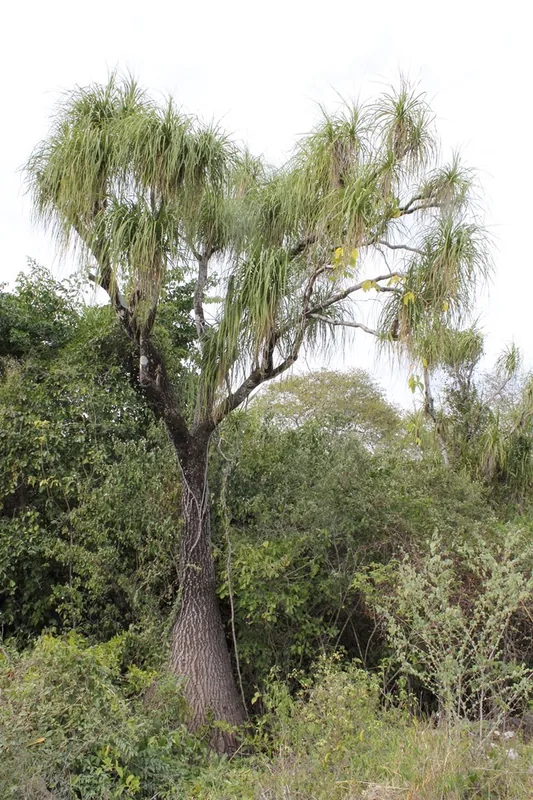
Close-up photo reference
Compare your tree against these to confirm the species and spot problems early.

Sources
- Pony Tail — ASPCA Toxic and Non-toxic Plants
- Beaucarnea recurvata — NC State Extension Gardener Plant Toolbox
- Ponytail Palm houseplant care — New York Botanical Garden
- Beaucarnea recurvata — Missouri Botanical Garden Plant Finder
Buy a Ponytail Palm bonsai
- All species
- Shop bonsai trees, tools & supplies
- How to Water a Bonsai (Without Killing It)
- Bonsai Soil: What to Buy, What to Mix, and What It Costs
- Why Bonsai Die After Repotting: Diagnosing a Failed Repot
- Pruning vs. Pinching: Shaping Your Bonsai
- Overwintering Bonsai: Cold-Season Care
- Indoor Bonsai Light and Humidity: Making a Windowsill Actually Work
- Overwatering on bonsai
- Underwatering (Drought Stress) on bonsai
- Winter / Frost Damage on bonsai
- Spider Mites on bonsai
- Scale Insects on bonsai
- Natal Plum bonsai care
- Buddhist Pine bonsai care
- Gardenia bonsai care
- Glossy Privet bonsai care