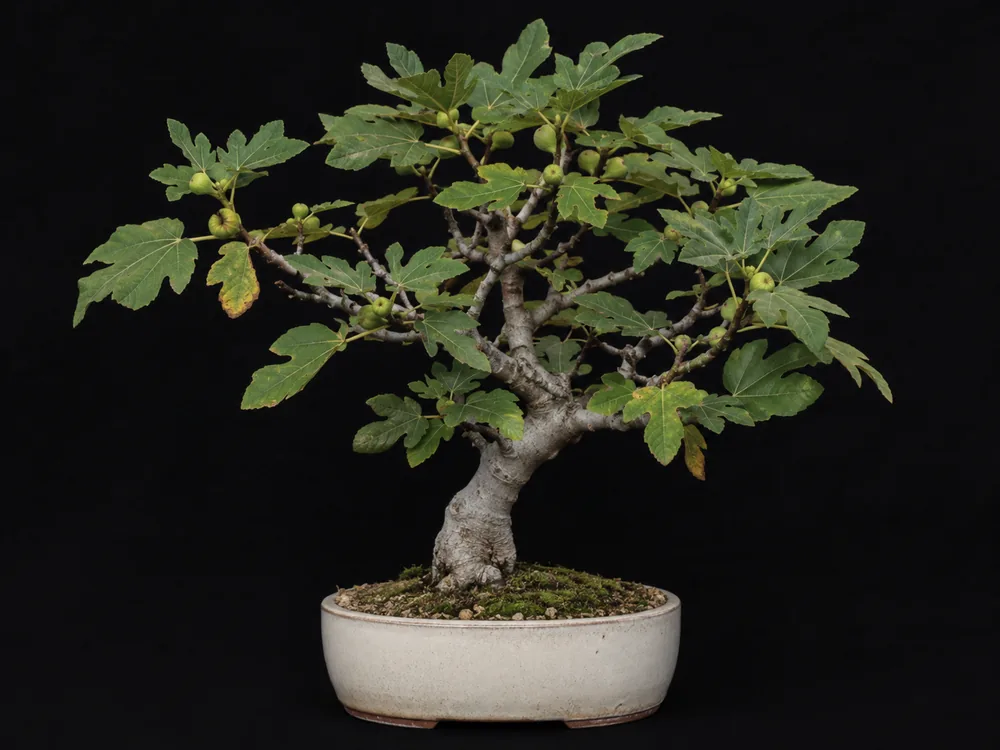
Fig (Common / Edible Fig) Bonsai Care
Ficus carica
Outdoor. The same species that produces the figs we eat, and it makes a rewarding, characterful bonsai. Most are lost to overwatering.
Moraceae (mulberry / fig family) · Deciduous (semi-deciduous in mild climates) broadleaf tree or large shrub; subtropical, native to the Mediterranean and western Asia
Fig (Common / Edible Fig) quick reference
| USDA zones | ~7–10 (frost-tender; damage below about 20°F / -6°C) |
|---|---|
| Indoor / outdoor | Outdoor in the growing season; protect from frost in winter (cool bright indoors/greenhouse). Can be grown indoors with strong light. |
| Light | Full sun — 6–8+ hours for strong trunks, compact leaves and figs |
| Water | Moist — keep evenly moist; somewhat drought-tolerant once established but do not let it dry out, and avoid waterlogging |
| Soil | Free-draining bonsai mix; tolerant of a range of pH |
| Repot | Every 2 years (young) to 3–5 years (older) in spring |
| Frost | Low — roots and shoots damaged by hard frost; must be protected in winter |
| Mature height (as bonsai) | Tree to 10 m; kept 30-70 cm as bonsai |
| Growth rate | Fast |
| Season of interest | Bold foliage, summer fruit, smooth bark |
| Leaf reduction | Limited - large lobed leaves |
| #1 cause of death | Frost/freeze damage (and overwatering/root rot on a poorly drained, cool root system) |
Overview & Character
The common edible fig is the same species that produces the figs we eat, and it makes a rewarding, characterful bonsai. It has handsome smooth grey bark, exudes milky white latex when cut, back-buds strongly and vigorously, and tolerates hard pruning — all qualities that make it forgiving and fast to develop. With age it can form gnarled, characterful trunks and even aerial-root and root-over-rock effects in warm conditions.
The principal challenge is the foliage: Ficus carica has large, boldly lobed leaves that resist reduction, so it is far better suited to medium and large bonsai than to small shohin. The other key consideration is hardiness — unlike the cold-hardy temperate species, the fig is frost-tender and must be protected over winter. Treated well, it is robust, responsive and long-lived.
Identification
FOLIAGE: Large, alternate, simple leaves that are deeply palmately lobed (usually 3–5 lobes), thick and somewhat rough/leathery to the touch, bright green, with a heart-shaped base. Distinctly large for bonsai. The plant is deciduous in cool climates, dropping its leaves in winter. Cutting any part releases a milky white latex (sap) — a hallmark of the fig family.
BARK & TRUNK: Smooth, silvery-grey bark, often with a slightly muscled or knobbly character in older specimens; can develop attractive surface roots.
GROWTH HABIT/FORM: A spreading large shrub or small tree with thick, somewhat irregular branches; vigorous and quick to thicken. Back-buds freely, including on old wood.
FLOWERS/FRUIT/SEEDS: The "fruit" is the fig (syconium) — a fleshy, pear-shaped receptacle that actually encloses the tiny flowers inside; ripens from green to brown/purple. Distinctive and edible.
Look-alikes & how to tell them apart: Other ornamental Ficus used in bonsai — Ficus retusa, F. microcarpa ("ginseng fig"), F. benjamina — have small, smooth, entire (un-lobed), often glossy evergreen leaves and are tender tropicals grown indoors year-round. Ficus carica is set apart by its large, deeply lobed, rough deciduous leaves, the edible figs, and its semi-hardiness. The milky latex confirms it is a Ficus and not, say, a fig-leaf-mimicking maple.
Climate & USDA Zone
Best in USDA zones roughly 7–10. It is a warm-climate species, frost-tender, with damage occurring below about 20°F (-6°C); roots in a pot are particularly vulnerable to deep freezes. In zones 7–8 it usually needs winter protection; in zones 9–10 it can stay outdoors most of the year. It enjoys heat and full sun in summer. It can be grown as an indoor bonsai if given very strong light (a south-facing window or grow lights), though it still benefits from a cooler rest in winter and from being outdoors in the warm months.
Light
Give it as much sun as possible — full sun, 6–8 hours or more daily. Strong light produces sturdy trunks, the most compact possible leaves, and figs. Indoors, the limiting factor is almost always insufficient light; place it at the brightest window or supplement with grow lights, otherwise growth becomes leggy and weak with even larger leaves.
Watering
The fig likes it MOIST, but is more forgiving than the bottomland species. Keep the soil evenly moist through the growing season; water thoroughly when the topsoil begins to dry. It is somewhat drought-tolerant once established, so brief surface drying is tolerated better than by hornbeam or birch — but do not let the rootball dry out, which causes leaf drop. The bigger danger is overwatering, especially in cool weather or indoors with a cool, slow-draining rootball: this rots roots. Reduce watering markedly in winter dormancy/rest, keeping the soil just barely moist. Never let it stand waterlogged.
Soil & Root Care
Use a standard free-draining bonsai mix (akadama, pumice and lava, or an equivalent); the fig is tolerant of a range of pH and is not fussy about soil so long as it drains. It is vigorous and develops strong roots, so it benefits from regular root work. Repot young trees every 2 years and older specimens every 3–5 years in spring as growth resumes and temperatures warm. The fig handles root pruning well. In warm conditions it can be encouraged to produce attractive surface and aerial roots.
Feeding
Feed generously while in active growth — the fig is hungry and vigorous. Begin in spring once growth resumes and continue through summer into early autumn, then taper off. A balanced fertilizer is fine; consistent feeding supports the rapid growth that lets you develop and ramify the tree quickly. Do not feed during winter rest or immediately after repotting.
Pruning & Styling
The fig is one of the most forgiving species for pruning: it back-buds strongly, even on old wood, and tolerates hard cutting, so you can develop structure aggressively. Prune for structure in spring; clip and grow through the season, cutting new shoots back to 1–2 leaves to build branching. Leaf size is the central styling challenge — partial defoliation on healthy, vigorous trees can help reduce leaf size and force smaller secondary leaves, and keeping the tree in strong light and slightly lean keeps leaves smaller. Be aware that every cut weeps milky latex; this is normal — it seals naturally, but keep it off your skin and eyes. Wire younger shoots; thicker branches are best shaped by directional pruning. The species suits root-over-rock and clasping-root styles in warm climates.
Propagation & Cuttings
Ease: Very easy. Best methods: cuttings; air-layering; seed.
Ficus carica roots from hardwood cuttings extremely easily — pencil-thick winter cuttings set in soil take almost every time, and softwood cuttings root in warmth too. Air-layering is quick and reliable for trunk size. Fresh seed from ripe figs germinates warm but seedlings vary and are slow to fruit. Keep tender types frost-protected. For bonsai the big leaves reduce only somewhat, but cuttings and layers build gnarled, characterful trunks fast, and the plant tolerates hard pruning and back-buds strongly.
Pests
- Spider mites — common, especially indoors in dry warm air; stippled, dull leaves and fine webbing. Raise humidity and treat with neem/insecticidal soap.
- Scale insects — bumps on stems and leaf undersides; sticky honeydew. Treat with horticultural oil.
- Aphids — on soft new growth; rinse off or treat.
- Mealybugs — white cottony clusters in leaf axils, common on indoor figs; wipe off and treat.
Disease, Fungus & Infection
- Root rot — the main disease risk, from overwatering and poor drainage in cool conditions; prevent with a free-draining mix and careful winter watering.
- Fig rust — yellow-brown leaf spots leading to early leaf drop in warm, humid conditions; improve airflow, remove affected leaves.
- Sooty mold — black coating growing on the honeydew of sap-feeding pests; control the pests to clear it.
- Botrytis / fungal issues — can appear on figs grown too cool, damp and dark; improve light and ventilation.
Most Common Causes of Death
1. Frost / freeze damage. The fig is frost-tender; a hard freeze, especially to the potted roots, can kill it. Prevention: protect over winter — move to a cool bright frost-free place (greenhouse, garage, indoors) once temperatures drop near freezing; never leave a pot exposed to deep frost. 2. Overwatering / root rot. A cool, wet, slow-draining rootball (common in winter or indoors) rots the roots. Prevention: free-draining soil, water only when needed, cut watering right back in the cool/dormant season. 3. Insufficient light (indoor specimens). Too little light gives weak, leggy growth, oversized leaves and eventual decline. Prevention: brightest possible window or grow lights; move outdoors in the warm months. 4. Letting the rootball dry out completely. Causes leaf drop and stress despite some drought tolerance. Prevention: keep evenly moist in the growing season; don't let it go bone-dry. 5. No winter rest / constant warmth with poor light. A fig kept warm but dim all year weakens over time. Prevention: give it a cooler, brighter winter rest and strong summer light. 6. Pest infestation indoors. Spider mites and mealybugs thrive on stressed indoor figs and can overwhelm a weak tree. Prevention: maintain humidity, inspect regularly, treat early. 7. Sudden environment shock. Abrupt moves between very different light/temperature (e.g. warm bright outdoors to dim cold indoors) cause heavy leaf drop and stress. Prevention: transition gradually between locations.
Seasonal Calendar
- Spring: Once frost danger passes and growth resumes, repot and do structural pruning. Move outdoors into full sun as it warms. Resume feeding and regular watering.
- Summer: Peak growth — full sun, generous water and feeding. Clip-and-grow to build ramification; optional partial defoliation on vigorous trees to reduce leaf size. Figs may form. Watch for mites and scale.
- Autumn: Slow feeding and watering as growth eases. Before the first frost, bring the tree into winter protection. Leaves will yellow and drop in cooler climates.
- Winter: Rest in a cool, bright, frost-free place. Water sparingly — just enough to keep the soil from fully drying. Protect roots from any freezing. Watch indoor specimens for pests and inadequate light.
Close-up photo reference
Compare your tree against these to confirm the species and spot problems early.
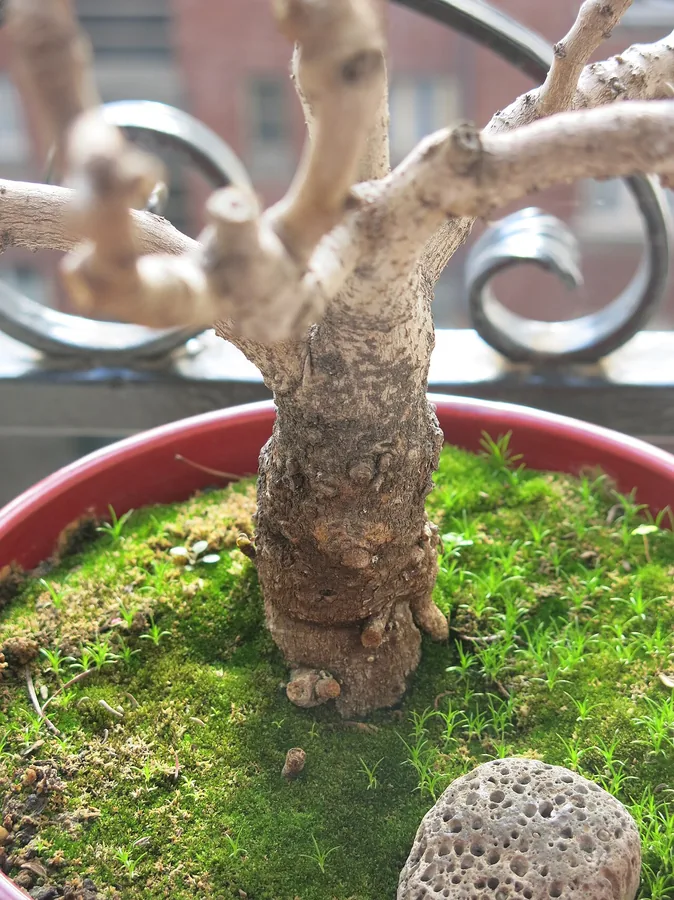

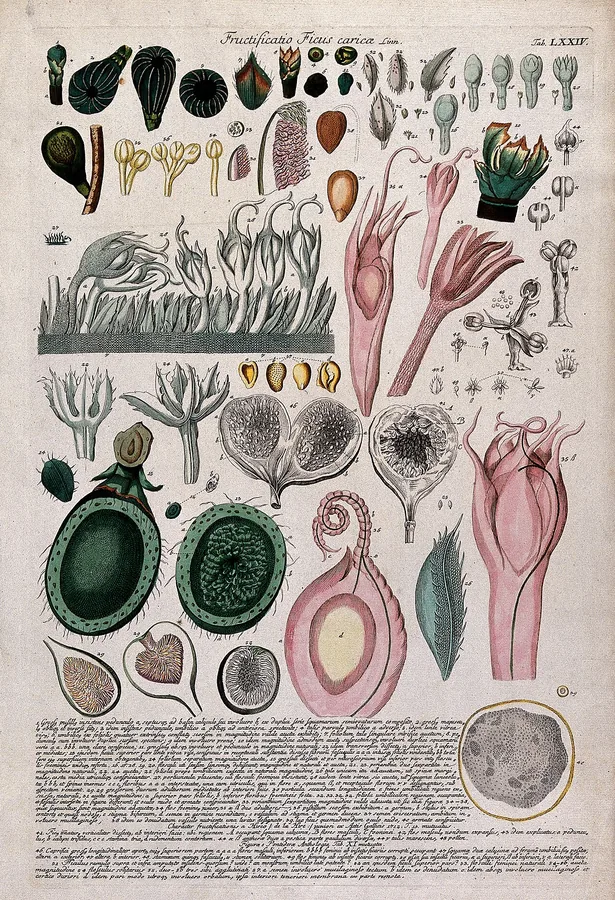
;_57_segments_of_flowers_and_fruits_at_Wellcome_V0043000.jpg)
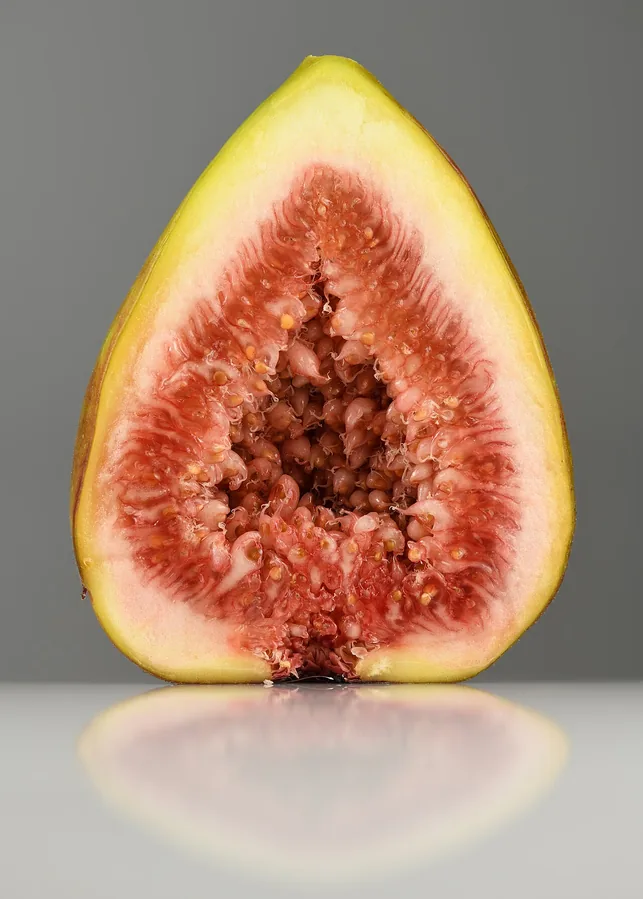
_fruit_halved.jpg)
Sources
- MakeBonsai — Fig Tree Bonsai Care Guide (Ficus carica)
- Bonsai Empire — Ficus bonsai care guide
- Bonsai Outlet — Ficus Bonsai Care Guide
- Wekiva Foliage — How to Grow Ficus carica (Common Fig Tree)
Where to buy a Fig (Common / Edible Fig) bonsai
We don’t stock Fig (Common / Edible Fig) at the moment. These species need similar care and we have them now — they are the closest match in our catalogue.
- Ginseng Ficus — similar care, in stock now
- Mistletoe Fig — similar care, in stock now
- Weeping Fig — similar care, in stock now
Browse all bonsai trees for sale or find a species matched to your climate and space.
- All species
- Shop bonsai trees, tools & supplies
- How to Water a Bonsai (Without Killing It)
- Bonsai Soil: What to Buy, What to Mix, and What It Costs
- Why Bonsai Die After Repotting: Diagnosing a Failed Repot
- Pruning vs. Pinching: Shaping Your Bonsai
- Overwintering Bonsai: Cold-Season Care
- Indoor Bonsai Light and Humidity: Making a Windowsill Actually Work
- Root Rot on bonsai
- Overwatering on bonsai
- Underwatering (Drought Stress) on bonsai
- Winter / Frost Damage on bonsai
- Insufficient Light (Etiolation) on bonsai
- Ginseng Ficus bonsai care
- Mistletoe Fig bonsai care
- Weeping Fig bonsai care
- Willow Leaf Ficus bonsai care