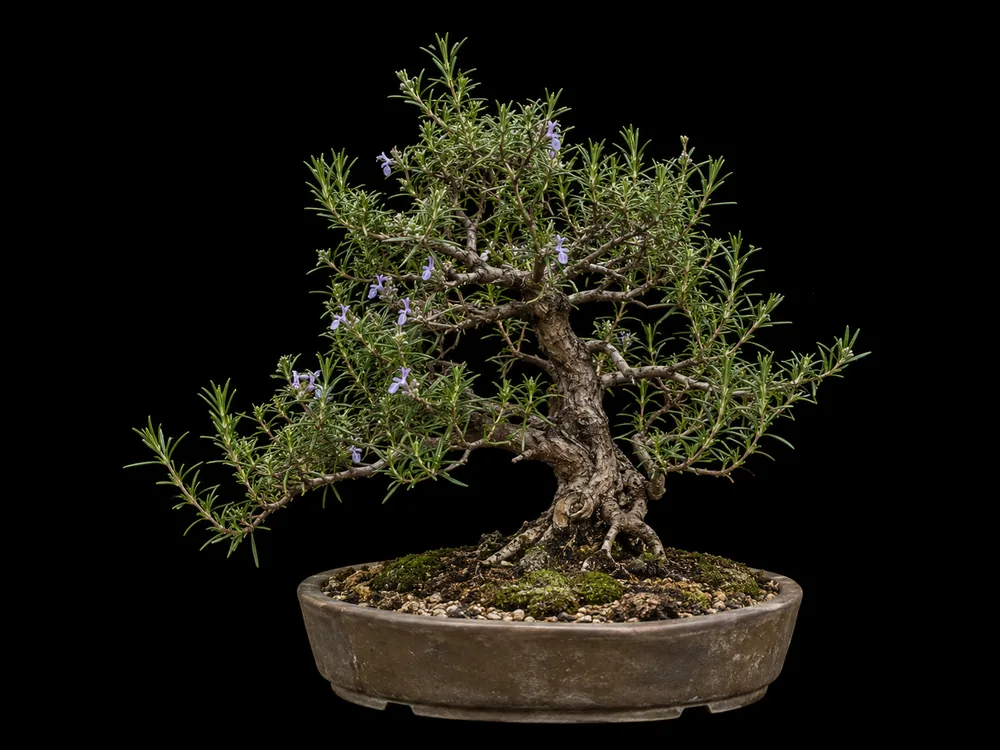
Rosemary Bonsai Care
Salvia rosmarinus
Zones 6 to 10, outdoor. The classic Mediterranean culinary herb, a woody. Most are lost to overwatering.
Lamiaceae (mint family) · Mediterranean evergreen aromatic herb/shrub (tender-ish; outdoor in mild zones, indoor/protected in cold winters)
Rosemary quick reference
| USDA zones | 6–10 depending on cultivar (often treated as 7/8–10 for reliable hardiness; protect in cold winters) |
|---|---|
| Indoor / outdoor | Outdoors in sun in mild climates; indoors at a bright sunny window or in a cold frame/greenhouse over harsh winters |
| Light | Full sun — as much direct light as possible; the brightest spot indoors |
| Water | Dry-leaning (Mediterranean) — water deeply, then let the soil dry out before watering again; rots quickly if kept wet |
| Soil | Sharp-draining, gritty, lean, slightly alkaline-to-neutral mix (lots of grit/pumice; minimal moisture-holding organic matter) |
| Repot | Every 2–3 years; spring; do not over-disturb the roots |
| Frost | Moderate but variable by cultivar; tender new growth and roots in pots are vulnerable — shelter from hard freezes |
| Mature height (as bonsai) | Shrub to 1.5m in nature; bonsai usually 15-40cm. |
| Growth rate | Moderate (woody, aromatic evergreen). |
| Season of interest | Late winter to spring for small blue flowers; year-round foliage. |
| Leaf reduction | Poor; needle-like leaves stay small but reduce little. |
| #1 cause of death | Root rot from overwatering / poorly draining soil (the classic rosemary killer), followed by winter cold damage in pots |
Overview & Character
Rosemary is the classic Mediterranean culinary herb — a woody, aromatic evergreen shrub with fine needle-like leaves and small blue (sometimes white or pink) flowers. As bonsai it is popular for shohin and small sizes: it grows quickly, develops gnarled, characterful trunks and flaky bark surprisingly fast, has tiny in-scale leaves, flowers readily, and fills the bench with fragrance. It is widely available and inexpensive, making it a great beginner subject — with one big caveat.
That caveat is water. Rosemary evolved on rocky, fast-draining, sun-baked Mediterranean hillsides and is extremely intolerant of wet feet. The number-one way people kill rosemary bonsai is overwatering, especially when bringing it indoors for winter. Give it sun, sharp drainage, and a "dry-leaning" watering habit and it is tough and rewarding.
Identification
FOLIAGE: Narrow, needle-like (linear) leaves, leathery, dark green above and paler/grey-felted below, 2–4 cm long, intensely aromatic when brushed (the familiar rosemary scent). Evergreen.
BARK & TRUNK: Stems are woody and become flaky/shredding grey-brown with age, developing rugged character quickly — a key reason it works for bonsai. Trunks gnarl and twist attractively.
GROWTH HABIT / FORM: Upright or trailing/prostrate depending on cultivar; vigorous, twiggy, densely branched. Suits informal upright, literati, cascade (prostrate forms), and shohin styles. Fast-growing for a woody shrub.
FLOWERS / FRUIT + season: Small, two-lipped flowers in blue/lavender (occasionally white or pink), borne in clusters along the stems, mainly in spring (and often again sporadically through the year in mild conditions). No ornamental fruit of note. Flowers form on established stems; light, regular trimming maintains both flowering and form.
Look-alikes & how to tell them apart: Lavender and some conifers can superficially resemble rosemary at a glance, but rosemary's combination of needle-like leaves with grey undersides + unmistakable resinous rosemary fragrance + small two-lipped blue flowers + square-ish mint-family stems is diagnostic. Crushing a leaf settles it instantly: nothing else smells like rosemary.
Climate & USDA Zone
Rosemary is hardy roughly in USDA zones 6–10 depending on the cultivar, though zones 7/8–10 are more reliable; some upright culinary types are hardier than trailing ones. It loves heat, sun, and dry air, and dislikes cold, wet, humid conditions. It generally does not tolerate temperatures much below about 30°F (-1°C) without damage, and a potted bonsai's roots are far more exposed than a garden plant's. In mild climates keep it outdoors in full sun year-round with shelter in cold snaps; in cold-winter climates overwinter it in a bright, cool, airy spot — a cold frame, unheated greenhouse, or a sunny cool window — never in a warm, dim, stuffy room.
Light
Full sun, always — rosemary cannot get too much direct light. Outdoors give it the sunniest position. Indoors it struggles in low light, so use the brightest south-facing window available and add a grow light in winter. Inadequate light causes weak, stretched growth, poor flowering, and makes overwatering damage far more likely.
Watering
This is a dry-loving Mediterranean plant — keep it on the dry side. Water thoroughly so the whole rootball is wetted, then wait until the soil has dried out before watering again. Rosemary is exceptionally sensitive to waterlogged roots and will rot if kept constantly moist. The danger peaks in winter and indoors, where low light and cool temperatures slow water use — overwatering then is the classic killer. Signs of overwatering include yellowing, browning from the inside out, and dark, slimy roots. When unsure, wait — rosemary forgives slight drought far more readily than sogginess. (Note: it dislikes both extremes; a complete prolonged bone-dry in a tiny shohin pot in summer heat can also be fatal, so check often in hot weather.)
Soil & Root Care
Sharp drainage is everything. Use a gritty, lean, free-draining mix dominated by inorganic, non-water-holding material — pumice, akadama, lava, coarse grit — with only a little organic matter; ordinary potting soil holds far too much water for rosemary. A slightly alkaline-to-neutral, somewhat dry-running mix mimics its native rocky hillsides. Repot in spring every 2–3 years, removing a modest amount of root and refreshing the gritty mix; avoid heavy bare-rooting. Keep newly repotted plants on the dry side and well ventilated.
Feeding
Being a fast grower, rosemary appreciates regular but moderate feeding through the growing season with a balanced fertilizer; it is not a heavy feeder and tolerates lean conditions well (consistent with its hillside origins). Reduce or stop feeding in winter when growth slows, especially indoors. Avoid overfeeding with high nitrogen, which produces soft, floppy, disease-prone growth.
Pruning & Styling
Rosemary grows quickly and responds well to regular trimming, making it satisfying to shape — but it can be reluctant to back-bud from old, bare wood, so do not cut back into leafless old wood expecting new shoots; keep some foliage on each branch you intend to keep. Pinch and trim new growth often through the growing season to build ramification and maintain the silhouette; this also encourages flowering on the resulting twiggy growth. The wood becomes stiff and brittle with age, so wire young, flexible shoots and shape early — older branches snap. Light, frequent work beats infrequent hard pruning. Its quick-aging flaky bark and gnarled stems make it ideal for fast-developed shohin.
Propagation & Cuttings
Ease: Easy. Best method: semi-hardwood cuttings.
Salvia rosmarinus (rosemary) roots easily from semi-hardwood cuttings taken in the warm season — strip lower leaves, dip in light hormone, and keep in gritty, barely-moist mix; rooting is quick. It layers where stems touch soil. Seed is slow and erratic and seldom used. Keep on the dry side to avoid rot; it's frost-tender in hard winters. For bonsai the aromatic evergreen foliage, blue flowers, and gnarled stems suit shohin; cuttings build the plant fast, and it back-buds on younger wood (poorly on old bare wood, so don't over-strip).
Pests
Outdoors in good conditions rosemary is fairly pest-free thanks to its aromatic oils. Indoors and on stressed plants the main culprits are spider mites (favored by dry indoor heat — but note overwatering, not dryness, is the bigger killer), aphids on soft tips, mealybugs, scale, and whitefly. Treat with insecticidal soap or neem, rinse aphids off, remove scale/mealybugs by hand, and improve air circulation. Good light and airflow prevent most problems.
Disease, Fungus & Infection
Root rot from overwatering and poor drainage is overwhelmingly the most important disease — it is what kills most rosemary bonsai. In damp, stagnant, crowded conditions rosemary is also prone to powdery mildew (a whitish coating on leaves and stems) and other fungal leaf problems. Prevent both with sharp drainage, dry-leaning watering, full sun, and good air movement; avoid wetting the foliage and never let the pot sit in a saucer of water. Remove any mildewed or dead growth promptly with clean tools.
Most Common Causes of Death
1. Root rot from overwatering / poor drainage. The classic rosemary killer, especially indoors in winter. Prevention: gritty fast-draining mix, water only when the soil has dried, never let the pot stand in water. 2. Wet, cold, stuffy winter conditions. Cool + damp + dim = rot and fungal collapse. Prevention: overwinter bright, cool, and airy; keep it on the dry side; avoid warm dim rooms. 3. Winter cold damage to roots in the pot. Potted roots are far more frost-exposed than garden plants. Prevention: shelter from hard freezes (cold frame, unheated greenhouse) per cultivar hardiness. 4. Insufficient light. Weak, stretched growth that is far more susceptible to rot and pests. Prevention: full sun outdoors; brightest window plus grow light indoors. 5. Cutting back into bare old wood. Rosemary often won't re-shoot from leafless old wood, killing the branch. Prevention: always leave foliage on branches you keep; build structure on young growth. 6. Powdery mildew / fungal leaf disease in stagnant air. Disfigures and weakens the plant. Prevention: good airflow, full sun, dry foliage, sensible watering. 7. Severe drought in a tiny pot during summer heat. Though dry-loving, a shohin can desiccate fatally. Prevention: check small pots frequently in hot weather; "dry between waterings," not "never water."
Seasonal Calendar
- Winter (Dec–Feb): Overwinter bright, cool, and airy (cold frame/unheated greenhouse or sunny cool window). Water very sparingly — this is the highest-risk overwatering season. No feeding. Watch for mildew and spider mites; ensure ventilation.
- Spring (Mar–May): Best repotting window into a gritty mix. Growth and main flowering begin. Resume moderate feeding. Start regular trimming/pinching. Move outdoors to full sun once frost risk passes.
- Summer (Jun–Aug): Vigorous growth in full sun. Water deeply but let the soil dry between waterings; check small pots often in heat. Feed moderately. Trim frequently for ramification; wire young shoots.
- Autumn (Sep–Oct): Growth slows; possible second flush of bloom in mild areas. Reduce watering and feeding as temperatures fall. Prepare winter shelter.
- Late autumn (Nov): Move to winter quarters before hard frost; transition to bright, cool, airy conditions and cut watering right back.
Sources
- Bonsai Resource Center — How to Care for Rosemary Bonsai (Rosmarinus officinalis)
- Bonsai Tree Gardener — Rosemary Bonsai Tree Care Guide
- Bonsai Outlet — Rosemary Bonsai Care
- Greg — Common Rosemary Problems (Salvia rosmarinus)
Where to buy a Rosemary bonsai
We don’t stock Rosemary at the moment. These species need similar care and we have them now — they are the closest match in our catalogue.
- Chinese Elm — similar care, in stock now
- Sea Grape — similar care, in stock now
Browse all bonsai trees for sale or find a species matched to your climate and space.
- All species
- Shop bonsai trees, tools & supplies
- How to Water a Bonsai (Without Killing It)
- Bonsai Soil: What to Buy, What to Mix, and What It Costs
- Why Bonsai Die After Repotting: Diagnosing a Failed Repot
- Pruning vs. Pinching: Shaping Your Bonsai
- Overwintering Bonsai: Cold-Season Care
- Indoor Bonsai Light and Humidity: Making a Windowsill Actually Work
- Root Rot on bonsai
- Overwatering on bonsai
- Underwatering (Drought Stress) on bonsai
- Winter / Frost Damage on bonsai
- Insufficient Light (Etiolation) on bonsai
- Chinese Elm bonsai care
- Gardenia bonsai care
- Sea Grape bonsai care
- Bahama Berry bonsai care