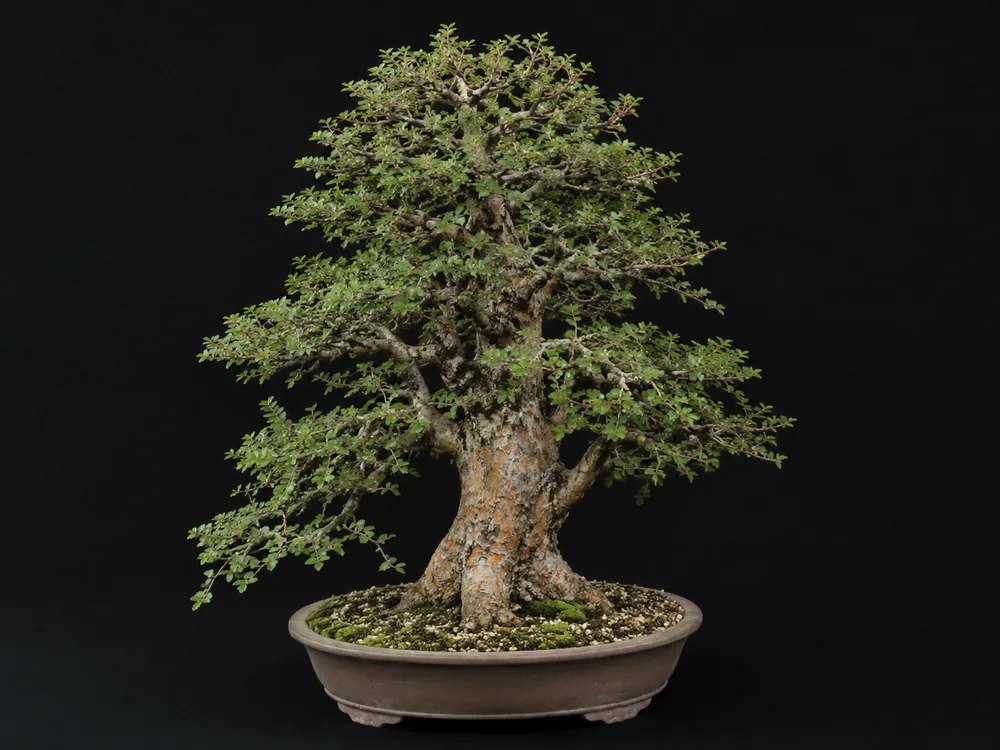
Chinese Elm Bonsai Care
Ulmus parvifolia
6 Chinese Elm bonsai in stock, from $51.95 Shipped direct from our nursery partners, with a 48-hour live-arrival guarantee. See the trees
Zones 4 to 9, outdoor. Widely regarded as one of the best species for beginners and one of the most versatile. Most are lost to overwatering.
Ulmaceae (elm family) · Deciduous to semi-evergreen broadleaf tree; outdoor bonsai (tolerates indoor culture better than most)
Chinese Elm quick reference
| USDA zones | 4–9 (one of the most adaptable elms; resistant to Dutch elm disease) |
|---|---|
| Indoor / outdoor | Outdoor preferred for strongest growth; can adapt indoors with very bright light |
| Light | Full sun outdoors; brightest possible window indoors |
| Water | Let the topsoil dry slightly, then water thoroughly — dislikes both constant wet and prolonged drought. Middle-of-the-road, leaning slightly toward "let dry between waterings." |
| Soil | Free-draining bonsai mix (akadama / pumice / lava); tolerant of a range of soils |
| Repot | Young trees yearly; established trees every 2–3 years, early spring |
| Frost | Hardy; protect container roots in hard freezes, especially trees kept warm/indoors that did not harden off |
| Mature height (as bonsai) | Tree to 18 m; kept 20-60 cm as bonsai |
| Growth rate | Fast |
| Season of interest | Fine ramification, semi-evergreen foliage |
| Leaf reduction | Excellent - reduces to under 1 cm |
| #1 cause of death | Overwatering and root rot (especially indoors) |
Overview & Character
The Chinese elm is widely regarded as one of the best species for beginners and one of the most versatile of all bonsai. It is tough, forgiving, fast-growing and back-buds prolifically, building fine ramification quickly. Small, glossy, serrated leaves reduce well, and mature trees develop attractive mottled, flaking "lacebark." Depending on climate it behaves as fully deciduous, semi-evergreen, or nearly evergreen — in mild conditions or indoors it may hold much of its foliage through winter.
It suits almost every style: informal upright, formal upright, broom, twin-trunk, cascade, group plantings and root-over-rock. Its combination of vigour, ease and refinement is why it is so often the first "serious" bonsai people own — and a tree that experienced growers keep for its quick ramification.
Identification
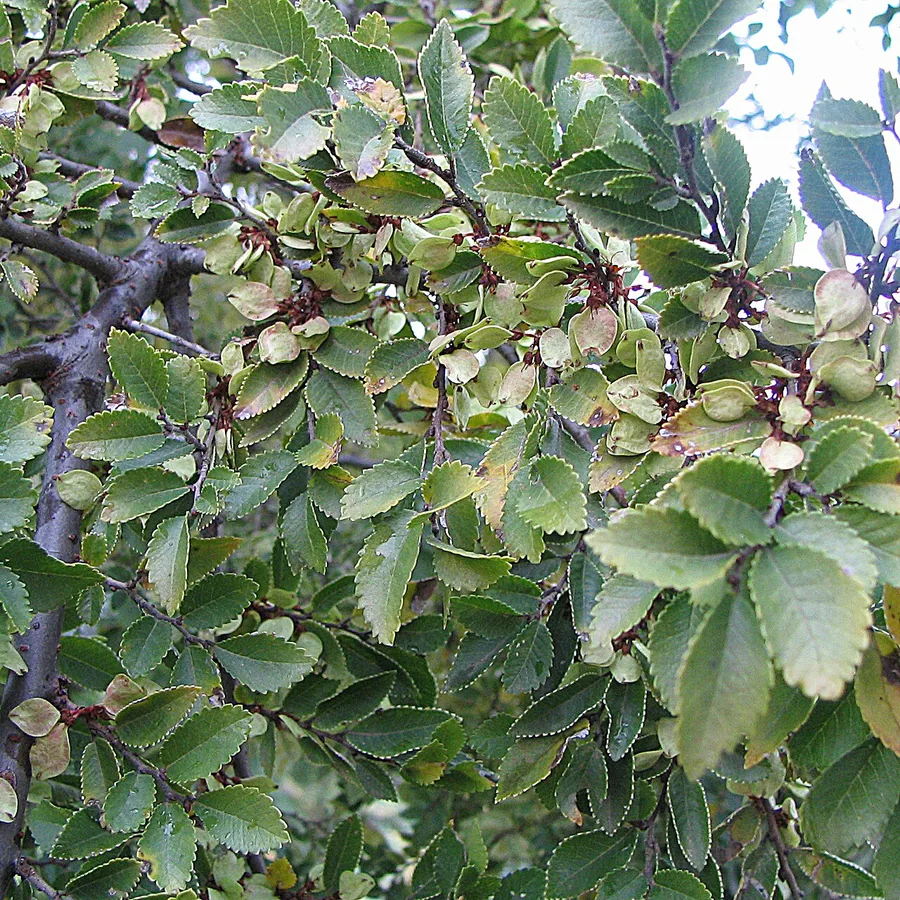
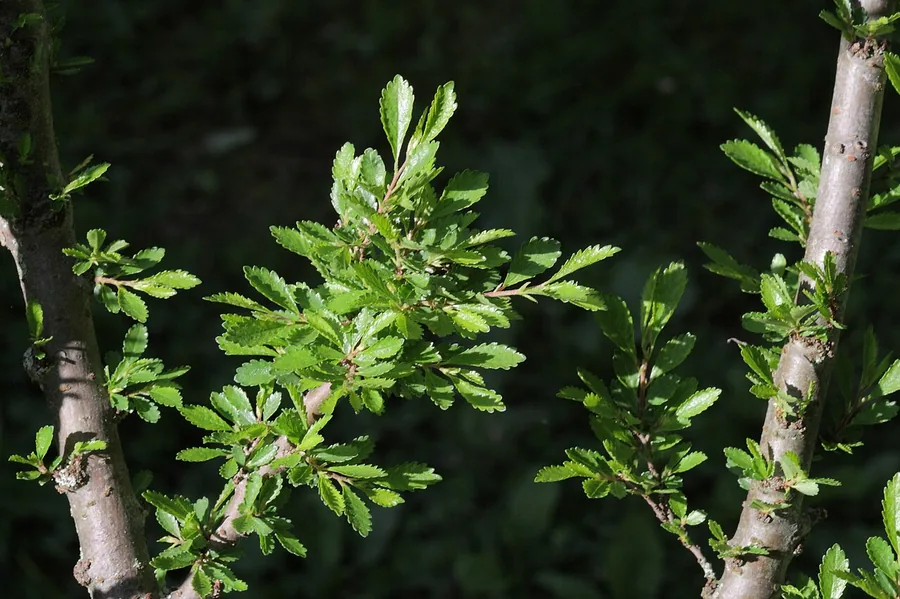
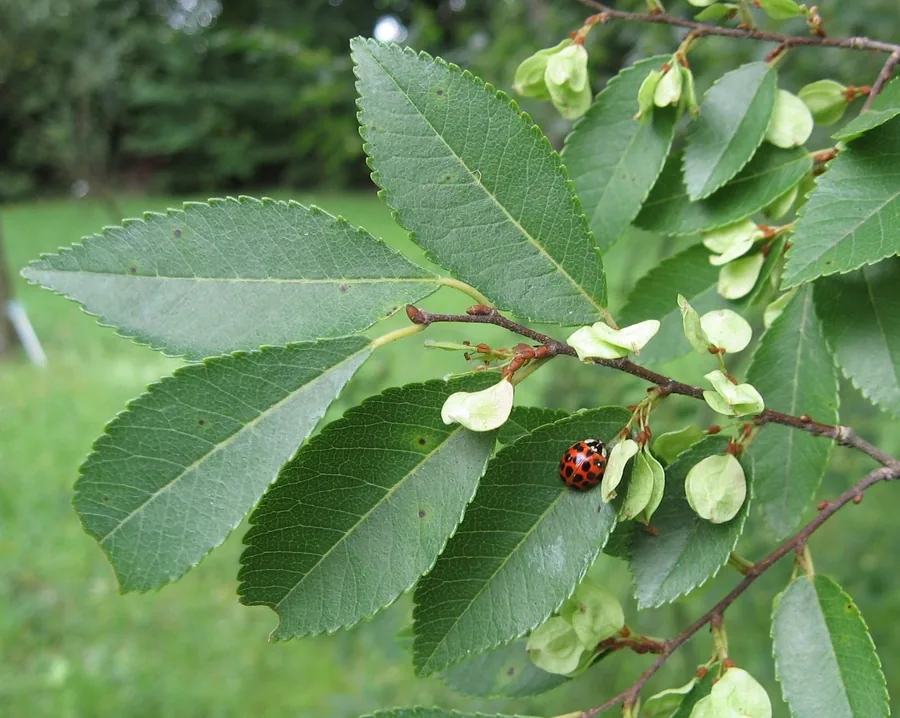
Foliage. Leaves are alternate and simple, small (about 0.75–2.5 in / 2–5 cm), elliptical, leathery and glossy dark green, with a single (simple) serrated margin and — the key elm clue — a conspicuously asymmetric, lopsided (oblique) leaf base where the blade meets the petiole unevenly. Lateral veins run parallel, each ending in a marginal tooth. Behaves deciduous, semi-evergreen or nearly evergreen depending on climate.
Bark & trunk. The signature feature is mottled, flaking "lacebark" — older bark exfoliates in irregular puzzle-piece patches of grey, tan, orange and reddish-brown.
Growth habit / form. A graceful, rounded, often vase-shaped tree that back-buds prolifically and ramifies into fine, dense twigging.
Flowers / fruit / seeds. Inconspicuous flowers in autumn (unusual — most elms flower in spring), followed by small flat winged samaras with the seed centered in the wing.
Look-alikes & how to tell them apart: Often confused with Siberian elm (Ulmus pumila), which has larger, thinner, duller leaves and does not form lacebark; the mottled flaking bark plus autumn flowering separates Chinese elm. Distinguished from zelkova (also Ulmaceae, also oblique-based leaves) by Chinese elm's flaking lacebark and winged samaras — zelkova has smooth non-flaking grey bark and tiny wingless drupe-like fruits, not samaras.
Climate & USDA Zone
Ulmus parvifolia is cold-hardy across USDA zones 4–9, making it one of the most adaptable elms for temperate climates, and it is notably resistant to Dutch elm disease. It is happiest outdoors where it gets strong light and airflow. Unlike most temperate bonsai, it tolerates indoor life reasonably well provided light is bright; however, a tree that has been kept warm and has not hardened off for winter must not then be exposed to sudden hard frost. Outdoor-grown trees should be given a cool dormancy and protected from severe freezes at the roots.
Light
Outdoors, give full sun for compact, vigorous, well-ramified growth. Indoors, place it at the brightest available window (south- or west-facing) and supplement with a grow light if needed — insufficient light indoors causes leggy growth, leaf drop and weakening. The species grows distinctly stronger outdoors.
Watering
The Chinese elm wants a moderate watering regime and tolerates neither extreme: it cannot endure prolonged drought, nor constant saturation. The reliable method is to wait until the topsoil has begun to dry, then water generously so the entire rootball is wetted, and let it approach dryness again before the next watering. It leans slightly toward "let dry between waterings" compared with maples. Overwatering is the single most common problem, particularly indoors where evaporation is slower — root rot follows quickly in soggy soil.
Soil & Root Care
Use a free-draining bonsai mix such as akadama, pumice and lava in roughly equal parts; the species is tolerant and will accept many well-draining substrates. Repot young trees annually and established trees every two to three years in early spring as buds begin to move. Chinese elm produces dense, fibrous roots and tolerates significant root reduction — up to about one third of the rootball can be removed at a healthy repot. Good drainage at the pot base is essential to avoid the waterlogging this species dislikes.
Feeding
Feed regularly from spring through autumn with a balanced fertilizer to support its vigorous growth; the species responds strongly and quickly. Reduce nitrogen on refined trees to keep leaves small and twigging fine. For trees kept actively growing indoors over winter, feed lightly to match the slower growth. Ease off right after repotting.
Pruning & Styling
Chinese elm is a pruning workhorse. It back-buds freely on old and new wood, so hard cuts are well tolerated and reliably produce fresh shoots. Let new shoots extend to several leaves, then cut back to one or two — repeating this through the season builds dense ramification fast. The species can be clip-and-grown to shape with minimal wiring. Where wiring is used, the bark is relatively forgiving but still marks, so monitor and remove wire before it bites in. Partial defoliation on strong trees can be used to reduce leaf size and increase twig density. Seal larger cuts.
Propagation & Cuttings
Ease: Very easy. Best methods: cuttings (all types); seed; root cuttings.
Chinese elm is the classic beginner-friendly cutting subject. Softwood cuttings in spring/summer and hardwood cuttings in winter both root readily with a touch of IBA; even bare hardwood sticks pushed into soil often take. Root cuttings from suckers work well in spring. Seed sown fresh in autumn/spring germinates easily. It air-layers quickly too. For bonsai this means fast development, easy branch replacement, and reliable shohin production — one of the most forgiving species to multiply by any method.
Pests
When humidity is low the Chinese elm is prone to spider mites and scale insects — more than a dozen scale species can attack it, with soft brown (lecanium) scale among the most common, and these can be stubborn to clear over several seasons. Aphids and the occasional caterpillar also appear. Frequent misting/spraying with water deters mites and scale; treat infestations with horticultural oil, insecticidal soap, or for heavy scale, removal of infested twigs plus a systemic insecticide.
Disease, Fungus & Infection
Black spot / anthracnose leaf-spot fungi are the most visible disease, showing as dark spots on the leaves; spores germinate in moist, still conditions, so improve airflow, avoid wetting foliage late in the day, and remove fallen infected leaves. Root rot from overwatering is the most dangerous problem and often the underlying cause of decline. Powdery mildew and sooty mould (following pest honeydew) can also occur. The species' resistance to Dutch elm disease is a notable advantage over other elms.
Most Common Causes of Death
1. Overwatering / root rot. The top killer (especially indoors with low light/poor drainage); let the topsoil dry, then water thoroughly. 2. Poor indoor conditions. It tolerates indoors better than most, but needs the brightest possible spot and good airflow; weak low-light trees decline. 3. Drying out completely. Fine twiggy roots die in a bone-dry pot; don't let it fully dry in summer heat. 4. Winter root freeze. If grown outdoors in cold zones, shelter potted roots from hard freezes. 5. Black spot / scale neglect. Treat leaf fungal spot and scale early; improve airflow.
Seasonal Calendar
- Spring: Repot if due (early); resume feeding; prune to shape — it back-buds readily.
- Summer: Bright light; water when topsoil dries; regular trimming for ramification; watch scale/spider mites.
- Autumn: Taper feeding; outdoor trees may be semi-deciduous to deciduous depending on climate.
- Winter: Cool rest preferred; indoors keep bright and cooler; outdoors protect potted roots.
Close-up photo reference
Compare your tree against these to confirm the species and spot problems early.



Sources
Buy a Chinese Elm bonsai
- Medium Chinese Elm Bonsai, Straight Trunk, 9 Years Old (Ulmus parvifolia) — $51.95
- Small Chinese Seiju Elm Bonsai, 8 Years Old (Ulmus parvifolia) — $54.95
- Small Chinese Elm Curve Trunk Bonsai, Trained, 8 Years Old (Ulmus parvifolia) — $56.95
- Medium Chinese Elm Bonsai, Curved Trunk, 10 Years Old (Ulmus parvifolia) — $85.95
- Chinese Elm On Bonsai, On a Rock Slab, 7 Years Old (Ulmus parvifolia) — $143.95
- Chinese Elm Bonsai, Root Over Rock (Ulmus parvifolia) — $395.00
- All species
- Shop bonsai trees, tools & supplies
- How to Water a Bonsai (Without Killing It)
- Bonsai Soil: What to Buy, What to Mix, and What It Costs
- Why Bonsai Die After Repotting: Diagnosing a Failed Repot
- Pruning vs. Pinching: Shaping Your Bonsai
- Overwintering Bonsai: Cold-Season Care
- Indoor Bonsai Light and Humidity: Making a Windowsill Actually Work
- Root Rot on bonsai
- Overwatering on bonsai
- Underwatering (Drought Stress) on bonsai
- Winter / Frost Damage on bonsai
- Insufficient Light (Etiolation) on bonsai
- American Elm bonsai care
- Cedar Elm bonsai care
- Cotoneaster bonsai care
- Siberian Elm bonsai care