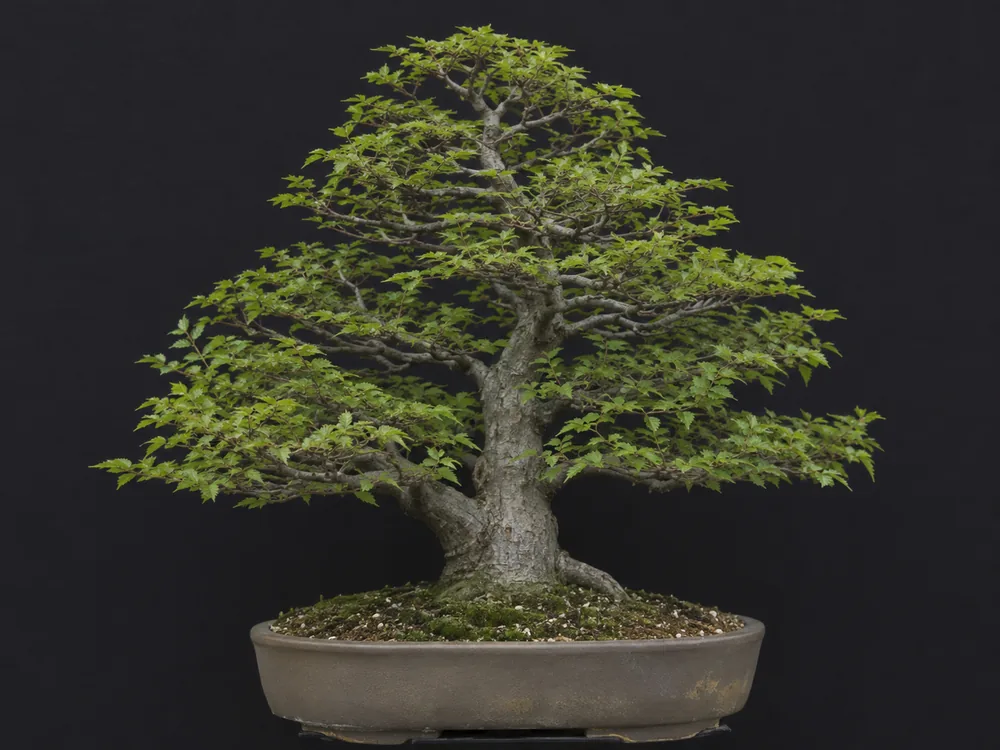
Japanese Zelkova / Gray-bark Elm Bonsai Care
Zelkova serrata
Zones 5 to 8, outdoor only. The Japanese zelkova, or gray-bark elm, is the classic subject for the broom style (hokidachi). Most are lost to drying out.
Ulmaceae (elm family) · Deciduous broadleaf tree; outdoor bonsai
Japanese Zelkova / Gray-bark Elm quick reference
| USDA zones | 5–8 |
|---|---|
| Indoor / outdoor | Outdoor only — requires genuine winter dormancy |
| Light | Full sun for compact growth and good ramification |
| Water | Keep evenly moist — sits on the water-heavy side; do not let it dry out, but avoid sodden soil. Water generously and frequently. |
| Soil | Free-draining bonsai mix (akadama / pumice / lava) |
| Repot | Young trees yearly; established trees every 2–3 years, early spring before bud break |
| Frost | Hardy, but fine branches and roots are damaged below about 23 °F (-5 °C) in a pot — protect in deep cold |
| Mature height (as bonsai) | 30m wild; 30-90cm as broom-style bonsai |
| Growth rate | Fast; classic broom vigor |
| Season of interest | Fine ramified twigs winter; orange-red autumn |
| Leaf reduction | Reduces very well with defoliation and pinching |
| #1 cause of death | Drying out (fatal to fine roots/twigging) and winter root/twig dieback from hard freezes; also root rot from overwatering |
Overview & Character
The Japanese zelkova, or gray-bark elm, is the classic subject for the broom style (hokidachi) — a straight trunk dividing into a fine, fan-shaped crown of countless twigs. It is one of the most elegant deciduous bonsai, prized for its smooth grey bark (which exfoliates to reveal orange-brown beneath on older trees), its delicate serrated leaves, fine ramification, and reddish young shoots. Autumn color runs through yellow, orange and rusty red, and the bare winter silhouette of a well-built broom is one of bonsai's signature images.
While the species is most associated with broom style, it can also be developed as informal or formal upright and in group plantings. Its natural growth habit — strong central rise then fine repeated division — makes the broom almost effortless to encourage.
Identification
Foliage. Leaves are alternate and simple, ovate to oblong, roughly 1–2 in (3–5 cm) long, dark green and slightly rough above, with a slightly oblique (asymmetric) base typical of the elm family and — its key margin trait — regular, sharply pointed (acuminate), single serrations, each tooth fed by a straight parallel lateral vein (usually 8–14 vein pairs). Autumn color runs yellow, orange and rusty red.
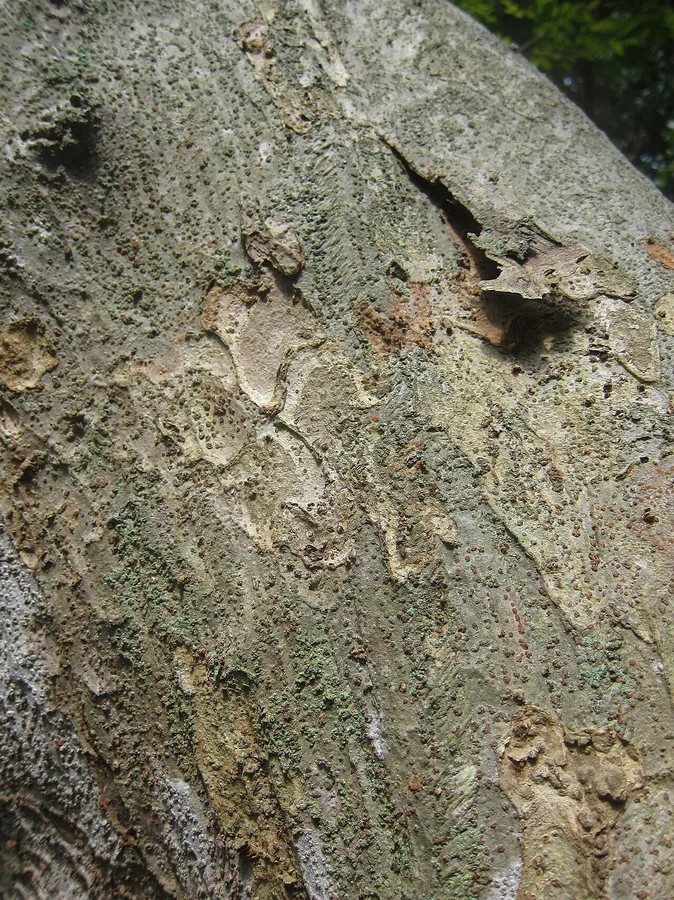
Bark & trunk. Smooth grey bark that, on older trees, exfoliates in small flakes to reveal orange-brown patches; the trunk classically rises straight then divides into a fan.
Growth habit / form. Strongly vase-shaped / broom-like — a single rise dividing repeatedly into a dense, fine, fan-shaped crown (the natural basis for hokidachi broom style).
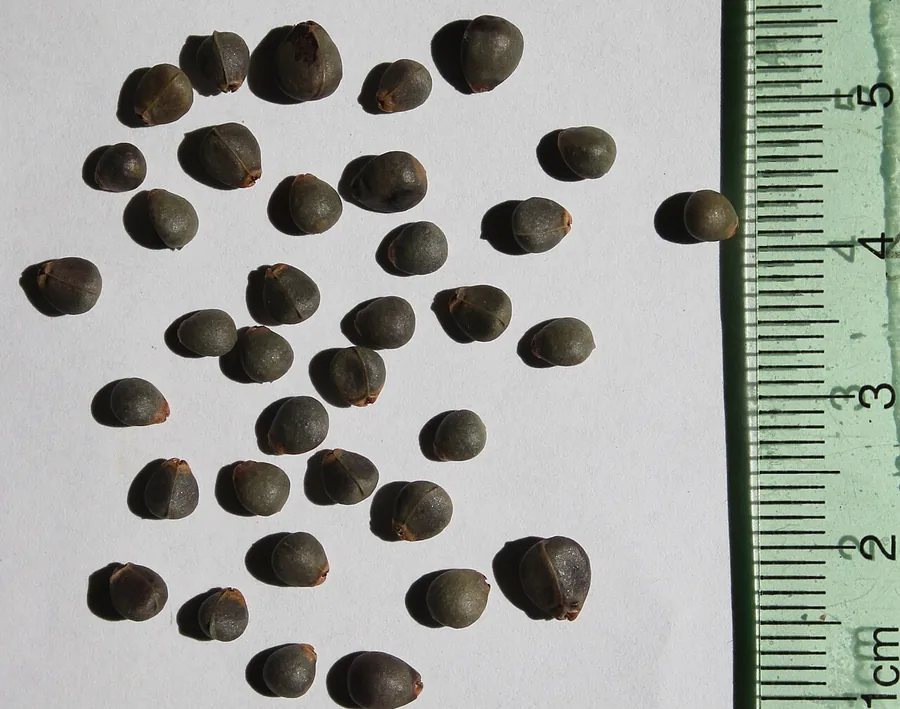
Flowers / fruit / seeds. Small, inconspicuous unisexual spring flowers; fruit is a tiny (~2–3 mm) kidney-shaped, wingless drupe-like nutlet — NOT a winged samara.
Look-alikes & how to tell them apart: Closest to true elms (Ulmus); both share the oblique leaf base and parallel veining, but zelkova has smooth, non-corky grey bark, regular single serrations, and tiny wingless nutlets, whereas elms bear flat winged samaras (and Chinese elm shows mottled flaking lacebark). The neat single-toothed margin and vase/broom habit are the quickest tells.
Climate & USDA Zone
Zelkova serrata is hardy in USDA zones 5–8, suiting much of the temperate United States. It requires a real winter dormancy and must be grown outdoors year-round. As a bonsai its fine branches and exposed roots are more tender than the ground-grown tree: temperatures below roughly 23 °F (-5 °C) can cause dieback in fine twigging and damage roots, so provide protection in a cold frame, unheated greenhouse, or mulched position during hard freezes.
Light
Give full sun. Strong light keeps internodes short, twigging dense and the broom crown well-filled, and supports good autumn color. Only in extreme summer heat is a little shade worthwhile; otherwise maximise exposure.
Watering
The zelkova sits on the water-heavy side of the spectrum and should be kept consistently and evenly moist. It must not be allowed to dry out — the fine roots and twigs that make the broom crown are quickly lost to a dry rootball. Water once a day, and more on hot days. That said, it should not be left sopping wet: the ideal is damp-but-not-saturated soil that is re-watered before it actually dries. Free draining soil and attentive, frequent watering are the balance to strike.
Soil & Root Care
Use a free-draining bonsai mix such as akadama, pumice and lava in roughly equal parts, which holds moisture while still draining freely. Repot young trees yearly and established trees every two to three years in early spring before the buds break. Zelkova produces dense fibrous roots and tolerates substantial root work — up to about one third of the rootball can be removed at a healthy repot. For broom-style trees, even radial root development supports the symmetrical crown above; arrange roots carefully at successive repots.
Feeding
Feed regularly from when the spring leaves harden through to autumn with a balanced fertilizer to drive the vigorous shoot production that fills out a broom. Reduce nitrogen on refined trees to keep leaves small and twigging fine. Stop feeding briefly after repotting and ease off in peak summer heat; a potassium-rich autumn feed helps harden growth before winter.
Pruning & Styling
Building and maintaining ramification is the heart of zelkova work. Allow new shoots to extend to several pairs of leaves, then cut back to one or two pairs; the species divides willingly and rapidly, doubling twig count with each cycle — exactly what the broom style needs. Partial defoliation on strong, healthy trees in early summer reduces leaf size and further increases twig density.
To start a broom, a young trunk is cut flat across the top and the resulting cluster of shoots is selected and repeatedly divided to form the fan. Wire is used sparingly — most shaping is by directional pruning — but where wire is applied, watch closely as the smooth bark marks; remove before it bites in. Seal larger cuts.
Propagation & Cuttings
Ease: Easy. Best methods: seed; cuttings; root cuttings.
Zelkova serrata grows readily from seed — collect in autumn, cold-moist stratify ~2–3 months, and sow in spring; germination is good and seedlings develop the fine twigging suited to broom style. Softwood cuttings root at moderate rates with hormone, and root cuttings work. For bonsai the classic broom form is usually built from seedlings for even radial roots; the species back-buds strongly and ramifies finely, making it a top deciduous bonsai subject.
Pests
Zelkova is comparatively pest-resistant. The main nuisance is spider mites in the dense foliage mass, especially in hot, dry, stagnant air; caterpillars and leaf rollers can deform leaves, and aphids, snails and slugs appear occasionally. Keep airflow through the crown, inspect the interior of dense canopies, and treat early with insecticidal soap, horticultural oil or an appropriate miticide.
Disease, Fungus & Infection
Like other elms, zelkova can suffer leaf-spot fungi, powdery mildew and anthracnose in humid, stagnant conditions, showing as spotted or disfigured foliage. Root rot follows overwatering or poor drainage. The species shows good resistance to Dutch elm disease relative to true elms. Prevention is the usual package: good airflow, free-draining soil, correct watering, clearing fallen infected leaves, and clean tools with sealed cuts.
Most Common Causes of Death
1. Drying out. A heavy transpirer with fine roots; a missed watering in heat causes twig dieback — keep well watered in growth. 2. Winter twig/root freeze. Fine twigs and potted roots are frost-sensitive; shelter the pot and delicate ramification in hard freezes. 3. Overwatering / root rot. Still needs free drainage; avoid constantly soggy soil. 4. Loss of broom structure from bad pruning. Prune to build the classic broom; remove crossing/strong shoots to keep fine even ramification. 5. Indoor keeping. Deciduous and dormancy-dependent — keep outdoors.
Seasonal Calendar
- Spring: Repot if due (early); resume feeding; build broom structure; selective spring pruning.
- Summer: Water generously; trim for fine ramification; partial shade in extreme heat; watch aphids.
- Autumn: Good fall color; taper feeding/water; structural pruning after leaf drop.
- Winter: Dormant; protect fine twigs and potted roots from hard freezes.
Close-up photo reference
Compare your tree against these to confirm the species and spot problems early.


Sources
Growing a Japanese Zelkova / Gray-bark Elm bonsai
We don’t currently stock Japanese Zelkova / Gray-bark Elm trees. If you already have one — or you are sourcing one elsewhere — these are the supplies its care depends on:
- Bonsai Decorative Crushed Shale Top of Soil Dressing — $4.95
- Bonsai Zen Garden Grooming Rake — $8.95
- Metal Impression Tags Package of 4 — $2.95
Browse all bonsai trees, tools and soil or find a species we stock that suits your conditions.
- All species
- Shop bonsai trees, tools & supplies
- How to Water a Bonsai (Without Killing It)
- Bonsai Soil: What to Buy, What to Mix, and What It Costs
- Why Bonsai Die After Repotting: Diagnosing a Failed Repot
- Pruning vs. Pinching: Shaping Your Bonsai
- Overwintering Bonsai: Cold-Season Care
- Indoor Bonsai Light and Humidity: Making a Windowsill Actually Work
- Root Rot on bonsai
- Overwatering on bonsai
- Underwatering (Drought Stress) on bonsai
- Winter / Frost Damage on bonsai
- Powdery Mildew on bonsai
- American Beech bonsai care
- American Elm bonsai care
- American Hornbeam bonsai care
- Amur Maple bonsai care