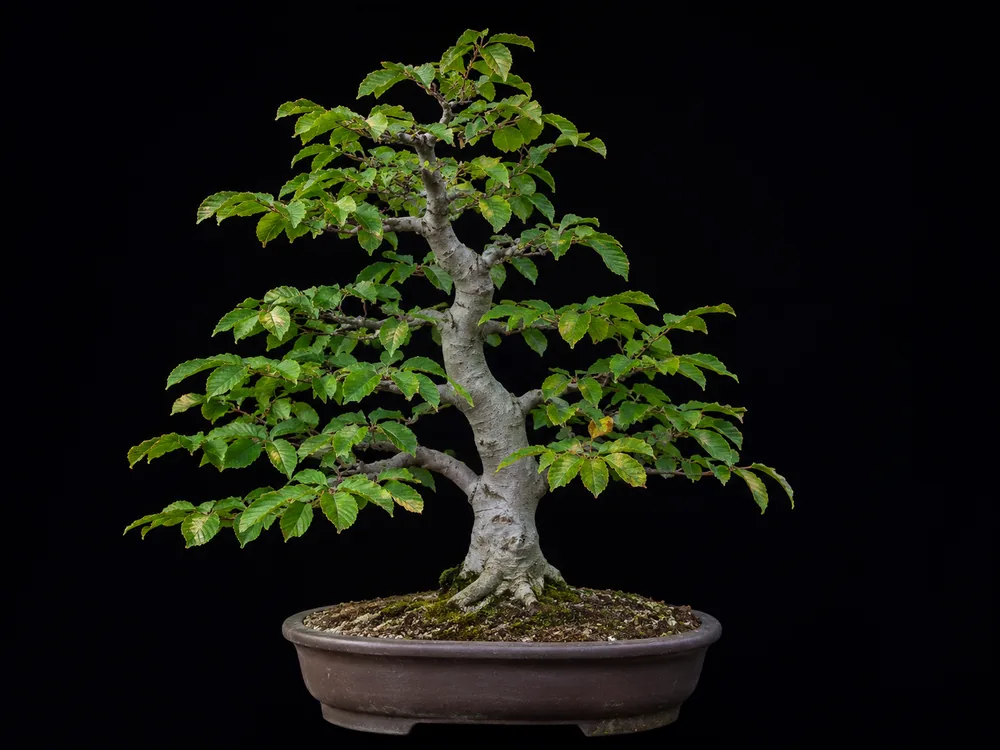
American Beech Bonsai Care
Fagus grandifolia
Zones 3 to 9, outdoor. A stately deciduous tree with smooth grey bark, crisp serrated leaves. Most are lost to drying out.
Fagaceae (beech family) · Deciduous broadleaf tree
American Beech quick reference
| USDA zones | 3–9 |
|---|---|
| Indoor / outdoor | Outdoor (deciduous; needs seasons and dormancy) |
| Light | Full sun in spring; part shade in summer heat |
| Water | Keep slightly moist — not soggy, not dry |
| Soil | Free-draining, moisture-retentive mix |
| Repot | Every 3–5 years, early spring (slow) |
| Frost | Very hardy; protect potted roots in hard freeze |
| Mature height (as bonsai) | Tree to 25 m; kept 30-80 cm as bonsai |
| Growth rate | Slow |
| Season of interest | Golden autumn colour, tan winter leaves held |
| Leaf reduction | Moderate - slow to reduce large leaves |
| #1 cause of death | Drying out / hot-wind leaf shrivel; impatience (very slow) |
Overview & Character
The American Beech is a stately deciduous tree with smooth grey bark, crisp serrated leaves, and the prized beech habit of holding tan, papery marcescent leaves through winter. It makes a refined, classical bonsai but is firmly a tree for the patient and experienced — it is slow, with only a single spring flush of growth, and it resents being rushed.
It wants bright spring light to keep leaves small, summer shade to prevent scorch, steady (not wet) moisture, and minimal fuss. It does not respond well to full defoliation. With time it develops elegant ramification and a beautiful winter image with its retained leaves.
Identification
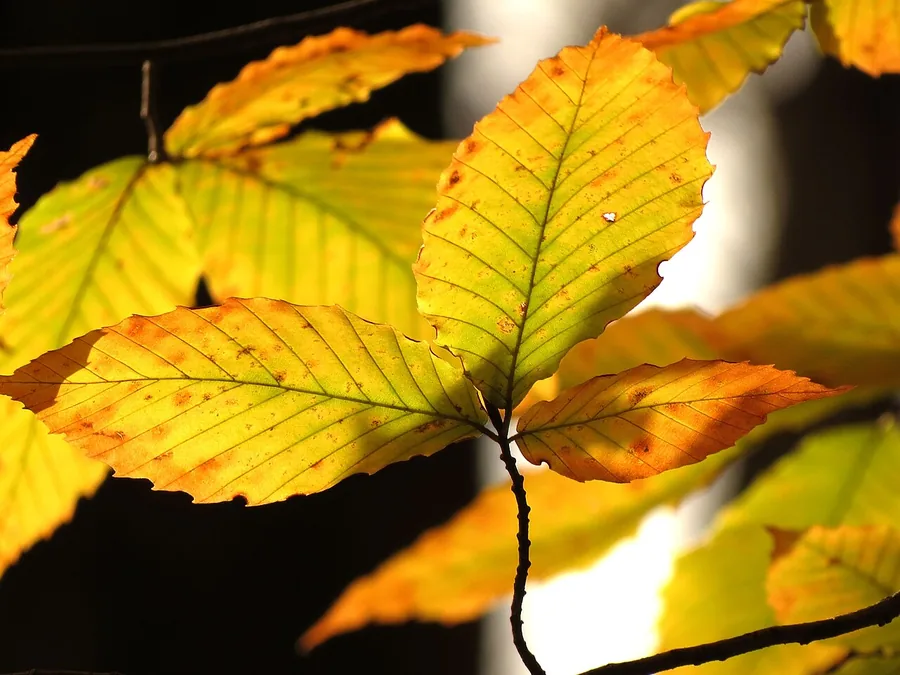
Foliage: Crisp, elliptic leaves ~6–12 cm with a pointed tip, straight parallel veins each ending in a sharp marginal tooth (coarsely serrate), glossy dark green turning golden-bronze in autumn; many leaves persist tan and papery through winter (marcescence).
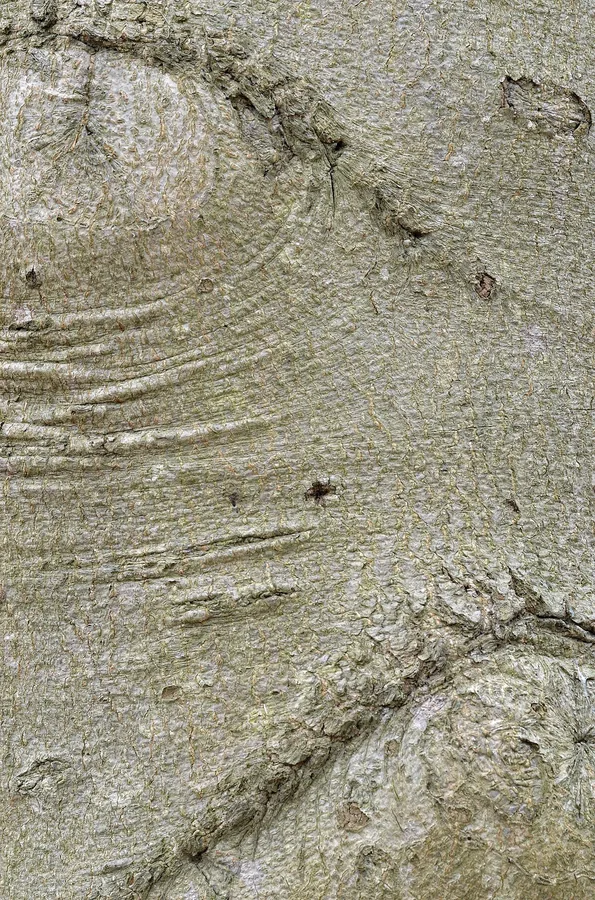
Bark & trunk: Smooth, thin, silvery-grey bark that stays smooth even on old trunks — a hallmark of beech.
Growth habit / form: Upright with a single annual flush, fine eventual twigging, and a refined crown; suits formal/informal upright.
Flowers / fruit: Wind-pollinated; small flowers in spring followed by spiny husks holding triangular beech nuts (rare on bonsai).
Look-alikes & how to tell them apart: Very close to **European Beech (Fagus sylvatica)** — American Beech has longer, more coarsely toothed, thinner leaves with more vein pairs, and is hardier; the prominent marginal teeth on each vein distinguish it from the wavier-edged European Beech.
Climate & USDA Zone
Very hardy in USDA zones 3–9. Deciduous and dormancy-dependent, grown outdoors year-round. Cold-hardy; protect potted roots in hard freezes. It dislikes hot, dry, windy exposure, which shrivels the leaves.
Light
Full sun in spring as new growth emerges (this keeps leaves smaller and growth vigorous), then 30–40% shade through summer to prevent leaf scorch. Shelter from hot, fast wind, which causes leaves to shrivel and drop.
Watering
Keep slightly moist — beech wants neither wet feet nor drying out.
- Check moisture up to twice a day in the growing season; water at least once daily, sometimes twice, keeping it evenly moist but not soggy.
- Drying out (especially with hot wind) shrivels leaves; waterlogging harms the roots.
- Reduce in dormancy but never bone-dry.
Soil & Root Care
Soil: A free-draining, moisture-retentive bonsai mix (akadama / pumice / lava).
Repotting:
- Frequency: every 3–5 years — it is slow; repot only when needed.
- Timing: early spring just as buds begin to swell. Beech tolerates fairly thorough root work (much of the old soil and up to ~half the roots can be reduced) without weakening when done at the right moment.
- Aftercare: shelter, keep slightly moist, resume feeding only once growth restarts.
Feeding
Feed modestly through the growing season; because it is single-flush, build strength steadily rather than forcing growth. Ease off late season. Don't feed freshly repotted or dormant trees.
Pruning & Styling
- Single flush — work conservatively. Let spring shoots extend, then prune back to 1–2 nodes; do not expect a reliable second flush.
- Avoid full defoliation — beech responds poorly, often with unbalanced regrowth and twig dieback. Instead, leaf-cut in roughly May, cutting each outer-canopy leaf in half to admit light and reduce size.
- Wiring: the smooth thin bark marks easily — wire carefully with protection; best in the dormant season.
- Suits formal and informal upright; the winter image with marcescent leaves is a feature.
Propagation & Cuttings
Ease: Difficult from cuttings; easiest from seed. Best methods: seed, then grafting for named forms.
Beech barely roots from cuttings, so seed is the standard route. Collect ripe nuts in autumn, discard any that float, and give them 3 months of cold-moist stratification (in damp sand at ~4 °C / fridge) before spring sowing; germination is uneven. Softwood cuttings taken in early summer under mist with 0.3% IBA rooting hormone occasionally strike but rarely build strong roots. Air-layering is slow and unreliable on beech. Named or weeping selections are usually side-veneer grafted onto seedling understock in late winter. For bonsai, most growers buy seedlings or collect young saplings (yamadori) rather than propagate — beech is prized but very slow, so a head start matters.
Pests
- Beech woolly aphid (woolly white sap-suckers)
- Scale insects
- Aphids on new growth
- Caterpillars chewing foliage
Treat with horticultural oil, insecticidal soap, or appropriate systemics; catch infestations early.
Disease, Fungus & Infection
Generally healthy but slow to recover from stress:
- Leaf scorch / shrivel — from hot wind and drying; the most common problem (cultural).
- Powdery mildew / leaf spot — in damp, stagnant conditions; improve airflow.
- Root rot — from waterlogging.
- Beech bark disease (scale + Neonectria fungus) — a landscape issue; keep trees vigorous and scale-free.
Prevention: spring sun then summer shade, shelter from wind, even moisture, airflow.
Most Common Causes of Death
1. Drying out / hot-wind leaf shrivel. Keep evenly moist and shelter from wind and harsh summer sun. 2. Impatience / over-working a very slow, single-flush tree. Don't defoliate hard or stack heavy work; let it build slowly. 3. Waterlogging / root rot. Keep moist but well-drained. 4. Sun scorch in midsummer. Provide 30–40% shade in heat. 5. Unprotected potted roots in severe freezes. Very hardy, but shelter the pot.
Seasonal Calendar
- Spring: Repot if due (as buds swell); full sun for the single flush; begin feeding; keep moist.
- Summer: 30–40% shade; even moisture (check twice daily); leaf-cut (~May) instead of defoliating; shelter from wind.
- Autumn: Golden-bronze color; taper feeding/water as it goes dormant.
- Winter: Dormant; tan leaves often persist (winter feature); structural pruning; protect potted roots; keep just-moist.
Close-up photo reference
Compare your tree against these to confirm the species and spot problems early.


Sources
Where to buy a American Beech bonsai
We don’t stock American Beech at the moment. These species need similar care and we have them now — they are the closest match in our catalogue.
- Japanese Blue Beech — similar care, in stock now
Browse all bonsai trees for sale or find a species matched to your climate and space.
- All species
- Shop bonsai trees, tools & supplies
- How to Water a Bonsai (Without Killing It)
- Bonsai Soil: What to Buy, What to Mix, and What It Costs
- Why Bonsai Die After Repotting: Diagnosing a Failed Repot
- Pruning vs. Pinching: Shaping Your Bonsai
- Overwintering Bonsai: Cold-Season Care
- Indoor Bonsai Light and Humidity: Making a Windowsill Actually Work
- Root Rot on bonsai
- Underwatering (Drought Stress) on bonsai
- Winter / Frost Damage on bonsai
- Leaf Scorch / Sunburn on bonsai
- Powdery Mildew on bonsai
- European Beech bonsai care
- Japanese Blue Beech bonsai care
- Amur Maple bonsai care
- Beautyberry bonsai care