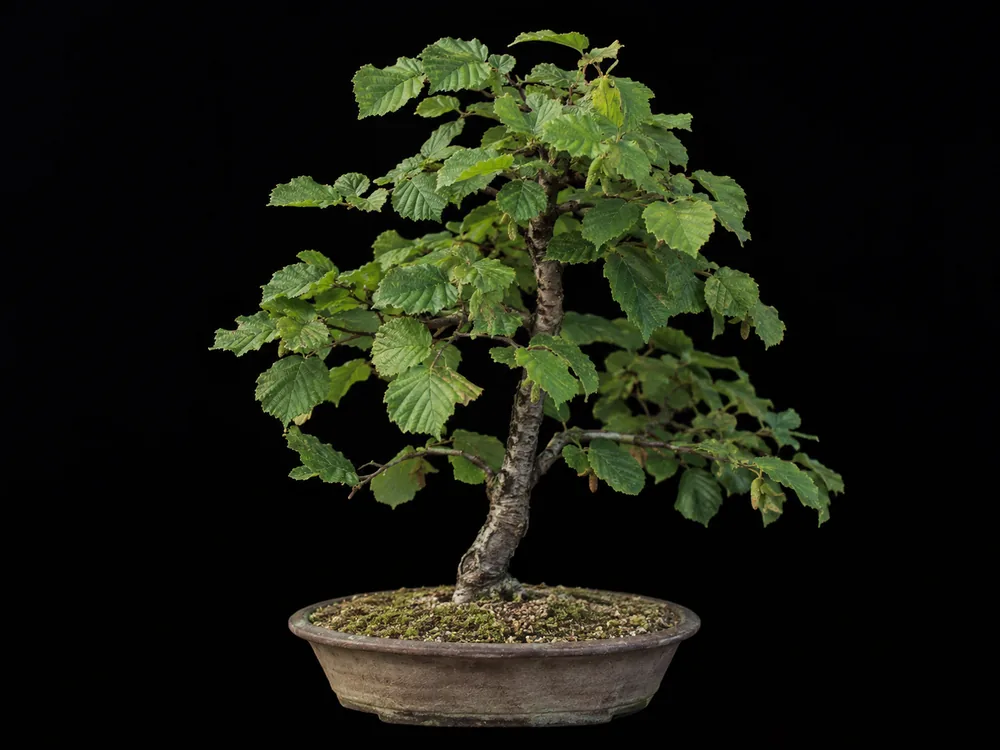
Common Hazel Bonsai Care
Corylus avellana
Zones 4 to 8, outdoor. A familiar woodland and hedgerow tree that brings distinct seasonal drama to a bonsai bench. Most are lost to drying out.
Betulaceae (birch family) · Deciduous broadleaf tree / large multi-stemmed shrub
Common Hazel quick reference
| USDA zones | 4 to 8 |
|---|---|
| Indoor / outdoor | Outdoor-only: a hardy temperate tree needing full winter dormancy |
| Light | Full sun to partial shade: tolerates shade but is denser and catkins better in sun |
| Water | Moisture-loving: likes consistently moist, never dried-out soil |
| Soil | Free-draining but moisture-retentive loam-based mix; lime-tolerant |
| Repot | Every 2 to 3 years, in early spring before buds break |
| Frost | Very hardy; wood survives well below −25 °C (−13 °F) |
| Mature height | Shrub/tree to 8 m; kept 25-60 cm as bonsai |
| Growth rate | Fast |
| Season of interest | Winter catkins, yellow autumn color |
| Leaf reduction | Limited - naturally large leaves |
| #1 cause of death | Letting the rootball dry out: hazel resents drought in a pot |
Overview & Character
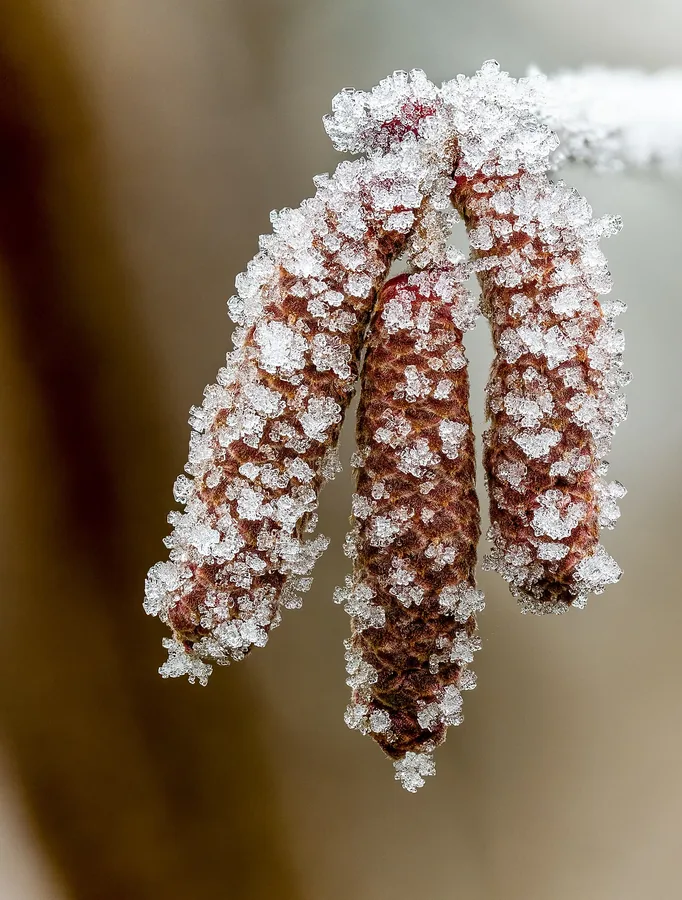
Common hazel is a familiar woodland and hedgerow tree that brings distinct seasonal drama to a bonsai bench. In late winter it hangs pale-yellow "lamb's tail" catkins, the male flowers, from bare twigs long before the leaves, while the tiny crimson-tufted female flowers wait to be pollinated on the same shoots. Then come rounded, soft, doubly-toothed leaves that turn clear yellow in autumn, and in good years the well-loved cobnuts. Its readiness to sucker and form multiple stems makes it a natural for clump, multi-trunk, and informal woodland-style plantings, and old collected hazel stools develop wonderfully rugged, muscular bases.
The care keys are straightforward for a hardy deciduous species: it is thoroughly frost-tolerant, wants steady moisture (it genuinely dislikes drying out), and back-buds well so it takes to pruning and ramification. Its two watch-points as bonsai are leaf size: the leaves are naturally fairly large and want defoliation or hard pruning to reduce, and its vigorous suckering, which must be managed to keep a clean design.
Identification
Foliage: Rounded to broadly ovate leaves, 5 to 12 cm, softly hairy, with a doubly-serrated margin and a short pointed tip; fresh mid-green, turning yellow in autumn. New growth is slightly sticky-hairy.
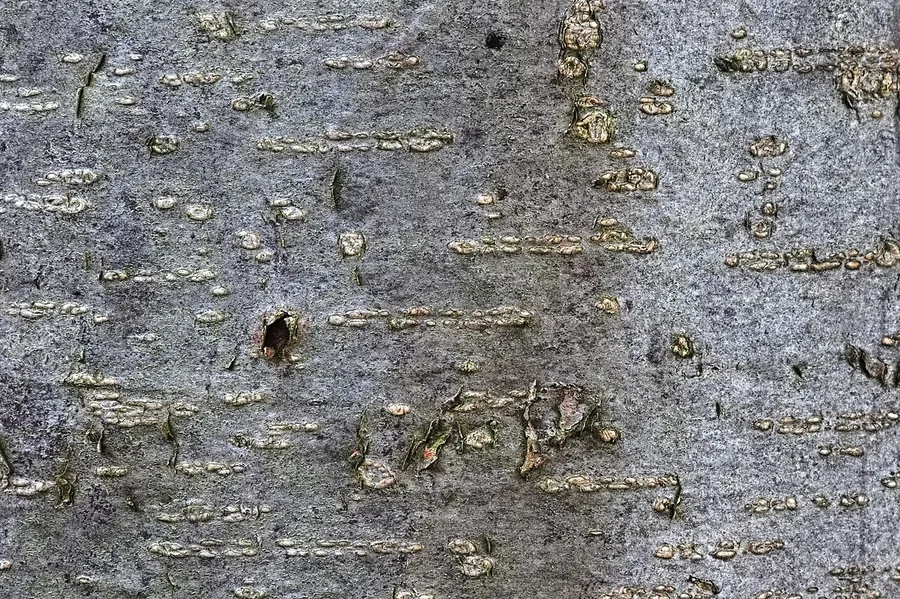
Bark & trunk: Smooth, shiny gray-brown bark marked with pale horizontal lenticels when young, becoming more textured and slightly peeling with age. Naturally multi-stemmed from the base.
Growth habit / form: A suckering large shrub or small tree, 3 to 8 m, typically forming a broad clump of arching stems; twiggy and dense, back-budding freely on old wood.
Flowers / fruit: Monoecious, flowering in late winter: long pendulous yellow male catkins and tiny bud-like female flowers with red styles on the same plant. Fruit is the hazelnut/cobnut, held in a leafy green involucre (husk), ripening in autumn.
Look-alikes & how to tell them apart: Most easily confused with **hornbeam (Carpinus betulus), whose leaves are more clearly ribbed and neatly pleated, whose bark is smooth gray and often fluted, and which bears winged seed clusters rather than nuts. Hazel's soft, rounded, doubly-toothed leaves, its early yellow catkins, and its husked nuts distinguish it. It can also resemble young alder (Alnus)**, but alder has small woody cone-like fruit and blunter leaves.
Climate & USDA Zone
Common hazel is a cold-hardy temperate species suited to USDA zones 4 to 8. It is very frost-tolerant, with wood surviving hard winters well below −25 °C (−13 °F), and it needs a genuine cold dormancy each year. Because catkins form in late winter, an exceptional late freeze can damage them and cost a nut crop, but not the tree. It must live outdoors year-round and will not thrive as an indoor plant. In colder zones give the container some winter protection: mulch or plunge the pot, or shelter it in an unheated cold frame, to shield the more-exposed potted roots while keeping the tree cold and dormant.
Light
Grow hazel in full sun to partial shade; it tolerates more shade than many bonsai species but is denser, produces more catkins, and colors better in full sun. In deep shade it becomes leggy with sparse twigging. A position with good morning sun and some relief from the fiercest afternoon heat suits it well, especially given its dislike of drying out.
Watering
Keep hazel consistently moist through the growing season; it is a moisture-loving species that hates drying out in a pot.
- Water freely and often from bud-break through summer; the soft leaves wilt quickly if the rootball dries.
- Do not let the soil dry out fully between waterings, though the mix should still drain freely.
- Reduce watering in autumn as the leaves color and drop, keeping the soil just moist over winter.
- In hot, windy weather check more than once a day; hazel transpires heavily and drought stress shows fast.
Soil & Root Care
Soil: A free-draining but moisture-retentive, loam-based mix: akadama with pumice and an organic component (composted bark or a little loam) holds the steady moisture hazel likes. It is lime-tolerant and unfussy about pH.
Repotting:
- Repot every 2 to 3 years while building the tree; established specimens can go a little longer.
- Timing: early spring, just before or as the buds begin to move, before the leaves open.
- Root-work tolerance is good; hazel is fairly forgiving of root pruning for a deciduous tree; remove up to about a third of the roots and cut back suckering roots that crowd the pot.
- Aftercare: keep moist and sheltered from strong wind, out of harsh sun, and resume feeding after a few weeks once new growth appears.
Feeding
Feed generously from leaf-out through summer with a balanced fertilizer to support the vigorous growth and, if you want nuts, flower-bud development. Ease off nitrogen in late summer so the wood hardens before winter; a higher-potassium autumn feed helps ripen wood and set catkins for the following season. Withhold feed from a freshly repotted or stressed tree until it is clearly growing again. Hazel's vigor means it responds strongly to feeding, so pair it with pruning to keep growth compact.
Pruning & Styling
- Suits clump, multi-trunk, informal upright, and woodland-group styles that play to its natural multi-stemmed, suckering habit.
- Prune structurally in late winter to early spring; hazel back-buds strongly on old wood, so it tolerates hard cutting to build taper and ramification.
- Manage suckers ruthlessly; rub out or remove basal shoots you don't want, or they will spoil the design and rob the leader of vigor.
- Leaf reduction: full or partial defoliation in early summer on a healthy tree forces a smaller second flush, important for scaling down hazel's naturally large leaves.
- Wire young shoots while pliable; older branches are stiffer, so shape mainly by directional pruning and clip-and-grow.
Propagation & Cuttings
Ease: Easy. Best methods: layering; suckers; seed.
Corylus avellana is traditionally layered; it suckers and its low branches root where they touch soil, so stool/mound layering and lifting suckers are the classic, near-foolproof methods. Seed (hazelnuts) grows well after ~2 to 4 months cold-moist stratification; protect from rodents. Hardwood cuttings root only modestly. For bonsai, division of a rooted sucker or a spring layer gives an instant, characterful small tree; hazel back-buds strongly and coppices, so it recovers well from hard reduction.
Pests
- **Nut weevil (Curculio nucum)**: the larva bores into developing nuts, leaving a round exit hole; remove and destroy affected nuts.
- Aphids: cluster on new shoots and leaf undersides; wash off and treat with insecticidal soap or a systemic.
- **Hazel big-bud mite (Phytoptus avellanae)**: swells buds into abnormal rounded galls that fail to open; pick off and destroy infested buds.
- Winter moth and other defoliating caterpillars: chew spring foliage; grease bands and targeted controls limit damage.
Disease, Fungus & Infection
- Powdery mildew: white powdery coating on leaves in warm, humid, still air; improve airflow and treat with an appropriate fungicide if severe.
- **Eastern filbert blight (Anisogramma anomala)**: a serious canker disease of hazels (notably where the American pathogen is present), causing rows of black stromata and branch dieback; prune out and destroy cankered wood well below symptoms.
- **Bacterial blight (Xanthomonas arboricola pv. corylina)**: angular leaf spots, bud death, and shoot cankers in wet conditions; remove affected shoots and avoid overhead wetting.
- Prevention: ensure good air circulation, avoid wetting foliage late in the day, clear fallen leaves and infected nuts, and sterilize tools between cuts.
Most Common Causes of Death
1. Letting the rootball dry out: the leading killer; hazel is moisture-loving and drought in a pot can cause rapid, sometimes fatal, dieback. Keep it consistently moist. 2. Root rot from waterlogging: the opposite extreme; a sodden mix rots roots, so keep drainage free even while holding moisture. 3. Neglected suckers and starvation: unmanaged suckering and under-feeding weaken the main design and invite decline; manage growth and feed on schedule. 4. Canker / blight left untreated: eastern filbert or bacterial blight can spread through the tree; cut out infected wood early. 5. Winter freeze on unprotected potted roots: the tree is very hardy but container roots aren't; mulch or shelter the pot in severe zones.
Seasonal Calendar
- Spring: Buds break after the catkins; repot before bud movement, then feed and water freely as growth accelerates and remove unwanted suckers.
- Summer: Vigorous growth; keep constantly moist, feed, defoliate or hard-prune for leaf reduction and ramification, and watch for aphids and mildew.
- Autumn: Leaves turn yellow and drop and nuts ripen; reduce nitrogen and watering, harvest cobnuts, and clear fallen leaves that harbor disease.
- Winter: Fully dormant with hanging yellow catkins; keep outdoors and cold, protect potted roots in hard climates, and do structural pruning in late winter.
Close-up photo reference
Compare your tree against these to confirm the species and spot problems early.


Sources
- Wikipedia: *Corylus avellana*
- RHS: *Corylus avellana* (hazel)
- Woodland Trust: Hazel (*Corylus avellana*)
Growing a Common Hazel bonsai
We don’t currently stock Common Hazel trees. If you already have one — or you are sourcing one elsewhere — these are the supplies its care depends on:
- Bonsai Decorative Crushed Shale Top of Soil Dressing — $4.95
- Bonsai Zen Garden Grooming Rake — $8.95
- Metal Impression Tags Package of 4 — $2.95
Browse all bonsai trees, tools and soil or find a species we stock that suits your conditions.
- All species
- Shop bonsai trees, tools & supplies
- How to Water a Bonsai (Without Killing It)
- Bonsai Soil: What to Buy, What to Mix, and What It Costs
- Why Bonsai Die After Repotting: Diagnosing a Failed Repot
- Pruning vs. Pinching: Shaping Your Bonsai
- Overwintering Bonsai: Cold-Season Care
- Indoor Bonsai Light and Humidity: Making a Windowsill Actually Work
- Root Rot on bonsai
- Underwatering (Drought Stress) on bonsai
- Winter / Frost Damage on bonsai
- Powdery Mildew on bonsai
- Aphids on bonsai
- American Beech bonsai care
- American Elm bonsai care
- American Hornbeam bonsai care
- Amur Maple bonsai care