
Japanese Snowbell Bonsai Care
Styrax japonicus
Zones 5 to 8, outdoor. One of the most elegant of all flowering bonsai subjects. Most are lost to drying out.
Styracaceae (storax family) · Deciduous broadleaf small tree
Japanese Snowbell quick reference
| USDA zones | 5 to 8 |
|---|---|
| Indoor / outdoor | Outdoor: a temperate flowering tree needing seasonal change and winter dormancy |
| Light | Full sun to light afternoon shade: full sun for bloom, some shade in fierce heat |
| Water | Moisture-loving: consistently moist; intolerant of drying out |
| Soil | Free-draining, moisture-retentive, slightly acidic mix |
| Repot | Every 2 to 3 years in early spring |
| Frost | Good; wood hardy to about -23 °C (-9 °F); protect potted roots |
| Mature height | Tree to 10 m; 25-55 cm as bonsai |
| Growth rate | Moderate |
| Season of interest | Pendulous white bell flowers in early summer |
| Leaf reduction | Good |
| #1 cause of death | Drought stress: letting the root ball dry out in leaf |
Overview & Character
The Japanese snowbell is one of the most elegant of all flowering bonsai subjects. In late spring to early summer, once the tree is in full leaf, it hangs its branches with rows of delicate, pendulous, bell-shaped white flowers on slender stalks, the blooms dangle beneath the horizontally held foliage so that, viewed from below, the whole canopy drips with white bells. The habit is naturally graceful and layered, with smooth gray bark and a fine, spreading branch structure that suits refined, airy designs. It is a favorite in Japanese gardens and translates beautifully to the pot.
Snowbell rewards patience: it is a woodland-margin tree that likes cool, moist, slightly acidic, free-draining conditions and steady water, and it dislikes drought, harsh reflected heat, and alkaline soil. It back-buds reasonably on younger wood and takes to pruning, but flowers on the previous season's growth, so timing cuts to preserve the bloom is essential. The care keys are simple: never let it dry out, give it slightly acidic soil, full sun softened in extreme heat, and a proper cold winter.
Identification
Foliage: Alternate, oval to elliptical leaves 4 to 8 cm long, glossy dark green, with finely toothed or nearly smooth margins and a pointed tip. Autumn color is a modest yellow, sometimes with reddish tints.
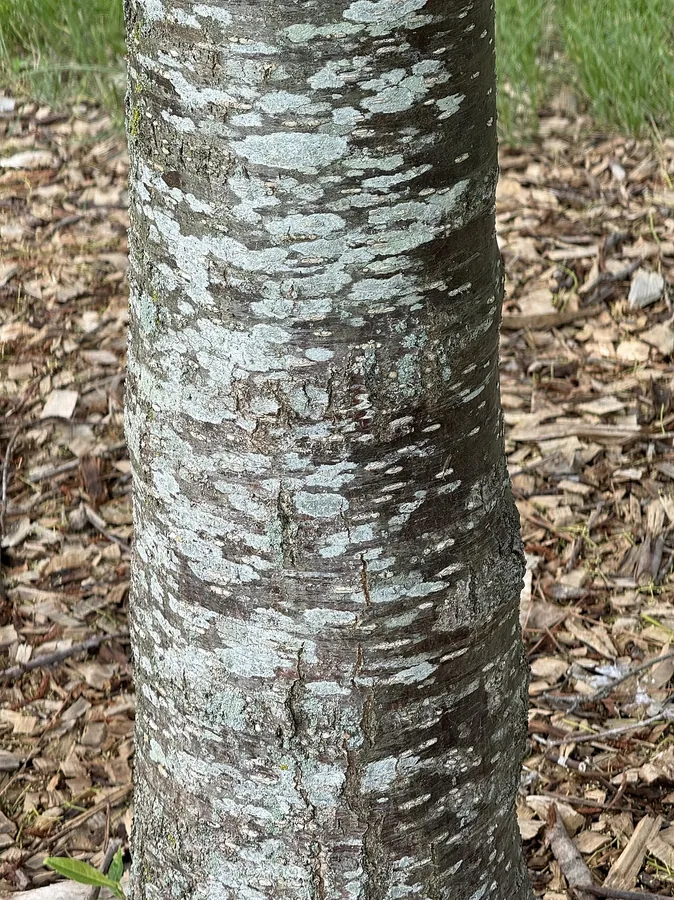
Bark & trunk: Smooth, gray to gray-brown bark, developing subtle orange-brown fissuring and a fine plated texture with age; the clean, smooth trunk is one of its ornamental strengths.
Growth habit / form: A small tree with a naturally wide-spreading, layered, horizontal-to-slightly-weeping branch habit, the foliage is held above the flowers, which hang below.
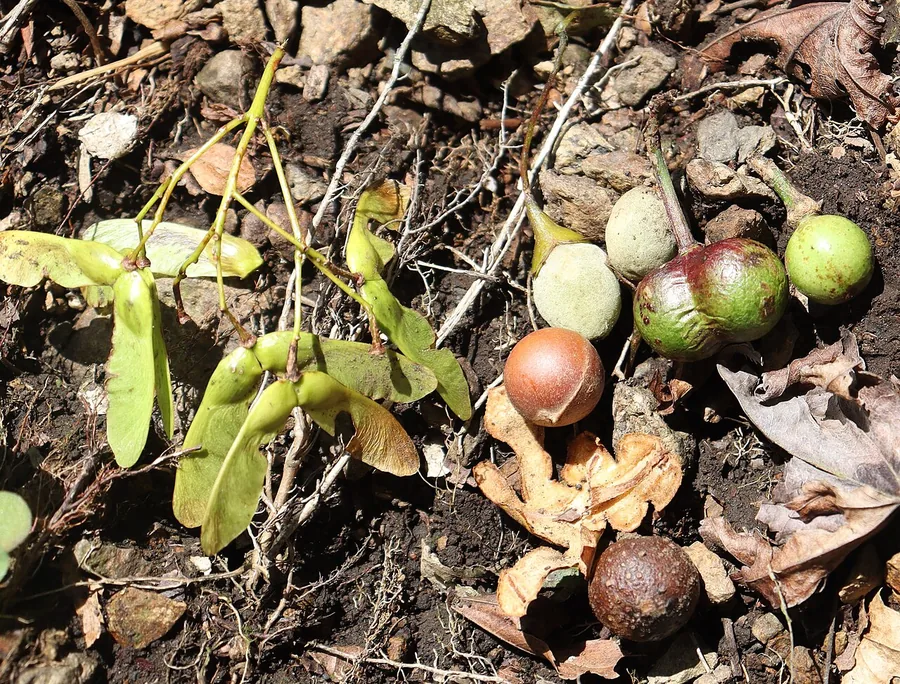
Flowers / fruit: Slightly fragrant, pendulous, bell-shaped white (occasionally pink) flowers about 2 cm across, hanging singly or in small clusters on slender stalks in late spring to early summer, borne below the branches. Fruit is a hanging, oval, grayish-green drupe-like capsule.
Look-alikes & how to tell them apart: The fragrant snowbell (Styrax obassia) is the closest relative; distinguish it by its much larger, nearly round leaves (up to 20 cm) that partly hide the flowers, versus S. japonicus's smaller leaves that let the bells hang clear in view. The related silverbell (Halesia carolina), also Styracaceae, has similar white bells but bears distinctive four-winged fruit rather than snowbell's smooth capsule.
Climate & USDA Zone
A temperate tree hardy across USDA zones 5 to 8. The wood tolerates roughly -23 °C (-9 °F), but roots in a shallow bonsai pot are far more vulnerable and can be damaged below about -8 to -10 °C (18 to 14 °F). It must live outdoors year-round and needs a full winter dormancy to flower well. As a woodland-margin species it prefers cool, moist conditions and slightly acidic soil, and it resents hot, dry, exposed sites and alkaline, chalky ground. Overwinter it in an unheated but frost-buffered position (a cold frame, mulched bed, or sheltered spot), protecting the root ball while allowing the top to experience normal seasonal cold.
Light
Grow in full sun for the best flowering, with light afternoon shade only where summer heat is fierce.
Snowbell flowers most freely in strong light, but its foliage and shallow roots can suffer in relentless, hot afternoon sun combined with any dryness. In cool or maritime climates, full sun all day suits it; in hot inland regions, morning sun with dappled afternoon shade keeps leaves clean and roots cool.
Watering
Keep the soil consistently moist; snowbell is thirsty and will not tolerate drying out while in leaf.
- Water before the surface dries; a dried-out snowbell drops leaves and suffers twig dieback quickly.
- In summer heat, water daily and shade the pot itself if the root zone overheats.
- Prefer rainwater or soft water where possible, as this slightly acid-loving tree dislikes hard, alkaline water.
- Reduce watering as leaves fall in autumn, and keep only barely moist through winter dormancy.
Soil & Root Care
Soil: A free-draining yet moisture-retentive, slightly acidic mix, for example akadama and pumice with added kanuma or composted bark to hold moisture and keep the pH mildly acid. Avoid lime and alkaline components.
Repotting:
- Repot every 2 to 3 years while developing; older trees every 3 to 4 years.
- Timing: early spring as buds begin to swell, before leaves and flowers emerge.
- Root-work tolerance: moderate; work roots carefully, removing no more than about a quarter to a third of the mass on a healthy tree, and avoid a full bare-root in one session.
- Aftercare: keep in a bright, sheltered, out-of-wind spot, kept evenly moist, and withhold fertilizer for 3 to 4 weeks while new roots form.
Feeding
Feed moderately with a balanced organic fertilizer once the leaves harden after spring flowering, favoring a formulation suited to acid-loving plants. From mid-to-late summer, shift toward a lower-nitrogen, higher-potassium feed to firm growth and support the following season's flower buds, then stop feeding once the tree enters dormancy. Because snowbell flowers on the previous year's wood, steady but not excessive feeding through summer helps build strong flowering shoots; too much nitrogen produces soft, floppy growth and fewer blooms.
Pruning & Styling
- Suited to informal upright, weeping/cascade-influenced, and layered horizontal styles that show off the naturally spreading, pendulous branches; also handsome in group plantings.
- Prune structurally right after flowering, since next year's flower buds form on the current season's growth; pruning in late summer, autumn or winter removes those buds and sacrifices the bloom.
- Pinch and shorten extending shoots through the season to build ramification while retaining the airy, layered character rather than shearing it into a dense pad.
- Wire young, flexible shoots to set the horizontal, cascading lines; older branches are stiffer and better positioned with guy-wires to avoid snapping.
- Seal larger cuts cleanly, as snowbell can be slow to heal big wounds; favor many small cuts over a few large ones.
Propagation & Cuttings
Ease: Moderate. Best methods: seed; softwood cuttings; grafting.
Styrax japonicus grows from seed, which has a double dormancy: sow fresh and expect germination after warm-then-cold cycling (often the second spring), or give ~3 months warm plus ~3 months cold stratification. Softwood cuttings in early summer under mist with IBA root at moderate rates. Weeping/pink forms are grafted. For bonsai, seedlings or young grafted nursery plants are practical; the pendulous white bells and smooth bark are the appeal, developing as the trunk matures.
Pests
- Aphids: cluster on soft new growth and flower stalks, distorting shoots and dripping honeydew; rinse off or treat with insecticidal soap.
- Scale insects: brown or soft scales on twigs and leaf undersides; scrape off or treat with horticultural oil.
- Spider mites: stipple and bronze leaves in hot, dry conditions; raise humidity and treat with a miticide.
- Fall webworm / leaf-eating caterpillars: can chew and web foliage in late summer; pick off, remove webbing, or treat with a Bt-based product.
Disease, Fungus & Infection
- **Root and crown rot (Phytophthora / Pythium):** in wet, poorly drained, cold soil the roots rot and the tree wilts and collapses; prevention through sharp drainage is the only reliable answer.
- Leaf spots (various fungi): dark spots and blotches in prolonged wet weather, usually cosmetic; clear fallen leaves and avoid overhead wetting.
- Chlorosis on alkaline soil: not a pathogen but a common disorder: yellowing between the veins when grown too alkaline; correct with acidic soil, soft water, and iron/sequestered feed.
Prevention: sharp drainage, steady (not soggy) moisture, slightly acidic soil and soft water, good airflow, and clean-up of fallen leaves keep snowbell largely trouble-free.
Most Common Causes of Death
1. Drought stress: letting the root ball dry out, the number-one killer; snowbell's shallow roots dry fast in a pot, and a single missed hot day in leaf can cause irreversible dieback. Keep it consistently moist and shade the pot in heat. 2. Root rot from wet, poorly drained soil: the flip side of its moisture love; cold, saturated soil rots the roots, so drainage must be sharp. 3. Frozen roots in a shallow pot: the wood is hardy but potted roots are not; protect the root ball over winter. 4. Alkaline soil / hard water chlorosis: grown too alkaline it starves of iron and declines; use acidic soil and soft water. 5. Loss of flowering (and stress) from mistimed pruning: pruning at the wrong time removes flower buds and weakens the tree; prune only right after flowering.
Seasonal Calendar
- Spring: Repot before bud break; enjoy the hanging white bells; do structural pruning right after flowering; begin light feeding as leaves harden.
- Summer: Keep consistently moist, watering daily in heat and shading the pot if it overheats; pinch for ramification; watch for aphids and mites; feed low-nitrogen to set flower buds.
- Autumn: Enjoy modest yellow color; reduce watering as leaves fall; clear fallen leaves; do NOT prune, to preserve next spring's flower buds.
- Winter: Fully dormant; protect potted roots from hard freezes; keep soil barely moist; plan next year's structural work for immediately after bloom.
Close-up photo reference
Compare your tree against these to confirm the species and spot problems early.


Sources
- Wikipedia: *Styrax japonicus*
- Missouri Botanical Garden: *Styrax japonicus*
- Royal Horticultural Society: *Styrax japonicus*
Growing a Japanese Snowbell bonsai
We don’t currently stock Japanese Snowbell trees. If you already have one — or you are sourcing one elsewhere — these are the supplies its care depends on:
- Bonsai Decorative Crushed Shale Top of Soil Dressing — $4.95
- Bonsai Zen Garden Grooming Rake — $8.95
- Metal Impression Tags Package of 4 — $2.95
Browse all bonsai trees, tools and soil or find a species we stock that suits your conditions.
- All species
- Shop bonsai trees, tools & supplies
- How to Water a Bonsai (Without Killing It)
- Bonsai Soil: What to Buy, What to Mix, and What It Costs
- Why Bonsai Die After Repotting: Diagnosing a Failed Repot
- Pruning vs. Pinching: Shaping Your Bonsai
- Overwintering Bonsai: Cold-Season Care
- Indoor Bonsai Light and Humidity: Making a Windowsill Actually Work
- Root Rot on bonsai
- Underwatering (Drought Stress) on bonsai
- Winter / Frost Damage on bonsai
- Spider Mites on bonsai
- Scale Insects on bonsai
- American Beech bonsai care
- American Elm bonsai care
- American Hornbeam bonsai care
- Amur Maple bonsai care