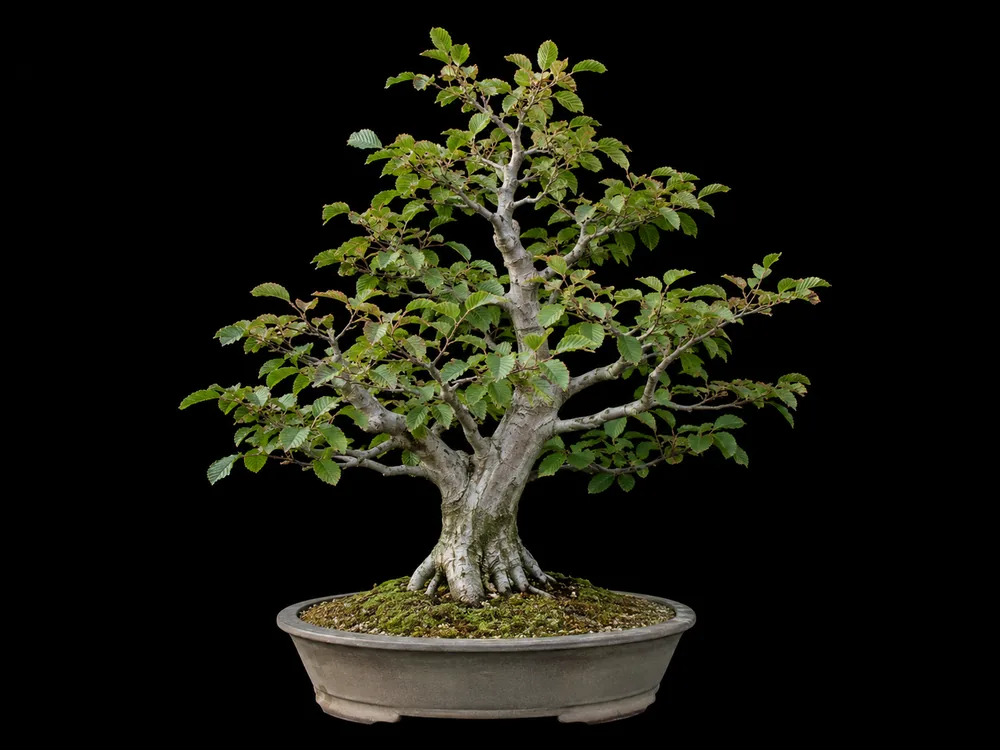
American Hornbeam Bonsai Care
Carpinus caroliniana
Zones 3 to 9a, outdoor only. One of the finest native North American species. Most are lost to drying out.
Betulaceae (birch family) · Deciduous broadleaf hardwood; small understory tree native to eastern North America
American Hornbeam quick reference
| USDA zones | 3–9a (very cold-hardy) |
|---|---|
| Indoor / outdoor | Outdoor only — needs a genuine winter dormancy |
| Light | Full sun to semi-shade; light afternoon shade in peak summer to prevent leaf scorch |
| Water | Moist — keep evenly damp; never let the root ball dry out, but avoid waterlogging |
| Soil | Free-draining, slightly acidic to neutral mix (e.g. akadama/pumice/lava); tolerates a little organic matter to hold moisture |
| Repot | Every 2 years in early spring, just before buds open |
| Frost | Excellent — fully hardy; protect only the pot/roots in severe freezes |
| Mature height (as bonsai) | Tree to 12 m; kept 20-50 cm as bonsai |
| Growth rate | Slow-moderate |
| Season of interest | Orange-red autumn colour, fine ramification |
| Leaf reduction | Good - reduces well with defoliation |
| #1 cause of death | Dieback from heavy/late-season pruning combined with drying out of the rootball |
Overview & Character
The American Hornbeam is one of the finest native North American species for bonsai, prized above all for its extraordinary trunk. Mature bark is smooth, slate-grey and rippled with sinuous, muscle-like flutes — hence the nicknames "musclewood" and "ironwood." The wood itself is famously dense and hard.
As an understory tree it naturally stays small and tolerates shade, which makes it forgiving of typical garden placement. It ramifies well into fine twig structure, holds small leaves once refined, and delivers reliable autumn color in yellow, orange and russet-red. It is cold-hardy to an extreme degree, so winter survival is rarely the problem — the real risks are improper pruning timing and letting it dry out.
It is best suited to informal upright, broom, and multi-trunk/clump styles that show off the rippling trunk.
Identification
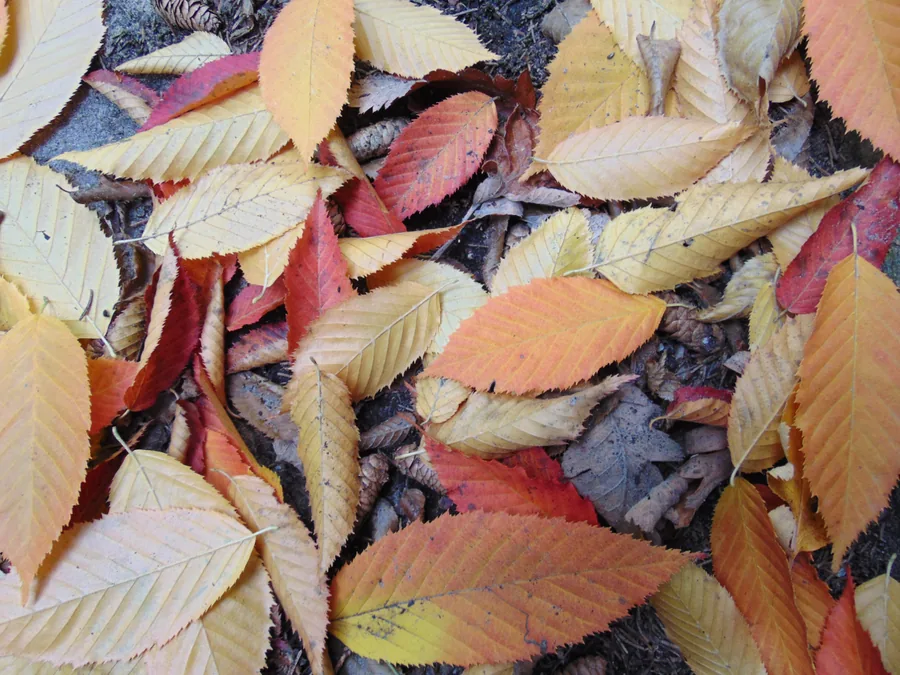
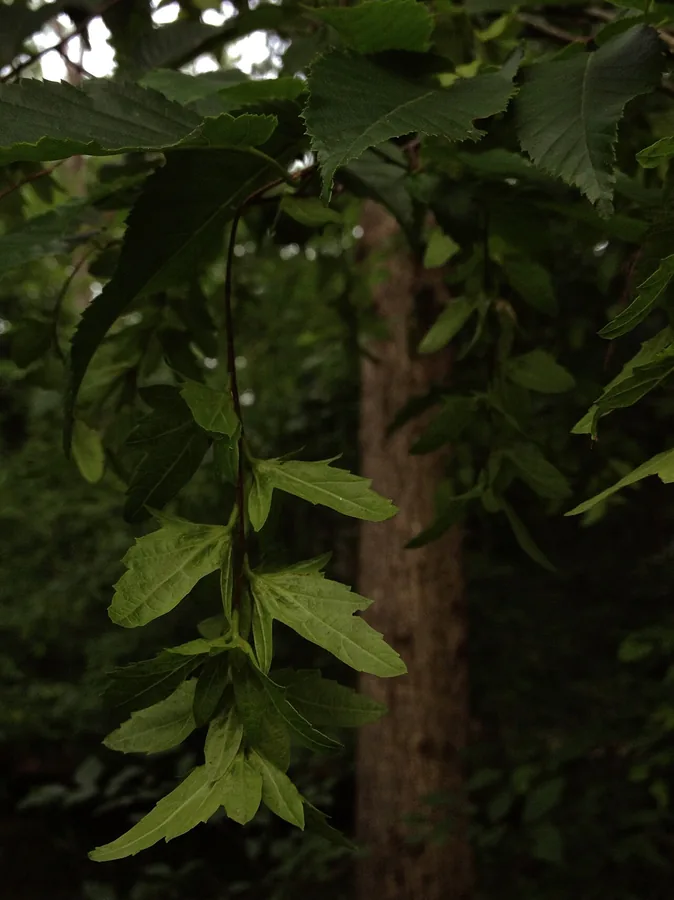
FOLIAGE: Leaves are alternate, simple, oval to oblong with a pointed tip, 5–12 cm long. The margins are doubly serrate (small teeth set upon larger teeth) — a key birch-family trait. Veins are strongly parallel and impressed, giving a pleated look. Fresh spring growth often flushes reddish; autumn color is yellow to orange-red.
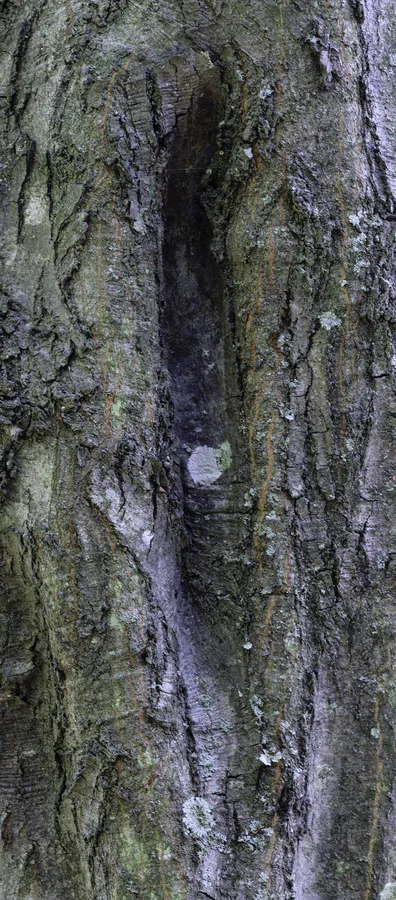
BARK & TRUNK: The signature feature. Smooth, thin, blue-grey bark over a trunk that is conspicuously fluted and sinewy, looking like flexed muscle or twisted sinew under skin. It does not develop the deep plated bark of older oaks — the smoothness and ripples are the giveaway.
GROWTH HABIT/FORM: A small, often multi-stemmed understory tree with a rounded, spreading crown and fine twiggy branching. Slow to moderate growth; naturally compact.
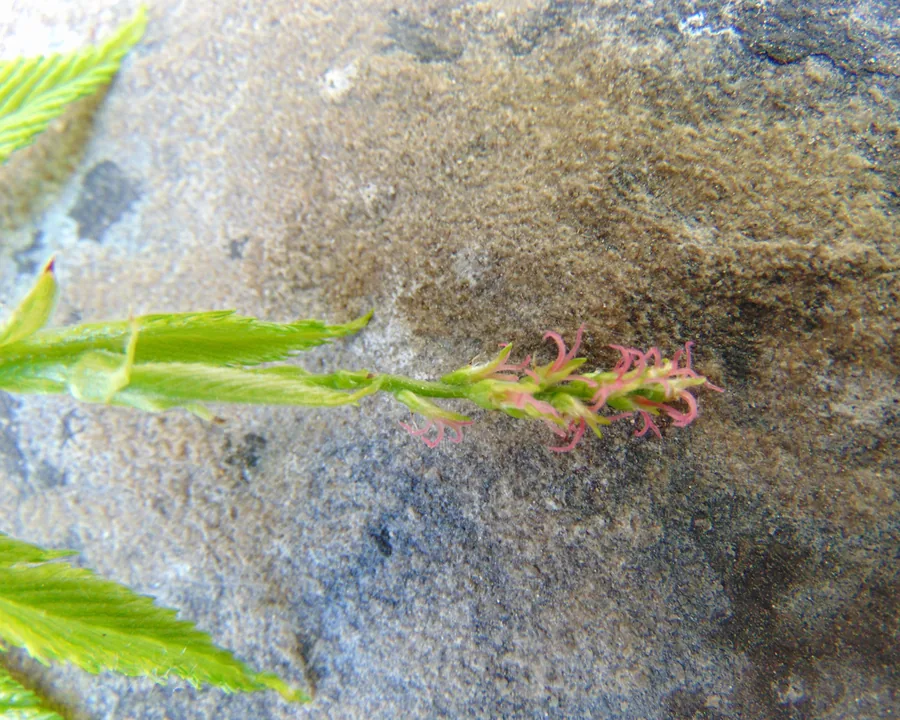
FLOWERS/FRUIT/SEEDS: Monoecious; wind-pollinated catkins in spring. Fruit is a small nutlet attached to a distinctive three-lobed leafy bract (a winged "wing" that aids wind dispersal), hanging in clusters.
Look-alikes & how to tell them apart: Often confused with American Beech (Fagus grandifolia), which has smooth grey bark too — but beech bark is taut and round, not fluted/muscled, and beech leaves have simple (single) serrations and hold tan dead leaves through winter. Hop-Hornbeam (Ostrya virginiana) has shreddy, flaky brown bark and papery hop-like seed sacs, not smooth muscled grey bark with leafy bracts. European Hornbeam (Carpinus betulus) is very similar but has slightly less dramatic fluting and is the more common nursery hornbeam.
Climate & USDA Zone
Hardy across USDA zones 3–9a, making it one of the most cold-tolerant deciduous bonsai available. It requires a true cold dormancy each winter and must be grown outdoors year-round. It naturally grows in moist bottomlands and along streams ("water beech"), so it appreciates humidity and consistent moisture and dislikes hot, dry, windy exposures.
Light
Give it full sun to partial shade. In spring and autumn full sun encourages tight internodes, good ramification and strong fall color. During the hottest part of summer, provide roughly 30–40% shade cloth or light afternoon shade — as an understory species its thin leaves can scorch and brown at the margins in fierce, dry heat. Good air circulation helps prevent fungal issues.
Watering
This species likes it MOIST. Keep the soil evenly damp at all times. In the wild it grows in stream margins and floodplains, so it will not tolerate the rootball drying out — even one severe dry-out can trigger leaf burn and branch dieback. Check the soil up to twice a day in the growing season; in hot weather many specimens need watering once or even twice daily. That said, it is not a bog plant: use free-draining soil so it never sits in stagnant water. Reduce frequency in winter dormancy but never let it bone-dry.
Soil & Root Care
Use a free-draining inorganic-based bonsai mix (akadama, pumice and lava in roughly equal parts is a good starting point), with a slightly higher proportion of moisture-retentive component (akadama) than you would use for a drought-tolerant species. It prefers slightly acidic to neutral pH. The fine, fibrous root system responds well to root work. Repot every 2 years in early spring just as the buds begin to swell but before they open; prune roots moderately and tease out the rootball.
Feeding
Feed regularly through the growing season to support ramification. Begin once the spring leaves have hardened off and continue into autumn. A balanced fertilizer works well; ease off high nitrogen in late summer to firm up growth before dormancy. Organic solid fertilizers or a balanced liquid feed every 1–2 weeks during peak growth are both effective. Do not feed a freshly repotted or stressed tree until it has recovered.
Pruning & Styling
Hornbeam back-buds readily and ramifies beautifully, so it rewards structural pruning. Do major structural pruning in late winter to early spring before bud break, OR in summer once growth has hardened. Avoid heavy pruning in autumn: like other hornbeams, cutting hard late in the season invites dieback as the tree shuts down and cannot seal or recover wounds. During the growing season, pinch and trim new shoots back to 1–2 leaves to build dense twig structure. The wood is hard, so wiring is best done on younger, flexible shoots; protect the thin bark from wire bite. Large cuts heal slowly — favor directional pruning and clip-and-grow over big chops where possible.
Propagation & Cuttings
Ease: Moderate. Best methods: seed; layering; cuttings with care.
Hornbeam is grown mainly from seed, but the seed is notoriously slow — it has a double dormancy, so expect a warm-then-cold treatment (e.g. sow fresh in summer, leave outside through two winters) or ~2–3 months warm plus ~3 months cold stratification; many seeds wait a full extra year. Softwood cuttings in early summer under mist with IBA root at moderate rates. Air-layering works well in spring and is the fastest way to make a sizeable, trunk-thick tree true to the parent. For bonsai, layering an established branch is often more practical than the patience-testing seed route.
Pests
- Aphids — cluster on soft new growth; rinse off or treat with insecticidal soap/neem.
- Scale insects — appear as small bumps on twigs and leaf undersides; treat with horticultural oil.
- Mealybugs — white cottony masses in leaf axils; wipe off and treat.
- Spider mites — in hot, dry conditions; cause stippling and fine webbing. Keep humidity up to deter them.
Disease, Fungus & Infection
- Powdery mildew — a common issue; white powdery coating on leaves, worsened by poor airflow and damp foliage. Improve air circulation, avoid wetting leaves late in the day, treat with a fungicide if persistent.
- Leaf spot fungi — brown/black blotches in wet seasons; remove affected leaves and improve ventilation.
- Root rot — from waterlogged, poorly draining soil; prevent with a free-draining mix and proper watering balance.
Most Common Causes of Death
1. Heavy or late-autumn pruning causing dieback. Hornbeams shut down in autumn and cannot recover from hard cuts made then. Prevention: do structural work in late winter/early spring or mid-summer only; keep autumn work light. 2. Letting the rootball dry out. A moisture-loving understory species; a single severe dry-out scorches foliage and kills branches. Prevention: check soil twice daily in summer; never let it go bone-dry. 3. Waterlogging / root rot. The opposite extreme — soggy, airless soil suffocates roots. Prevention: use free-draining soil and a pot with good drainage. 4. Over-aggressive root pruning. Removing too much root at once on a hard-wooded species can stall or kill it. Prevention: repot every 2 years, prune roots moderately, time it to early spring. 5. Summer leaf scorch from full hot sun. Thin understory leaves burn in fierce, dry heat. Prevention: afternoon shade in peak summer and consistent moisture. 6. Fungal disease from poor airflow. Powdery mildew and leaf spot weaken a crowded tree. Prevention: space, ventilate, keep foliage dry overnight. 7. Pest infestation left unchecked. Heavy scale/aphid/mite loads sap vigor. Prevention: inspect regularly and treat early.
Seasonal Calendar
- Early Spring (before bud break): Best time to repot and do structural/root pruning. Begin watering attentively as buds swell.
- Late Spring: Let new growth extend, then pinch back to build ramification. Begin feeding once leaves harden. Watch for aphids.
- Summer: Water once or twice daily; provide afternoon shade in heat. Light maintenance pruning/pinching on hardened growth is acceptable. Monitor for mildew, mites and scale.
- Autumn: Enjoy fall color. Keep pruning to an absolute minimum to avoid dieback. Reduce feeding. Keep soil moist.
- Winter: Fully dormant and hardy. Protect the pot and roots from hard freezes (mulch, cold frame, or sheltered ground); a frozen rootball that also dries out is the risk. Do not bring indoors — it needs the cold.
Close-up photo reference
Compare your tree against these to confirm the species and spot problems early.



.jpg)
Sources
- Bonsai Empire — Hornbeam and Beech (Carpinus and Fagus) care guide
- Eisei-en / Bjorn Bjorholm — Care guide for native US Hornbeam and Beech bonsai
- University of Florida IFAS — *Carpinus caroliniana* (ST120)
- NC State Extension Gardener Plant Toolbox — *Carpinus caroliniana*
Where to buy a American Hornbeam bonsai
We don’t stock American Hornbeam at the moment. These species need similar care and we have them now — they are the closest match in our catalogue.
- Korean Hornbeam — similar care, in stock now
Browse all bonsai trees for sale or find a species matched to your climate and space.
- All species
- Shop bonsai trees, tools & supplies
- How to Water a Bonsai (Without Killing It)
- Bonsai Soil: What to Buy, What to Mix, and What It Costs
- Why Bonsai Die After Repotting: Diagnosing a Failed Repot
- Pruning vs. Pinching: Shaping Your Bonsai
- Overwintering Bonsai: Cold-Season Care
- Indoor Bonsai Light and Humidity: Making a Windowsill Actually Work
- Root Rot on bonsai
- Underwatering (Drought Stress) on bonsai
- Winter / Frost Damage on bonsai
- Leaf Scorch / Sunburn on bonsai
- Powdery Mildew on bonsai
- Hornbeam bonsai care
- Korean Hornbeam bonsai care
- American Elm bonsai care
- Amur Maple bonsai care