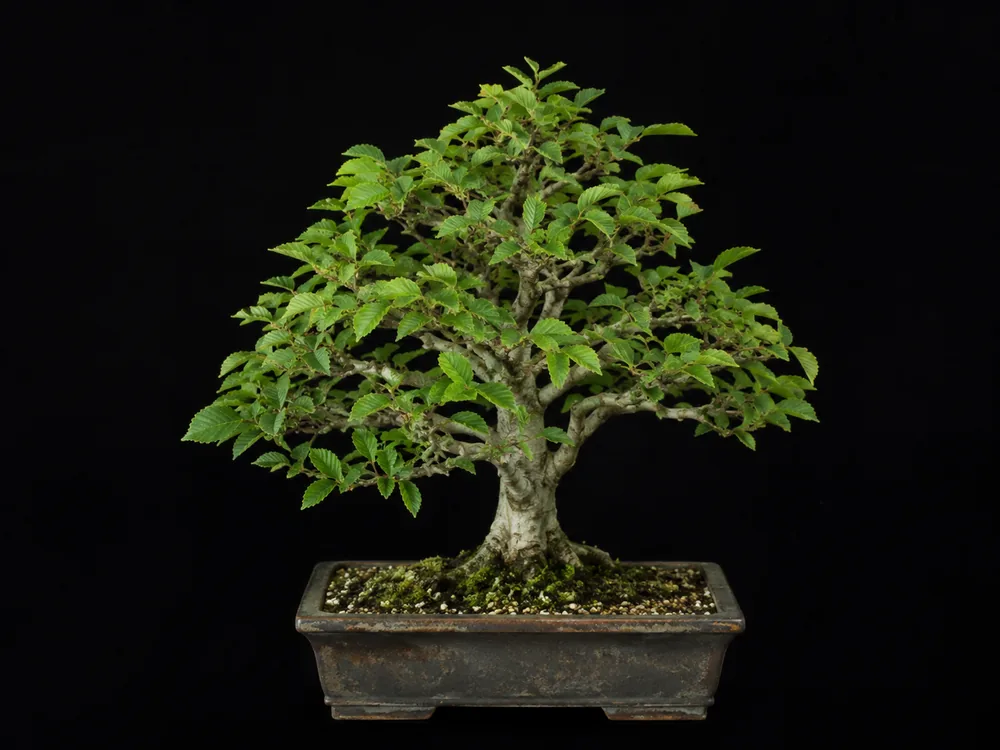
Hornbeam Bonsai Care
Carpinus betulus
Outdoor only. Hornbeams are among the finest deciduous bonsai. Most are lost to drying out.
Betulaceae (birch family) · Deciduous broadleaf tree; outdoor bonsai
Hornbeam quick reference
| USDA zones | Roughly 4–8 (C. betulus ~4–8; Korean hornbeam similar, somewhat tender in a pot) |
|---|---|
| Indoor / outdoor | Outdoor only — requires winter dormancy |
| Light | Full sun to light shade; afternoon shade in extreme heat helps prevent leaf scorch |
| Water | Water when the soil surface dries; never let it dry out completely, but do not keep it soggy. Korean hornbeam in particular likes to run on the drier side and can nearly dry out between waterings. |
| Soil | Free-draining bonsai mix (akadama / pumice / lava) |
| Repot | Young trees every 1–2 years; established trees every 2–3 years, early spring before buds open |
| Frost | Frost-hardy in the ground; container roots must be protected from hard freeze — Korean hornbeam tolerant to about 20 °F (-7 °C) for medium/large trees |
| Mature height (as bonsai) | Tree to 25 m; 20-60 cm as bonsai |
| Growth rate | Moderate |
| Season of interest | Autumn colour, marcescent winter leaves |
| Leaf reduction | Excellent with defoliation |
| #1 cause of death | Root rot from overwatering; also drying out and late-autumn pruning causing un-hardened dieback |
Overview & Character
Hornbeams are among the finest deciduous bonsai. They produce small, crisply serrated, deeply veined leaves, smooth grey ("muscle") bark that fluts attractively with age, dense fine ramification, and rich autumn color through yellow, orange and copper. Many hold their cured, papery brown leaves into winter (marcescence). European hornbeam (Carpinus betulus) makes larger, powerful trees; the smaller-leaved Korean hornbeam (C. turczaninowii) and Japanese C. laxiflora are especially valued for delicate, refined work and small to medium sizes.
Stylistically hornbeams suit informal upright, formal upright, broom, twin-trunk, group and forest plantings. Korean hornbeam in particular is renowned as a tough, agreeable, beginner-friendly species that still rewards advanced refinement.
Identification
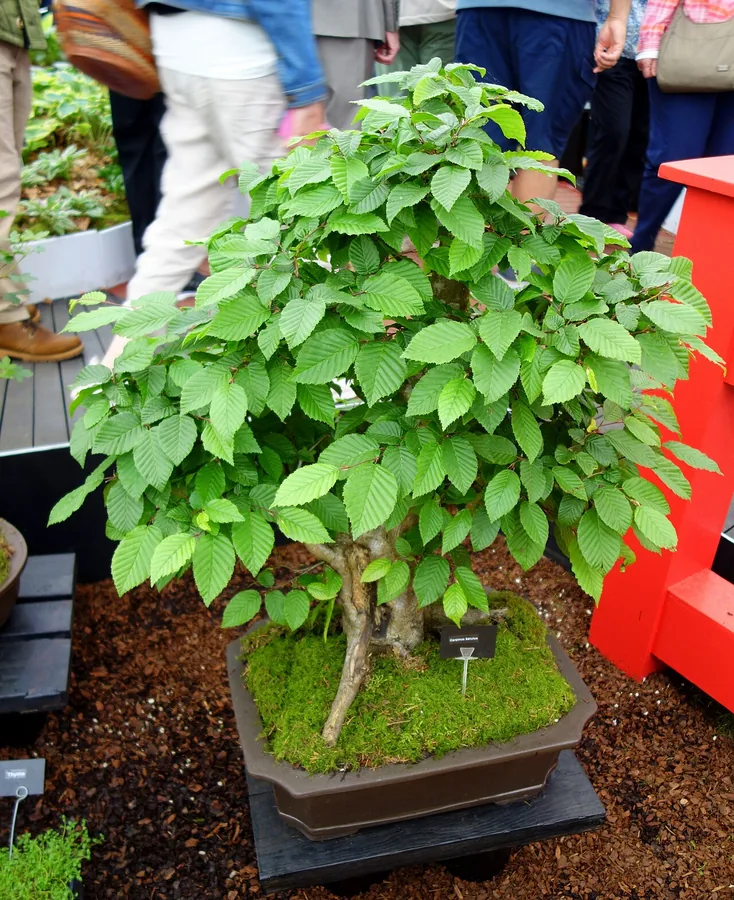
Foliage. Leaves are alternate, simple, ovate, roughly 1.5–4 in (4–10 cm) on C. betulus (much smaller on Korean/Japanese species), with crisp double (doubly) serrated margins and strongly impressed, deeply pleated parallel veins giving a corrugated, ribbed look. Spring green deepens to summer green and turns yellow, orange and copper in autumn; many leaves are marcescent, hanging on as cured papery brown through winter.
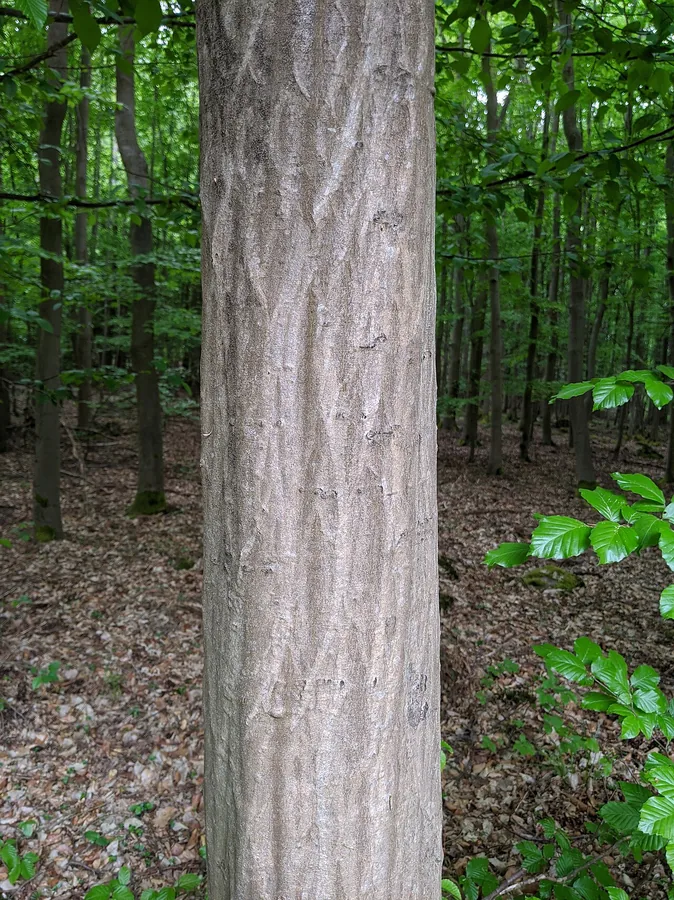
Bark & trunk. The unmistakable feature: smooth grey "muscle" bark over a fluted, sinewy, rippled trunk that looks like flexed muscle or twisted sinew (hence "musclewood"/ironwood). Hard, dense wood.
Growth habit / form. A dense, twiggy small-to-medium tree that back-buds reliably on old wood.
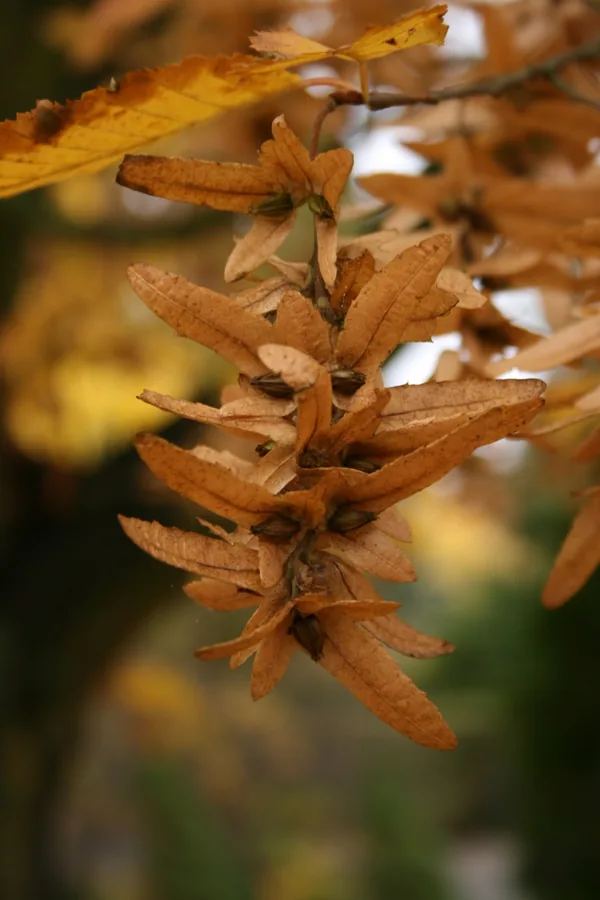
Flowers / fruit / seeds. Pendulous catkins in spring; seeds are small nutlets each subtended by a distinctive three-lobed leafy bract (involucre) that aids wind dispersal.
Look-alikes & how to tell them apart: Most confused with beech (same family habit and marcescence) and birch. The decisive tells: hornbeam has the ribbed/fluted "muscle" trunk, doubly-serrated corrugated leaves, and three-lobed seed bracts, whereas beech has a smooth round (un-fluted) trunk, wavy near-entire leaf margins, long cigar-shaped buds, and triangular nuts in a spiky husk.
Climate & USDA Zone
European hornbeam is hardy roughly across USDA zones 4–8, with Korean and Japanese species broadly similar. All require a genuine winter dormancy and must be grown outdoors. Although very frost-hardy in nature — where roots reach deep, insulated ground — hornbeams in shallow pots have exposed roots that must be protected from hard freezes. Korean hornbeam is notably durable, with medium and larger trees tolerating around 20 °F (-7 °C); even so, shelter or mulch the pot in deep cold, and the tree should stay cool/cold (not warm) for about three months of winter rest.
Light
Hornbeams take full sun, which keeps growth compact and ramification fine, but in very hot climates or strong summer sun the thinner-leaved forms can scorch — light afternoon shade then protects the foliage. A bright, airy position with good air movement is ideal and discourages mildew.
Watering
Hornbeams want moderate watering: water as soon as the soil surface dries, never letting the rootball dry out completely, while taking care not to keep it constantly soggy (overwatering invites fatal root rot). In practice this means roughly once a day in spring and autumn, twice a day in summer heat, and just-moist soil in winter. Korean hornbeam has notably broad tolerance and prefers to run on the drier side — it can be allowed to almost dry out between waterings, which makes it forgiving for those prone to overwatering. Across the group, lean toward "let the surface dry, then water" rather than keeping the mix wet.
Soil & Root Care
Use a free-draining bonsai mix such as akadama, pumice and lava in roughly equal parts — good drainage is the key defence against the root rot hornbeams are prone to. Repot young trees every one to two years and established trees every two to three years in early spring just before the buds open. Hornbeams produce dense fibrous roots and tolerate moderate root reduction — remove up to about one third at a healthy repot. Even, radial nebari supports broom and upright forms.
Feeding
Feed regularly from when the spring leaves harden through to autumn with a balanced fertilizer to support ramification and vigour. Reduce nitrogen on refined trees to keep leaves small. Ease off right after repotting and in peak summer heat. A potassium-rich autumn feed helps growth harden before winter — but avoid pushing late soft growth (see pruning).
Pruning & Styling
Hornbeams ramify well in response to repeated cut-back: let shoots extend to several pairs of leaves, then cut back to one or two pairs through the season. They back-bud reliably on older wood, so structural cuts are well tolerated; seal larger cuts. Partial defoliation on strong, healthy trees in early summer reduces leaf size and increases twig density.
A key timing caution: do not prune hornbeams again in autumn, because a late flush of growth may not harden off before the first frost and will die back, sometimes carrying damage into older wood. Wire while branches are young and flexible; the smooth grey bark marks easily, so check wire frequently and remove it before it bites in.
Propagation & Cuttings
Ease: Moderate. Best methods: seed; layering; cuttings.
Carpinus betulus is grown mainly from seed, which has a double dormancy — sow fresh in summer for germination after two winters, or give ~2 months warm plus ~3 months cold stratification. Softwood cuttings in early summer root at moderate rates with IBA under mist. Air-layering in spring is reliable and the fastest way to a trunk-thick, true-to-parent tree. For bonsai, layering an established branch avoids the slow seed route; hornbeam back-buds well and holds pale winter leaves.
Pests
Hornbeams (and the closely related beeches) are frequently attacked by mealybugs and scale insects, and aphids cluster on soft new growth. Caterpillars and red spider mites can also appear, mites in hot, dry, still air. Inspect regularly — especially bark crevices and leaf undersides — and treat with insecticidal soap, horticultural oil or, for stubborn scale/mealybug, a systemic insecticide alongside improved growing conditions.
Disease, Fungus & Infection
The main diseases of hornbeam and beech are canker, blight and leaf spot, plus powdery mildew in humid, stagnant conditions. The most dangerous problem, however, is root rot following overwatering, which is typically fatal. Prevention rests on free-draining soil, correct (drier-leaning) watering, good airflow, leaf hygiene, and clean tools with sealed cuts.
Most Common Causes of Death
1. Root rot from overwatering. Likes a slightly drier side; use free-draining soil and avoid soggy conditions. 2. Autumn pruning dieback. Pruning late in the season can cause un-hardened dieback — do structural work in spring. 3. Drying out / leaf scorch. Fine roots scorch if the pot dries in heat; keep evenly moist and give some afternoon shade in extreme heat. 4. Winter root freeze. Shelter potted roots in hard freezes. 5. Indoor keeping. Needs outdoor dormancy.
Seasonal Calendar
- Spring: Repot if due (early); structural pruning; resume feeding; pinch new growth for ramification.
- Summer: Even moisture; light trimming; partial shade in extreme heat; watch for aphids.
- Autumn: Good color and marcescent leaves; taper feeding/water; avoid heavy pruning now.
- Winter: Dormant; protect potted roots; wiring can be done while leafless.
Close-up photo reference
Compare your tree against these to confirm the species and spot problems early.



Sources
Where to buy a Hornbeam bonsai
We don’t stock Hornbeam at the moment. These species need similar care and we have them now — they are the closest match in our catalogue.
- Korean Hornbeam — similar care, in stock now
Browse all bonsai trees for sale or find a species matched to your climate and space.
- All species
- Shop bonsai trees, tools & supplies
- How to Water a Bonsai (Without Killing It)
- Bonsai Soil: What to Buy, What to Mix, and What It Costs
- Why Bonsai Die After Repotting: Diagnosing a Failed Repot
- Pruning vs. Pinching: Shaping Your Bonsai
- Overwintering Bonsai: Cold-Season Care
- Indoor Bonsai Light and Humidity: Making a Windowsill Actually Work
- Root Rot on bonsai
- Overwatering on bonsai
- Underwatering (Drought Stress) on bonsai
- Winter / Frost Damage on bonsai
- Leaf Scorch / Sunburn on bonsai
- American Hornbeam bonsai care
- Korean Hornbeam bonsai care
- American Elm bonsai care
- Amur Maple bonsai care