
Flowering Dogwood Bonsai Care
Cornus florida
Zones 5 to 9, outdoor. One of North America's most beloved spring-flowering trees. Most are lost to drying out.
Cornaceae (dogwood family) · Deciduous broadleaf small tree
Flowering Dogwood quick reference
| USDA zones | 5 to 9 |
|---|---|
| Indoor / outdoor | Outdoor: a temperate woodland-edge tree needing seasonal change and winter cold |
| Light | Morning sun with afternoon shade: an understory tree that scorches in relentless full sun |
| Water | Moisture-loving: consistently moist, cool roots; intolerant of drought |
| Soil | Free-draining but moisture-retentive, slightly acidic mix |
| Repot | Every 2 to 3 years in early spring, cautiously |
| Frost | Good: wood hardy to about -29 °C (-20 °F); protect potted roots |
| Mature height | Tree to 10 m; 30-60 cm as bonsai |
| Growth rate | Moderate |
| Season of interest | Spring bracts, autumn color, red berries |
| Leaf reduction | Good |
| #1 cause of death | Drought / heat stress at the roots, which triggers dieback and disease |
Overview & Character
The flowering dogwood is one of North America's most beloved spring-flowering trees, and as bonsai it delivers a display few species can rival: in mid-spring, before or as the leaves emerge, the branches are covered in large, flat, four-"petaled" blooms. What look like petals are actually showy white (sometimes pink) bracts surrounding a small cluster of true flowers, botanically clever, and visually stunning. The show continues into autumn, when foliage turns deep red-purple and the tree sets clusters of glossy red drupes. Its natural layered, tiered branching, so characteristic of woodland dogwoods, translates beautifully into the horizontal, spreading silhouettes bonsai artists prize.
Dogwood is not a beginner's tree. It is an understory species that resents hot dry roots, harsh sun, and heavy root disturbance, and it is prone to a serious fungal disease (anthracnose). The care keys are cool, consistently moist, slightly acidic soil; dappled or morning-only sun; gentle rather than aggressive root work; and good air circulation. Reward the effort and it gives spring bracts, red fruit, and fiery autumn color in one tree.
Identification
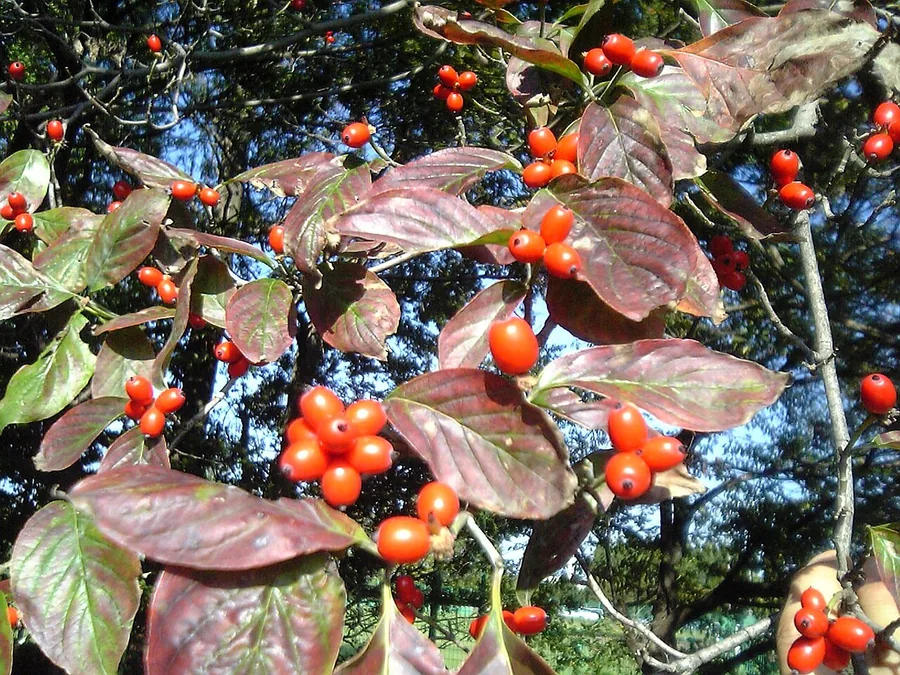
Foliage: Opposite, oval leaves 7 to 15 cm long with smooth or slightly wavy margins and distinctive arcuate (curving) veins that follow the leaf edge toward the tip; gently pull a leaf apart and the veins string out on fine latex-like threads, a classic dogwood test. Autumn color is a rich red to purple.
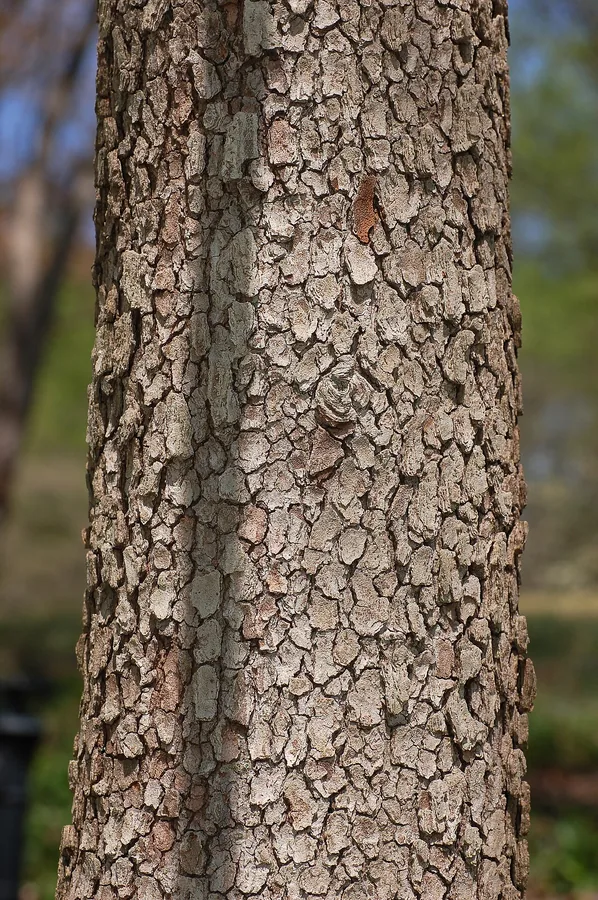
Bark & trunk: Mature bark breaks into a fine, blocky, alligator-hide pattern of small gray-brown plates, highly ornamental and a strong ID feature on older trunks.
Growth habit / form: A small tree with a broad, low, distinctly tiered and horizontal branching habit, giving it a naturally layered, spreading crown.
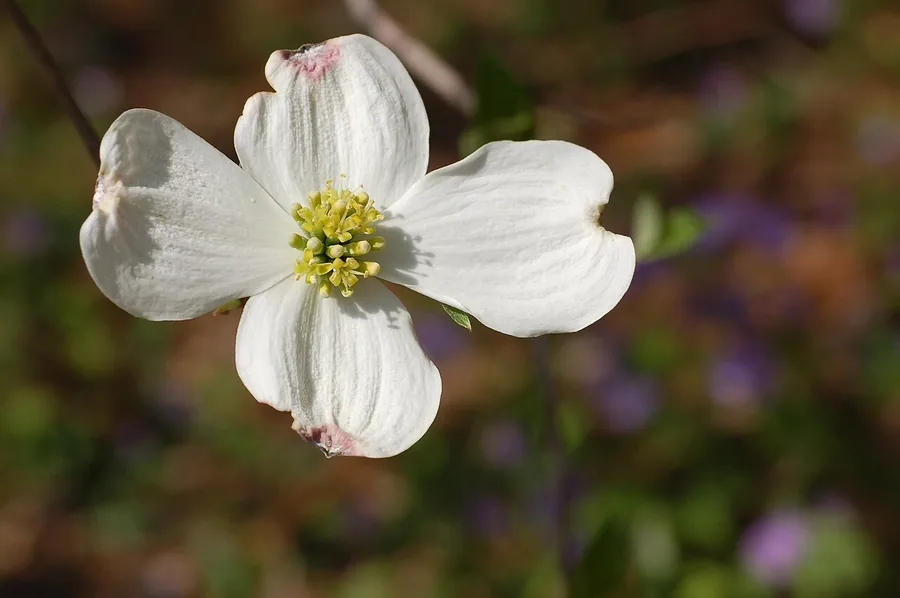
Flowers / fruit: In spring, small greenish-yellow true flowers sit in a central cluster surrounded by four large white (or pink) notched bracts up to 5 cm across, the showy "flower." Fruit is a cluster of shiny red egg-shaped drupes ripening in autumn, attractive to birds.
Look-alikes & how to tell them apart: The Kousa dogwood (Cornus kousa) is the closest bonsai counterpart; tell them apart by the bracts: Kousa's are pointed at the tip and it flowers later (early summer, after the leaves), whereas C. florida's bracts are notched at the tip and it flowers earlier. Kousa also bears bumpy raspberry-like fruit versus florida's smooth red drupe clusters.
Climate & USDA Zone
A temperate tree hardy across USDA zones 5 to 9. The wood tolerates roughly -29 °C (-20 °F), but potted roots are far more exposed and are damaged below about -8 to -10 °C (18 to 14 °F). It must live outdoors year-round and needs winter dormancy to flower. As a woodland-edge understory species it dislikes hot, exposed sites; in warm zones it particularly needs cool, shaded roots and afternoon shade. Overwinter it in an unheated but frost-buffered spot (a cold frame, mulched bed, or sheltered corner), protecting the root ball while allowing the top normal seasonal cold.
Light
Give it morning sun and afternoon shade; dappled woodland-edge light is ideal; avoid relentless, exposed full sun.
As an understory tree, Cornus florida flowers reasonably in part shade and suffers leaf scorch and root stress in hot, all-day sun. Bright but filtered light, or full morning sun only, keeps foliage clean and the roots cool, which this species demands.
Watering
Keep the soil consistently, evenly moist and the roots cool; dogwood is drought-intolerant.
- Water before the soil dries out; a dogwood that repeatedly dries will drop leaves and suffer twig dieback.
- In summer heat, water daily and consider shading the pot itself to keep the root zone cool.
- Use rainwater or soft water where possible, as this slightly acid-loving tree can suffer in hard, alkaline water.
- Reduce watering as leaves fall in autumn, and keep only barely moist through winter dormancy.
Soil & Root Care
Soil: A free-draining yet moisture-retentive, slightly acidic mix, for example akadama and pumice with added composted bark or kanuma to hold moisture and keep pH mildly acid. Avoid alkaline components.
Repotting:
- Repot every 2 to 3 years, and less often once established; dogwood dislikes frequent disturbance.
- Timing: early spring as buds swell, before flowering and leaf-out.
- Root-work tolerance: only moderate; work roots gently, removing no more than about a quarter of the mass, and never bare-root the whole plant at once.
- Aftercare: keep in shade, out of wind, kept evenly moist, and withhold fertilizer for about a month while roots recover.
Feeding
Feed moderately with a balanced organic fertilizer once the leaves have hardened after spring flowering. Dogwood does not need heavy feeding, and an acidic or ericaceous-type feed suits its preference for slightly acid conditions. Ease back on nitrogen from late summer and offer a low-nitrogen, higher-potassium feed to firm growth and support flower-bud formation for next spring, then stop feeding once the tree enters dormancy. Excess nitrogen produces soft, disease-prone growth that is especially vulnerable to anthracnose.
Pruning & Styling
- Suited to informal upright and, above all, layered/tiered horizontal styles that echo the tree's natural spreading habit; also handsome in group plantings.
- Prune major structural branches right after flowering, since flower buds for next year form on the current season's wood; pruning too late removes next spring's display.
- Pinch and shorten extending shoots through the season to build ramification, but avoid heavy summer cutting that stresses this disease-prone species.
- Seal larger cuts and keep tools clean; dogwood wounds are an entry point for anthracnose, so tidy, well-sealed cuts matter more than usual.
- Wire young, flexible shoots; older branches are stiff and better positioned by guy-wires to avoid snapping.
Propagation & Cuttings
Ease: Moderate to difficult. Best methods: seed; softwood cuttings; grafting.
Cornus florida grows from seed; clean the red drupes and give warm-then-cold stratification (about 1 month warm, 3 months cold) before spring sowing; germination is fair. Softwood cuttings in early summer under mist with IBA root but must harden and be kept over winter carefully, or they die back. Named/pink forms are grafted. For bonsai, seedlings or young grafted nursery plants are practical; dogwood resents heavy root disturbance and is slow to flower, so develop patiently.
Pests
- **Dogwood borer (Synanthedon scitula):** a clearwing-moth larva that tunnels under the bark, causing dieback; keep bark healthy and unwounded, and treat trunks if borer entry holes and frass appear.
- Scale insects (including cottony/soft scales): encrust twigs and drip honeydew; scrape off or treat with horticultural oil.
- Aphids: cluster on soft new growth, distorting shoots; rinse off or use insecticidal soap.
- Spider mites: stipple and bronze foliage in hot, dry conditions; raise humidity and treat with a miticide.
Disease, Fungus & Infection
- **Dogwood anthracnose (Discula destructiva):** the most serious disease of Cornus florida: tan leaf blotches with purple rims, blighted flowers, twig dieback, and trunk cankers, worst in cool, wet, shaded, poorly ventilated conditions; improve airflow, avoid wetting foliage, remove infected material, and apply protective fungicide.
- **Powdery mildew (Erysiphe pulchra):** white coating on leaves in warm humid weather, causing scorch and distortion; ventilate and treat with fungicide.
- **Spot anthracnose (Elsinoë corni):** small reddish spots on bracts and leaves in wet springs; usually cosmetic but treat if severe.
Prevention: the single best defense is airflow and dry foliage; space and site the tree so leaves dry quickly, avoid overhead watering, remove and destroy fallen infected leaves, keep cuts clean, and avoid overly lush nitrogen-driven growth.
Most Common Causes of Death
1. Drought and hot-root stress: the leading killer; dogwood's shallow roots dry and overheat fast in a pot, and repeated stress triggers dieback and opens the door to anthracnose. Keep roots cool, shaded, and evenly moist. 2. Dogwood anthracnose: a genuinely lethal fungal disease in cool, wet, stagnant conditions; prevent with airflow, dry foliage, and prompt removal of infected wood. 3. Frozen roots in a shallow pot: the wood is hardy but potted roots are not; protect the root ball over winter. 4. Over-aggressive root pruning: dogwood resents heavy root disturbance and can collapse after a hard repot; work roots gently and infrequently. 5. Full-sun exposure and alkaline conditions: relentless sun scorches, and hard, limey water and soil cause decline; give afternoon shade and slightly acidic, soft water.
Seasonal Calendar
- Spring: Repot gently before bud break; enjoy the bracts; do structural pruning immediately after flowering; begin light feeding as leaves harden.
- Summer: Keep roots cool, shaded and evenly moist, watering daily in heat; watch closely for anthracnose and mildew; pinch lightly for ramification.
- Autumn: Enjoy red-purple color and red fruit; reduce watering as leaves fall; apply a final low-nitrogen feed; clear and destroy fallen leaves to break the disease cycle.
- Winter: Fully dormant; protect roots from hard freezes; keep soil barely moist; keep pruning tools clean and seal any late cuts.
Close-up photo reference
Compare your tree against these to confirm the species and spot problems early.



Sources
- Wikipedia: *Cornus florida*
- Missouri Botanical Garden: *Cornus florida*
- Royal Horticultural Society: *Cornus florida*
Growing a Flowering Dogwood bonsai
We don’t currently stock Flowering Dogwood trees. If you already have one — or you are sourcing one elsewhere — these are the supplies its care depends on:
- Bonsai Decorative Crushed Shale Top of Soil Dressing — $4.95
- Bonsai Zen Garden Grooming Rake — $8.95
- Metal Impression Tags Package of 4 — $2.95
Browse all bonsai trees, tools and soil or find a species we stock that suits your conditions.
- All species
- Shop bonsai trees, tools & supplies
- How to Water a Bonsai (Without Killing It)
- Bonsai Soil: What to Buy, What to Mix, and What It Costs
- Why Bonsai Die After Repotting: Diagnosing a Failed Repot
- Pruning vs. Pinching: Shaping Your Bonsai
- Overwintering Bonsai: Cold-Season Care
- Indoor Bonsai Light and Humidity: Making a Windowsill Actually Work
- Underwatering (Drought Stress) on bonsai
- Winter / Frost Damage on bonsai
- Leaf Scorch / Sunburn on bonsai
- Powdery Mildew on bonsai
- Spider Mites on bonsai
- American Elm bonsai care
- American Hornbeam bonsai care
- Amur Maple bonsai care
- Common Hackberry bonsai care