
Common Hackberry Bonsai Care
Celtis occidentalis
Zones 3 to 9, outdoor. A rugged, adaptable deciduous tree native across central and eastern North America. Most are lost to cold damage.
Cannabaceae (hemp family; formerly placed in Ulmaceae) · Deciduous broadleaf tree
Common Hackberry quick reference
| USDA zones | 3 to 9 |
|---|---|
| Indoor / outdoor | Outdoor: a hardy temperate deciduous tree that needs winter dormancy |
| Light | Full sun: thrives in strong light; tolerates some part shade |
| Water | Moderate, evenly moist: likes regular water but is notably drought-tolerant once established |
| Soil | Well-draining bonsai mix; very adaptable to soil type and pH |
| Repot | Every 2 to 3 years (younger trees) in early spring before bud break |
| Frost | Very high: cold-hardy to roughly −40 °C / −40 °F in the ground; protect pot roots from hard freeze |
| Mature height | Tree to 20 m; kept 30-80 cm as bonsai |
| Growth rate | Moderate |
| Season of interest | Fresh spring green, yellow autumn color |
| Leaf reduction | Good with pinching and defoliation |
| #1 cause of death | Frozen rootball in winter: the tree is tough, but exposed pot roots can be killed by hard freeze |
Overview & Character
Common hackberry is a rugged, adaptable deciduous tree native across central and eastern North America, closely related to the elms and long valued in bonsai as an elm-like subject that is even tougher and more forgiving. It is grown for its fine ramification, small serrated leaves that reduce well, and above all its remarkable bark, smooth gray when young, developing distinctive corky, warty, ridged "wart bark" with age that reads as instant maturity on a bonsai. Vigorous, resilient, and quick to back-bud, it is an excellent, beginner-friendly tree that rewards development with a convincingly old, gnarled appearance in relatively few years.
The care keys are those of a hardy outdoor deciduous tree: full sun, a real cold winter dormancy, consistent water in its pot (though it forgives the occasional dry spell), and free-draining soil. It handles hard pruning and root work far better than most flowering trees, back-budding freely, so it is tolerant of the learning curve. Its one real seasonal vulnerability is the exposed rootball in a container over a hard winter; the trunk is bulletproof to cold, but potted roots need protection.
Identification
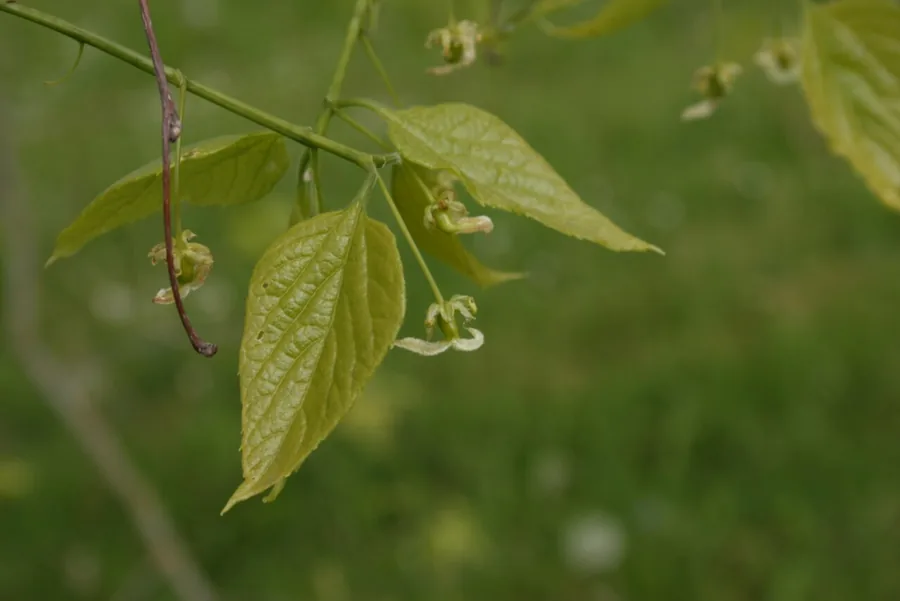
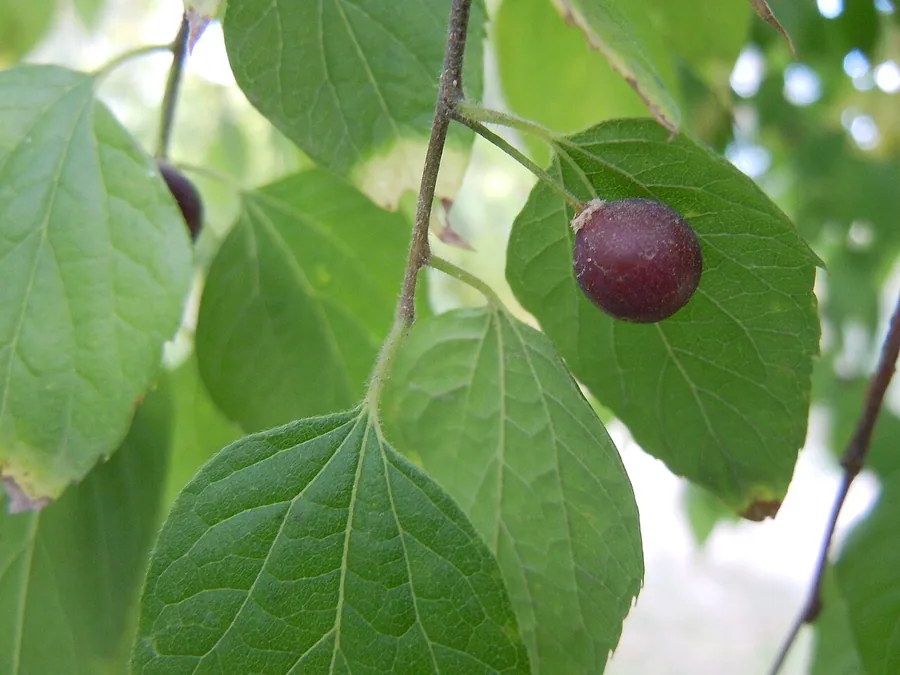
Foliage: Alternate, simple, ovate leaves with an asymmetric (oblique) base, serrated margins, and a long pointed tip; rough-textured, mid to yellow-green, turning pale yellow in autumn. Leaves reduce readily under bonsai culture.
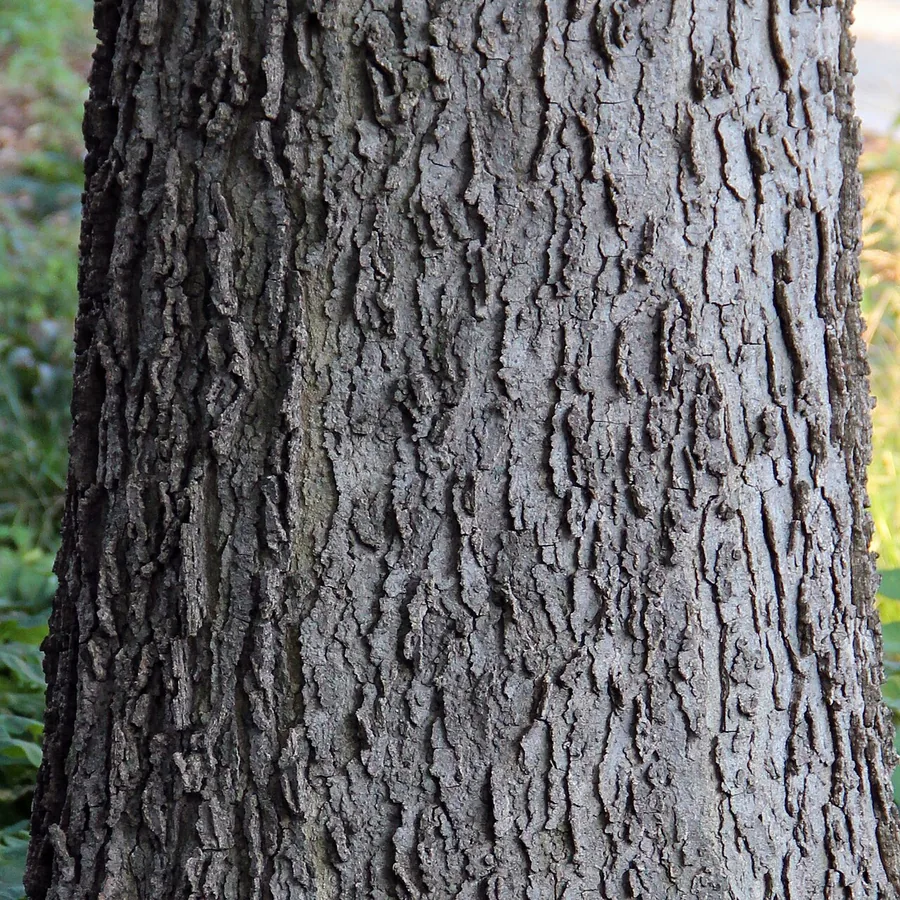
Bark & trunk: The signature feature: smooth silvery-gray when young, developing prominent corky, warty, wart-like ridges and knobs with age, giving an aged, characterful trunk far sooner than most species.
Growth habit / form: In nature a medium-large tree to 15 to 20 m with a rounded, spreading crown; vigorous and freely branching, making it easy to build dense ramification.
Flowers / fruit: Small, inconspicuous greenish flowers in spring; followed by small round berry-like drupes ripening from orange-red to dark purple, edible and eaten by birds, the source of many self-sown seedlings.
Look-alikes & how to tell them apart: Closely resembles elms (Ulmus) and its cousin sugarberry (Celtis laevis / C. laevigata). Distinguish from elm by the asymmetric leaf base combined with three prominent veins from the leaf base and the warty corky bark, versus elm's more uniformly furrowed bark. Sugarberry (C. laevigata) has narrower, smoother, less-toothed leaves and smoother bark than common hackberry's warty trunk.
Climate & USDA Zone
Common hackberry is exceptionally cold-hardy, thriving in USDA zones 3 to 9 and tolerating ground temperatures down to roughly −40 °C (−40 °F). It needs a genuine cold winter dormancy and must live outdoors year-round; it is not an indoor tree. It also tolerates heat, wind, drought, and urban pollution well, making it forgiving of a wide range of climates. The one caveat in bonsai is that potted roots are far less hardy than the trunk: in hard-freeze regions, protect the rootball over winter (mulch, heel into the ground, or move to a cold frame or unheated shed) so the roots do not freeze solid, while still exposing the tree to the cold it needs.
Light
Give hackberry full sun; it is a strong-light tree that grows vigorously and colors best in an open, sunny position. It tolerates some light part shade, but too much shade produces weak, leggy growth and larger leaves. In very hot climates it handles full sun well thanks to its drought tolerance, though ensuring adequate water in high heat prevents leaf scorch.
Watering
Keep the soil evenly moist in the growing season, but hackberry is notably drought-tolerant and forgives the occasional dry spell better than most bonsai species.
- Water thoroughly when the surface begins to dry; in summer heat this may be daily.
- It survives brief drought well, so missed waterings are more forgivable than with thin-leaved flowering trees.
- Still ensure sharp drainage; it dislikes standing water, which rots roots.
- Reduce watering in autumn and give only enough over dormancy to keep roots from drying out completely.
Soil & Root Care
Soil: A well-draining bonsai mix: akadama with pumice and lava (roughly 2:1:1), or a general inorganic mix with some organic component. Hackberry is very adaptable to soil type and pH and is not fussy as long as drainage is good.
Repotting:
- Repot every 2 to 3 years for younger, vigorous trees; less often as they mature.
- Time it for early spring, just before or as buds swell, while dormant.
- It tolerates root work well for a deciduous tree; you can remove up to about one-third of the roots and rake out old soil; being elm-like, it recovers strongly.
- Aftercare: shelter from strong wind and hard sun for a couple of weeks, protect from late frost, water carefully, and delay feeding until new growth appears.
Feeding
Feed generously through the growing season, as hackberry is a vigorous grower. Use a balanced fertilizer every 2 weeks or a slow-release organic feed monthly from leaf-out through summer. Ease off nitrogen toward late summer to firm growth and keep internodes and leaves smaller, and stop feeding once the tree goes dormant. Strong feeding early in the season fuels the vigor that builds ramification quickly on this species.
Pruning & Styling
- Suitable styles include informal upright (moyogi), broom (which suits its elm-like habit beautifully), formal upright, clump and multi-trunk forms.
- It back-buds readily on old wood and tolerates hard pruning well, so structural cuts and heavy shortening are low-risk, a big part of why it is beginner-friendly.
- Pinch and clip new shoots through the growing season to build fine ramification and reduce leaf size; partial defoliation of larger leaves in early summer can further refine the canopy.
- Wire young, flexible branches; older wood stiffens, so set primary structure while branches are supple and use guy wires for heavier limbs.
- Seal larger cuts; the wood heals reasonably but clean sealing prevents dieback.
Propagation & Cuttings
Ease: Easy. Best methods: seed; cuttings.
Celtis occidentalis grows readily from seed; clean the drupes, cold-moist stratify ~2 to 3 months, and sow in spring; birds spread it so self-sown seedlings are common. Softwood/semi-hardwood cuttings root at moderate rates with hormone, and it air-layers. For bonsai the vigorous growth, tough constitution, and easy back-budding make seed-grown stock develop quickly; trunk chops build good taper on this forgiving native.
Pests
- Hackberry nipple gall psyllid (Pachypsylla spp.), the signature hackberry pest, causing distinctive bump/nipple galls on leaves; largely cosmetic; remove badly galled leaves; systemic control only if severe.
- Aphids: cluster on soft new shoots, secreting honeydew; rinse off and treat with insecticidal soap.
- Scale insects: bumps on stems and branches; treat with horticultural oil, including a dormant application.
- Spider mites: in hot, dry conditions, causing stippling and webbing; rinse foliage and treat with miticidal soap.
- Caterpillars (including hackberry emperor larvae): chew foliage; hand-pick or treat with Bacillus thuringiensis (Bt).
Treatment line: for sap-suckers use insecticidal soap or horticultural oil on both leaf surfaces every 7 to 10 days; for chewing pests hand-pick or apply Bt; leaf galls are usually harmless and need no treatment.
Disease, Fungus & Infection
- Witches' broom: very common on hackberry, caused by a combination of a powdery mildew fungus (Sphaerotheca) and an eriophyid mite; produces dense clustered twiggy brooms. Prune out brooms; largely cosmetic and rarely fatal.
- Powdery mildew: white powdery coating on leaves in humid, crowded conditions; improve airflow, remove affected foliage, and treat with a fungicide if severe.
- Leaf spot fungi: dark blotches in wet conditions; remove affected leaves and improve air circulation.
- Root rot (Phytophthora): from waterlogged soil; prevented by sharp drainage and careful watering.
Prevention: good air circulation, full sun, sharp drainage, and prompt removal of witches' brooms and diseased foliage keep hackberry healthy; it is generally a robust, disease-resistant species.
Most Common Causes of Death
1. Frozen rootball in winter: the number-one killer of an otherwise bulletproof tree; potted roots are far less cold-hardy than the trunk. Protect the pot (mulch, cold frame, or heel into the ground) while still allowing dormancy. 2. Waterlogging / root rot: soggy soil rots the roots. Use free-draining substrate and never let the pot stand in water. 3. Skipping winter dormancy: kept warm indoors year-round, it weakens and declines. It must experience a real cold winter outdoors. 4. Severe summer drought neglect: though drought-tolerant, a fully dried-out pot in extreme heat still scorches and can kill. Keep evenly moist in heat. 5. Late-frost damage to fresh growth: tender spring shoots can be nipped by a late freeze after bud break. Give frost protection to newly repotted or leafing trees.
Seasonal Calendar
- Spring: Bud break and rapid growth; repot in early spring before buds swell if due, resume feeding as leaves expand, and begin structural pruning and wiring.
- Summer: Vigorous growth; keep evenly watered, feed regularly, and clip/pinch shoots (and partial-defoliate) to build ramification and reduce leaf size; watch for galls, mites, and mildew.
- Autumn: Leaves turn yellow and drop; reduce watering and feeding, let the tree harden off, and prepare winter root protection.
- Winter: Fully dormant outdoors; protect the pot/roots from hard freeze while ensuring the tree gets its needed chill; water only enough to keep roots from drying out completely.
Close-up photo reference
Compare your tree against these to confirm the species and spot problems early.
.jpg)


Sources
- Wikipedia: *Celtis occidentalis*
- Missouri Botanical Garden: *Celtis occidentalis*
- The Morton Arboretum: Common hackberry
Growing a Common Hackberry bonsai
We don’t currently stock Common Hackberry trees. If you already have one — or you are sourcing one elsewhere — these are the supplies its care depends on:
- Bonsai Decorative Crushed Shale Top of Soil Dressing — $4.95
- Bonsai Zen Garden Grooming Rake — $8.95
- Metal Impression Tags Package of 4 — $2.95
Browse all bonsai trees, tools and soil or find a species we stock that suits your conditions.
- All species
- Shop bonsai trees, tools & supplies
- How to Water a Bonsai (Without Killing It)
- Bonsai Soil: What to Buy, What to Mix, and What It Costs
- Why Bonsai Die After Repotting: Diagnosing a Failed Repot
- Pruning vs. Pinching: Shaping Your Bonsai
- Overwintering Bonsai: Cold-Season Care
- Indoor Bonsai Light and Humidity: Making a Windowsill Actually Work
- Root Rot on bonsai
- Underwatering (Drought Stress) on bonsai
- Winter / Frost Damage on bonsai
- Leaf Scorch / Sunburn on bonsai
- Powdery Mildew on bonsai
- Amur Maple bonsai care
- European Spindle bonsai care
- Field Maple bonsai care
- American Elm bonsai care