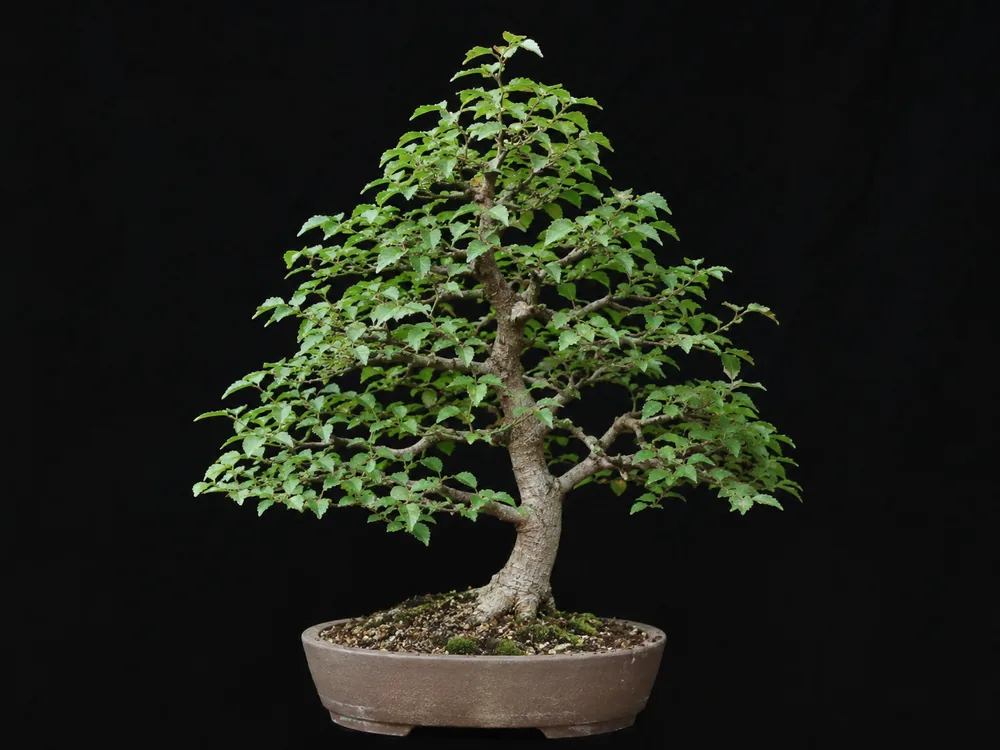
Chinese Hackberry Bonsai Care
Celtis sinensis
Zones 7 to 9, outdoor. A vigorous, fast-growing warm-climate broadleaf that makes an excellent and rewarding bonsai. Most are lost to overwatering.
Cannabaceae (formerly Ulmaceae) · Deciduous (semi-deciduous in mild climates) broadleaf tree, grown as bonsai
Chinese Hackberry quick reference
| USDA zones | 7–9 (warm-temperate; not very cold-hardy) |
|---|---|
| Indoor / outdoor | Outdoor in suitable climates; can be wintered as a cool indoor/greenhouse tree in cold regions |
| Light | Loves sun — full sun in cool/warm months; partial shade in peak summer heat |
| Water | Moist — water daily in the growing season the moment the surface dries; keep moist in winter; still must drain freely |
| Soil | Well-draining, pumice-rich inorganic mix with some grit; avoid heavy organic soil |
| Repot | Young trees annually; mature trees every 2–3 years |
| Frost | Limited — protect from hard frost; not a deep-cold species |
| Mature height (as bonsai) | Tree to 20 m; kept 25-60 cm as bonsai |
| Growth rate | Moderate-fast |
| Season of interest | Yellow autumn colour, fine twigging |
| Leaf reduction | Good - reduces well with defoliation |
| #1 cause of death | Root rot from poorly draining soil; secondary risk from neglect of its fast vigorous growth |
Overview & Character
Chinese Hackberry is a vigorous, fast-growing warm-climate broadleaf that makes an excellent and rewarding bonsai. It puts on great size boosts in a single season, reaching a mature-looking trunk within just a few years, which makes it satisfying for impatient growers — but it also demands frequent trimming and root pruning to keep it in bonsai proportion. It builds fine twigging, develops smooth pale-grey bark, and offers light autumn color. It loves sun and water during the growing season and is generally trouble-free when grown well, with root rot from poor drainage being the main thing to guard against.
Identification
FOLIAGE: Alternate, simple leaves that are ovate with a drawn-out pointed tip, a serrate margin (often toothed mainly toward the tip), and a characteristically asymmetric (oblique) leaf base — the two sides of the leaf meet the stalk unevenly. Three main veins run from near the base. Glossy mid-green, turning yellowish in autumn.
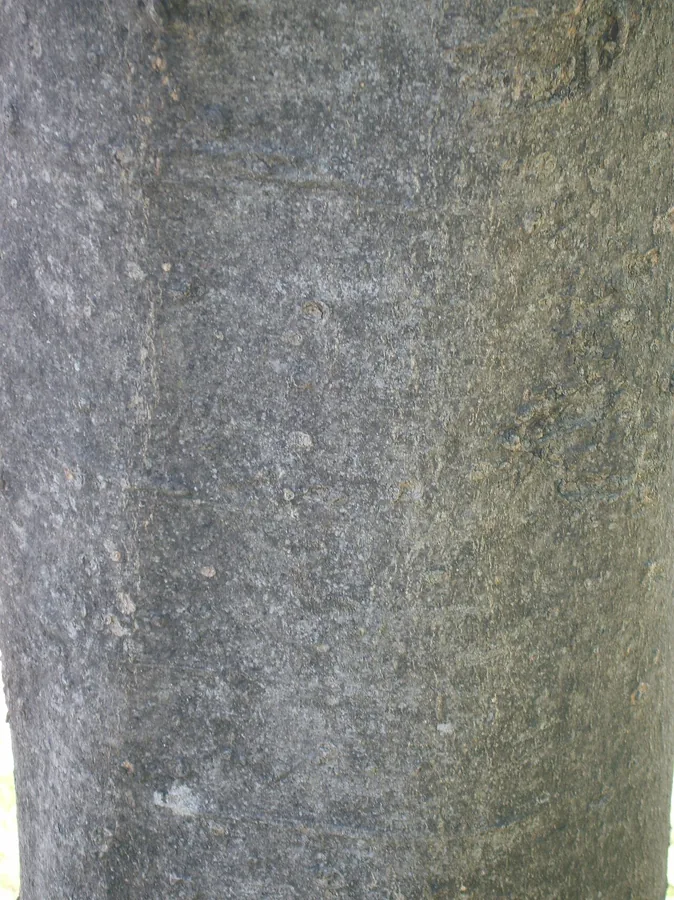
BARK & TRUNK: Smooth, pale grey bark when young that can develop a slightly warty or roughened texture with age (a classic hackberry trait). Trunks fatten quickly.
GROWTH HABIT / FORM: A fast, vigorous, spreading tree with a rounded crown; very twiggy and responsive, building ramification readily.
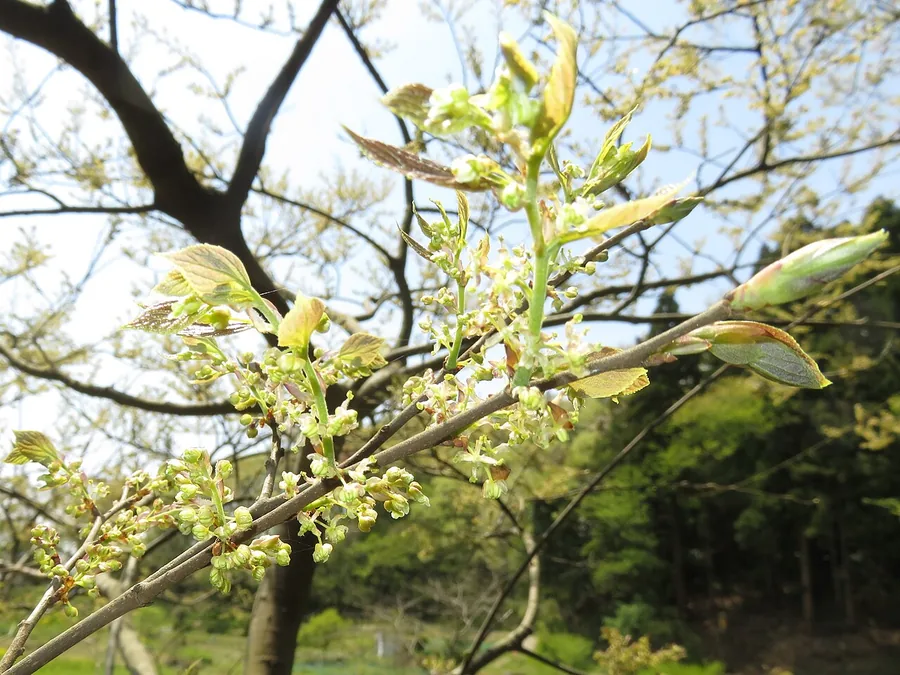
FLOWERS / FRUIT / SEEDS: Small inconspicuous greenish flowers, followed by small round berries (drupes) that ripen orange to dark purple — a hackberry signature.
Look-alikes & how to tell them apart: Hackberry is distinguished by its asymmetric (oblique) leaf base + warty bark + small round berries, with three veins from the leaf base. Elms (Ulmus) also have an asymmetric leaf base but bear flat disc-like winged samaras (not berries) and lack the warty bark. Maples have opposite, lobed leaves and paired samaras; hornbeam has a fluted trunk and winged seed bracts. The berry fruit is the quickest confirmation of hackberry.
Climate & USDA Zone
Suited to USDA zones 7–9 — a warm-temperate species that is not deeply cold-hardy. In its zone range it grows outdoors year-round. In colder regions it should be overwintered in a cool but frost-free space (cold greenhouse, conservatory, or bright cool room). It thrives in warmth and sun and resents hard frost on its roots.
Light
The Celtis adores sunshine. Place it where it receives plenty of direct light. In cool to warm months it wants direct sun for much of the day; in the hottest part of summer move it to partial shade to stop it drying out or scorching. Strong light keeps growth compact and supports good ramification.
Watering
Keep it moist. Water daily during the growing season, watering the moment the soil surface feels dry, and keep the soil moist through winter as well. The balance to strike is consistent moisture without waterlogging: never let it dry out completely, but never leave it sitting in saturated soil either, because that causes root rot. Its vigorous growth means it drinks heavily in summer heat. Free-draining soil is what makes generous watering safe.
Soil & Root Care
Use a well-draining mix to prevent the most common problem, root rot. Hackberry does best in a pumice-laced substrate; akadama works as a component as well. The soil should not be heavily organic but can include some organic grit mixed in. Because it grows so fast, root development is rapid: repot young trees annually and mature trees every 2–3 years, root-pruning to control vigor and prevent the pot becoming root-bound.
Feeding
Feed weekly for about 4–5 weeks after the buds open in spring, then continue regular feeding through the growing season. Use low-nitrogen fertilizers to avoid coarse, oversized growth on this already vigorous species — this keeps leaves smaller and internodes shorter. Reduce and stop feeding as growth slows in autumn.
Pruning & Styling
This is a fast grower that requires frequent trimming to stay in proportion. Let shoots extend, then cut back hard to one or two nodes to build ramification; expect to repeat this often through the season. It back-buds well, so it tolerates and recovers from heavy pruning. Wire young shoots while flexible and protect the smooth bark; because growth is rapid, check wire often so it does not bite in. Defoliation on healthy trees can reduce leaf size. Its quick response makes it forgiving and ideal for developing structure fast.
Propagation & Cuttings
Ease: Easy. Best methods: seed; cuttings; layering.
Celtis sinensis grows readily from seed — clean the small drupes, cold-moist stratify ~2–3 months, and sow in spring; germination is good. Softwood/semi-hardwood cuttings in the growing season root at fair-to-good rates with hormone, and it air-layers well in spring. Birds spread the seed, so self-sown seedlings are common. For bonsai the vigorous growth and easy back-budding make seed- or cutting-grown stock develop quickly, with good taper achievable through trunk chops and regrowth.
Pests
Generally trouble-free, especially when grown well. The main pests are red spider mites and caterpillars, and these tend to attack already-weakened trees rather than healthy ones. Inspect leaf undersides for mite stippling and webbing. Treat with a water jet, horticultural/neem oil, insecticidal soap, or an appropriate insecticide, and above all keep the tree vigorous, since strong trees largely resist these pests.
Disease, Fungus & Infection
The dominant health issue is root rot, driven by poorly draining or waterlogged soil — prevented by a well-draining, pumice-rich mix and correct watering. Beyond that, hackberry is largely disease-resistant when healthy. General fungal leaf problems are minimized by good airflow and by watering the soil rather than the foliage. Remove any dead or diseased wood promptly to keep the tree clean and vigorous.
Most Common Causes of Death
1. Root rot from poorly draining soil. The single most common killer. Prevention: use a well-draining, pumice-laced inorganic mix and never let the pot stay waterlogged. 2. Neglecting its fast growth. Left untrimmed and un-repotted it becomes root-bound, coarse, and weakened. Prevention: trim frequently and repot on a tight schedule (young trees annually). 3. Frost damage. Not cold-hardy; hard frost on the roots can kill it. Prevention: overwinter frost-free in cold climates (cool greenhouse/bright cool room). 4. Drying out completely in summer. Its vigor means heavy water demand; desiccation damages roots and foliage. Prevention: water daily in the growing season, check soil often in heat. 5. Summer scorch from full sun in extreme heat. Prevention: partial shade in the hottest months. 6. Pests on weakened trees (mites/caterpillars). Strike trees that are already stressed. Prevention: keep the tree strong and well cared for; treat early if seen. 7. Overwatering in winter. Cool, low-growth periods plus saturated soil invite rot. Prevention: keep winter soil moist but never soggy.
Seasonal Calendar
- Spring: Repot (young trees annually) into well-draining mix. Begin weekly low-nitrogen feeding once buds open. Full sun. Start frequent trimming as vigorous growth begins.
- Summer: Water daily — twice on hot days; move to partial shade in peak heat. Trim repeatedly to control fast growth and build ramification; consider defoliation on strong trees. Watch weak trees for mites/caterpillars.
- Autumn: Light yellow color. Taper off feeding. Continue tidying pruning; assess structure. In cold regions begin moving toward frost-free winter quarters.
- Winter: Keep frost-free and the soil moist (not soggy). Largely dormant/slowed. Do structural pruning and wiring while growth is quiet; remove any dead wood.
Close-up photo reference
Compare your tree against these to confirm the species and spot problems early.


Sources
- Bonsai Empire — Hackberry Bonsai (Celtis) care guide
- Bonsai4Me — Celtis / Hackberry Bonsai species guide
- Bonsai Mary — Chinese Hackberry Bonsai (Celtis sinensis)
- Bonsai Tree Gardener — Chinese Hackberry Bonsai Tree Care Guide (Celtis sinensis)
Growing a Chinese Hackberry bonsai
We don’t currently stock Chinese Hackberry trees. If you already have one — or you are sourcing one elsewhere — these are the supplies its care depends on:
- Bonsai Decorative Crushed Shale Top of Soil Dressing — $4.95
- Bonsai Zen Garden Grooming Rake — $8.95
- Metal Impression Tags Package of 4 — $2.95
Browse all bonsai trees, tools and soil or find a species we stock that suits your conditions.
- All species
- Shop bonsai trees, tools & supplies
- How to Water a Bonsai (Without Killing It)
- Bonsai Soil: What to Buy, What to Mix, and What It Costs
- Why Bonsai Die After Repotting: Diagnosing a Failed Repot
- Pruning vs. Pinching: Shaping Your Bonsai
- Overwintering Bonsai: Cold-Season Care
- Indoor Bonsai Light and Humidity: Making a Windowsill Actually Work
- Root Rot on bonsai
- Overwatering on bonsai
- Underwatering (Drought Stress) on bonsai
- Winter / Frost Damage on bonsai
- Leaf Scorch / Sunburn on bonsai
- Common Hackberry bonsai care
- Chinese Wisteria bonsai care
- Premna bonsai care
- American Beech bonsai care