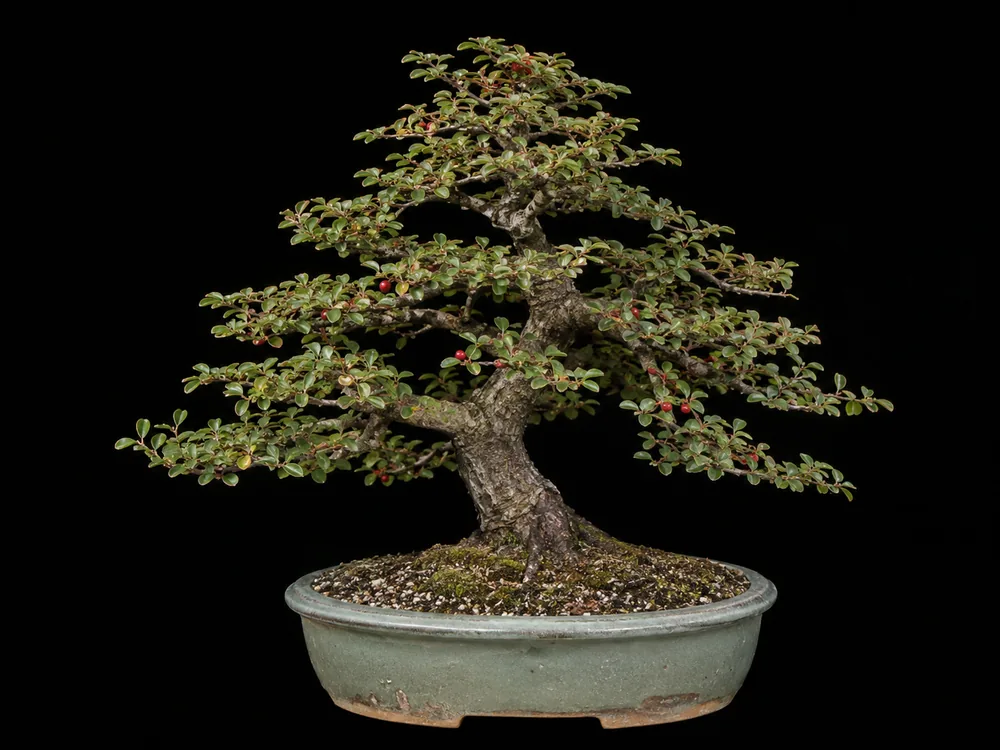
Cotoneaster Bonsai Care
Cotoneaster horizontalis
Outdoor. One of the best and most beginner-friendly outdoor bonsai subjects, especially at small sizes, Shohin, Kifu. Most are lost to overwatering.
Rosaceae (rose family) · Deciduous to semi-evergreen woody shrub; hardy temperate (outdoor)
Cotoneaster quick reference
| USDA zones | Roughly 5–7 (*C. horizontalis*); may struggle in regions with very hot summers south of zone 7 |
|---|---|
| Indoor / outdoor | Outdoor — needs a real winter dormancy; not an indoor bonsai |
| Light | Full sun to bright; full sun gives best flowering and fruit |
| Water | Plenty of water in summer; tolerates short droughts. Keep only slightly moist in winter |
| Soil | Standard free-draining bonsai mix; undemanding |
| Repot | Every 2–3 years (young), 3–5 years (older), early spring |
| Frost | Hardy in ground; in a pot the roots need frost protection (cold frame / unheated shelter) |
| Mature height (as bonsai) | Shrub to 3 m; kept 15-40 cm as bonsai |
| Growth rate | Moderate to fast |
| Season of interest | Spring flowers, autumn/winter berries |
| Leaf reduction | Excellent - small leaves naturally |
| #1 cause of death | Root rot from overwatering (especially in winter); also winter root-freeze in a pot, and indoor cultivation |
Overview & Character
Cotoneaster is one of the best and most beginner-friendly outdoor bonsai subjects, especially at small sizes — Shohin, Kifu, and Chuhin. Cotoneaster horizontalis (rockspray) has a naturally flat, fishbone branching habit and tiny leaves; C. microphyllus is smaller-leaved and more evergreen. Both offer a full seasonal display: glossy small leaves, clusters of small white-to-pink flowers in spring/early summer, and an abundance of bright red berries that persist into autumn and winter, providing color long after the leaves have gone.
The species is exceptionally tolerant of pruning, back-buds well, and develops fine, dense ramification quickly, which is why it suits small bonsai so well. It is hardy, vigorous, and adaptable — its only real demands are a sunny outdoor position, sensible watering, and protection of the pot-bound roots in hard winter cold.
Identification
Foliage: Very small, alternate, rounded-to-broadly-oval leaves (often under 1.5 cm), glossy dark green above and paler beneath, with smooth margins. Deciduous to semi-evergreen; in autumn the leaves of C. horizontalis flush red-bronze before dropping. C. microphyllus has even smaller, more evergreen leaves.
Bark & trunk: Thin grey-brown bark; slim, wiry stems and branches that lignify and stiffen with age.
Growth habit / form: The defining feature of C. horizontalis is its flat, rigid fishbone / herringbone branching — side shoots arranged regularly along the main stems in a stiff, splayed plane, which is why it suits cascade and rock plantings.
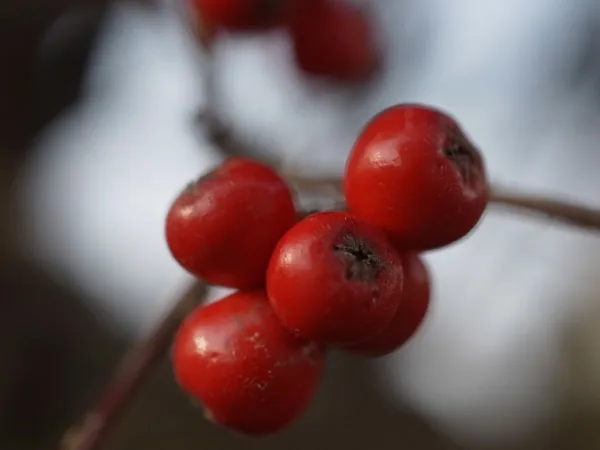
Flowers / fruit: Tiny white-to-pink-tinged flowers in late spring/early summer (much smaller and more solitary than privet's panicles), followed by abundant small, round, bright red berries that persist into winter.
Look-alikes & how to tell them apart: Look for small glossy leaves, the rigid herringbone branch pattern, and bright red berries — but no thorns. The thornless habit separates it from Pyracantha (which has sharp thorns and clustered orange/red berries) and Hawthorn (thorns plus lobed leaves and red haws). Its red berries and tiny rounded leaves distinguish it from Privet (black berries, larger soft leaves, no herringbone) and from Ficus (no latex, no aerial roots) and Fukien Tea (no white-dotted leaves).
Climate & USDA Zone
Cotoneaster horizontalis is hardy across roughly USDA zones 5–7. It does not perform well in regions with very hot summers (generally south of zone 7), where heat can stress it. It is an outdoor bonsai that requires a genuine cold dormancy each winter and should not be kept indoors. While the species is fully frost-hardy in the ground, the roots of a tree in a shallow bonsai pot are far more vulnerable to freezing, so winter root protection is important (see below).
Light
Give Cotoneaster a full-sun to very bright position. Maximum light produces the most compact growth, the heaviest flowering, and the best berry set — the whole point of growing this species. In climates with intense summer heat, very light afternoon shade can prevent stress, but in most climates full sun is ideal.
Watering
In summer Cotoneaster is thirsty and needs plenty of water — water generously and do not let it dry out during active growth, flowering, and fruiting, though it can tolerate brief short droughts better than many species. In winter, swing the other way: keep the roots only slightly moist, because cold, wet, dormant soil readily causes root rot. So: wet (well-watered) in summer, barely moist in winter, free-draining soil throughout.
Soil & Root Care
Cotoneaster is undemanding about soil; any good free-draining bonsai mix serves well. Repot young trees every 2–3 years and older specimens every 3–5 years, in early spring before growth starts. It tolerates root pruning well, which makes building a good nebari straightforward. After repotting, keep the tree sheltered until it re-establishes and avoid letting the fresh soil stay waterlogged.
Feeding
Feed regularly through the growing season with a balanced bonsai fertilizer — solid organic feed every few weeks or a liquid feed more frequently. Adequate feeding supports vigorous growth and good fruiting. As with most fruiting species, avoid excessive nitrogen at the expense of flowers; a balanced feed is best. Stop feeding as the tree enters winter dormancy.
Pruning & Styling
Cotoneaster takes constant pruning extremely well and responds with dense, fine twigging — ideal for refined small bonsai. Trim young shoots regularly through the growing season to maintain the silhouette and build ramification; prune older, structural branches in spring. It back-buds reliably, so hard cutbacks are well tolerated. The thin, flexible young shoots wire easily, though they lignify and can become brittle with age, so do major bending while wood is still young. To enjoy the berries, leave some flowering shoots untrimmed through the bloom period. The naturally horizontal habit of C. horizontalis lends itself to cascade, semi-cascade, informal, and rock-planting styles.
Propagation & Cuttings
Ease: Easy. Best methods: cuttings; layering; seed.
Cotoneaster roots readily — semi-hardwood cuttings in summer and hardwood cuttings in autumn both strike well with light hormone. Low, spreading types layer naturally where stems touch soil, giving quick rooted pieces. Seed germinates after warm-then-cold stratification (or sow fresh outdoors and wait), but it's slow and hybridizes freely, so cuttings keep forms true. For bonsai, cuttings and layers rapidly produce the fine twigs, small leaves, and berries this genus is loved for, and it makes excellent forgiving shohin material.
Pests
Cotoneaster can be bothered by aphids (on soft new growth), scale insects, spider mites, caterpillars, and borers. Inspect regularly, especially the new shoots and leaf undersides, and treat outbreaks with insecticidal soap, neem oil, or an appropriate systemic. Healthy, well-sited trees in good airflow generally have few serious pest problems.
Disease, Fungus & Infection
The most important disease to know is fire blight (a bacterial infection, Erwinia amylovora), which affects many Rosaceae and causes shoots to suddenly wilt, blacken, and look scorched ("burnt"), often with a shepherd's-crook bend at the tip. Reassuringly, C. horizontalis and some C. microphyllus cultivars are among the less fire-blight-prone cotoneasters. If it strikes, prune well below the infected tissue, disinfecting tools between cuts, and dispose of the prunings. Cotoneaster can also suffer bacterial blight, powdery mildew, various leaf-spot fungi, and root rot — most of which are minimized by good drainage, correct watering, full sun, and air circulation. Root rot from cold, wet winter soil is the most common fungal-type killer.
Most Common Causes of Death
1. Overwatering / root rot. The main killer; thirsty in summer but rot-prone in soggy soil — free-draining mix, water when surface dries. 2. Drying out in summer. Fruiting/flowering trees drink heavily; a hard dry-out drops berries and causes dieback. 3. Winter root freeze. Hardy but shelter potted roots in severe freezes. 4. Fire blight (rare on bonsai). A Rosaceae member; if blackened 'shepherd's crook' shoots appear, cut well below into healthy wood and sterilize tools. 5. Pests. Aphids, scale, and woolly aphid — treat early; spider mites in hot dry air.
Seasonal Calendar
- Spring: Repot if due (early); resume feeding; light pruning; white/pink flowers appear — leave some for berries.
- Summer: Thirsty — water generously; trim after flowering; watch aphids/mites.
- Autumn: Red berries color up (the highlight); taper feeding/water.
- Winter: Hardy dormancy; protect potted roots; berries often persist; structural pruning while dormant.
Close-up photo reference
Compare your tree against these to confirm the species and spot problems early.

Sources
Where to buy a Cotoneaster bonsai
We don’t stock Cotoneaster at the moment. These species need similar care and we have them now — they are the closest match in our catalogue.
- Chinese Elm — similar care, in stock now
Browse all bonsai trees for sale or find a species matched to your climate and space.
- All species
- Shop bonsai trees, tools & supplies
- How to Water a Bonsai (Without Killing It)
- Bonsai Soil: What to Buy, What to Mix, and What It Costs
- Why Bonsai Die After Repotting: Diagnosing a Failed Repot
- Pruning vs. Pinching: Shaping Your Bonsai
- Overwintering Bonsai: Cold-Season Care
- Indoor Bonsai Light and Humidity: Making a Windowsill Actually Work
- Root Rot on bonsai
- Overwatering on bonsai
- Underwatering (Drought Stress) on bonsai
- Winter / Frost Damage on bonsai
- Leaf Scorch / Sunburn on bonsai
- Chinese Elm bonsai care
- Amur Maple bonsai care
- Common Hackberry bonsai care
- European Spindle bonsai care