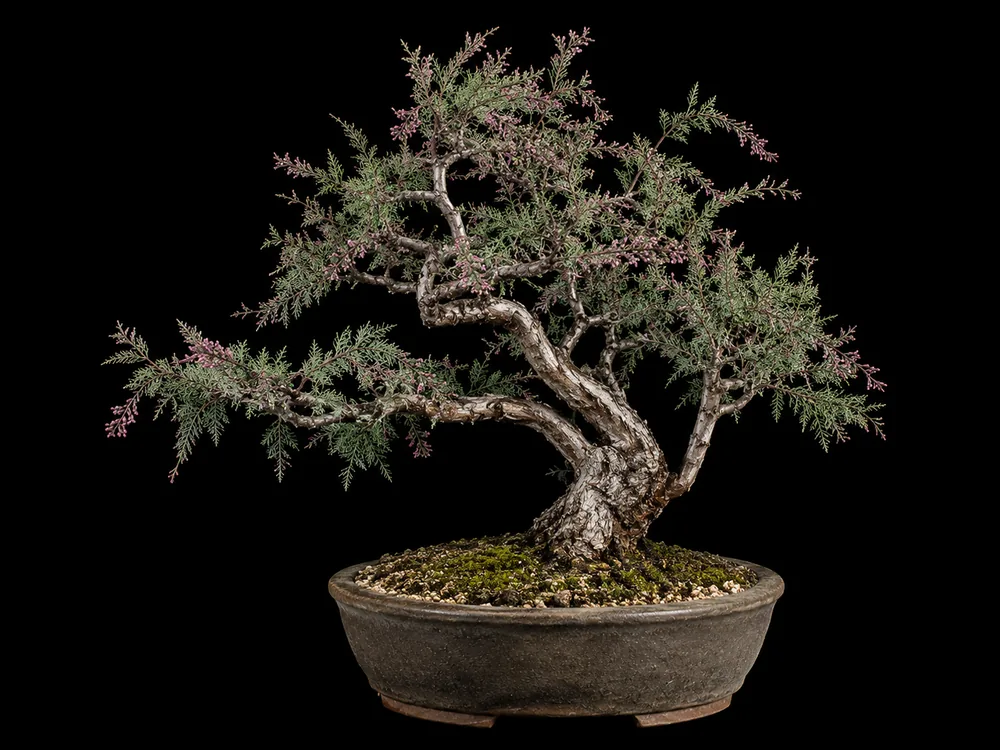
Tamarisk Bonsai Care
Tamarix ramosissima
Zones 4 to 8, outdoor. A tough, wiry deciduous shrub native to the drylands and riverbanks.
Tamaricaceae (tamarisk family) · Deciduous broadleaf shrub/small tree
Tamarisk quick reference
| USDA zones | 4 to 8 |
|---|---|
| Indoor / outdoor | Outdoor: a temperate deciduous shrub that needs winter dormancy |
| Light | Full sun: a sun-loving desert/riverbank plant; give it maximum light |
| Water | Water-loving yet drought-tolerant: thrives with plenty of water but survives dryness and salinity remarkably well |
| Soil | Well-draining bonsai mix; tolerates saline, alkaline, and poor soils |
| Repot | Every 2 years in early spring; it is a vigorous grower |
| Frost | High: cold-hardy to roughly −30 °C / −20 °F in the ground; protect pot roots from hard freeze |
| Mature height | Shrub to 5m in nature; bonsai usually 25-60cm. |
| Growth rate | Fast (salt-tolerant, vigorous). |
| Season of interest | Spring/summer for feathery pink plume flowers. |
| Leaf reduction | Good; fine scale foliage naturally delicate. |
| #1 cause of death | Hard pruning / wiring during the wrong season: heavy work outside its narrow safe window causes dieback |
Overview & Character
Tamarisk is a tough, wiry deciduous shrub native to the drylands and riverbanks of Eurasia, now widely naturalized (and famously invasive as "saltcedar") across the American West. In bonsai it is prized for a very particular look: delicate, feathery, cypress-like gray-green foliage on fine, whippy branches, topped in summer by airy plumes of tiny pink flowers, all riding on a rugged, fissured trunk. That combination of soft, wind-swept foliage and gnarled bark makes it a superb subject for windswept (fukinagashi) and literati styles that capture its riverbank, storm-blown character. It is vigorous, salt- and drought-hardy, and quick to develop.
The care keys reward respect for its rhythm rather than raw toughness. Tamarisk grows fast and loves water and sun, but it has a reputation for being temperamental about timing: heavy pruning, wiring, and root work must be done in the right season or branches die back unpredictably. The traditional and reliable approach is to do structural pruning and wiring in early spring as growth begins, keep it very well watered and fed in summer, and avoid hard work in the dormant cold months. Get the timing right and it is a fast, forgiving grower; get it wrong and you lose branches.
Identification
Foliage: Tiny, scale-like, alternate leaves clasping slender green twigs, giving a fine, feathery, juniper- or cypress-like gray-green texture. The whole shoot is soft and plume-like rather than leaf-by-leaf obvious.
Bark & trunk: Young stems smooth and reddish-brown to purplish; older trunks develop rough, furrowed, ridged gray-brown bark that gives a convincingly aged, rugged appearance well suited to bonsai.
Growth habit / form: A large, densely branched shrub or small tree to 5 to 6 m, with slender, arching, whip-like branches; naturally airy and open, lending itself to windswept and cascading forms.
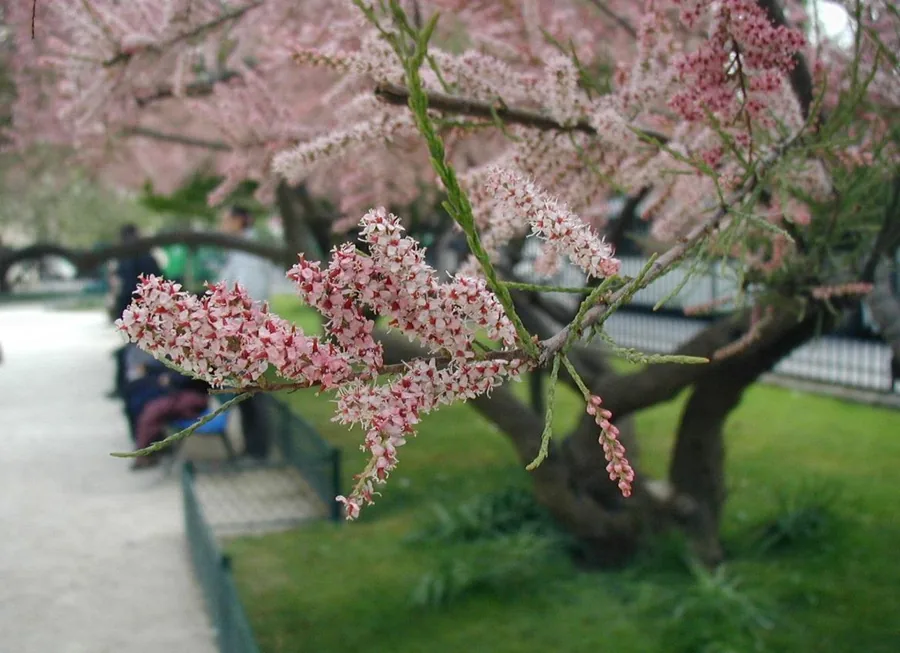
Flowers / fruit: Masses of tiny pink (to pinkish-white) flowers borne in slender plume-like racemes on the current season's growth, typically summer into early autumn; followed by tiny capsules releasing wind-borne, tufted seeds.
Look-alikes & how to tell them apart: Foliage superficially resembles a juniper (Juniperus) or a cypress, but tamarisk is deciduous with true (if tiny) scale leaves and produces showy pink flower plumes; junipers are evergreen conifers bearing cones/berries, never pink blooms. Among tamarisks, T. ramosissima is distinguished from spring-flowering T. tetrandra by its summer-to-autumn bloom on current-year wood and its five-petaled flowers.
Climate & USDA Zone
Tamarix ramosissima is cold-hardy across USDA zones 4 to 8, tolerating ground temperatures down to roughly −30 °C (−20 °F). It needs a genuine cold winter dormancy and lives outdoors year-round; it is not an indoor tree. It is extraordinarily tolerant of heat, drought, wind, alkaline and saline soils, and coastal salt spray, reflecting its dryland and riverbank origins. As with other potted deciduous species, the exposed rootball is the weak point in a hard winter: protect the pot (mulch, heel into the ground, or move to a cold frame or unheated shed) so the roots do not freeze solid while the tree still gets the chill it needs.
Light
Give tamarisk full, unobstructed sun; it is a sun-loving dryland plant that grows strongest and flowers best in maximum light. Any significant shade produces weak, sparse, leggy growth and poor bloom. Its salt and heat tolerance means it handles the hottest, brightest positions well, provided watering keeps pace in extreme heat.
Watering
Tamarisk is unusual; it is both water-loving and drought-tolerant: it thrives on abundant water yet survives dryness and salinity that would kill most bonsai.
- Water generously and often in the growing season; it is a thirsty, fast grower and will not object to a very moist root run.
- At the same time it tolerates the occasional missed watering and dry spell far better than most species.
- It even tolerates saline and hard water thanks to its salt-excreting foliage, a rare plus for difficult water.
- Ensure good drainage nonetheless, and reduce watering in autumn and over dormancy to only what keeps roots from fully drying out.
Soil & Root Care
Soil: A well-draining bonsai mix: akadama with pumice and lava, or a general inorganic mix. Tamarisk is famously unfussy and tolerates saline, alkaline, sandy, and poor soils, so drainage and stability matter more than any special composition.
Repotting:
- Repot every 2 years or so; it is a vigorous grower and fills a pot with roots quickly.
- Time it for early spring as buds begin to move; avoid disturbing the roots at other times.
- It tolerates root pruning reasonably well given its vigor, but combine it with matching top pruning and do it only in that early-spring window; heavy root work at the wrong time can cause dieback.
- Aftercare: keep sheltered from strong wind and hard sun for a couple of weeks, protect from late frost, water well, and resume feeding once new growth is established.
Feeding
Feed generously through the growing season to fuel its natural vigor. Use a balanced fertilizer every 2 weeks or a slow-release organic feed monthly from leaf-out through summer. Because it flowers on current-season growth, keeping it well fed and growing strongly supports both foliage development and the summer flower plumes. Ease off nitrogen in late summer to firm the growth, and stop feeding once the tree enters dormancy.
Pruning & Styling
- Suitable styles include windswept (fukinagashi), literati (bunjin), informal upright, and cascade/semi-cascade forms that exploit its slender, arching, whip-like branches and feathery foliage.
- Timing is critical: do hard structural pruning and wiring in early spring as growth begins; tamarisk is notorious for dieback if heavily pruned or wired in the dormant season or late in the year.
- Because it flowers on current-year wood, light trimming after spring growth still allows summer bloom; trim shoots regularly through summer to build density and refine the plume-like pads.
- Wire young, flexible whips in spring; they set quickly, but watch for wire bite on fast-growing branches and remove wire promptly.
- Pinch back long extension growth to keep the airy canopy in proportion and encourage back-budding on the fine shoots.
Propagation & Cuttings
Ease: Very easy. Best methods: hardwood and softwood cuttings.
Tamarix ramosissima roots extremely easily: hardwood cuttings in winter (even large stakes) and softwood cuttings in summer both strike readily with little effort, and broken pieces root where they fall, which is why it's invasive. Seed is tiny and short-lived and seldom used. For bonsai the fine feathery foliage, pink plumes, and rugged trunks are the draw; cutting-grown plants develop fast, tolerate salt and drought, and back-bud strongly, though the wispy growth needs frequent trimming to build ramification.
Pests
- Aphids: cluster on soft new shoots and flower plumes, secreting honeydew; rinse off and treat with insecticidal soap.
- Scale insects: bumps on stems and twigs; treat with horticultural oil, including a dormant application.
- Spider mites: thrive in hot, dry conditions, causing stippling and fine webbing on the delicate foliage; rinse and treat with miticidal soap.
- Tamarisk leaf beetle (Diorhabda spp.): a specialist defoliator (deliberately introduced as biocontrol in the US); skeletonizes foliage; hand-pick or treat if it appears on cultivated plants.
Treatment line: for sap-suckers and mites use insecticidal soap or horticultural oil on both foliage surfaces every 7 to 10 days, and improve air circulation; hand-pick leaf beetles from small specimens.
Disease, Fungus & Infection
- Root rot (Phytophthora / Pythium): the main real threat despite its water tolerance, arising from stagnant, poorly drained soil; prevented by sharp drainage and avoiding a permanently waterlogged (as opposed to well-watered, draining) pot.
- Powdery mildew: occasional white coating on foliage in humid, crowded, low-airflow conditions; improve air movement, remove affected shoots, and treat with fungicide if severe.
- Canker / dieback: twig and branch dieback, often following ill-timed heavy pruning or wounding; prune out dead wood back to healthy tissue and work only in the safe season.
Prevention: full sun, good air circulation, drainage that keeps water moving rather than stagnant, and above all correct-season pruning prevent nearly all problems on this generally robust species.
Most Common Causes of Death
1. Hard pruning or wiring in the wrong season: the number-one killer; heavy work outside the early-spring window causes unpredictable branch dieback that can cascade. Do structural work only as growth begins in spring. 2. Frozen rootball in winter: potted roots are far less cold-hardy than the trunk. Protect the pot (mulch, cold frame, or heel into the ground) while still allowing dormancy. 3. Root rot from stagnant, waterlogged soil: despite loving water, standing (non-draining) water rots the roots. Use free-draining substrate and keep water moving. 4. Skipping winter dormancy: kept warm indoors year-round, it weakens and declines. It must experience a real cold winter outdoors. 5. Severe neglect drought in extreme heat: very tolerant, but a fully dried-out pot in blazing heat can still kill a fast-transpiring tamarisk. Keep it well watered in summer.
Seasonal Calendar
- Spring: The key working window: repot in early spring as buds move, do structural pruning and wiring as growth begins, and resume feeding as foliage expands.
- Summer: Vigorous growth and pink flower plumes on current-year wood; water generously, feed regularly, and trim shoots lightly to shape while preserving bloom; watch for mites and aphids.
- Autumn: Growth slows and leaves drop; reduce watering and feeding, let the tree harden off, and prepare winter root protection; avoid hard pruning now.
- Winter: Fully dormant outdoors: protect the pot/roots from hard freeze while ensuring the tree gets its needed chill; water only enough to keep roots from drying out, and do no heavy pruning or wiring.
Close-up photo reference
Compare your tree against these to confirm the species and spot problems early.

Sources
- Wikipedia: *Tamarix ramosissima*
- Missouri Botanical Garden: *Tamarix ramosissima*
- USDA Forest Service: *Tamarix ramosissima* (saltcedar)
Growing a Tamarisk bonsai
We don’t currently stock Tamarisk trees. If you already have one — or you are sourcing one elsewhere — these are the supplies its care depends on:
- Bonsai Decorative Crushed Shale Top of Soil Dressing — $4.95
- Bonsai Zen Garden Grooming Rake — $8.95
- Metal Impression Tags Package of 4 — $2.95
Browse all bonsai trees, tools and soil or find a species we stock that suits your conditions.
- All species
- Shop bonsai trees, tools & supplies
- How to Water a Bonsai (Without Killing It)
- Bonsai Soil: What to Buy, What to Mix, and What It Costs
- Why Bonsai Die After Repotting: Diagnosing a Failed Repot
- Pruning vs. Pinching: Shaping Your Bonsai
- Overwintering Bonsai: Cold-Season Care
- Indoor Bonsai Light and Humidity: Making a Windowsill Actually Work
- Root Rot on bonsai
- Underwatering (Drought Stress) on bonsai
- Winter / Frost Damage on bonsai
- Powdery Mildew on bonsai
- Spider Mites on bonsai
- Amur Maple bonsai care
- Common Hackberry bonsai care
- Cotoneaster bonsai care
- European Spindle bonsai care