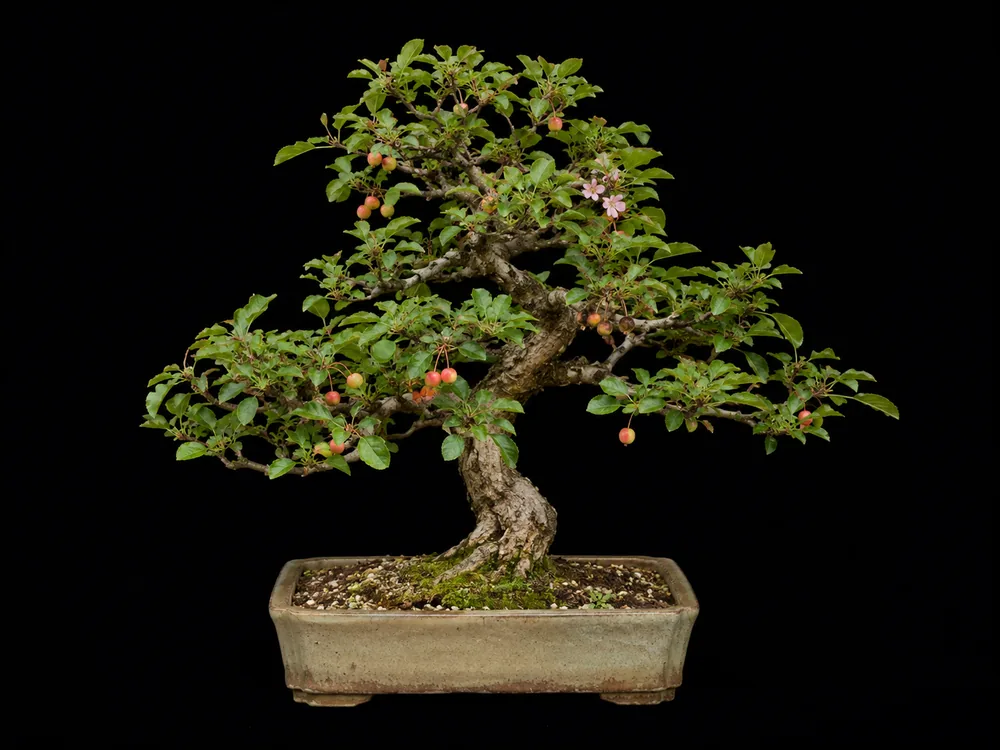
Crabapple Bonsai Care
Malus
One of the great flowering-and-fruiting deciduous bonsai. Most are lost to drying out.
Rosaceae (rose family) · Deciduous broadleaf flowering and fruiting tree/shrub; outdoor bonsai
Crabapple quick reference
| USDA zones | Roughly Zones 4–8 (species-dependent; many are reliably hardy Zones 4–7) |
|---|---|
| Indoor / outdoor | Strictly outdoor — needs full sun, airflow, and a real cold winter dormancy |
| Light | Full sun, at least 6 hours/day; shelter from harsh midday scorch during peak heat |
| Water | Likes it on the WET / consistently-moist side — never let it dry out, especially in flower and fruit. Reliable drainage still required |
| Soil | Free-draining bonsai mix; e.g. akadama / pumice / lava (roughly equal parts), slightly water-retentive. Tolerates a touch of organic matter |
| Repot | Young trees annually in spring; older/established trees every 2–3 years |
| Frost | Frost hardy when established, but roots in a shallow pot are vulnerable — protect from hard/prolonged frost |
| Mature height (as bonsai) | Tree to 8 m; kept 25-60 cm as bonsai |
| Growth rate | Moderate |
| Season of interest | Spring blossom, autumn fruit and colour |
| Leaf reduction | Good with defoliation |
| #1 cause of death | Letting the rootball dry out (drought stress), compounded by root rot from poor drainage and by unmanaged fire blight |
Overview & Character
The crabapple is one of the great flowering-and-fruiting deciduous bonsai. It offers a full calendar of interest: a flush of pink, white, or red spring blossom, fresh green summer foliage, then a heavy crop of miniature apples ("crabs") in red, orange, or yellow that often hang on well into winter after the leaves drop. The fruit is true-to-scale on a bonsai, which is a large part of the appeal.
Crabapples build characterful, rugged trunks with age and respond well to most classic bonsai styles — informal upright, slanting, and especially full-crowned broom or umbrella shapes that show off blossom and fruit. They are vigorous, forgiving of styling, and widely available, which makes them a good first flowering bonsai — provided you respect their thirst and their disease profile.
Identification
FOLIAGE: Alternate, simple, ovate to elliptic leaves with finely serrated (toothed) margins, mid- to dark green, often with good yellow/orange autumn color. Leaves emerge with the spring growth flush.
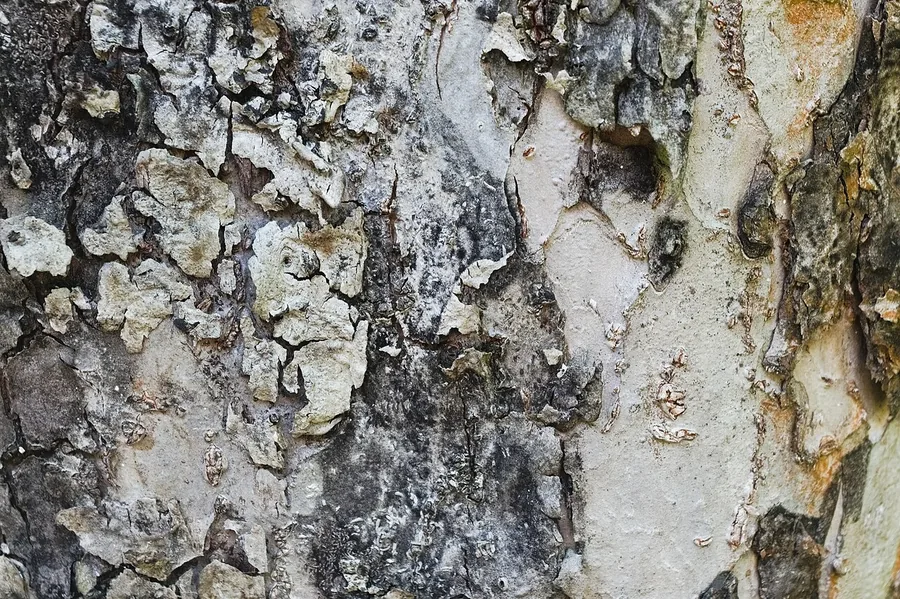
BARK & TRUNK: Young bark is smooth and grey-brown; with age it becomes scaly, fissured, and flaky, developing the gnarled, characterful trunk prized in older specimens. Spur shoots (short, stubby side branches) form along older wood — these are important (see Flowers/Fruit).
GROWTH HABIT / FORM: Naturally a small rounded tree or large shrub with a spreading, twiggy crown. Twiggy ramification develops readily, which suits broom and informal upright styles.
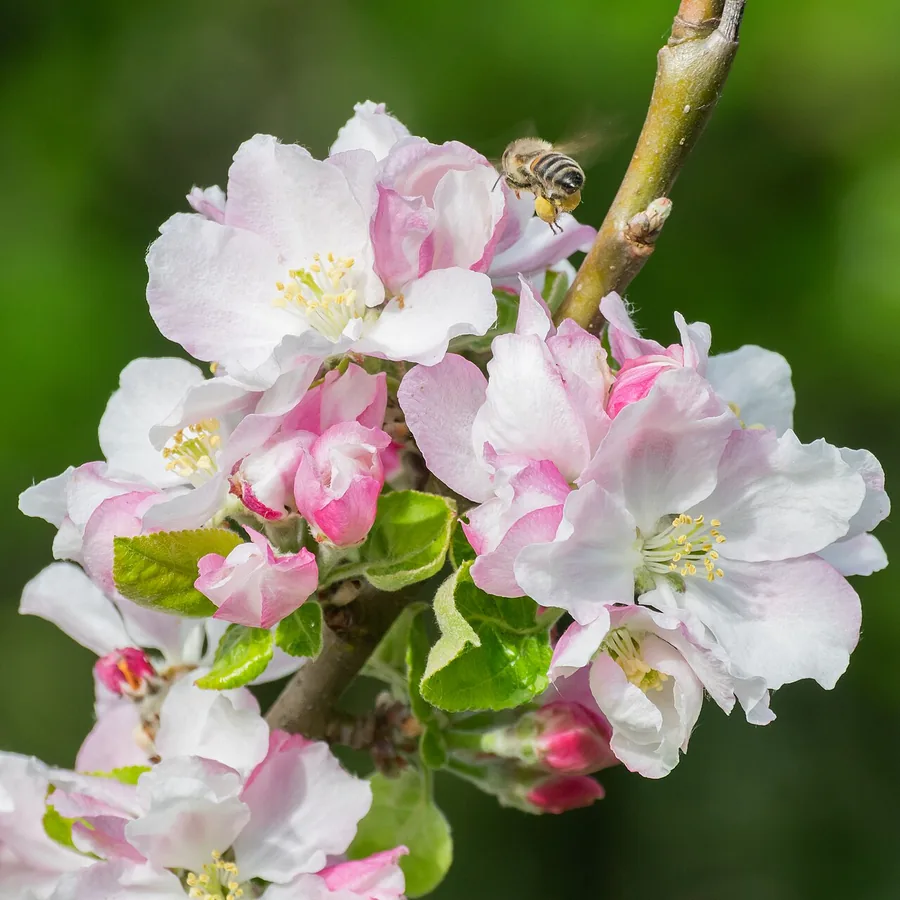
FLOWERS / FRUIT + season + old/new wood: Five-petaled blossoms appear in mid-spring (typically April–May in the Northern Hemisphere), in shades of white, pink, and deep rose-red, followed by small pomes (the "crab apples") that color up in late summer/autumn and frequently persist into winter. Crabapple flowers and fruits on OLD wood — specifically on short SPURS that form on two-year-old and older branches. This is the single most important pruning fact: blossom and fruit buds are set the previous season on existing spur wood, so aggressive late-winter/early-spring shortening of those branches removes the coming bloom and crop.
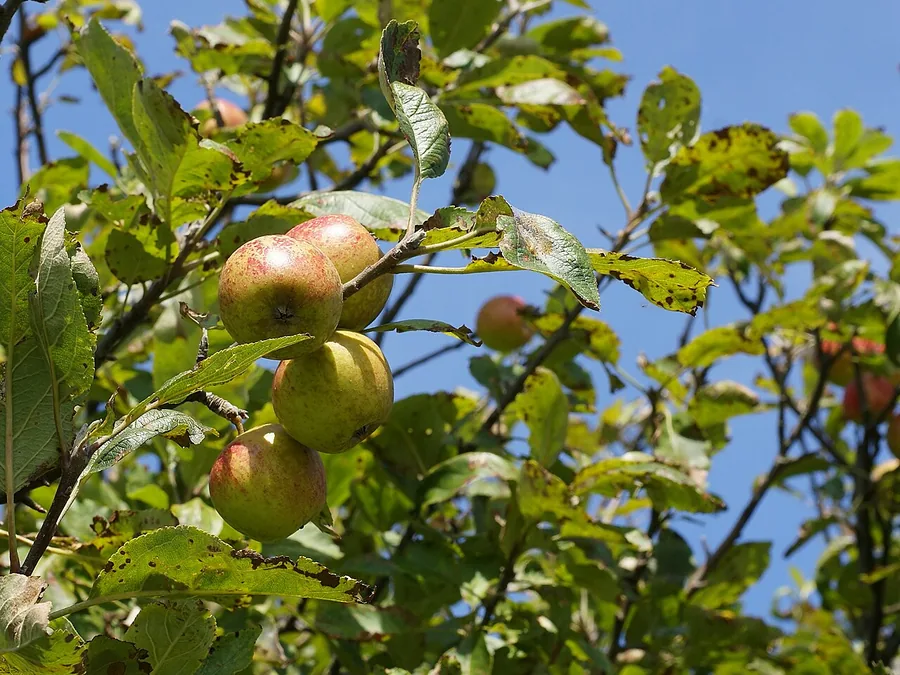
Look-alikes & how to tell them apart: Crabapple is easily confused with **hawthorn (Crataegus), flowering quince (Chaenomeles), and domestic apple (Malus domestica)**. Hawthorn typically has thorns and lobed leaves; crabapple is usually thornless (or only slightly spurred) with simple toothed leaves. Flowering quince has stiff, often spiny twigs and hard, large quince-like fruit, not little apples. Domestic apple has larger leaves and full-size fruit; crabapple fruit is by definition small (about 5 cm or less). The miniature pome fruit on woody spurs is the giveaway for Malus.
Climate & USDA Zone
Crabapples are cool-temperate trees that require a genuine winter dormancy to flower and fruit well. Most are comfortable in USDA Zones 4–8, with many cultivars reliably hardy through Zone 4–7. They are not houseplants and will decline if kept warm year-round. In hot-summer regions, give some relief from the most intense midday sun to protect blossom and prevent leaf scorch, but keep light levels high overall.
Light
Full sun is essential — aim for at least 6 hours of direct sun per day, with morning and evening sun being ideal. Strong light drives flowering, fruit set, and tight ramification. Avoid deep shade, which produces leggy growth and poor bloom. During the hottest part of summer, light afternoon shade or relief from reflected heat helps prevent scorched foliage and premature fruit drop.
Watering
Crabapple is a thirsty, moisture-loving species — keep it on the WET / consistently-moist side, never bone dry. Water generously through the growing season and do not allow the rootball to dry out, particularly while it is in flower or carrying fruit; drought stress at those stages causes blossom drop, shriveled/dropped fruit, leaf loss, and root death.
That said, "moist" is not "waterlogged." Use a free-draining mix so excess water escapes, and water by observation (check the soil) rather than on a rigid clock — both over- and under-watering cause leaf drop and can kill roots. In peak summer a healthy crabapple in a small pot may need watering once or even twice a day.
Soil & Root Care
Use a free-draining but moisture-retentive bonsai substrate — a classic mix of akadama, pumice, and lava rock (roughly equal parts) works well; the akadama component helps hold the moisture this species likes. A small proportion of organic matter is tolerated and can help water retention.
Repot young, vigorous trees annually in early spring as buds begin to swell; repot older, established trees every 2–3 years. Spring (just before/at bud movement) is the safest repotting window. Prune roots moderately and keep the surface roots (nebari) spreading and even. Always ensure the pot drains freely to avoid the root rot this species is prone to in stagnant soil.
Feeding
Crabapples are heavy feeders that support a lot of flower and fruit. Feed regularly through the growing season from after the spring flush until autumn. A balanced fertilizer supports general growth; shifting to a lower-nitrogen, higher-phosphorus/potassium feed from mid/late summer encourages flower-bud set and fruit development rather than soft leafy growth. Ease off feeding during the heat of midsummer if growth stalls, and stop feeding as the tree goes dormant. Do not feed a sick, freshly repotted, or stressed tree.
Pruning & Styling
Old vs new wood — the key rule: crabapple blooms and fruits on old wood, on short spurs borne on 2-year-old and older branches. Flower buds are set the previous summer. Therefore, do NOT hard-prune those spur-bearing branches in late winter/spring, or you will cut off the season's blossom and fruit.
Correct timing:
- Structural / heavy pruning: Best done in late autumn after leaf drop, when you can clearly see the bare branch structure and distinguish plump flower/fruit buds from leaf buds — this lets you keep the spurs you want and remove only what you intend to. (Late-winter structural work is possible but riskier for the bloom; prune conservatively.)
- Growing-season management: Let the tree extend in spring, then trim back over-long or congested new shoots to one or two leaves once they have run, to build ramification and short spur wood. After this, leave the tree largely unpruned until late summer so it can ripen wood and set buds.
- Fruit thinning: A heavy crop exhausts the tree and can prevent flowering the following year (biennial bearing). Thin developing fruit so the tree carries a modest crop, especially on younger or weaker specimens.
Wiring is best done on dormant or semi-hardened wood; protect the bark, which marks easily. Build the silhouette to display blossom and fruit — broom, informal upright, and slanting styles all suit Malus.
Propagation & Cuttings
Ease: Moderate. Best methods: grafting; cuttings; layering (seed won't come true).
Malus cultivars are usually grafted or budded onto apple rootstock, which controls vigour and preserves flower/fruit character; this is standard nursery practice. Softwood cuttings in early summer under mist with IBA root at moderate rates, and air-layering works in spring. Seed germinates easily after ~2–3 months cold stratification but seedlings won't match the parent's flowers or fruit. For bonsai, layer or graft a known clone to guarantee blossom and crabapple display; seedlings are fine only for generic stock.
Pests
- Aphids — cluster on soft new shoots and flower buds; distort growth and produce honeydew/sooty mold. Treat with insecticidal soap or neem; blast off with water.
- Spider mites — thrive in hot, dry conditions; cause stippling and fine webbing. Raise humidity, hose foliage, use miticide if needed.
- Scale insects — limpet-like bumps on stems; sap-suckers that weaken the tree. Treat with horticultural oil.
- Caterpillars / leaf-rollers — chew foliage; pick off or treat as needed.
- Woolly aphid and codling-type larvae can also appear on Malus.
Disease, Fungus & Infection
Crabapples are members of the rose family and share apples' classic disease problems. The three to know:
- Fire blight (Erwinia amylovora, bacterial) — the most dangerous. Causes shoots and blossoms to suddenly wilt, blacken, and curl into a "shepherd's crook," looking scorched. It spreads fast and can kill a tree. Prune out infected wood well below the visible damage, disinfecting tools between cuts, and remove debris. Choose resistant cultivars.
- Apple scab (Venturia inaequalis, fungal) — olive-brown to black blotches on leaves and fruit, causing leaf yellowing and premature drop. Improve airflow, avoid overhead wetting of foliage, remove fallen leaves, and use resistant cultivars.
- Cedar-apple rust (Gymnosporangium, fungal) — bright orange/yellow spots on leaves and fruit; needs a nearby juniper/cedar host to complete its cycle. Remove affected foliage; separate from junipers where possible.
- Powdery mildew and leaf spot can also occur in humid, still conditions.
Prevention is mostly cultural: full sun, good airflow, clean fallen leaves and mummified fruit, water the soil rather than the foliage, keep the tree vigorous, and select disease-resistant cultivars (e.g. 'Sugar Tyme', 'Red Jewel') where you can.
Most Common Causes of Death
1. Drought / letting the rootball dry out — the number-one killer. Crabapples are thirsty; a single missed watering in summer heat can cause severe stress, and repeated drying kills roots. Prevention: water by observation, never let it go bone dry, check daily in summer (twice in heat). 2. Root rot from poor drainage / overwatering — soggy, stagnant soil suffocates and rots roots. Prevention: free-draining mix, free-draining pot, water when needed rather than on a fixed schedule. 3. Fire blight — bacterial dieback that can take a whole tree fast. Prevention: plant resistant cultivars, prune out infection well below the damage with sterilized tools, remove debris. 4. Cutting off the bloom/fruit then over-stressing — not directly fatal, but hard-pruning spur wood at the wrong time plus a heavy fruit load on a weakened tree leads to decline. Prevention: prune after leaf drop, preserve spurs, thin fruit on weak trees. 5. Winter root freeze in the pot — roots are far less hardy than the top; an unprotected shallow pot can freeze solid. Prevention: heel the pot into the ground, mulch, or move to a cold but sheltered spot over hard frosts. 6. Untreated pest infestations (aphids/mites/scale) — sap-suckers that progressively weaken the tree and spread disease. Prevention: inspect regularly, treat early with soap/neem/oil. 7. Kept indoors / no dormancy — warmth year-round exhausts the tree, prevents flowering, and invites pests. Prevention: keep it outdoors and let it experience winter cold.
Seasonal Calendar
- Early spring (Feb–Mar): Repot just before/at bud swell (young trees yearly, older every 2–3 yrs). Final light structural tidy only — do not remove flower buds.
- Mid–late spring (Apr–May): Flowering. Keep soil consistently moist, full sun, watch for aphids. Begin feeding once flowering finishes.
- Early summer (Jun): Thin fruit on young/weak trees. Let new shoots extend, then trim back to 1–2 leaves. Water heavily; watch for scab, mildew, mites.
- Midsummer (Jul–Aug): High water demand — possibly twice daily. Shift toward lower-N feed to set buds. Leave unpruned to ripen wood. Monitor for fire blight.
- Autumn (Sep–Oct): Fruit colors and persists; great display season. Autumn leaf color. Reduce feeding as growth slows.
- Late autumn (Oct–Nov): After leaf drop, do main structural pruning while buds are visible. Clean up fallen leaves/mummified fruit (disease control).
- Winter (Dec–Jan): Dormant. Protect the pot/roots from hard, prolonged frost. Keep slightly moist — do not let it dry out completely even when dormant.
Close-up photo reference
Compare your tree against these to confirm the species and spot problems early.

.jpg)

Sources
- Bonsai Empire — Apple & Crabapple Bonsai (Malus) care guide
- Miyagi Bonsai — Crab Apple Bonsai Care Guide
- Evergreen Gardenworks — Crabapples for Bonsai
- Brooklyn Botanic Garden — The Best Crabapple Trees for Your Garden
Where to buy a Crabapple bonsai
We don’t stock Crabapple at the moment. These species need similar care and we have them now — they are the closest match in our catalogue.
- Blueberry — similar care, in stock now
Browse all bonsai trees for sale or find a species matched to your climate and space.
- All species
- Shop bonsai trees, tools & supplies
- How to Water a Bonsai (Without Killing It)
- Bonsai Soil: What to Buy, What to Mix, and What It Costs
- Why Bonsai Die After Repotting: Diagnosing a Failed Repot
- Pruning vs. Pinching: Shaping Your Bonsai
- Overwintering Bonsai: Cold-Season Care
- Indoor Bonsai Light and Humidity: Making a Windowsill Actually Work
- Root Rot on bonsai
- Overwatering on bonsai
- Underwatering (Drought Stress) on bonsai
- Winter / Frost Damage on bonsai
- Leaf Scorch / Sunburn on bonsai
- Japanese Barberry bonsai care
- Amur Maple bonsai care
- Blackthorn bonsai care
- Blueberry bonsai care