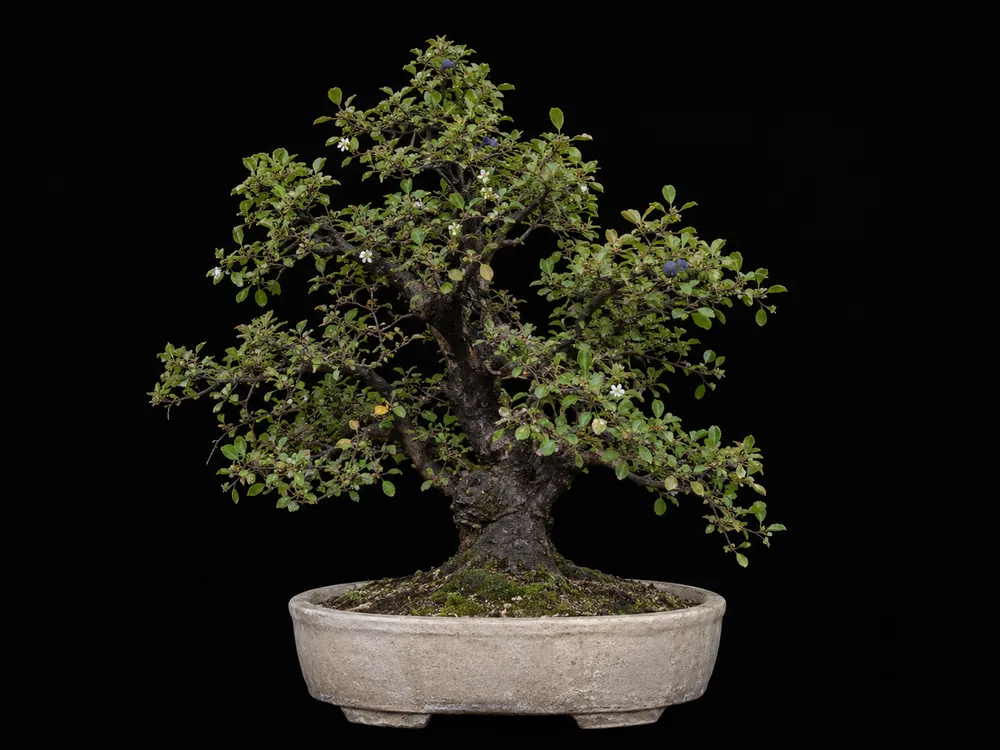
Blackthorn Bonsai Care
Prunus spinosa
Zones 4 to 8, outdoor. One of the great flowering bonsai of the European hedgerow. Most are lost to repotting shock.
Rosaceae (rose family) · Deciduous broadleaf flowering / fruiting tree (thorny large shrub)
Blackthorn quick reference
| USDA zones | 4 to 8 |
|---|---|
| Indoor / outdoor | Outdoor-only: a fully hardy temperate tree that needs a real winter dormancy |
| Light | Full sun: best flowering and short internodes in the open |
| Water | Evenly moist: tolerates drier soil than many but likes steady moisture in growth |
| Soil | Free-draining loam-based mix; tolerates lime |
| Repot | Every 2 to 3 years, in early spring before or as buds move |
| Frost | Very cold-hardy; wood survives well below −25 °C (−13 °F) |
| Mature height | Shrub to 6 m; 25-50 cm as bonsai |
| Growth rate | Slow-moderate |
| Season of interest | Early white spring blossom, autumn sloes |
| Leaf reduction | Good - small leaves reduce well |
| #1 cause of death | Root loss / dieback from over-aggressive root pruning or repotting at the wrong time |
Overview & Character
Blackthorn is one of the great flowering bonsai of the European hedgerow. In very early spring, before a single leaf appears, the bare black twigs erupt into a cloud of small white five-petaled flowers, the classic "blackthorn winter", followed in autumn by blue-black, plum-like sloes. Add naturally dark, almost black fissured bark, vicious thorns, and a gnarled, character-laden habit even on young collected material, and you have a species that reads as ancient long before it is. Yamadori blackthorn from old hedges is prized for exactly this rugged, weathered look.
The care keys reflect its hedgerow toughness and its Prunus quirks. It wants full sun and a genuine cold winter to flower well, appreciates steady moisture in the growing season, and is very hardy. The catch is the roots and wood: like many Prunus it can be temperamental about heavy root work and dislikes large cuts, which heal slowly and can die back. Work it patiently, protect wounds, and it rewards you with flowers, fruit, and superb bark.
Identification
Foliage: Small, oval, finely toothed matte green leaves, 2 to 4 cm long, appearing after the flowers. Autumn color is a modest yellow.
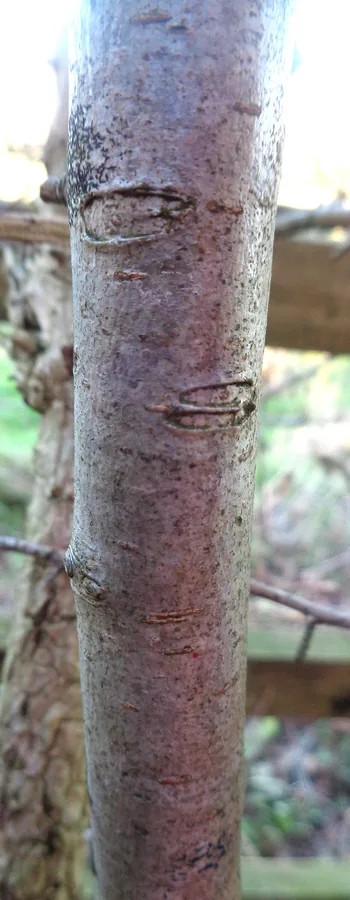
Bark & trunk: Very dark, near-black to blackish-brown bark that becomes rough and fissured with age, the source of the name. Twigs are stiff and armed with sharp, true thorns (spine-tipped side shoots).
Growth habit / form: A densely twiggy, suckering large shrub or small tree to 4 to 7 m, thicket-forming in the wild; intricate, angular branching that suits craggy, characterful designs.
Flowers / fruit: Profuse solitary white flowers on bare wood in very early spring (often March in temperate Europe), each about 1 to 1.5 cm. Fruit is the sloe: a small, round, blue-black drupe about 1 to 1.5 cm with a waxy bloom, very astringent, ripening in autumn.
Look-alikes & how to tell them apart: Easily confused with **wild cherry plum / myrobalan (Prunus cerasifera), which flowers slightly later usually WITH or just before the leaves, has greener non-black twigs, few or no thorns, and larger fruit. Blackthorn's flowers open on bare, thorny, black wood before the leaves; the "flowers-before-leaves on black thorny twigs" combination separates it. It can also be confused with wild pear (Pyrus)**, but pear flowers have pink-tipped anthers and no thorns of the blackthorn type.
Climate & USDA Zone
Blackthorn is a cold-hardy temperate tree, thriving in USDA zones 4 to 8. It is extremely frost-tolerant, with wood surviving hard continental winters well below −25 °C (−13 °F), and it genuinely needs a cold dormancy to set and open flower buds properly. Because it flowers so early, the open blossom itself can be caught by a late hard frost near −4 °C (25 °F), which costs the crop but not the tree. It must live outdoors year-round; the roots in a pot are more exposed than in the ground, so in severe zones give winter protection to the container (mulch, plunge the pot, or move to an unheated cold shelter) while keeping the tree fully dormant and cold.
Light
Grow blackthorn in full sun for the strongest flowering, shortest internodes, and best autumn fruit. It will tolerate light shade but becomes leggy and flowers less. Full exposure also deepens the dark bark character and keeps the dense twiggy structure that makes the species so effective as bonsai.
Watering
Keep the soil evenly moist through the growing season, allowing the surface to dry slightly between waterings; it tolerates brief dryness better than sogginess.
- Water freely from bud-break through summer while leaves and fruit are developing.
- Let the top layer dry a little before rewatering; blackthorn dislikes constantly saturated roots.
- Reduce watering markedly in autumn as it goes dormant, keeping the soil just barely moist over winter.
- Never let a fruiting tree dry out fully in summer or the sloes will drop.
Soil & Root Care
Soil: A free-draining, loam-based mix: akadama with pumice and grit works well. Blackthorn is lime-tolerant and unfussy about pH, but drainage matters more than composition.
Repotting:
- Repot every 2 to 3 years; older, slower trees can go longer.
- Timing is critical: repot in early spring just as buds swell, or immediately after flowering; never in autumn or mid-winter for this Prunus.
- Root-work tolerance is limited: remove only a modest portion of the roots (roughly a quarter to a third) and avoid drastic bare-rooting, which can trigger dieback.
- Aftercare: keep sheltered from cold wind and strong sun, water carefully, and delay feeding for about a month until new roots establish.
Feeding
Feed from after flowering through summer with a balanced fertilizer to build strength and support fruit, easing off nitrogen in late summer so growth hardens before winter. A slightly higher-potassium feed in mid- to late summer improves flower-bud formation for the following spring and helps fruit ripen. Do not feed during the flowering period on bare wood, and withhold feed from a freshly repotted or stressed tree until it is growing again.
Pruning & Styling
- Suits informal upright, literati, windswept, and craggy old-tree styles that exploit its dark bark and thorny character.
- Prune structurally right after flowering; because blackthorn flowers on the previous year's wood, hard winter pruning removes the coming display.
- Pinch and trim extending shoots through summer to build the fine, dense twig-work the species is prized for.
- Seal all significant cuts: like most Prunus, blackthorn heals large wounds slowly and can die back from them, so avoid big chops where possible and protect any you make.
- Wire while shoots are young and pliable and mind the thorns; older wood is stiff and brittle, so develop shape gradually with directional pruning.
Propagation & Cuttings
Ease: Easy. Best methods: root suckers/cuttings; seed; softwood cuttings.
Prunus spinosa spreads by suckers, so the simplest method is to lift rooted suckers or take root cuttings (pencil-thick, in late winter). Softwood cuttings in early summer with IBA root at fair rates; hardwood cuttings are less reliable. Seed needs patience; clean the stones and give warm-then-cold stratification (or sow fresh outdoors and wait one to two winters). For bonsai, sucker division or collecting from old hedgerow stock quickly yields characterful, gnarled trunks with the spiny, early-flowering character prized in this species.
Pests
- Aphids: colonize soft new shoots, especially the tips; wash off and treat with insecticidal soap or a systemic.
- Plum / fruit moth caterpillars: bore into developing sloes; remove affected fruit and use pheromone traps.
- Scale insects: brown or waxy bumps on twigs; treat with horticultural oil in the dormant-to-early season.
- Winter moth caterpillars: chew young spring foliage; grease bands on trunks and targeted controls help.
Disease, Fungus & Infection
- **Silver leaf (Chondrostereum purpureum)**: a serious fungal disease of Prunus entering through wounds, causing a silvery sheen on leaves and branch dieback; prune only in the growing season (dry summer weather) and seal cuts to avoid it.
- **Blossom wilt / brown rot (Monilinia laxa / M. fructigena)**: blights flowers and rots fruit in wet springs; remove infected blossom, spurs, and mummified fruit.
- **Bacterial canker (Pseudomonas syringae)**: sunken, gummy cankers and dieback, worst in cold wet conditions; cut out cankers into clean wood and avoid autumn/winter pruning.
- **Pocket plum (Taphrina pruni)**: distorts sloes into hollow, seedless "pockets"; remove and destroy affected fruit.
- Prevention: prune in dry summer weather, seal wounds, keep tools sterile, and clear fallen leaves and mummified fruit that carry spores.
Most Common Causes of Death
1. Root loss / dieback from over-aggressive root pruning or repotting at the wrong time: the top killer; keep root work light and repot only in early spring or just after flowering. 2. Silver leaf infection through unsealed or badly timed cuts: can kill branch by branch; prune in dry summer weather and seal wounds. 3. Bacterial canker in cold, wet conditions: cut out cankers early and avoid winter pruning. 4. Waterlogging / root rot: sodden soil rots the roots; use a free-draining mix and ease off watering in dormancy. 5. Winter container freeze on unprotected roots: the tree is hardy but potted roots aren't; mulch or shelter the pot in severe zones.
Seasonal Calendar
- Spring: Flowers open on bare wood very early, then leaves emerge; repot as buds swell or just after flowering, and protect open blossom from late frost.
- Summer: Main growth; feed, water evenly, do all structural pruning and wiring in dry weather, and build fine ramification by trimming shoots.
- Autumn: Sloes ripen blue-black; reduce nitrogen and watering, enjoy the fruit, and begin winter preparation as leaves fall.
- Winter: Fully dormant and very cold-hardy; keep outdoors and cold, protect the container's roots in severe climates, and avoid any pruning.
Close-up photo reference
Compare your tree against these to confirm the species and spot problems early.

Sources
- Wikipedia: *Prunus spinosa*
- RHS: *Prunus spinosa* (blackthorn)
- Woodland Trust: Blackthorn (*Prunus spinosa*)
Where to buy a Blackthorn bonsai
We don’t stock Blackthorn at the moment. These species need similar care and we have them now — they are the closest match in our catalogue.
- Blueberry — similar care, in stock now
Browse all bonsai trees for sale or find a species matched to your climate and space.
- All species
- Shop bonsai trees, tools & supplies
- How to Water a Bonsai (Without Killing It)
- Bonsai Soil: What to Buy, What to Mix, and What It Costs
- Why Bonsai Die After Repotting: Diagnosing a Failed Repot
- Pruning vs. Pinching: Shaping Your Bonsai
- Overwintering Bonsai: Cold-Season Care
- Indoor Bonsai Light and Humidity: Making a Windowsill Actually Work
- Root Rot on bonsai
- Underwatering (Drought Stress) on bonsai
- Winter / Frost Damage on bonsai
- Scale Insects on bonsai
- Aphids on bonsai
- Flowering Cherry for Warm Climates (Zone 8b) bonsai care
- Japanese Apricot (Ume) bonsai care
- Blueberry bonsai care
- Crabapple bonsai care