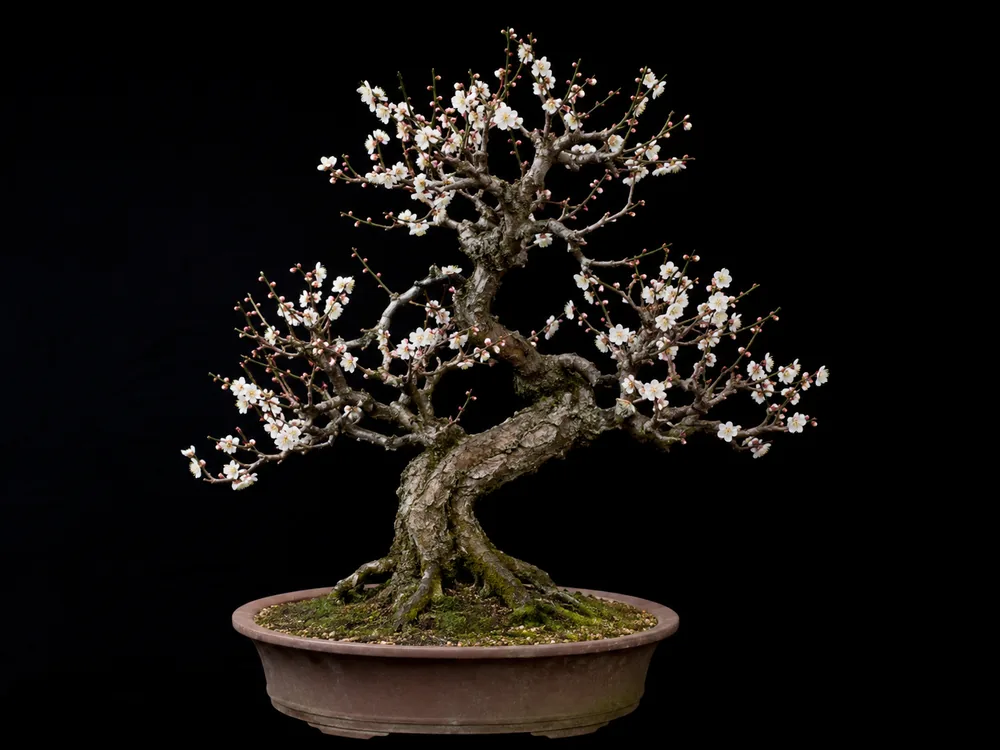
Japanese Apricot (Ume) Bonsai Care
Prunus mume
The Japanese apricot, or ume, is the classic East-Asian winter-blooming bonsai. Most are lost to overwatering.
Rosaceae (rose family) · Deciduous broadleaf winter/early-spring-flowering tree; outdoor bonsai
Japanese Apricot (Ume) quick reference
| USDA zones | Roughly Zones 6–9; hardy to about Zone 6 (down to ~-5°F / -20°C) but shelter the pot, especially in Zone 6 |
|---|---|
| Indoor / outdoor | Strictly outdoor — needs a cold winter to bloom; only the open flowers are briefly protected from hard frost |
| Light | Full sun; high light drives flowering and ripens wood |
| Water | Moderate — keep evenly MOIST but never waterlogged. Wetter than a true xeric tree, drier than a bog plant; will rot in standing water |
| Soil | Free-draining bonsai mix (e.g. akadama / pumice / lava); good aeration to prevent root rot |
| Repot | Young trees every 1–2 years; older trees every 2–3 years, in early spring after flowering |
| Frost | Wood is frost hardy; potted roots and open blossoms are vulnerable — protect from hard frost |
| Mature height (as bonsai) | Tree to 8 m; 25-60 cm as bonsai |
| Growth rate | Moderate |
| Season of interest | Fragrant pink-white flowers in late winter |
| Leaf reduction | Good |
| #1 cause of death | Root rot from waterlogged/poorly drained soil; secondarily, killing the bloom by pruning at the wrong time and Prunus dieback/canker |
Overview & Character
The Japanese apricot, or ume, is the classic East-Asian winter-blooming bonsai — a tree celebrated for centuries in Japanese and Chinese culture for flowering in the depths of winter, often while snow is still on the ground. Its fragrant five-petaled blossoms in white, pink, or deep red open on bare branches from late winter into early spring, making it one of the first bonsai to come into flower each year and a treasured symbol of resilience and the arrival of spring.
As a bonsai, ume is prized for its blossom and its characterful, often craggy and twisting trunk. It is, however, less forgiving than a crabapple: it does not readily back-bud from old bare wood, and it has a particular pruning rhythm that must be respected or you lose the very thing it is grown for — the flowers. It is best regarded as an intermediate species.
Identification
FOLIAGE: Alternate, simple, broadly ovate leaves with finely serrated margins and a tapering (acuminate) tip, mid-green, emerging after the flowers have finished. Leaves are relatively unremarkable — this tree is grown for bloom, not foliage.
BARK & TRUNK: Bark is grey to grey-brown, becoming rougher and more rugged with age. Old specimens develop gnarled, twisting, characterful trunks that are central to the tree's appeal in winter when bare and in flower.
GROWTH HABIT / FORM: Upright to spreading small tree; vigorous extension growth in long shoots. Older wood is reluctant to produce new buds, so structure must be built and maintained on younger wood.
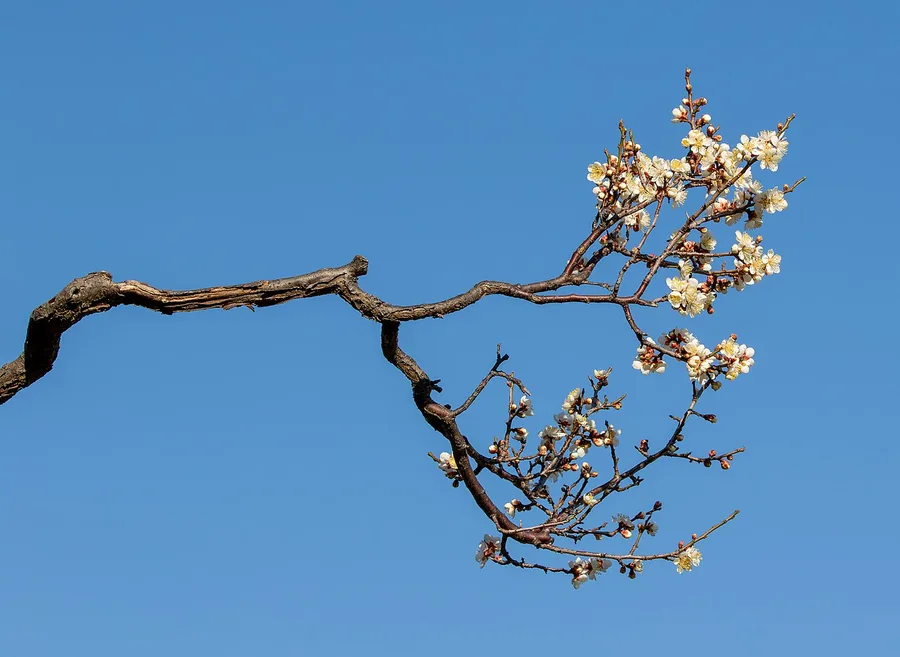
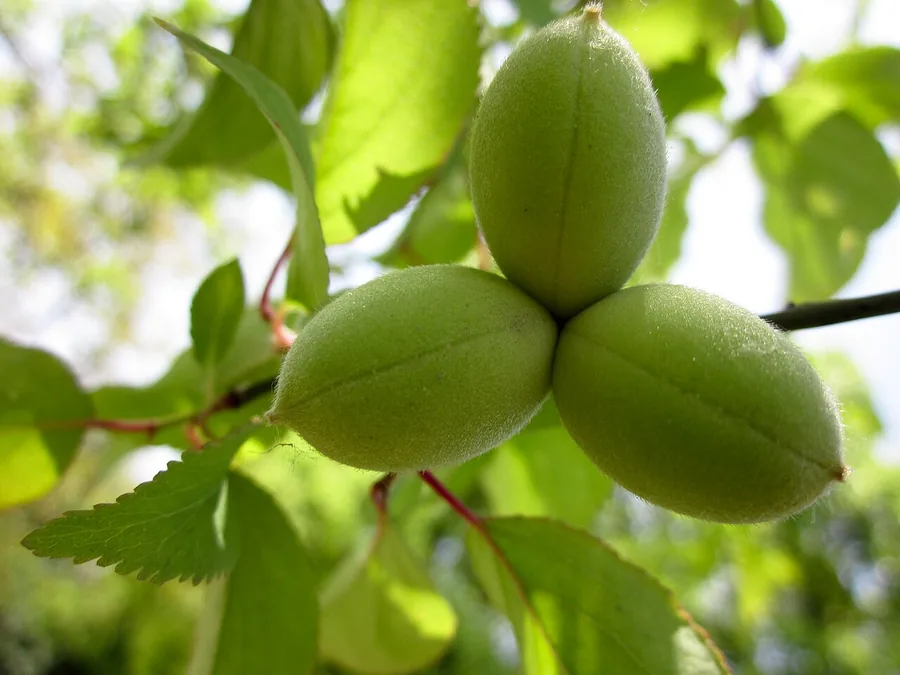
FLOWERS / FRUIT + season + old/new wood: Highly fragrant, 5-petaled flowers in white, pink, or carmine-red open on bare branches in late winter to early spring (often Jan–Mar in the Northern Hemisphere, earlier in mild areas). Small green, apricot-like fruits (the ume of pickled-plum and plum-wine fame) may follow in summer but are usually secondary in bonsai. Ume flowers on OLD wood — specifically on the PREVIOUS YEAR'S shoots/old wood. This is critical: flower buds are formed on last season's growth, so pruning must be timed around it (see Pruning).
Look-alikes & how to tell them apart: Ume is easily confused with **flowering cherry (Prunus serrulata), flowering plum/apricot relatives, and crabapple (Malus)**. The key tell is timing and scent: ume blooms very early (mid-winter to early spring), with a strong sweet fragrance, on bare wood — cherries bloom later and are usually less fragrant, often with flowers in clusters/racemes on stalks. Versus crabapple, ume blooms much earlier and produces a single fuzzy apricot-type fruit rather than a tiny apple-shaped pome. The combination of mid-winter fragrant bloom on bare twisting branches is distinctively Prunus mume.
Climate & USDA Zone
Ume is a cool-temperate tree that requires winter cold to set and break its flower buds — it cannot be grown as an indoor plant. It is generally reliable in USDA Zones 6–9, hardy to roughly Zone 6 (minimum around -5°F / -20°C), but the potted rootball is far less hardy than the species in the ground, so winter shelter is recommended, particularly at the cold end of its range. In very mild winter areas it blooms earliest. The open flowers themselves can be damaged by a hard frost, so brief protection during a freeze while in bloom helps preserve the display.
Light
Give ume full sun. High light is needed to ripen the current year's wood, set strong flower buds for the following winter, and keep growth compact. Insufficient light produces weak, leggy shoots and poor bloom. Outdoors in an open, sunny position year-round is ideal.
Watering
Keep the soil evenly MOIST but never waterlogged — a moderate regime. Water regularly through the growing season so the rootball stays moderately moist, but ume does not tolerate standing water: soggy, airless soil causes root rot, which is a leading cause of death in this species. Let the surface begin to dry between waterings, then water thoroughly so the whole rootball is wetted and excess drains away. In short: wetter than a drought-adapted tree, but drier (better drained) than a moisture-loving crabapple. Water demand peaks in summer; reduce in cooler months but never let a dormant tree dry out completely.
Soil & Root Care
Use a free-draining, well-aerated bonsai substrate — akadama, pumice, and lava (roughly equal parts) is a good baseline. Aeration matters here because the species is prone to root rot in stagnant conditions; the mix should hold moisture but drain freely.
Repot young trees every 1–2 years and older, established trees every 2–3 years. The best window is early spring, immediately after flowering finishes but before strong leaf growth, so repotting does not interfere with the bloom and the tree has the whole season to recover. Root-prune moderately; do not bare-root aggressively. Always ensure the container drains freely.
Feeding
Feed through the growing season to build strong shoots and set next winter's flower buds. Begin feeding after flowering and the spring flush, using a balanced fertilizer for general vigor, then shift toward a lower-nitrogen, higher-phosphorus/potassium feed from mid/late summer to favor flower-bud formation over soft leafy growth. Stop feeding as the tree heads into dormancy. Do not feed a freshly repotted, stressed, or diseased tree.
Pruning & Styling
Old vs new wood — the central rule: ume flowers on OLD wood / the previous year's shoots, and it is reluctant to back-bud from bare old wood. Both facts shape every pruning decision.
Correct timing — prune right after flowering:
- The main pruning is done immediately after the tree finishes flowering (early spring). Cutting back at this point removes spent flowering wood while still giving the tree the whole growing season to produce new shoots that will carry next winter's flower buds.
- A useful technique: cut roughly half of the long shoots back by one-half to two-thirds. This balances two needs — encouraging vigorous new long shoots (which will bloom in future years) while still retaining enough flower buds for the coming season. Doing this every year keeps the tree flowering and prevents it becoming all old, bare, flowerless wood.
- Because ume struggles to bud from old bare wood, never cut a branch back to bare old wood expecting it to re-sprout — leave at least 1, and preferably 2–3, leaf buds on each shoot you cut. If you remove all buds from a branch it may simply die back.
- Avoid heavy pruning in late summer/autumn or winter — by then the flower buds for the coming bloom are already set on the previous shoots, and cutting then removes the display.
Wire on younger, flexible wood; protect the bark. Style to showcase the bare, characterful winter silhouette and the bloom — informal upright, literati, and weeping/cascade interpretations all suit ume.
Propagation & Cuttings
Ease: Moderate. Best methods: grafting; cuttings; seed.
Prunus mume cultivars are propagated vegetatively to keep their prized flowers: grafting/budding onto Prunus rootstock is standard, and hardwood or softwood cuttings root at low-to-moderate rates with hormone. Air-layering works in spring. Seed (from the ripe fruit) germinates after warm-then-cold stratification but won't come true and is slow to flower. For bonsai, always start from a known flowering clone via graft, cutting, or layer; ume flowers on old wood in late winter and back-buds well, but dislikes heavy root disturbance.
Pests
Ume is generally fairly pest-resistant, but watch for:
- Aphids — the most common pest; cluster on soft new shoots, distort growth, excrete honeydew. Treat with insecticidal soap or neem oil; hose them off.
- Scale insects — limpet-like sap-suckers on stems and branches; treat with horticultural oil.
- Spider mites — stippling and fine webbing in hot, dry spells; raise humidity, hose foliage, use a miticide if needed.
- Inspect new growth regularly and treat early.
Disease, Fungus & Infection
As a member of Prunus, ume is subject to the fungal and bacterial problems common to cherries, plums, and apricots:
- Root rot — from waterlogged or poorly drained soil; the most important disease risk for potted ume. Prevent with free-draining mix, a free-draining pot, and correct watering.
- Bacterial canker / dieback (Prunus canker) — sunken, oozing lesions on bark, branch dieback, and gumming. Prune out affected wood in dry weather with sterilized tools; avoid wounding; keep the tree vigorous.
- Blossom blight / Monilinia (brown rot) — can blight flowers and shoots in wet conditions. Remove affected blooms/shoots and improve airflow.
- Leaf spot / shot-hole and powdery mildew can occur in humid, stagnant conditions.
Prevention is cultural: full sun and good airflow, water the soil (not the foliage), prune cleanly in dry weather with disinfected tools, remove fallen leaves and spent blossoms, and avoid the soggy soil that invites root rot.
Most Common Causes of Death
1. Root rot from waterlogged / poorly drained soil — the top killer; ume hates standing water. Prevention: free-draining substrate, free-draining pot, water only when the surface starts to dry, never leave it sitting in water. 2. Cutting branches back to bare old wood — because ume rarely back-buds from old wood, such cuts can cause the whole branch to die. Prevention: always leave 1–3 viable buds on any shoot you shorten; never expect bare old wood to re-sprout. 3. Pruning at the wrong time (losing the tree's energy/bloom) — late-summer/winter cutting removes the set flower buds and, with repeated mistiming, weakens the tree. Prevention: do the main pruning right after flowering. 4. Prunus canker / dieback — bacterial/fungal infection that progressively kills branches. Prevention: prune in dry weather with sterile tools, avoid wounds, keep the tree healthy. 5. Winter root freeze in the pot — potted roots are much less hardy than the wood; an unprotected pot can freeze. Prevention: shelter the pot over hard frosts; protect open blossoms during a freeze. 6. Drought / letting the rootball dry out — especially during the summer growth that sets next year's flowers. Prevention: keep the soil evenly moist; check daily in summer heat. 7. Kept indoors / no winter cold — without dormancy ume will not flower and will slowly decline. Prevention: grow it outdoors year-round.
Seasonal Calendar
- Late winter / early spring (Jan–Mar): Flowering on bare branches — the highlight. Protect open blooms from hard frost; keep soil moist. Do not prune yet beyond removing obvious deadwood.
- Early spring, right after bloom (Mar–Apr): Main pruning window — cut about half the long shoots back by ½–⅔, leaving 1–3 buds per cut. Repot young/older trees now if due. Begin feeding once the flush starts.
- Late spring / early summer (May–Jun): Strong shoot extension. Feed for vigor. Watch for aphids on new growth. Keep evenly moist.
- Midsummer (Jul–Aug): Peak water demand. Let the new shoots ripen — these will carry next winter's flowers. Shift to lower-N feed to set flower buds. Avoid heavy pruning.
- Autumn (Sep–Oct): Growth slows; reduce feeding. Flower buds are now set on the year's shoots — do not cut them off. Clean up fallen leaves.
- Winter (Nov–Dec): Dormant, buds swelling toward bloom. Protect the pot/roots from hard, prolonged frost. Keep slightly moist; do not let it dry out fully.
Close-up photo reference
Compare your tree against these to confirm the species and spot problems early.
_at_Nagai_Park,_January_2024_-_1221_(2).jpg)
.jpg)
Sources
- Bonsai Empire — Japanese Apricot Bonsai (Prunus mume) care guide
- Miyagi Bonsai — Japanese Apricot Bonsai Care Guide
- North Carolina Extension Gardener Plant Toolbox — Prunus mume
- Missouri Botanical Garden — Prunus mume Plant Finder
Growing a Japanese Apricot (Ume) bonsai
We don’t currently stock Japanese Apricot (Ume) trees. If you already have one — or you are sourcing one elsewhere — these are the supplies its care depends on:
- Bonsai Decorative Crushed Shale Top of Soil Dressing — $4.95
- Bonsai Zen Garden Grooming Rake — $8.95
- Metal Impression Tags Package of 4 — $2.95
Browse all bonsai trees, tools and soil or find a species we stock that suits your conditions.
- All species
- Shop bonsai trees, tools & supplies
- How to Water a Bonsai (Without Killing It)
- Bonsai Soil: What to Buy, What to Mix, and What It Costs
- Why Bonsai Die After Repotting: Diagnosing a Failed Repot
- Pruning vs. Pinching: Shaping Your Bonsai
- Overwintering Bonsai: Cold-Season Care
- Indoor Bonsai Light and Humidity: Making a Windowsill Actually Work
- Root Rot on bonsai
- Underwatering (Drought Stress) on bonsai
- Winter / Frost Damage on bonsai
- Insufficient Light (Etiolation) on bonsai
- Powdery Mildew on bonsai
- Blackthorn bonsai care
- Flowering Cherry for Warm Climates (Zone 8b) bonsai care
- Amur Maple bonsai care
- Cedar Elm bonsai care