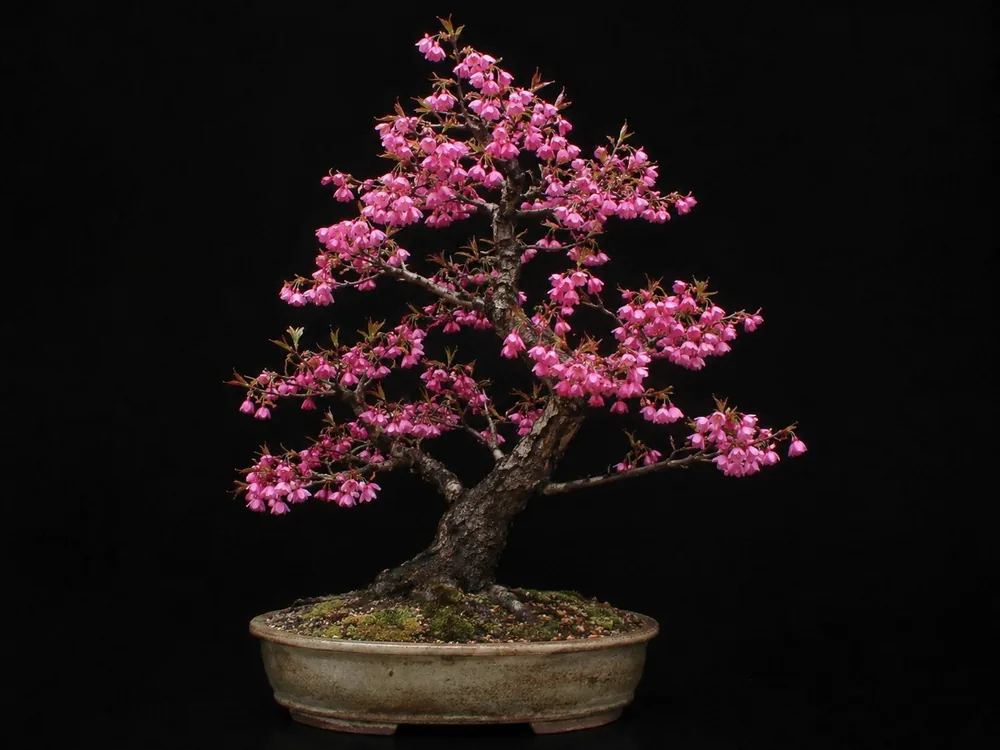
Flowering Cherry for Warm Climates (Zone 8b) Bonsai Care
Prunus campanulata
Outdoor only. The iconic image of flowering bonsai, but the famous Japanese cherries. Most are lost to overwatering.
Rosaceae (rose family) · Deciduous flowering tree
Flowering Cherry for Warm Climates (Zone 8b) quick reference
| USDA zones | Taiwan Cherry ~7b–9a (best 8–9, heat-loving); Okame ~6–9 (heat + cold tolerant) — both well-suited to 8b |
|---|---|
| Indoor / outdoor | Outdoor only — needs the natural seasons and chilling |
| Light | Full sun (best flowering); light afternoon shade in extreme heat |
| Water | Consistently moist but well-drained — thirsty in growth, never waterlogged |
| Soil | Well-draining, slightly acidic to neutral bonsai mix |
| Repot | Every 2–3 years, early spring before/just after flowering |
| Frost | Hardy and need winter chill; both varieties handle zone 8b winters easily |
| Mature height (as bonsai) | Tree to 12 m; kept 30-70 cm as bonsai |
| Growth rate | Moderate to fast |
| Season of interest | Pink spring blossom, autumn colour |
| Leaf reduction | Good with defoliation |
| #1 cause of death | For the wrong species (standard Japanese cherries) in 8b: inadequate winter chill plus heat/humidity disease pressure; for these two: root rot and Prunus fungal/borer problems |
Overview & Character
Cherry blossom is the iconic image of flowering bonsai, but the famous Japanese cherries (Prunus serrulata, P. × yedoensis 'Yoshino', etc.) are a poor match for a hot zone-8b climate. This guide focuses on two varieties that actually thrive in the warm South: the **Taiwan Cherry (Prunus campanulata) and the Okame hybrid (Prunus × incam)**.
Taiwan Cherry is the most heat-tolerant of the flowering cherries. Native to Taiwan and southern China, it has a famously low chilling requirement and bursts into vivid, deep-pink, bell-shaped (campanulate) flowers very early in the season — often late winter — before the leaves emerge. It is planted throughout the deep South for exactly this reason.
The Okame cherry is a hybrid of Prunus incisa (Fuji cherry) × Prunus campanulata (Taiwan cherry). From its Taiwanese parent it inherits early bloom, fast growth, carmine-pink flowers and heat tolerance; from its Japanese parent it gains extra cold hardiness. The result is an unusually adaptable small cherry that flowers reliably across a wide range and is a superb choice where you want classic cherry blossom in a warm climate. Both make graceful, early-flowering deciduous bonsai with fine twigging and good autumn colour.
Identification
Foliage: Simple, alternate, finely serrated leaves, glossy green, elliptic to ovate with a pointed tip — typical Prunus foliage. Deciduous, often with reddish or orange autumn colour. New growth can flush bronze.
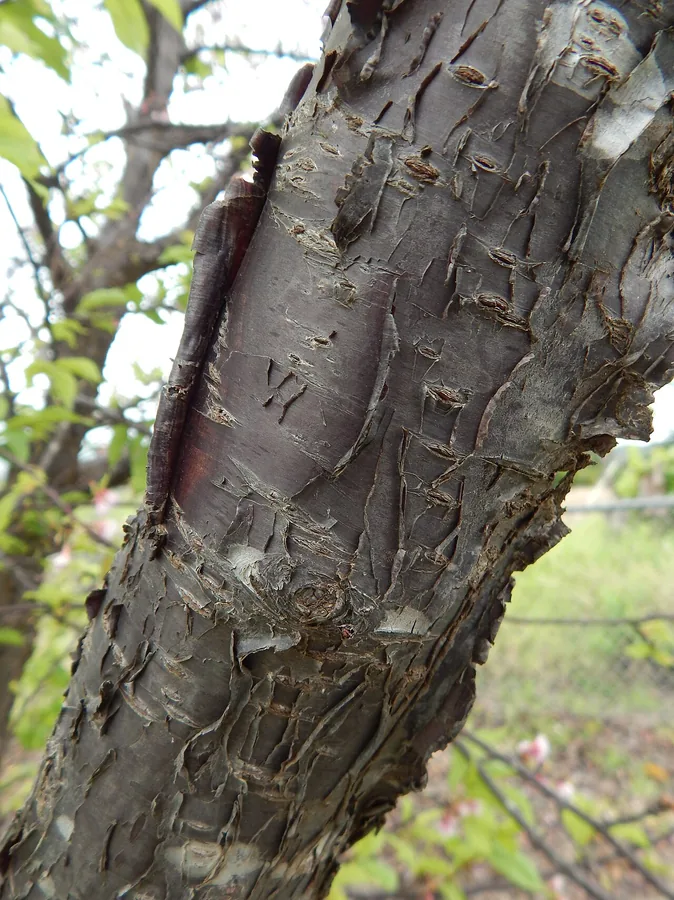
Bark & trunk: Classic cherry bark — smooth, glossy, reddish-brown to coppery, marked with conspicuous horizontal bands of raised lenticels (the breathing pores). On Okame especially the trunk and limbs take on a polished reddish-bronze sheen with prominent horizontal lenticels.
Growth habit / form: Upright-to-spreading small tree with fine twigging; both varieties bloom very early, on bare wood before the leaves emerge.
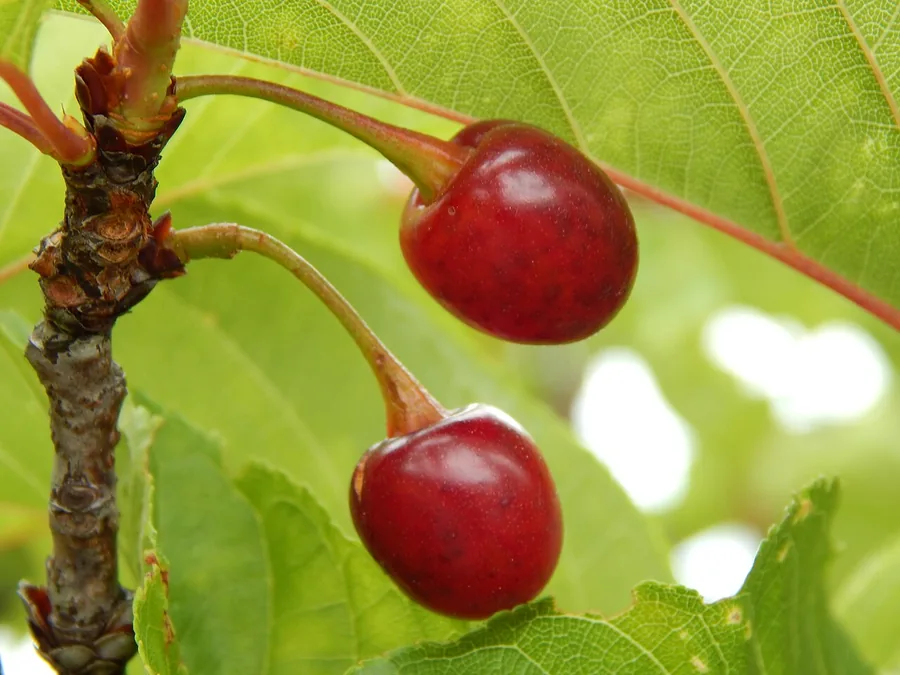
Flowers / fruit: Prunus campanulata (Taiwan Cherry) bears bell-shaped (campanulate), nodding, deep carmine-pink to crimson flowers — the campanulate shape is its signature. Prunus × incam 'Okame' bears 5-petaled rosy/carmine-pink flowers with red calyces and reddish stalks (flatter, more open than the pure campanulata bell). Small dark cherries may follow.
Look-alikes & how to tell them apart: All cherries share the horizontal lenticel-banded bark and 5-petaled pink/white blossoms — the key is flower shape and timing. Taiwan Cherry = deep, hanging bell-shaped crimson-pink blooms, earliest of all; Okame = brighter, flatter, open 5-petaled carmine-pink blooms, also very early. Versus standard Japanese cherries ('Yoshino', 'Kanzan'): those bloom later, are paler pink/white, and lack the low-chill, heat-tolerant early bell-flowering of the campanulata line. Distinguish Prunus from ornamental plum (Prunus cerasifera) by the cherry's lenticel bands and clustered blossoms.
Climate & USDA Zone
Taiwan Cherry performs best in roughly USDA zones 7b–9a, and zones 8–9 are ideal; it positively wants heat and humidity and grows fast and healthy in warm-temperate conditions. Okame is hardier on the cold end (about zones 6–9) while keeping the heat tolerance, making it the more all-round adaptable of the two. Both are comfortably suited to zone 8b.
Why standard Japanese cherries struggle in 8b: classic Japanese flowering cherries are adapted to cooler temperate climates and have a relatively high chilling requirement — they need a substantial number of winter hours below ~45 °F to break dormancy and flower properly. In a mild zone-8b winter they often fail to accumulate enough chill, leading to erratic, sparse or no bloom and weak, confused leaf-out. On top of that, the long, hot, humid 8b summer dramatically increases pressure from the fungal diseases and borers that already plague the genus Prunus, and these cool-climate cherries lack the heat tolerance to shrug it off. They tend to be short-lived and disappointing there. Taiwan Cherry and Okame solve both problems: low chilling requirement and genuine heat tolerance.
All flowering cherries are temperate, deciduous trees and must be grown outdoors — they cannot be kept as houseplants and require the natural cycle of seasons, including a winter dormancy.
Light
Grow in full sun. Maximum light gives the most prolific flowering, strong shoot growth and the best autumn colour. In the fiercest part of an 8b summer, light afternoon shade can reduce heat stress and leaf scorch, but err toward more sun rather than less. Shelter from strong, drying wind, which damages both blossom and foliage.
Watering
Flowering cherries like to be kept consistently moist but never waterlogged. They are thirsty during the growing season — a flowering, leafing tree in full summer sun in zone 8b can dry out fast, so check daily and water thoroughly before the soil dries out, especially around bloom and leaf-out. The essential balance is drainage: Prunus roots are prone to rot in soggy soil, so water generously but let the excess drain completely and never let the pot stand in water. Taper watering in autumn and keep the root ball only just moist through winter dormancy. Never let the tree go bone-dry during flowering or while setting next year's buds.
Soil & Root Care
Use a well-draining bonsai soil, slightly acidic to neutral. A mix of akadama with pumice and lava rock, or a good commercial deciduous-tree mix, retains the steady moisture these cherries want while still draining freely.
Repot every 2–3 years in early spring. Because these cherries flower very early, the practical window is just before bud movement or right after flowering finishes, while the tree is still in early spring. Prunus species can be sensitive to heavy root reduction, so root-prune conservatively, keep the work clean with sterilised tools, and protect the freshly repotted tree from late frost and harsh sun while it re-establishes.
Feeding
Feed to support flowering and growth. A balanced fertiliser through spring and summer maintains vigour; a feed slightly higher in phosphorus and potassium in late summer/early autumn supports the formation of next season's flower buds. Avoid pushing excessive nitrogen, which favours leaf at the expense of bloom and produces soft growth vulnerable to disease. Stop feeding in winter dormancy.
Pruning & Styling
These cherries flower on the previous year's wood, so timing matters: prune just after flowering so you do not remove next year's flower buds, then allow new shoots to extend and ripen through summer. Pinch and trim through the growing season to build fine twigging. Prunus heals poorly compared with many species, so keep cuts modest, use clean sharp tools, and seal larger wounds to limit fungal entry and gumming.
Wire young, flexible shoots; older branches are stiff and brittle, so favour clip-and-grow for structure. Both varieties have an elegant, slightly upright-to-spreading habit that suits informal upright and broom-style designs.
Propagation & Cuttings
Ease: Moderate. Best methods: cuttings; grafting; layering.
Ornamental Prunus (here Prunus campanulata for warm zones) are propagated vegetatively to keep flower character: softwood cuttings in early summer under mist with IBA root at moderate rates, and choice forms are budded/grafted onto Prunus rootstock. Air-layering works in spring. Seed germinates after warm-then-cold stratification but won't come true and is slow to flower. For bonsai, always start from a known flowering clone via cutting, layer, or graft; cherries dislike heavy root and branch work, so propagate and then develop gently.
Pests
Like all Prunus, these cherries attract a familiar set of pests:
- Aphids on new growth (sticky honeydew, distorted leaves) — treat with soap, neem or a systemic.
- Spider mites in hot, dry summer conditions — rinse foliage and treat; humidity helps.
- Scale on stems and branches — horticultural oil or systemic.
- Borers — wood-boring larvae that attack stressed Prunus; keep the tree vigorous and wound-free to deter them.
- Caterpillars / leaf-rollers — pick off or treat with Bt.
Disease, Fungus & Infection
The genus Prunus is disease-prone, and the warm, humid 8b summer raises the stakes — which is exactly why species choice (heat-tolerant Taiwan/Okame over cool-climate Japanese cherries) is the first line of defence. Watch for:
- Brown rot and blossom/twig blight (Monilinia) — fungal, attacks flowers and shoots in wet spring weather.
- Leaf spot / shot-hole — fungal/bacterial spotting that perforates leaves.
- Powdery mildew on new growth in humid conditions.
- Bacterial canker and gummosis — oozing sap from wounds and cankers; the main reason to keep cuts clean and small.
- Root rot in waterlogged soil.
Manage with good air circulation, full sun, careful watering (avoid wetting foliage late in the day), prompt removal of infected material, and clean pruning practice. Preventive fungicide can help in a wet spring if disease has been a problem.
Most Common Causes of Death
1. Wrong species for the zone. Standard Japanese cherries fail in 8b from too little winter chill plus heat/humidity disease — grow Taiwan Cherry (P. campanulata) or Okame (P. × incam). 2. Peach leaf curl & fungal disease. Prunus are disease-prone; treat preventively, improve airflow, and remove infected foliage. 3. Overwatering / root rot. Keep moist but never soggy; cherries resent waterlogged roots. 4. Drying out / heat stress. Don't let the pot dry in heat; some afternoon shade helps in hot summers. 5. Borers and aphids. Keep vigor up against borers; treat aphids early; avoid large wounds (cherries heal poorly).
Seasonal Calendar
- Spring: Bloom on bare/old wood; prune lightly right after flowering; repot if due then; resume feeding.
- Summer: Keep evenly moist; afternoon shade in extreme heat; watch for fungal leaf disease and aphids.
- Autumn: Taper feeding/water; leaf color then drop.
- Winter: Dormant; in 8b chilling is limited so use warm-adapted cultivars; protect potted roots from any hard freeze.
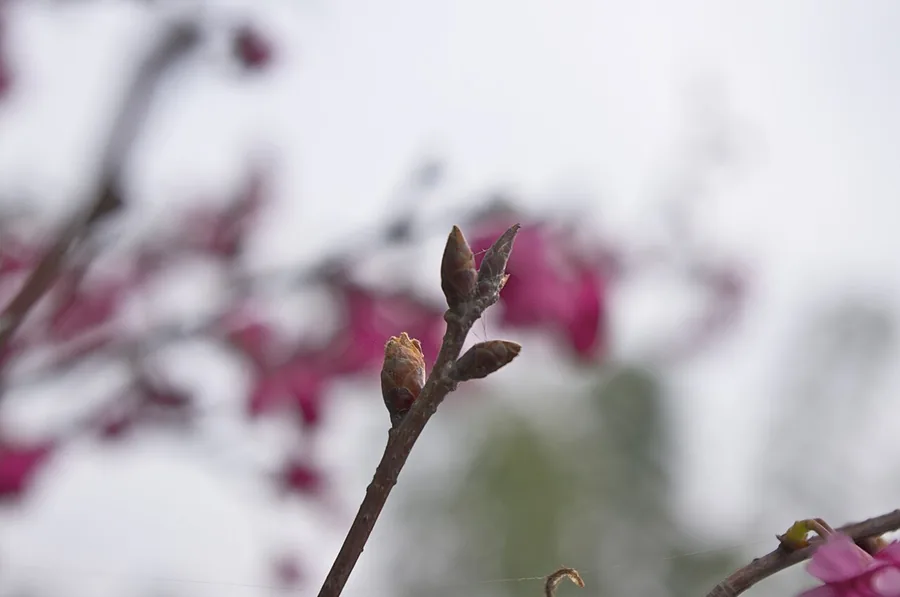
Close-up photo reference
Compare your tree against these to confirm the species and spot problems early.
.jpg)

.jpg)
Sources
Growing a Flowering Cherry for Warm Climates (Zone 8b) bonsai
We don’t currently stock Flowering Cherry for Warm Climates (Zone 8b) trees. If you already have one — or you are sourcing one elsewhere — these are the supplies its care depends on:
- Bonsai Decorative Crushed Shale Top of Soil Dressing — $4.95
- Bonsai Zen Garden Grooming Rake — $8.95
- Metal Impression Tags Package of 4 — $2.95
Browse all bonsai trees, tools and soil or find a species we stock that suits your conditions.
- All species
- Shop bonsai trees, tools & supplies
- How to Water a Bonsai (Without Killing It)
- Bonsai Soil: What to Buy, What to Mix, and What It Costs
- Why Bonsai Die After Repotting: Diagnosing a Failed Repot
- Pruning vs. Pinching: Shaping Your Bonsai
- Overwintering Bonsai: Cold-Season Care
- Indoor Bonsai Light and Humidity: Making a Windowsill Actually Work
- Root Rot on bonsai
- Overwatering on bonsai
- Underwatering (Drought Stress) on bonsai
- Winter / Frost Damage on bonsai
- Leaf Scorch / Sunburn on bonsai
- Blackthorn bonsai care
- Japanese Apricot (Ume) bonsai care
- American Beech bonsai care
- Amur Maple bonsai care