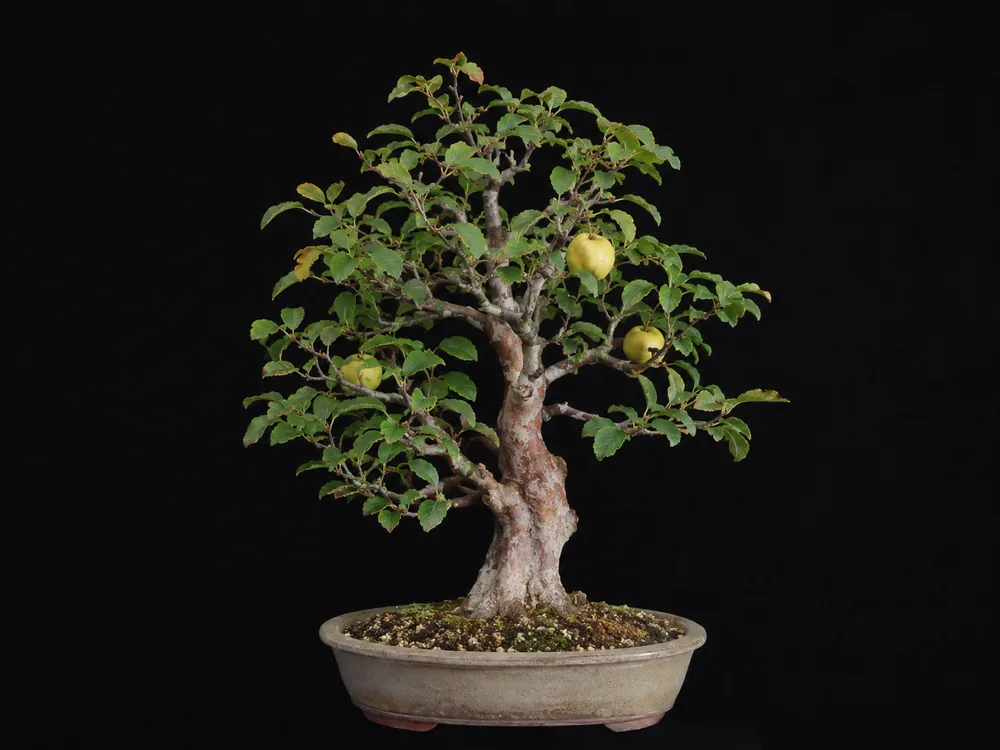
Chinese Quince Bonsai Care
Pseudocydonia sinensis
Outdoor. One of the most beautiful of all flowering and fruiting bonsai, and is valued above all for its spectacular flaking. Most are lost to drying out.
Rosaceae (Rose family) · Deciduous flowering and fruiting tree; outdoor bonsai
Chinese Quince quick reference
| USDA zones | Roughly 6–8 |
|---|---|
| Indoor / outdoor | Outdoor — needs sun, warmth and a cool dormancy |
| Light | Full sun; warmth and good airflow promote flowering and fruiting |
| Water | Keep slightly moist at all times — lean wet, especially in summer. Heavy water need while flowering/fruiting; must not dry out |
| Soil | Well-draining but moisture-retentive bonsai mix; slightly acidic to neutral |
| Repot | Young trees every 1–2 years; older every 2–3 years, early spring before bud break |
| Frost | Tolerates some frost but protect potted roots from hard freeze and cold drying wind |
| Mature height (as bonsai) | Tree to 10 m; kept 30-60 cm as bonsai |
| Growth rate | Moderate |
| Season of interest | Pink spring flowers, large autumn fruit, flaky bark |
| Leaf reduction | Moderate - leaves fairly large |
| #1 cause of death | Fire blight (bacterial infection, severe in warm humid regions) and root problems from letting the pot dry out or stay waterlogged |
Overview & Character
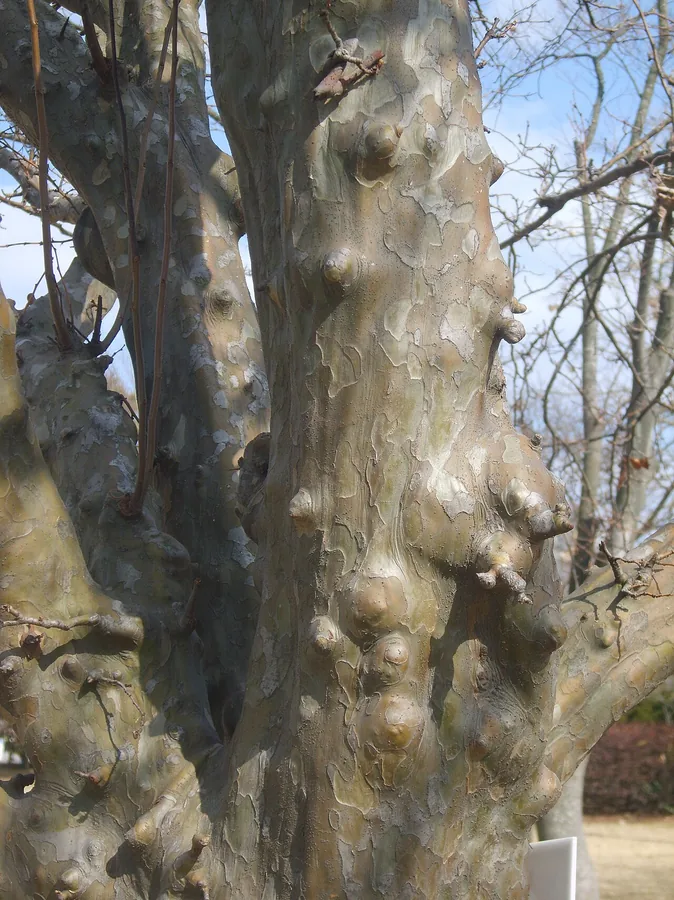
Chinese Quince is one of the most beautiful of all flowering and fruiting bonsai, and is valued above all for its spectacular flaking, camouflage-patterned bark. As the tree ages, the bark exfoliates in patches of gray, green, orange and brown, giving a mottled, sinewy trunk that is unmistakable. It is a single-trunked tree (unlike the shrubby Chaenomeles flowering quinces) capable of real height in the ground.
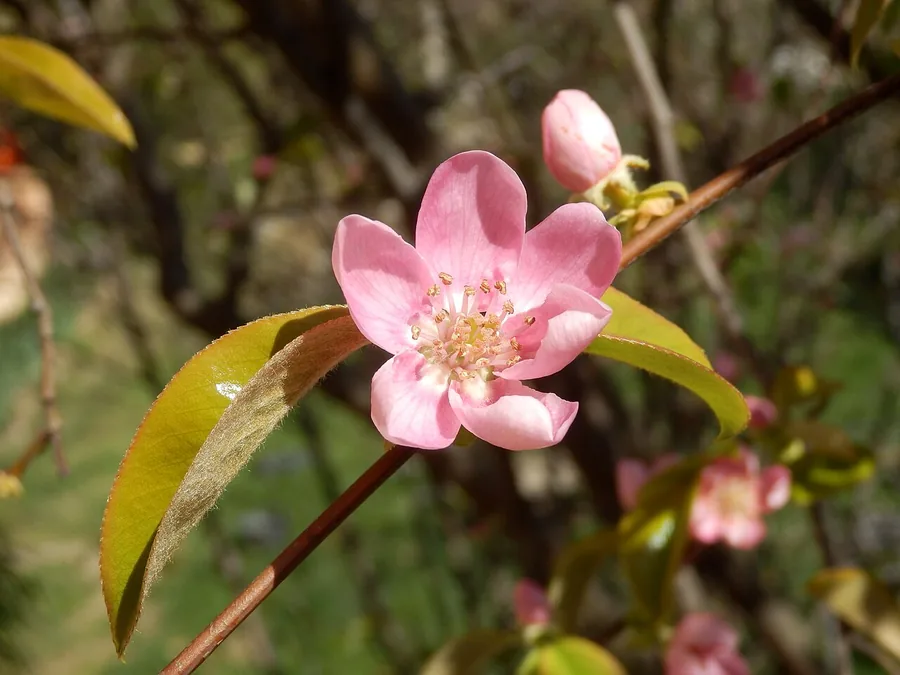
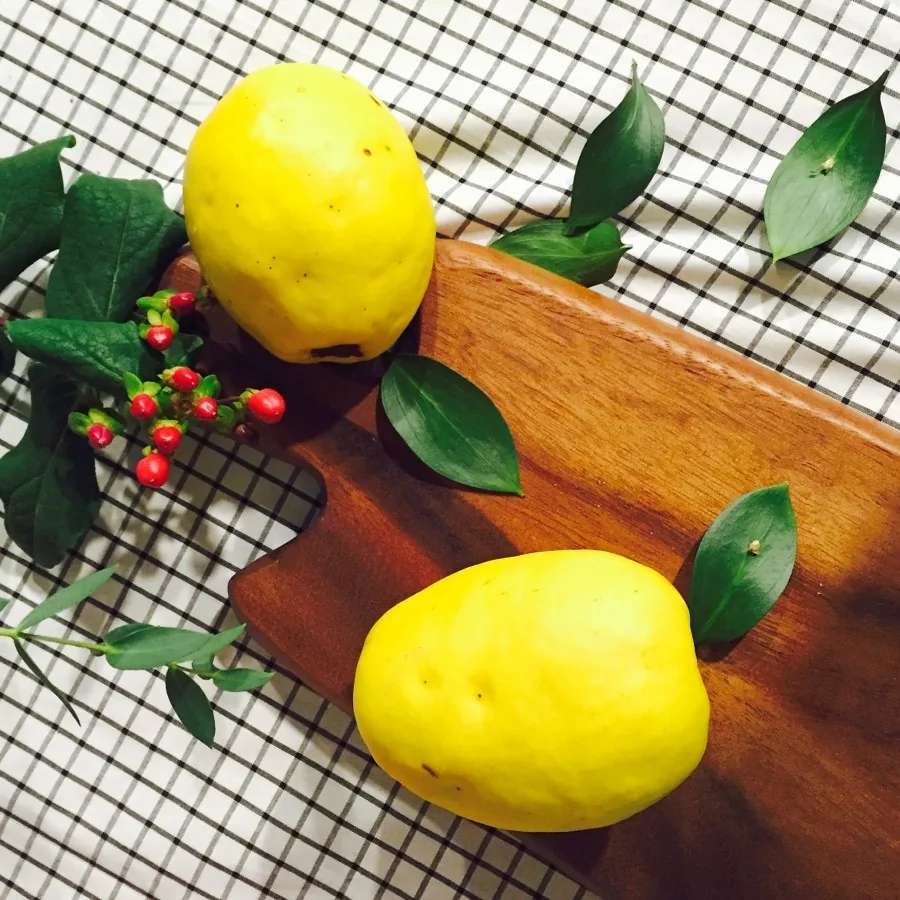
In spring it produces lovely pale pink, single, five-petaled flowers, followed in autumn by very large, hard, intensely fragrant yellow fruits that can scent a whole room. The glossy deep-green leaves take on yellow and red autumn tints. Because it belongs to the pome-fruit group of the rose family, it carries the same disease vulnerabilities as apples, pears and hawthorns — most importantly fire blight.
Identification
Foliage: Glossy, elliptical, finely serrated dark-green leaves, leathery in texture, turning yellow-to-red in autumn before dropping.
Bark & trunk: The signature feature — smooth bark that flakes off in irregular plates to reveal a mottled camouflage of gray, green, fawn, orange and brown. Trunks become muscular and fluted with age. This exfoliating bark is the single best identification cue.
Growth habit / form: Upright single-trunk tree with a rounded, somewhat irregular crown; stiffer, more architectural branching than the sprawling shrub quinces.
Flowers / fruit: Solitary pale pink (sometimes near-white) single flowers in mid-to-late spring, borne on short spurs. Followed by large (up to fist-sized on full trees), hard, oval, golden-yellow fruits in autumn that are extremely fragrant.
Look-alikes & how to tell them apart: Most often confused with the flowering quinces Chaenomeles (Japanese/Chinese flowering quince) and with true quince Cydonia oblonga. Tell them apart by habit and bark: Pseudocydonia is a tree with smooth, dramatically flaking camouflage bark and single spring flowers, whereas Chaenomeles is a thorny, multi-stemmed shrub with showy clustered flowers and non-flaking bark; Cydonia oblonga has fuzzy leaves and fruit and does not exfoliate. If the bark peels into a patchwork of colors, it is Pseudocydonia.
Climate & USDA Zone
Chinese Quince grows best in USDA zones 6–8. It enjoys warmth and full sun in the growing season and needs a cool winter dormancy. It can endure some frost, but as a potted bonsai it is safer to shelter it from strong frost and cold, drying wind — an unheated cold frame or garage makes a good winter home. It is not an indoor tree.
Light
Give full sun. Plenty of light and warmth, in an open, airy position, is what drives healthy growth and, crucially, good flowering and fruit set. A shady spot reduces bloom and invites fungal trouble on the foliage.
Watering
Lean wet — keep the rootball slightly moist at all times. Chinese Quince should never be allowed to dry out, and during summer when it is carrying flowers and developing its large fruit it needs a great deal of water. Water thoroughly and check daily in hot weather. The important nuance for disease control: water at the soil from below and keep water off the foliage, because wet leaves and splashing encourage fire blight and fungal infection. Use a pot that drains freely so the soil is consistently moist but never stagnant.
Soil & Root Care
Use a well-draining bonsai soil that still retains moisture — a standard akadama/pumice/lava mix with an organic component suits it. Chinese Quince prefers slightly acidic to neutral soil; avoid strongly alkaline conditions.
Repot young trees every 1–2 years and older specimens every 2–3 years, in early spring just before buds open. The root system is vigorous; prune roots moderately and ensure excellent drainage, as soggy stagnant soil promotes root rot.
Feeding
Feed regularly through the growing season with a balanced fertilizer to support vigorous growth and fruit development. Some growers favor slightly higher potassium and phosphorus as flowering and fruiting approach. A mildly acidifying feed helps keep the foliage healthy. Reduce and stop feeding as the tree enters dormancy.
Pruning & Styling
Chinese Quince flowers on short spurs on older wood, so indiscriminate hard pruning of mature branches removes next year's flowers. Prune with the bloom in mind: allow spurs to form and avoid stripping all the older flowering wood. Let new shoots extend, then trim back to shape after flowering. Structural pruning is best in late winter/early spring, but always weigh it against the spurs you want to keep for flowers and fruit.
Pinch and trim through summer to refine ramification. Wire young, flexible branches; older branches stiffen and can be brittle. The strong upright character and exquisite bark make it a natural for informal upright styles. Thinning fruit (removing most so only one or a few remain) prevents the heavy fruit from stressing and weakening a small tree.
Propagation & Cuttings
Ease: Moderate. Best methods: seed; cuttings; layering.
Pseudocydonia sinensis grows from seed — clean the large fragrant fruit's seed, cold-moist stratify ~2–3 months, and sow in spring; germination is fair. Semi-hardwood and hardwood cuttings root at moderate rates with hormone, and air-layering in spring is reliable for larger, flowering-size stock true to the parent. For bonsai the flaking, mottled bark and spring flowers are the draw; layering an established branch is a good way to get trunk character quickly, since seedlings are slow to flower.
Pests
- Aphids — on soft new growth; rinse or treat with insecticidal soap.
- Scale insects — treat with horticultural oil.
- Weevils (e.g. vine weevil) — adults notch leaf edges; larvae attack roots. Treat soil if root-feeding is suspected.
- Spider mites — in hot, dry conditions; stippled leaves and fine webbing.
- Caterpillars / leaf-rollers — occasional chewing damage; hand-pick.
Disease, Fungus & Infection
As a pome-fruit relative, Chinese Quince carries the disease load of apples and pears. The most serious threat is fire blight (Erwinia amylovora), a bacterial infection that is especially aggressive in the warm, humid US South. Symptoms are blackened, scorched-looking shoots and leaves that wilt and curl into the classic "shepherd's crook," often with oozing. Prevention: water from below to keep foliage dry, ensure strong airflow and sun, sterilize tools between cuts, and avoid excessive lush nitrogen growth. Treatment: prune well below infected tissue immediately and destroy the cuttings (do not compost), disinfecting tools after every cut; copper-based bactericides/fungicides can help suppress spread. The species is also prone to leaf-spot fungi, rust and powdery mildew — all reduced by dry foliage and good air movement.
Most Common Causes of Death
1. Fire blight. A bacterial infection that can kill branches or the whole tree, worst in warm humid climates. Prevention: keep foliage dry (water from below), maximize airflow and sun, sterilize tools, and cut out and destroy infected wood at the first sign. 2. Letting the rootball dry out. Heavy water demand while flowering and fruiting means a missed watering in summer can be fatal. Prevention: keep the soil consistently slightly moist; check daily in heat. 3. Waterlogging / root rot. A non-draining, perpetually soggy pot suffocates roots. Prevention: use free-draining soil and a pot that never holds standing water. 4. Winter freeze damage to potted roots. Exposed roots are far less hardy than the tree in the ground. Prevention: shelter the pot in a cold frame or unheated garage during hard frost and cold wind. 5. Over-fruiting on a small tree. Several large, heavy fruits drain a small specimen. Prevention: thin fruit to one or a few. 6. Stripping all flowering spurs by hard pruning, then over-stressing weak regrowth. Prevention: prune with the spurs in mind and stage major work across seasons.
Seasonal Calendar
- Late winter (Feb–Mar): Repot just before bud break; do structural pruning carefully, preserving flowering spurs.
- Spring (Apr–May): Flowering; begin feeding; protect open flowers from fierce weather. Watch for fire blight as growth flushes. Thin fruit after set.
- Summer (Jun–Aug): Peak water demand — keep soil moist, water from below; trim new growth for ramification; monitor for mites, aphids and fungal/bacterial disease.
- Autumn (Sep–Nov): Large fragrant fruit ripens; foliage colors yellow and red; reduce feeding; let the tree harden off; leaves drop.
- Winter (Dec–Jan): Dormant. Protect roots from hard freeze and drying wind; water sparingly but never let roots desiccate; no fertilizer.
Close-up photo reference
Compare your tree against these to confirm the species and spot problems early.



Sources
- Care guide for Chinese Quince Bonsai — Bonsai Empire
- Chinese Quince Bonsai Care Simplified — Bonsai Mary
- Pseudocydonia sinensis — Tupelo Bonsai
- Chinese Quince Bonsai Care Guide — Miyagi Bonsai
Where to buy a Chinese Quince bonsai
We don’t stock Chinese Quince at the moment. These species need similar care and we have them now — they are the closest match in our catalogue.
- Blueberry — similar care, in stock now
Browse all bonsai trees for sale or find a species matched to your climate and space.
- All species
- Shop bonsai trees, tools & supplies
- How to Water a Bonsai (Without Killing It)
- Bonsai Soil: What to Buy, What to Mix, and What It Costs
- Why Bonsai Die After Repotting: Diagnosing a Failed Repot
- Pruning vs. Pinching: Shaping Your Bonsai
- Overwintering Bonsai: Cold-Season Care
- Indoor Bonsai Light and Humidity: Making a Windowsill Actually Work
- Root Rot on bonsai
- Underwatering (Drought Stress) on bonsai
- Winter / Frost Damage on bonsai
- Leaf Scorch / Sunburn on bonsai
- Powdery Mildew on bonsai
- Blackthorn bonsai care
- Blueberry bonsai care
- Crabapple bonsai care
- Japanese Barberry bonsai care