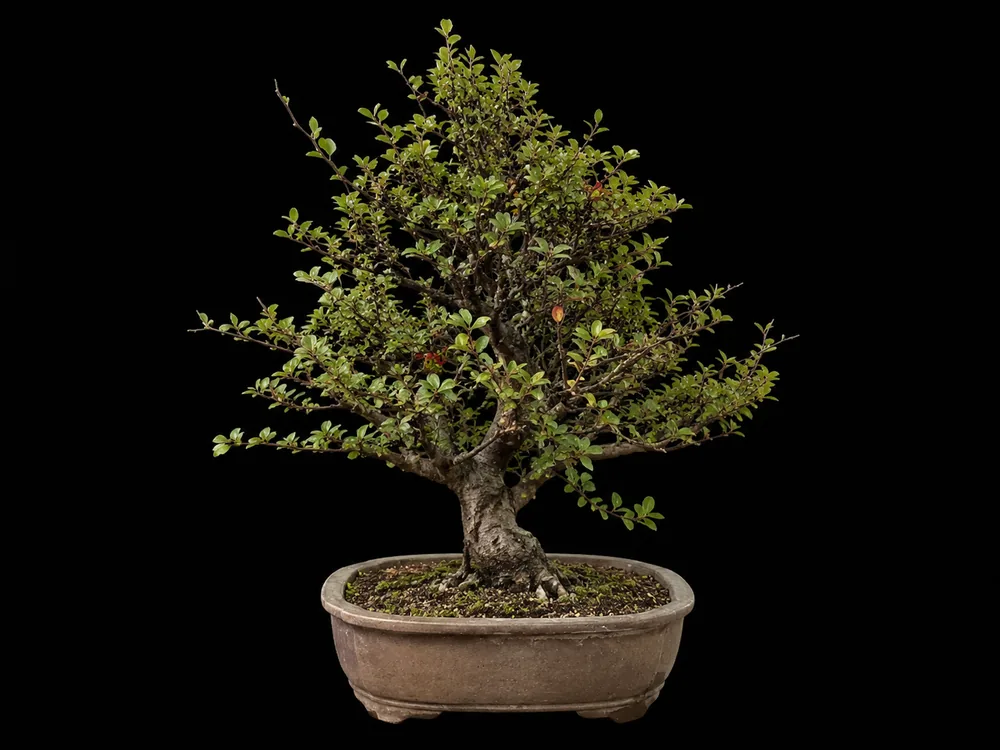
Japanese Barberry Bonsai Care
Berberis thunbergii
Zones 4 to 8, outdoor. One of the most popular deciduous bonsai shrubs, tough, adaptable, and richly colored. Most are lost to overwatering.
Berberidaceae (barberry family) · Deciduous flowering/fruiting shrub
Japanese Barberry quick reference
| USDA zones | 4–8 |
|---|---|
| Indoor / outdoor | Outdoor (deciduous; needs seasons and dormancy) |
| Light | Full sun — 6+ hours; best color and density |
| Water | Keep consistently moist — not waterlogged; less in dormancy |
| Soil | Free-draining bonsai mix |
| Repot | Every 2–3 years, early spring |
| Frost | Hardy; shelter potted roots from extreme cold |
| Mature height (as bonsai) | Shrub to 2 m; 15-40 cm as bonsai |
| Growth rate | Moderate |
| Season of interest | Red-purple foliage, autumn colour, red berries |
| Leaf reduction | Good - naturally small leaves |
| #1 cause of death | Root rot (overwatering, esp. dormancy); brittle-branch breakage |
Overview & Character
The Japanese Barberry is one of the most popular deciduous bonsai shrubs — tough, adaptable, and richly colored, with small leaves (green, gold, or purple by cultivar) that blaze bright red and orange in autumn, small yellow spring flowers, and red berries. It is dense, twiggy, and quick to ramify, with thorny stems.
It is easy and cold-hardy, wanting full sun for the best color and density, consistent (not soggy) moisture, and reduced winter watering. Its branches are brittle and the stems carry sharp spines, so wire young shoots carefully and handle with care. A colorful, forgiving subject that builds fine twigging fast.
Identification
Foliage: Small, spoon-shaped (obovate) leaves ~1–3 cm in rosette-like clusters on short spurs, with smooth margins; green, golden, or deep purple depending on cultivar, turning brilliant red-orange in autumn.
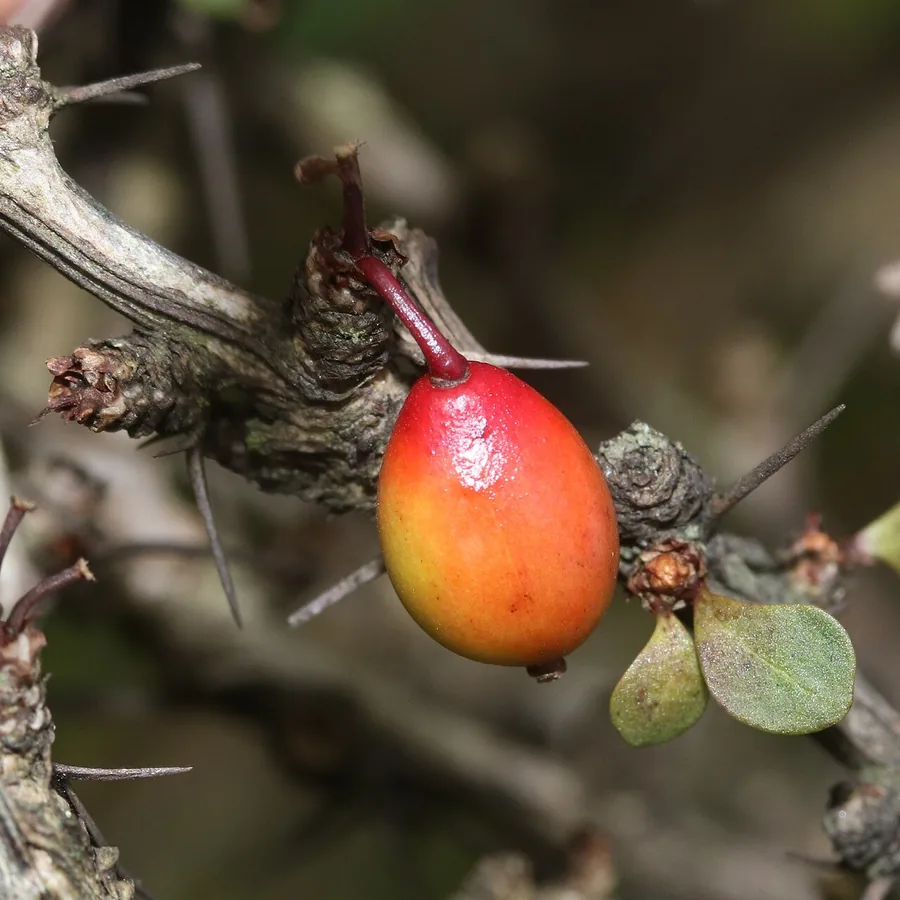
Bark & trunk: Brown, grooved stems armed with single sharp spines (thorns) at the nodes; inner wood and roots are characteristically bright yellow.
Growth habit / form: Dense, compact, very twiggy thorny shrub; ramifies readily. Suits informal upright, broom, and clump styles.
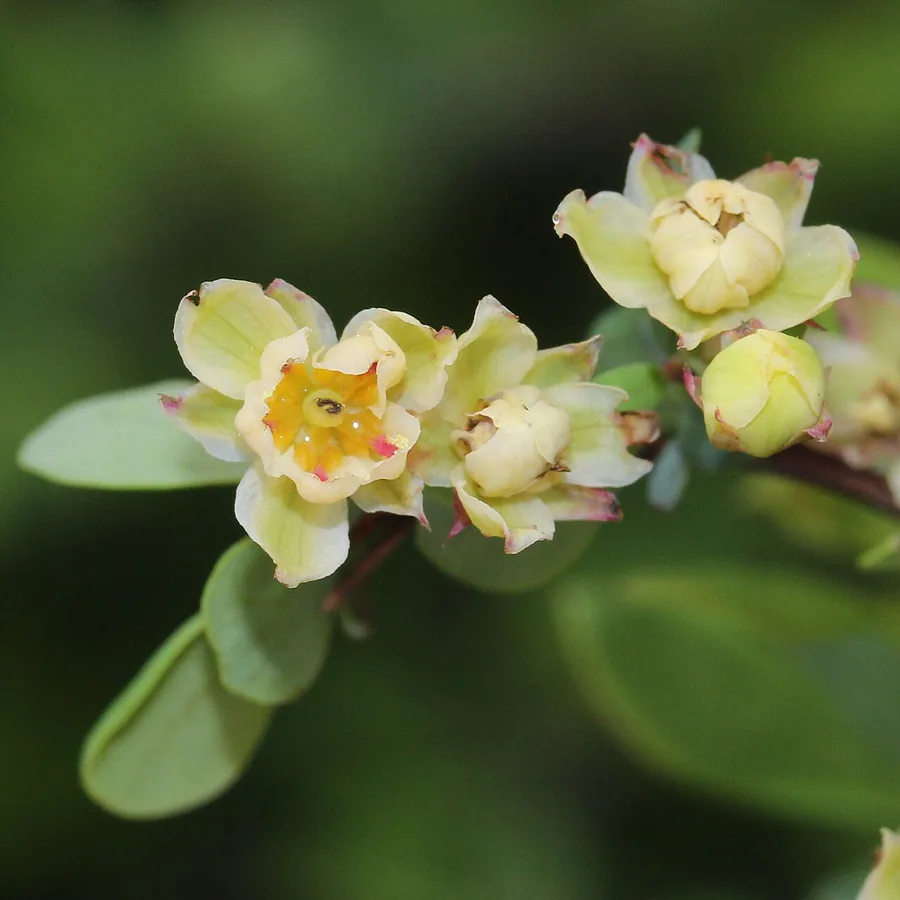
Flowers / fruit: Small, pale-yellow, cup-shaped flowers hanging singly or in small clusters in spring, followed by bright-red oblong berries that persist into winter.
Look-alikes & how to tell them apart: The combination of clustered small leaves on spiny short-spurs, yellow inner wood, and red autumn color is distinctive; distinguished from other barberries by its single (not three-pronged) spines and deciduous habit. (Berberis is mildly toxic if eaten.)
Climate & USDA Zone
Hardy in USDA zones 4–8. Deciduous and dormancy-needing, grown outdoors year-round; shelter potted roots from extreme cold and frost. Very adaptable and resilient. (Note: invasive in parts of North America — don't release seedlings.)
Light
Full sun — at least 6 hours for the best leaf color, compact growth, and flowering/fruiting; purple and gold cultivars especially need sun for strong color. It tolerates light shade but colors and densifies best in sun.
Watering
Keep consistently moist — but not waterlogged — and reduce in dormancy.
- Water thoroughly when the top layer feels dry, ensuring good drainage.
- Cut back watering in winter dormancy to prevent root rot.
- Avoid both drying out and standing water.
Soil & Root Care
Soil: A free-draining bonsai mix (akadama / pumice / lava).
Repotting:
- Frequency: every 2–3 years, in early spring just before growth begins.
- Reduce about a third of the root mass; it tolerates root-pruning well.
- Aftercare: keep moist and sheltered while re-establishing. (Mind the spines when handling.)
Feeding
Feed a balanced organic feed every ~2 weeks (liquid) or every other month (pellets) through the growing season; ease off toward dormancy. Don't feed freshly repotted or dormant trees.
Pruning & Styling
- Trimming: it back-buds and ramifies readily — trim shoots back to build dense fine twigging; takes hard pruning well.
- Wiring: the branches are brittle and snap easily — wire only young, flexible shoots (early spring or late summer) and remove after a few months to avoid scarring; much shaping is by clip-and-grow.
- Handle carefully — the stems are thorny.
- Suits informal upright, broom, and clump styles.
Propagation & Cuttings
Ease: Easy. Best methods: cuttings; seed.
Berberis thunbergii roots from semi-hardwood cuttings in summer and hardwood cuttings in autumn with hormone at good rates, and it layers where stems touch soil. Seed germinates after cleaning the red berries and ~2–3 months cold stratification, but coloured-leaf forms won't come true. For bonsai the small leaves, spines, and autumn colour/fruit are the draw; cutting-grown plants keep the cultivar's foliage colour, thicken fast, and back-bud strongly after hard pruning.
Pests
- Aphids (on new growth)
- Spider mites (hot, dry conditions)
- Scale insects
- Vine weevil (root-eating larvae)
Treat with horticultural oil, insecticidal soap, or appropriate systemics; catch infestations early.
Disease, Fungus & Infection
Generally tough; main risks:
- Root rot — from waterlogging, especially overwatering in dormancy.
- Powdery mildew / leaf spot / rust — fungal issues in humid, stagnant conditions; improve airflow.
- Barberry can host wheat stem rust as an alternate host (a field-crop concern, not a bonsai-health issue).
Prevention: full sun, consistent-but-drained moisture, reduced winter water, airflow.
Most Common Causes of Death
1. Root rot from overwatering (especially in dormancy). Reduce winter water; keep moist but well-drained. 2. Breaking brittle branches when wiring. Wire only young shoots; favor clip-and-grow. 3. Drying out in peak summer. Keep consistently moist in growth. 4. Powdery mildew in stagnant air. Give sun and airflow. 5. Unprotected potted roots in extreme cold. Hardy, but shelter the pot. (Mildly toxic if eaten.)
Seasonal Calendar
- Spring: Repot if due (early spring); yellow flowers; leaves emerge; begin feeding; full sun.
- Summer: Full sun for color; keep consistently moist; trim to ramify; wire young shoots carefully; berries form.
- Autumn: Brilliant red-orange color; red berries; taper feeding/water as it goes dormant.
- Winter: Dormant/leafless (berries persist); reduce watering; shelter potted roots from extreme cold.
Close-up photo reference
Compare your tree against these to confirm the species and spot problems early.
.jpg)
.jpg)
Sources
Growing a Japanese Barberry bonsai
We don’t currently stock Japanese Barberry trees. If you already have one — or you are sourcing one elsewhere — these are the supplies its care depends on:
- Bonsai Decorative Crushed Shale Top of Soil Dressing — $4.95
- Bonsai Zen Garden Grooming Rake — $8.95
- Metal Impression Tags Package of 4 — $2.95
Browse all bonsai trees, tools and soil or find a species we stock that suits your conditions.
- All species
- Shop bonsai trees, tools & supplies
- How to Water a Bonsai (Without Killing It)
- Bonsai Soil: What to Buy, What to Mix, and What It Costs
- Why Bonsai Die After Repotting: Diagnosing a Failed Repot
- Pruning vs. Pinching: Shaping Your Bonsai
- Overwintering Bonsai: Cold-Season Care
- Indoor Bonsai Light and Humidity: Making a Windowsill Actually Work
- Root Rot on bonsai
- Overwatering on bonsai
- Underwatering (Drought Stress) on bonsai
- Winter / Frost Damage on bonsai
- Powdery Mildew on bonsai
- Crabapple bonsai care
- European Spindle bonsai care
- Amur Maple bonsai care
- Blackthorn bonsai care