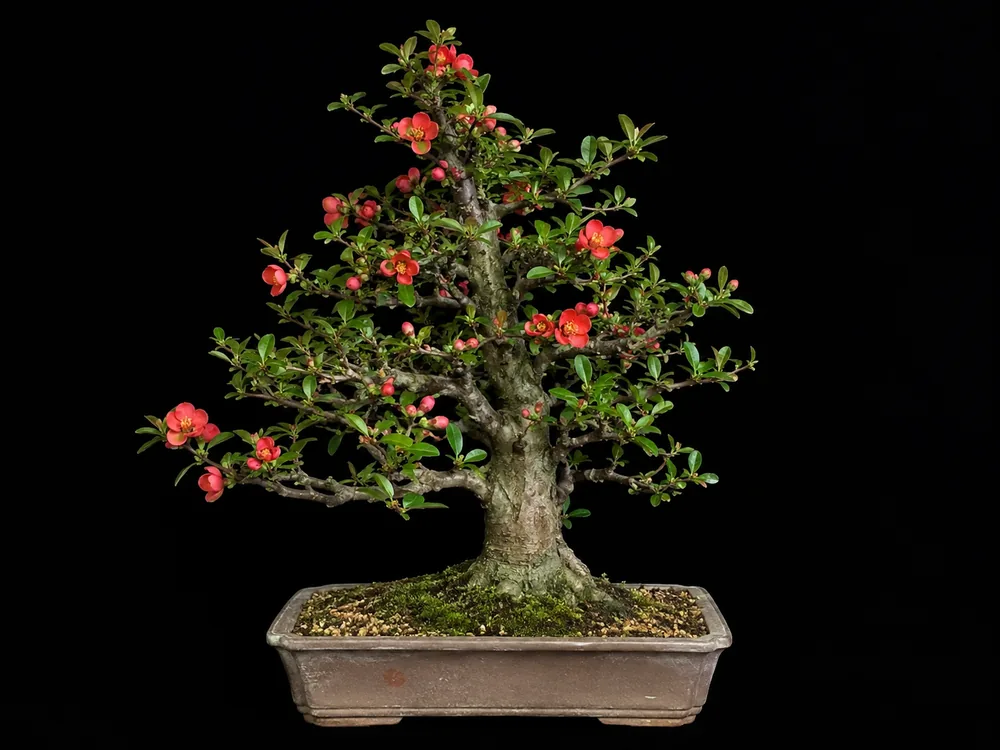
Japanese Flowering Quince Bonsai Care
Chaenomeles
Zones 4, outdoor. One of the earliest and most cheerful flowering bonsai, opening five-petalled blossoms in fiery red. Most are lost to overwatering.
Rosaceae (the rose family) · Deciduous, often thorny, early-flowering and fruiting shrub; outdoor bonsai
Japanese Flowering Quince quick reference
| USDA zones | 4/5–8 (some forms to zone 9); very cold-hardy and needs winter chill to flower |
|---|---|
| Indoor / outdoor | Outdoor — requires cold dormancy; without some cold it flowers poorly or not at all |
| Light | Full sun / lots of light to promote flowering and fruiting |
| Water | Evenly moist (not waterlogged); water when the top inch dries. Daily in summer, less in winter |
| Soil | Free-draining basic bonsai mix kept evenly moist |
| Repot | Every 2–3 years, preferably autumn (or spring before buds extend, with care) |
| Frost | Very hardy; but open flower buds in early spring are vulnerable to late frosts |
| Mature height (as bonsai) | Shrub to 2 m; 15-40 cm as bonsai |
| Growth rate | Moderate |
| Season of interest | Red, pink or white flowers late winter to spring |
| Leaf reduction | Good |
| #1 cause of death | Overwatering / root rot (with canker and fungal disease as serious secondary killers) |
Overview & Character
Flowering quince is one of the earliest and most cheerful flowering bonsai, opening five-petalled blossoms in fiery red, orange, pink, white, or bicolors in late winter to early spring — often before or just as the leaves appear, lighting up the dormant season. Small hard aromatic fruit may follow. The shrub is naturally twiggy and frequently thorny, with a tendency to throw up basal suckers, and it develops wonderful aged, rugged trunks.
The dwarf cultivar 'Chojubai' is especially revered in bonsai for its tiny leaves, dense twiggy ramification, repeat flowering, and small scale — it is one of the finest of all small flowering bonsai. Quince is generally tough and very cold-hardy, but it has a few real weaknesses: it is sensitive to overwatering, prone to several Rosaceae diseases (fireblight, canker, scab, leaf spot), and its early flower buds can be caught by late spring frosts. It also flowers on old wood, so pruning timing is critical to preserving the display.
Identification
Foliage: Glossy, oval-to-oblong leaves with finely toothed (serrated) margins, alternate along the twigs, bright green. Deciduous, turning yellowish before dropping. The dwarf 'Chojubai' has very small leaves and dense twigging.
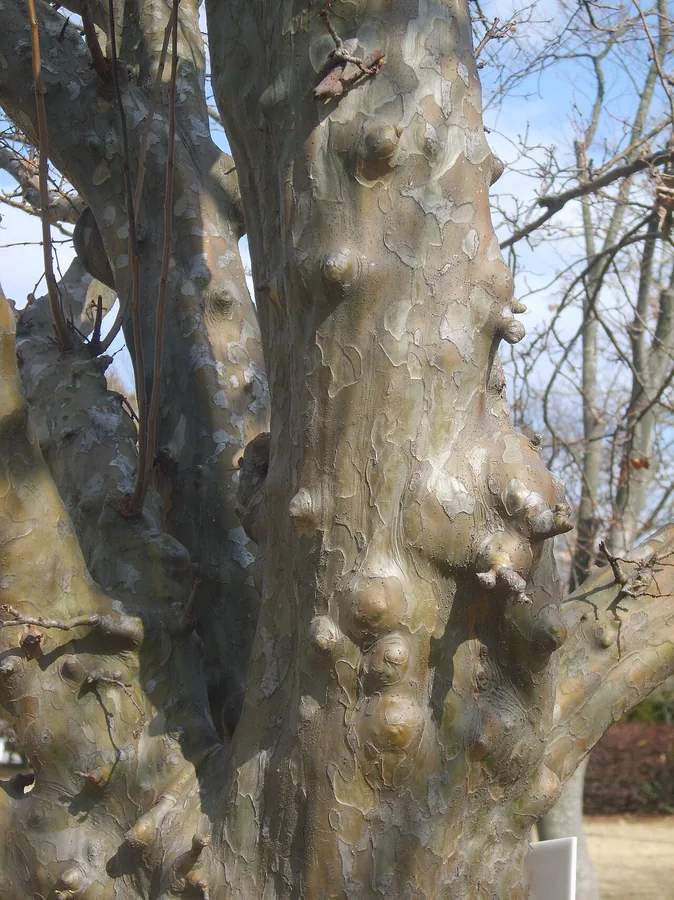
Bark & trunk: Grey-brown bark roughening with age into rugged, characterful old trunks; twigs are stiff, often armed with sharp thorns/spines, and the plant freely throws up basal suckers.
Growth habit/form: A dense, twiggy, often thorny suckering shrub; back-buds and ramifies well, suiting clip-and-grow.
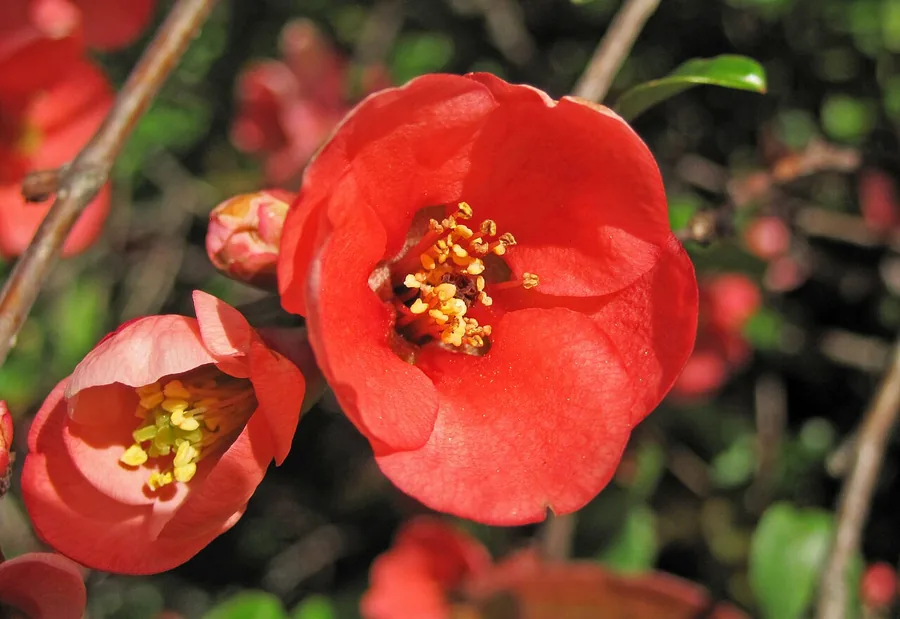
Flowers/fruit (key ID feature): Cup-shaped, 5-petalled blossoms in fiery red, orange, pink, white, or bicolors, opening in late winter to early spring — characteristically on bare old wood before or just as the leaves appear, brightening the dormant season. Followed by small, hard, aromatic apple-like pome fruit (yellow-green).
Look-alikes & how to tell them apart: The combination of early spring flowers on bare old wood plus a hard pome fruit is the giveaway. Versus pomegranate (also red-orange flowers), quince blooms in early spring on leafless wood and bears a hard pome, while pomegranate flowers in summer at new-shoot tips from a waxy leathery calyx and bears a soft leathery-skinned crowned fruit. The toothed alternate leaves and thorns separate it from azalea (entire leathery leaves, funnel flowers).
Climate & USDA Zone
Very cold-hardy, typically USDA zones 4/5–8 (some sources extend to 9). It needs a genuine winter chill — quince that don't get enough cold flower poorly or not at all — which makes it an outdoor species. Despite the overall hardiness, the flower buds swelling in early spring are susceptible to damage from late frosts, which can wreck a season's bloom. Protect from hard frost below about 5°C (41°F) at the bud stage and provide normal winter root protection for the shallow pot, while still ensuring the tree experiences the cold it requires.
Light
Site in full sun / a bright location. Plenty of direct light is what promotes heavy flowering and fruiting; in too much shade the plant grows leggy and blooms sparsely. Good light combined with good airflow also helps keep the foliage dry and reduces the fungal problems quince is prone to.
Watering
Evenly moist, never waterlogged. Water thoroughly when the top inch of soil feels dry, then let the excess drain. During the summer growing season this often means daily watering; in winter dormancy the plant needs much less. The key risk is the wet end of the scale — overwatering leads to yellowing leaves, root rot, and moldy soil, and is the most common way quince bonsai are killed. Aim for consistent moisture with free drainage rather than constant saturation.
Soil & Root Care
Use a free-draining basic bonsai soil mix (akadama/pumice/lava or similar) that holds even moisture while shedding excess water. Repot every 2–3 years, preferably in autumn; spring repotting is possible with care, done before the leaf buds extend. Quince is vigorous at the roots and produces basal suckers freely — remove unwanted suckers at repotting and through the season unless you want them for new trunks or a clump. Keep the soil from staying soggy after repotting to avoid rot.
Feeding
Feed regularly through the growing season to support the heavy flowering and fruiting habit. A balanced feed in spring builds growth; easing off nitrogen and favoring phosphorus/potassium later in the season supports flower-bud formation for the next year. Stop feeding in winter dormancy. Resume after the spring bloom to recover the plant's strength.
Pruning & Styling
Flowering quince blooms (and fruits) on old wood — primarily last year's wood — so pruning timing is critical. The flowers and fruit form increasingly on the previous season's shoots, so removing too much of that wood means no flowers or fruit.
The correct approach:
- Prune for shape and renewal in spring, right after flowering finishes. This preserves the current bloom and stimulates new growth that will carry next year's flowers, while leaving time for those new shoots to mature and set buds.
- Avoid heavy/structural pruning in late season, autumn, or winter, which would remove the wood already carrying next year's flower buds. Wait with strong pruning until appropriately timed after bloom.
- Remove basal suckers regularly unless wanted, and thin congested twiggy growth to keep airflow and prevent disease.
'Chojubai' and other quinces back-bud and produce dense twigging well, rewarding patient clip-and-grow refinement. Be mindful of thorns when wiring, and note the wood can be stiff — much shaping is done by directional pruning rather than heavy wiring.
Propagation & Cuttings
Ease: Easy. Best methods: cuttings; root cuttings/suckers; layering.
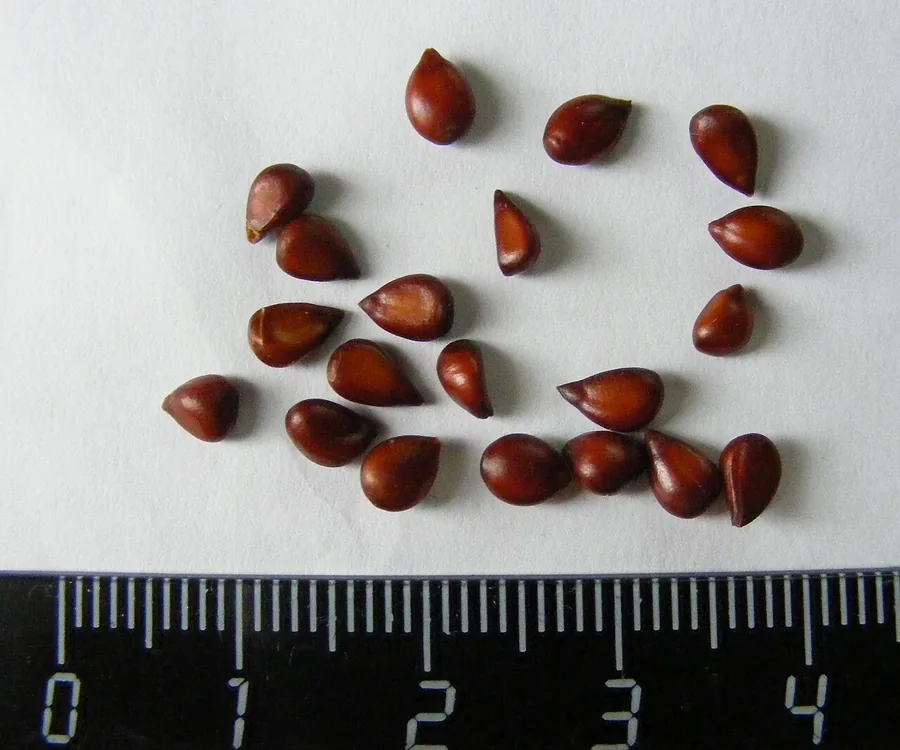
Chaenomeles roots well from softwood cuttings in early summer and hardwood cuttings in winter with hormone, and it suckers freely, so lifting rooted suckers or taking root cuttings in late winter is very reliable. Seed germinates after ~2–3 months cold stratification but won't come true. For bonsai the early flowers and small size suit shohin; sucker- or cutting-grown plants flower young, and the species back-buds strongly and tolerates hard pruning.
Pests
Watch for aphids (especially on new growth and buds), scale insects, and spider mites. Treat with insecticidal soap, neem, or appropriate controls, and keep the plant vigorous and airy. Good airflow and avoiding stress reduce pest pressure.
Disease, Fungus & Infection
Quince, as a member of Rosaceae, is prone to several notable diseases:
- Fireblight (bacterial) — a serious disease that can blacken and kill shoots; favored by cool, wet springs. Prune out and destroy affected wood well below the damage.
- Canker — a serious disease that can severely weaken and eventually kill the plant.
- Apple scab — can cause heavy defoliation by midsummer.
- Fungal leaf spot — especially in wet spring weather, causing considerable leaf drop.
- Powdery mildew.
Prevention is mostly cultural: site in good airflow and sun, avoid overhead watering and waterlogging, remove and destroy infected leaves and prunings, and don't crowd the plant. Use appropriate fungicide/bactericide for serious outbreaks, and act quickly on fireblight and canker since both can be lethal.
Most Common Causes of Death
1. Fire blight. Headline disease (a pome relative) — blackened wilting shoots; cut well below into healthy wood, sterilize tools, remove severe cases. 2. Overwatering / root rot. Keep evenly moist but free-draining; suckering roots resent constant sogginess. 3. Wrong pruning time / lost bloom. Flowers on old (last year's) wood — prune right after flowering, not in autumn/winter, or you cut off blooms. 4. Other fungal disease. Prone to canker, scab, and leaf spot in wet conditions; improve airflow, remove fallen leaves, fungicide if needed. 5. Winter root freeze; pests. Hardy but shelter potted roots in severe freezes; watch aphids and scale.
Seasonal Calendar
- Spring: Early flowers on bare wood; prune right after flowering; repot if due then; resume feeding; manage suckers.
- Summer: Keep evenly moist; light trimming; monitor for fire blight and leaf spot.
- Autumn: Large fragrant fruit may form; taper feeding/water.
- Winter: Hardy dormancy; protect potted roots; avoid pruning off flower buds.
Close-up photo reference
Compare your tree against these to confirm the species and spot problems early.

_(Newark,_Ohio,_USA)_3_(17357332741).jpg)

Sources
Where to buy a Japanese Flowering Quince bonsai
We don’t stock Japanese Flowering Quince at the moment. These species need similar care and we have them now — they are the closest match in our catalogue.
- Blueberry — similar care, in stock now
Browse all bonsai trees for sale or find a species matched to your climate and space.
- All species
- Shop bonsai trees, tools & supplies
- How to Water a Bonsai (Without Killing It)
- Bonsai Soil: What to Buy, What to Mix, and What It Costs
- Why Bonsai Die After Repotting: Diagnosing a Failed Repot
- Pruning vs. Pinching: Shaping Your Bonsai
- Overwintering Bonsai: Cold-Season Care
- Indoor Bonsai Light and Humidity: Making a Windowsill Actually Work
- Root Rot on bonsai
- Overwatering on bonsai
- Winter / Frost Damage on bonsai
- Powdery Mildew on bonsai
- Fire Blight on bonsai
- Blackthorn bonsai care
- Blueberry bonsai care
- Crabapple bonsai care
- Japanese Barberry bonsai care