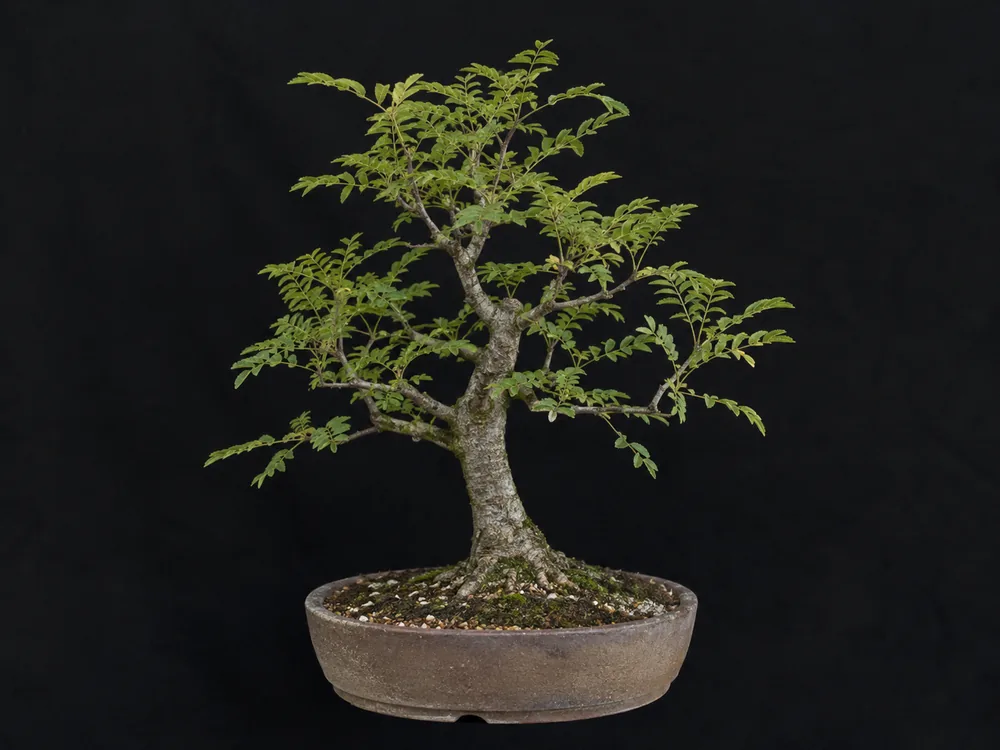
European Ash Bonsai Care
Fraxinus excelsior
Zones 4 to 7, outdoor. A tall, elegant woodland tree that translates into a light. Most are lost to fungal disease.
Oleaceae (olive family) · Deciduous broadleaf tree
European Ash quick reference
| USDA zones | 4 to 7 |
|---|---|
| Indoor / outdoor | Outdoor-only: a hardy temperate tree needing full winter dormancy |
| Light | Full sun: needs strong light for compact growth and good structure |
| Water | Moisture-loving: likes moist, fertile soil; dislikes prolonged drought |
| Soil | Free-draining but moisture-retentive loam-based mix; tolerates lime |
| Repot | Every 2 to 3 years, in early spring before buds break |
| Frost | Very hardy; wood survives well below −25 °C (−13 °F) |
| Mature height | Tree to 35 m; kept 40-90 cm as bonsai |
| Growth rate | Fast |
| Season of interest | Black winter buds, yellow autumn color |
| Leaf reduction | Limited - large compound leaves |
| #1 cause of death | Ash dieback (*Hymenoscyphus fraxineus*): a devastating fungal disease of this species |
Overview & Character
European ash is a tall, elegant woodland tree that translates into a light, airy bonsai with a distinctly northern-European character. Its pinnate leaves flush late and fall early, giving a long "bare tree" season that shows off one of ash's most striking features, its jet-black, velvety winter buds set on stout, flattened gray-green twigs, unmistakable in the dormant months. Mature bark develops a handsome diamond-patterned fissuring, and the tree naturally forms clean, upward-sweeping branch lines that suit informal upright and tall, slender designs. Winged seed clusters ("ash keys") add autumn interest on flowering specimens.
The care keys are those of a vigorous, hardy deciduous tree: full sun, steady moisture in fertile soil, a genuine cold winter, and firm pruning to counter its natural vigor and coarse, large pinnate leaves. The overriding modern concern, however, is disease. European ash faces two grave threats, ash dieback, caused by the fungus _Hymenoscyphus fraxineus_, which has killed vast numbers of ash across Europe, and the emerald ash borer (_Agrilus planipennis_), a beetle that has devastated ash in North America and is spreading in Europe. Any ash bonsai must be watched closely for both.
Identification
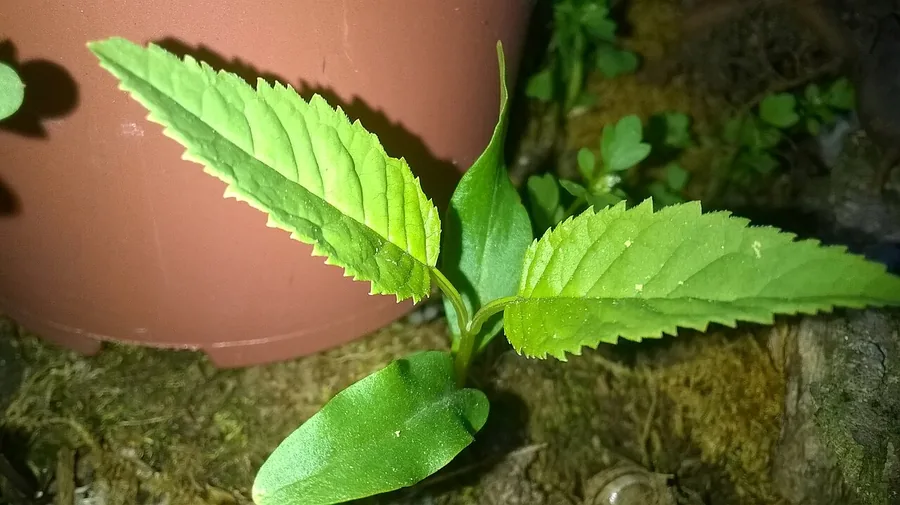
Foliage: Opposite, pinnately compound leaves, 20 to 35 cm, with 7 to 13 (usually 9 to 11) stalkless, lanceolate, toothed leaflets; mid-green, flushing late in spring and often falling green or a modest yellow in autumn.
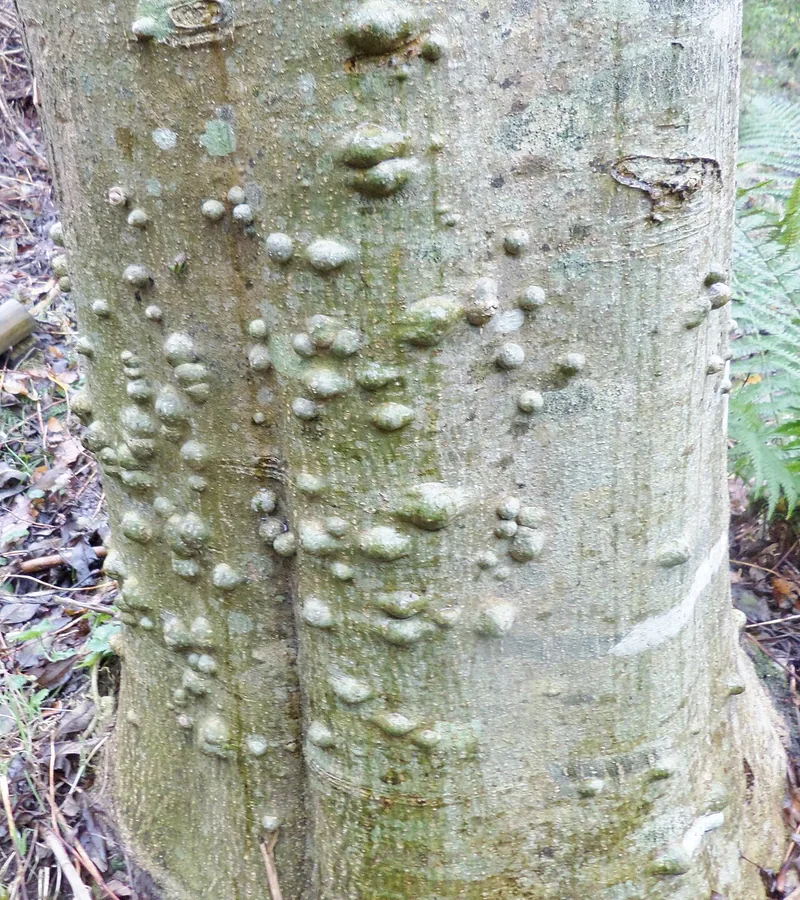
Bark & trunk: Smooth pale gray when young, developing a distinctive network of shallow diamond-shaped fissures with age. Twigs are stout, greenish-gray, and flattened at the nodes.
Growth habit / form: A large tree, 20 to 35 m in the wild, with an open, domed crown and strongly upswept branches; vigorous and fairly coarse, back-budding on younger wood.
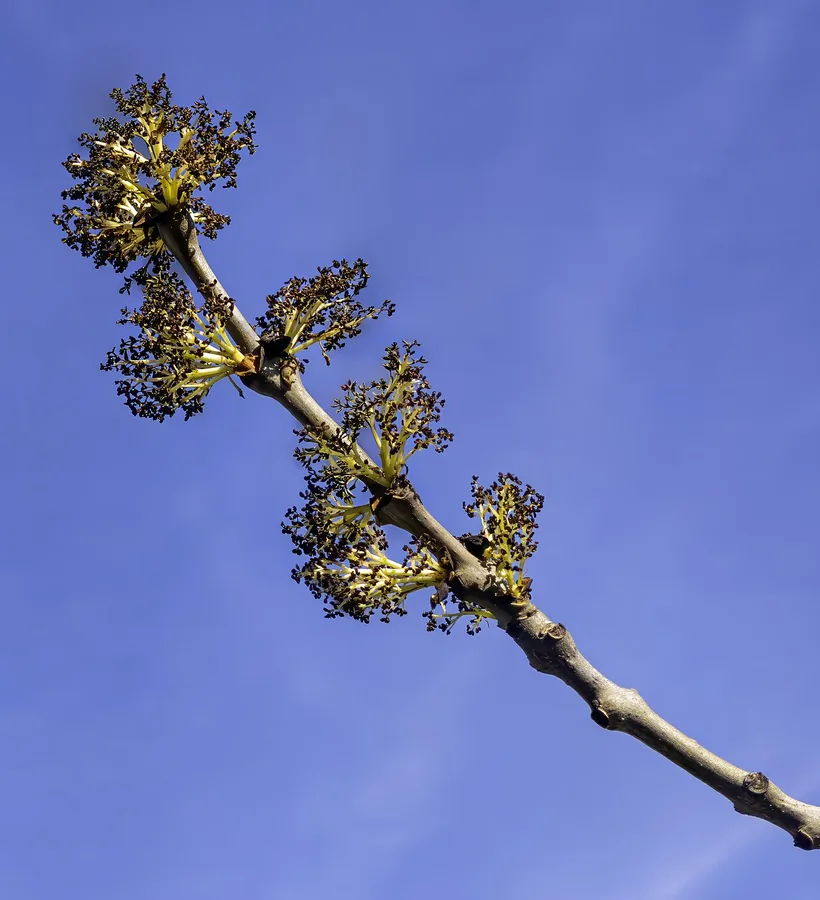
Flowers / fruit: Small purplish-black wind-pollinated flowers in clusters on bare twigs before the leaves; trees may be male, female, or mixed. Fruit is a bunch of single-winged dry samaras, "ash keys", ripening brown in autumn and often hanging through winter.
Look-alikes & how to tell them apart: The clearest confusion is with **rowan / mountain ash (Sorbus aucuparia)**, which despite its name is unrelated (Rosaceae): rowan has alternate pinnate leaves, brown buds, and soft orange-red berries, whereas ash has opposite leaves, unmistakable black velvety buds, and dry winged keys. It can also resemble **elder (Sambucus nigra)**, but elder has hollow pith and berry fruit. The opposite leaves plus jet-black winter buds are diagnostic for ash.
Climate & USDA Zone
European ash is a cold-hardy temperate tree suited to USDA zones 4 to 7. It is very frost-tolerant, its wood surviving hard winters well below −25 °C (−13 °F), and it needs a genuine, prolonged cold dormancy to grow and refoliate properly. It flushes late in spring, which partly protects the emerging leaves from late frosts. It must live outdoors year-round and will not thrive indoors. In colder zones give the container ordinary winter protection (mulch or plunge the pot, or shelter it in an unheated cold frame) to shield the more-exposed potted roots while keeping the tree cold and dormant.
Light
Grow European ash in full sun for the most compact growth, the strongest structure, and the healthiest foliage. It is a light-demanding tree that becomes leggy, sparse, and weak in shade. Full sun also helps harden growth and keep the vigorous shoots and large pinnate leaves in better proportion, and a well-lit, airy position reduces the leaf wetness that favors fungal disease.
Watering
Keep European ash evenly moist in fertile soil through the growing season; it is a moisture-loving tree that dislikes prolonged drought but also resents waterlogging.
- Water freely from leaf-out through summer, never letting the rootball dry out fully.
- Let the surface dry slightly between waterings while keeping the core of the rootball moist.
- Reduce watering in autumn as the leaves fall, keeping the soil just moist over winter.
- Avoid wetting the foliage late in the day where ash dieback is a risk, damp, still conditions favor the fungus.
Soil & Root Care
Soil: A free-draining but moisture-retentive, loam-based mix, akadama with pumice and an organic component holds the steady moisture ash likes. It tolerates lime and a range of pH but prefers fertile, non-droughty soil.
Repotting:
- Repot every 2 to 3 years while developing; established trees can go a little longer.
- Timing: early spring, just before the (late-breaking) buds begin to move, before the leaves open.
- Root-work tolerance is good, ash is vigorous and fairly forgiving of root pruning; remove up to about a third of the roots at a time.
- Aftercare: keep moist and sheltered from strong wind and harsh sun, sterilize tools before working (to avoid spreading disease), and resume feeding after a few weeks once new growth appears.
Feeding
Feed generously from leaf-out through summer with a balanced fertilizer to support ash's vigorous growth, then ease off nitrogen from late summer so the wood hardens before winter. Because ash is naturally coarse and fast, avoid excessive nitrogen, which produces oversized leaflets and long internodes that are hard to refine; pair feeding with pruning to keep growth compact. Withhold feed from a freshly repotted or disease-stressed tree until it is clearly growing again. A healthy, well-nourished tree also resists dieback better than a starved one.
Pruning & Styling
- Suits informal upright, tall/slender, and broom-influenced styles that echo ash's naturally upswept, domed crown; the black winter buds make it a striking bare-tree bonsai.
- Prune structurally in late winter to early spring while dormant; ash back-buds on younger wood, so cut to build taper and a finer branch structure, but sterilize tools between trees to avoid spreading dieback.
- Trim extending shoots through summer to encourage ramification and shorten the naturally long internodes.
- Leaflet reduction: partial defoliation of the largest compound leaves in early summer on a healthy tree forces smaller replacement growth, key for scaling ash's big pinnate leaves.
- Wire young, flexible shoots; older ash wood is stiff, so shape mainly by directional pruning and remove crossing or coarse branches to keep the design light.
Propagation & Cuttings
Ease: Moderate. Best methods: seed; collected.
Fraxinus excelsior grows from its winged seed (keys), which has a deep double dormancy, sow fresh in summer and expect ~18 months (a warm period then a cold winter, sometimes two) before germination, or give ~2 to 3 months warm plus ~3 months cold stratification. Cuttings root poorly; named forms are grafted. Ash suckers and self-sows freely. For bonsai, seedlings or collected saplings are practical; ash is vigorous and back-buds well, so trunk chops build taper readily.
Pests
- **Emerald ash borer (Agrilus planipennis)**: a serious metallic-green beetle whose larvae tunnel S-shaped galleries under the bark, girdling and killing ash; look for D-shaped exit holes, canopy dieback, and bark splitting, and consult local controls where it is present.
- **Ash bark beetles (Hylesinus spp.)**: bore under the bark of stressed or weak wood; keep the tree vigorous and remove infested material.
- Aphids: cluster on soft new shoots; wash off and treat with insecticidal soap or a systemic.
- **Ash-key gall / bud gall mites (Aceria spp.)**, cause cauliflower-like galls on flowers and buds; unsightly but rarely serious, remove affected clusters.
Disease, Fungus & Infection
- **Ash dieback (Hymenoscyphus fraxineus)**: the single most serious threat to European ash; the fungus causes diamond-shaped stem lesions, dark blotches and wilting on leaves, crown dieback, and often a secondary basal (root-collar) rot that kills the tree. There is no cure, remove and destroy heavily infected material, sterilize tools, avoid moving infected leaf litter, and keep the tree strong and airy.
- **Ash bacterial canker (Pseudomonas savastanoi)**: rough, cankered swellings on bark and branches; cut out cankered wood into clean tissue.
- Armillaria (honey fungus) root rot: can attack stressed or dieback-weakened ash at the base; ensure good drainage and remove infected roots.
- Prevention: keep foliage airy and dry, clear and destroy fallen ash leaves (the fungus fruits on old leaf litter), sterilize tools between trees, avoid importing infected plant material, and maintain vigor so the tree can wall off infection.
Most Common Causes of Death
1. **Ash dieback (Hymenoscyphus fraxineus): the number-one killer of European ash; there is no cure, so keep the tree airy and vigorous, destroy fallen ash leaves, sterilize tools, and remove infected wood promptly. 2. Emerald ash borer (Agrilus planipennis): larval tunneling girdles and kills ash; watch for D-shaped exit holes and dieback and use local controls where the beetle is present. 3. Waterlogging / root rot: sodden soil rots the roots and weakens the tree against disease; keep drainage free. 4. Drought stress: a moisture-loving tree left to dry out is weakened and far more vulnerable to dieback and borers; keep it evenly moist. 5. Winter freeze on unprotected potted roots**: the tree is very hardy but container roots are exposed; give ordinary pot protection in hard climates.
Seasonal Calendar
- Spring: Buds break late from their black tips; repot before bud movement, feed and water freely, and inspect new growth for the first signs of dieback.
- Summer: Vigorous growth; keep evenly moist, feed (easing nitrogen late), defoliate or trim for leaf reduction and ramification, and watch closely for emerald ash borer and dieback lesions.
- Autumn: Leaves fall early (often still green); reduce nitrogen and watering, and, critically for disease control, collect and destroy fallen ash leaves that host the dieback fungus.
- Winter: Fully dormant with striking black buds; keep outdoors and cold, protect potted roots in hard climates, and do structural pruning with sterilized tools.
Close-up photo reference
Compare your tree against these to confirm the species and spot problems early.

_Fraxinus_Excelsior_-_inflorescences_immatures.jpg)

Sources
- Wikipedia: *Fraxinus excelsior*
- RHS: *Fraxinus excelsior* (ash)
- Woodland Trust: Ash (*Fraxinus excelsior*) and ash dieback
Growing a European Ash bonsai
We don’t currently stock European Ash trees. If you already have one — or you are sourcing one elsewhere — these are the supplies its care depends on:
- Bonsai Decorative Crushed Shale Top of Soil Dressing — $4.95
- Bonsai Zen Garden Grooming Rake — $8.95
- Metal Impression Tags Package of 4 — $2.95
Browse all bonsai trees, tools and soil or find a species we stock that suits your conditions.
- All species
- Shop bonsai trees, tools & supplies
- How to Water a Bonsai (Without Killing It)
- Bonsai Soil: What to Buy, What to Mix, and What It Costs
- Why Bonsai Die After Repotting: Diagnosing a Failed Repot
- Pruning vs. Pinching: Shaping Your Bonsai
- Overwintering Bonsai: Cold-Season Care
- Indoor Bonsai Light and Humidity: Making a Windowsill Actually Work
- Root Rot on bonsai
- Underwatering (Drought Stress) on bonsai
- Winter / Frost Damage on bonsai
- Aphids on bonsai
- Fungal Canker & Dieback on bonsai
- Amur Maple bonsai care
- Beautyberry bonsai care
- Common Hackberry bonsai care
- Cotoneaster bonsai care