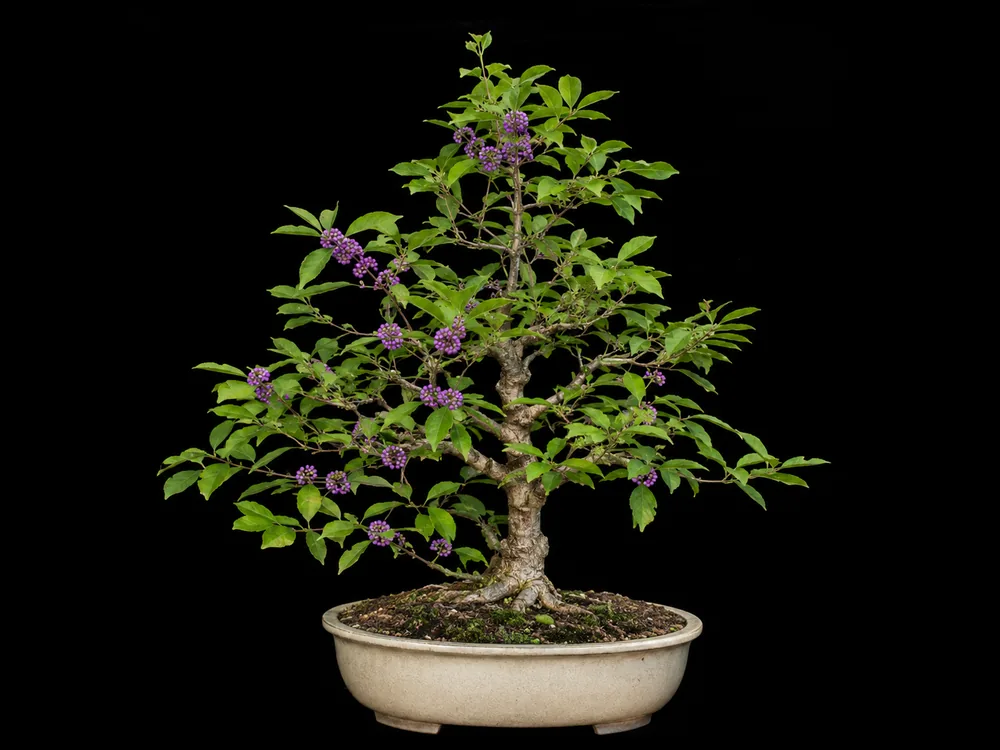
Beautyberry Bonsai Care
Callicarpa bodinieri
Zones 5 to 8, outdoor. A graceful deciduous shrub from central and western China. Most are lost to cold damage.
Lamiaceae (mint family; formerly placed in Verbenaceae) · Deciduous broadleaf shrub
Beautyberry quick reference
| USDA zones | 5 to 8 |
|---|---|
| Indoor / outdoor | Outdoor: a temperate deciduous shrub that needs winter dormancy |
| Light | Full sun to light shade: full sun for best fruit |
| Water | Moderate: keep evenly moist in growth; avoid drought when fruiting |
| Soil | Free-draining but moisture-retentive bonsai mix |
| Repot | Every 2 to 3 years |
| Frost | Good, hardy to about −20 °C (−4 °F); shelter the pot in hard freezes |
| Mature height | Shrub to 2.5 m; 20-40 cm as bonsai |
| Growth rate | Fast |
| Season of interest | Vivid purple autumn berries |
| Leaf reduction | Moderate - leaves stay fairly large |
| #1 cause of death | Winter root freeze in an exposed pot |
Overview & Character
Callicarpa bodinieri is a graceful deciduous shrub from central and western China, grown in bonsai for one unforgettable autumn feature: dense clusters of small, glossy, vivid violet-purple berries that ring the bare stems after the leaves fall, a color almost no other hardy plant produces. The cultivar 'Profusion' is especially heavy-fruiting. It is a member of the mint family, and its arching, slender branches and fine twigging make it well suited to informal and cascade styles. The berries follow small lilac summer flowers and persist into winter, giving a long season of interest on a compact, easily managed shrub.
Care keys: this is an outdoor, cold-hardy, deciduous shrub that needs a true winter rest. Give it full sun for the best fruit, keep it evenly watered through the growing season, and protect the exposed root ball from the hardest freezes. Fruit forms on the current season's growth, so prune with that in mind.
Identification
Foliage: Opposite, elliptic to oval leaves 5 to 12 cm long with finely toothed margins and a pointed tip, mid-green and softly hairy, often turning pale yellow-pink before dropping. The related C. dichotoma has smaller, neater leaves.
Bark & trunk: Pale gray-brown, smooth on young wood, developing texture with age; slender, arching branches.
Growth habit / form: An upright-to-arching, loosely branched shrub that responds well to pruning with fine twigging; naturally somewhat open and airy.
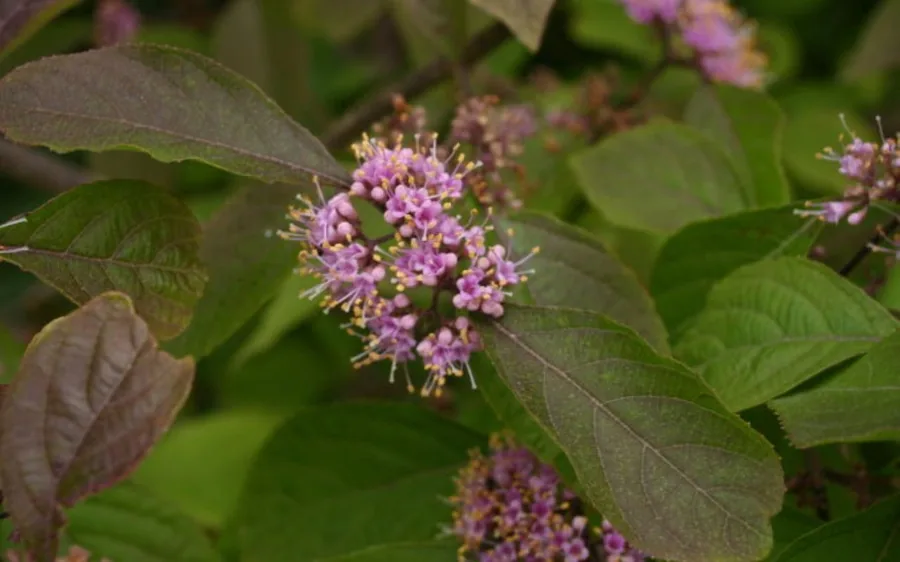
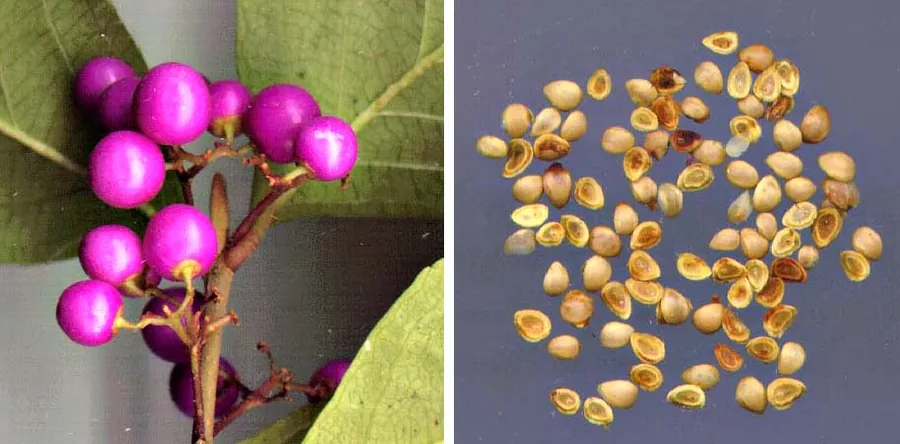
Flowers / fruit: Small lilac-to-pink flowers in clusters in the leaf axils in summer, followed in autumn by tight clusters of round, metallic violet-purple berries roughly 3 to 4 mm across that persist on bare stems.
Look-alikes & how to tell them apart: Most easily confused with **American beautyberry (Callicarpa americana), which has larger leaves and bigger, looser berry clusters and is less cold-hardy (zones 6 to 10). It also resembles purple beautyberry (Callicarpa dichotoma)**, a smaller, more refined shrub with a neater arching habit and smaller leaves; C. dichotoma is often preferred for smaller bonsai, while C. bodinieri is taller and more vigorous.
Climate & USDA Zone
Hardy in USDA zones 5 to 8. Established plants tolerate cold to about −20 °C (−4 °F), and the shrub needs a proper winter dormancy; it is an outdoor plant and will not thrive indoors. Ideal growth is at 18 to 30 °C (64 to 86 °F). Even where the top growth is fully hardy, the roots in a bonsai pot are more exposed than in open ground; in the coldest part of its range shelter the pot (cold frame, heeled into mulch, or against a wall) to keep the root ball from freezing solid, while still allowing the tree to go dormant. In colder-than-zone-5 areas, overwinter under frost protection.
Light
Grow in full sun for the heaviest, best-colored berries and most compact growth; it tolerates light shade but flowers and fruits less generously. Since the fruit is the main attraction, favor a sunny spot. In hot climates a little afternoon shade helps prevent leaf scorch and keeps the soil from drying too fast, but strong light is what drives the fruit display.
Watering
Keep the soil evenly moist through the growing season (steady moisture supports flowering and a good berry set) while allowing the surface to dry slightly between waterings.
- Water when the top of the soil begins to dry; in high summer a small pot may need daily watering.
- Avoid drought stress while the plant is flowering and fruiting, or it will drop flowers and berries.
- Do not waterlog it either; the roots dislike standing water despite the plant's love of moisture.
- Reduce watering markedly once the leaves drop and the plant is dormant.
Soil & Root Care
Soil: A free-draining but moisture-retentive bonsai mix: akadama with pumice and a little composted bark holds moisture while draining well. The species is not fussy about pH but appreciates a fertile, humus-containing substrate.
Repotting:
- Repot every 2 to 3 years.
- Best in early spring as buds begin to swell, before the leaves open.
- Roots are vigorous and fibrous and tolerate firm pruning; remove up to about a third on a healthy plant.
- Aftercare: keep sheltered from strong sun and wind, water carefully to keep the soil evenly moist, and delay feeding until new growth appears.
Feeding
Feed from when the leaves harden in spring through summer with a balanced fertilizer to support vigorous growth and heavy fruiting. Because flowering and fruiting are the goal, ease off high nitrogen in mid-to-late summer and favor a feed with more phosphorus and potassium to encourage bloom and berry set rather than lush leaf. Organic pellets or a regular diluted liquid feed both work. Stop feeding as the plant begins autumn dormancy and give none through winter.
Pruning & Styling
- Prune structurally in late winter or very early spring while dormant, when the branch framework is clear.
- Because berries form on the current season's growth, avoid removing new shoots wholesale in spring or you sacrifice the fruit; shorten selectively.
- Pinch and cut back new shoots after flowering to build fine ramification for the following display.
- Wire young, flexible shoots; older wood is somewhat brittle and better shaped by directional pruning.
- Suits informal upright, cascade, semi-cascade, and clump styles that use its naturally arching, fruit-laden branches to good effect.
Propagation & Cuttings
Ease: Easy. Best methods: softwood and hardwood cuttings; seed.
Callicarpa is one of the easier shrubs to root. Softwood cuttings in early summer strike fast under mist with light hormone; hardwood cuttings in late autumn/winter also root well. Seed germinates readily: clean the pulp from the purple berries and sow; a short cold stratification helps but fresh seed often sprouts without it. It also layers easily. Because it flowers and fruits on the current season's wood, cutting-grown plants berry quickly, making this a fast, rewarding subject for bonsai and accent plantings.
Pests
- Aphids: cluster on soft new growth and flower buds; rinse off or treat with insecticidal soap.
- Spider mites: in hot, dry conditions they cause stippling and leaf drop; raise humidity and use a miticide.
- Whitefly: small white flies under the leaves in warm sheltered spots; treat with soap or a systemic.
- Leaf-chewing caterpillars: remove by hand or spot-treat with Bt.
Disease, Fungus & Infection
- Leaf spot: various fungi cause brown or purple leaf spotting in wet, humid conditions; remove affected and fallen leaves and improve airflow.
- Powdery mildew: a white coating on leaves in stagnant, humid air, especially in late summer; increase ventilation and treat if severe.
- Root rot: from waterlogged, airless soil; roots blacken and the plant wilts; improve drainage and reduce watering.
- Black mold / sooty mold: grows on honeydew from aphids and whitefly; controlling the insects clears it.
Prevention: keep the soil evenly moist but never stagnant, maintain good air circulation through the open canopy, remove fallen leaves, and control sap-sucking insects to prevent secondary mold.
Most Common Causes of Death
1. Winter root freeze in an exposed pot: the potted root ball can freeze solid even when the top growth is hardy; shelter the pot in hard freezes while still allowing dormancy. 2. Root rot from waterlogged soil: standing water suffocates roots; use a free-draining mix and empty saucers. 3. Summer drought / dry-out while fruiting: a small pot dries fast and the plant drops its berries or worse; keep evenly moist. 4. Kept indoors, denied dormancy: without a winter rest and enough light it weakens and declines; it must live outdoors. 5. Severe spider mite or aphid infestation: heavy infestations defoliate and stress the plant; inspect and treat early.
Seasonal Calendar
- Spring: Repot before bud break; structural pruning while leafless; begin feeding once the leaves harden.
- Summer: Full sun and even moisture; lilac flowers appear; feed to support fruit set, pinch after flowering, and watch for mites and aphids.
- Autumn: The violet berries ripen and the leaves color and drop, exposing the fruit; taper feeding as the plant shuts down.
- Winter: Full dormancy; enjoy the persistent purple berries on bare stems; keep cold but shelter the pot from the hardest freezes; water only to keep roots from drying.
Close-up photo reference
Compare your tree against these to confirm the species and spot problems early.


Sources
- Wikipedia: *Callicarpa bodinieri*
- RHS: *Callicarpa bodinieri* var. *giraldii* 'Profusion'
- Missouri Botanical Garden: *Callicarpa* genus
Growing a Beautyberry bonsai
We don’t currently stock Beautyberry trees. If you already have one — or you are sourcing one elsewhere — these are the supplies its care depends on:
- Bonsai Decorative Crushed Shale Top of Soil Dressing — $4.95
- Bonsai Zen Garden Grooming Rake — $8.95
- Metal Impression Tags Package of 4 — $2.95
Browse all bonsai trees, tools and soil or find a species we stock that suits your conditions.
- All species
- Shop bonsai trees, tools & supplies
- How to Water a Bonsai (Without Killing It)
- Bonsai Soil: What to Buy, What to Mix, and What It Costs
- Why Bonsai Die After Repotting: Diagnosing a Failed Repot
- Pruning vs. Pinching: Shaping Your Bonsai
- Overwintering Bonsai: Cold-Season Care
- Indoor Bonsai Light and Humidity: Making a Windowsill Actually Work
- Root Rot on bonsai
- Underwatering (Drought Stress) on bonsai
- Winter / Frost Damage on bonsai
- Leaf Scorch / Sunburn on bonsai
- Powdery Mildew on bonsai
- Amur Maple bonsai care
- Common Hackberry bonsai care
- Eastern Redbud bonsai care
- European Spindle bonsai care