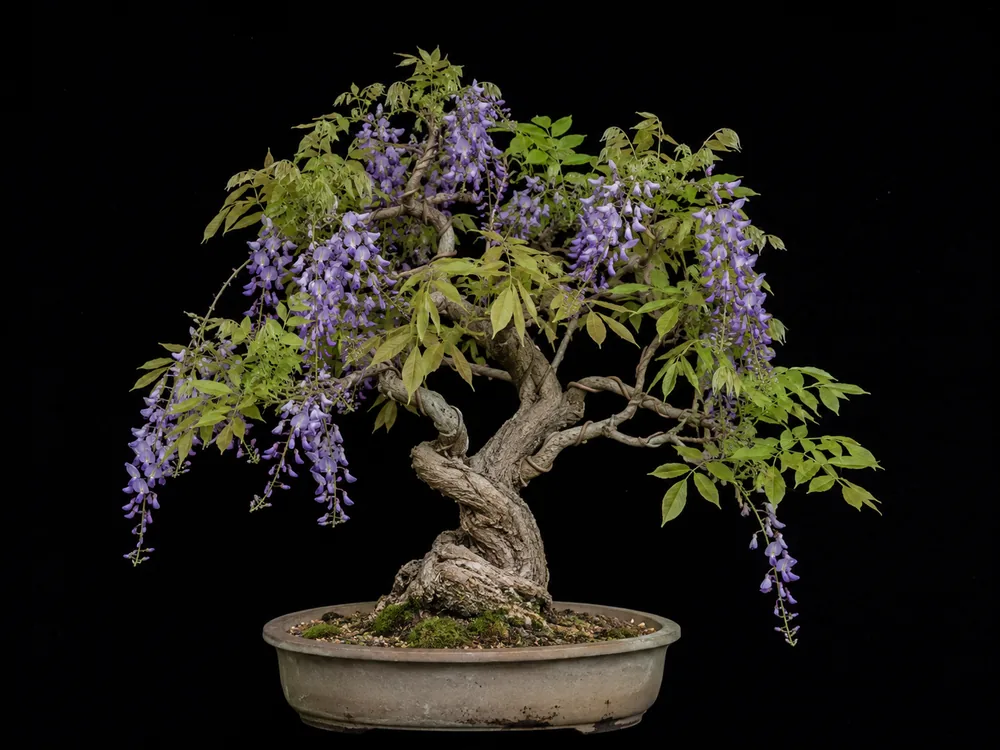
Chinese Wisteria Bonsai Care
Wisteria sinensis
Zones 5 to 9, outdoor. Grown as bonsai almost entirely for one spectacular event. Most are lost to drying out.
Fabaceae (the pea and legume family) · Deciduous flowering woody vine trained as bonsai
Chinese Wisteria quick reference
| USDA zones | 5 to 9 |
|---|---|
| Indoor / outdoor | Outdoor: a temperate deciduous vine that needs a real winter dormancy; it will not thrive indoors. |
| Light | Full sun: flower bud set fails in shade; wants 6+ hours of direct sun. |
| Water | Moisture-loving: a heavy drinker in growth, especially while flowering. |
| Soil | Free-draining, moisture-retentive mix; slightly acidic tolerated. |
| Repot | Every 2 to 3 years, early spring before buds swell. |
| Frost | Hardy to about −20 °C (−4 °F); protect roots in containers. |
| Mature height | Vine to 20 m; kept 30-70 cm as bonsai |
| Growth rate | Fast |
| Season of interest | Cascading violet spring flower racemes |
| Leaf reduction | Limited - grown for flowers not foliage |
| #1 cause of death | Never flowering plus neglect, but the true killer is winter root freeze in an unprotected pot, or summer drought during bloom. |
Overview & Character
Chinese wisteria is grown as bonsai almost entirely for one spectacular event: the cascade of fragrant lilac-blue racemes that drip from bare or barely-leafed branches in mid to late spring. A mature wisteria bonsai in full flower is among the most dramatic sights in the art, and the species tolerates the hard root confinement and aggressive pruning that container culture demands. The trunk thickens with age into gnarled, twisting deadwood-friendly forms, and old specimens develop character quickly. Note that all parts, especially the seeds and pods, are toxic to people and pets, containing wisterin and lectins that cause severe vomiting and gastric distress if eaten; keep pods away from children and animals.
The care keys are simple to state and hard to skip: full sun to force flower buds, abundant water and feeding through the growing season, a phosphorus-forward feed and reduced nitrogen in late summer to encourage bloom rather than runaway vine growth, and a genuine cold winter dormancy with root protection. Wisteria flowers on short spurs off older wood, so styling is a discipline of ruthless summer whip-pruning to convert long whips into flowering spurs.
Identification
Foliage: Pinnately compound leaves with 9 to 13 leaflets (typically 11), emerging bronze-green and maturing to soft green; leaflets are ovate with pointed tips. Chinese wisteria twines counter-clockwise (counterclockwise), a key field mark.
Bark & trunk: Smooth gray-brown when young, becoming furrowed and muscular with age; trunks twist naturally and old specimens show ropey, sinewy character prized in bonsai.
Growth habit / form: A vigorous twining liana that can throw shoots several meters in a season; in bonsai it is contained and trained to a trunk with a weeping or cascade canopy.
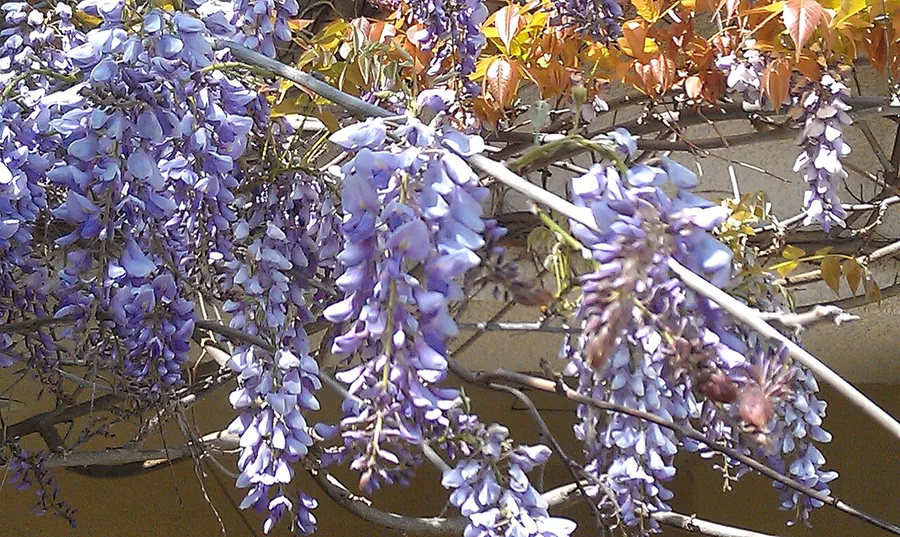
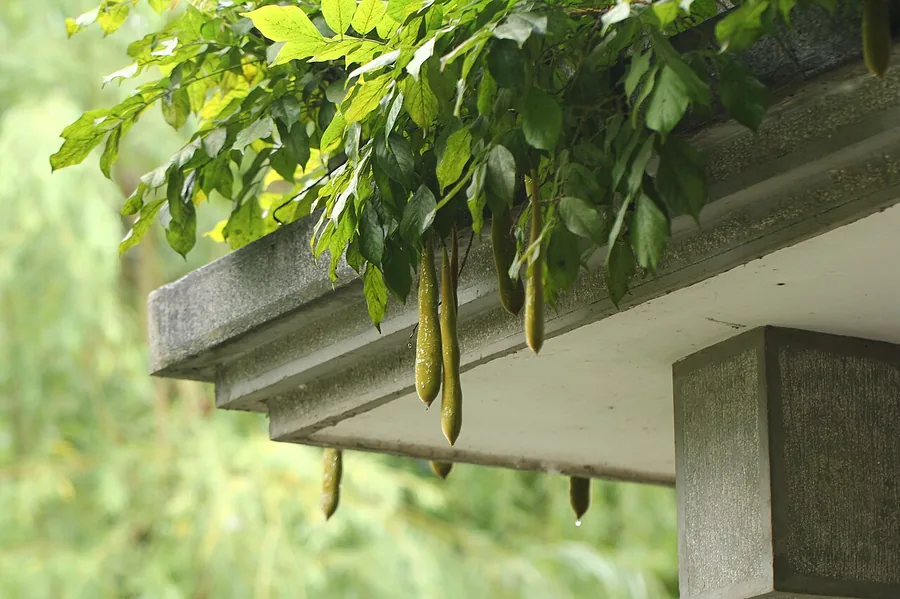
Flowers / fruit: Dense pendulous racemes 15 to 30 cm long of pea-shaped violet-blue (occasionally white) flowers, opening before or with the leaves in one flush, a hallmark distinguishing it from Japanese wisteria. Fruit is a velvety, bean-like seed pod containing toxic seeds.
Look-alikes & how to tell them apart: Japanese wisteria (Wisteria floribunda) is the main confusion. W. floribunda twines clockwise, has longer racemes (often 30 to 90 cm) that open progressively from the base as leaves expand, and usually has 13 to 19 leaflets. Chinese wisteria's shorter racemes opening nearly all at once, on bare wood, counter-clockwise twining, and ~11 leaflets are the reliable separators.
Climate & USDA Zone
Chinese wisteria is a temperate species hardy in USDA zones 5 to 9. It withstands winter lows around −20 °C (−4 °F) in the ground, but roots in a bonsai pot have no soil mass to buffer cold and are damaged well before that. It requires a period of winter chilling to break dormancy and flower properly. Grow it outdoors year-round; in cold winters overwinter the pot in an unheated garage, cold frame, or plunge it into the ground with the rootball mulched. In hot-summer zones (8 to 9) give afternoon shade to the pot to prevent root scorch.
Light
Full, direct sun is non-negotiable for flowering. Wisteria sets flower buds in strong light; a plant in partial shade grows lush foliage and refuses to bloom. Give it the sunniest position you have, ideally 6 to 8 hours of direct sun, with only the pot (not the canopy) shaded in extreme summer heat.
Watering
Keep it consistently moist; wisteria is a thirsty vine, never let it dry at the root during growth or bloom.
- In spring and summer water daily, sometimes twice daily in heat; a flowering wisteria transpires heavily.
- Standing the pot in a shallow tray of water during the peak of flowering is a common and effective practice.
- Reduce watering in late summer to help ripen wood and set buds, but never allow wilting.
- In winter dormancy keep the rootball just damp, never bone-dry and never waterlogged.
Soil & Root Care
Soil: A free-draining but moisture-retentive mix: akadama with a portion of organic matter or fine bark, or akadama/pumice/lava with added compost. Wisteria tolerates slightly acidic soil and appreciates the extra water-holding capacity.
Repotting:
- Repot every 2 to 3 years while young, less often as it matures.
- Timing: early spring, just as buds swell but before leaves open; after flowering is an acceptable alternative.
- Wisteria has thick, fleshy, vigorous roots and tolerates fairly hard root pruning; remove up to a third.
- Aftercare: water in well, keep out of strong wind and direct midday sun for two weeks, and hold off feeding for 3 to 4 weeks.
Feeding
Feed heavily but strategically. From leaf-out give a balanced fertilizer to build the plant, then switch in early to mid summer to a low-nitrogen, high-phosphorus and potassium feed (a "tomato" or bloom-type food) to drive flower-bud formation rather than leafy vine extension. Stop nitrogen entirely by late summer. Over-feeding with nitrogen is a classic reason wisteria makes leaves and no flowers. Resume nothing until the following spring.
Pruning & Styling
- Wisteria flowers on spurs off older wood, so the core technique is summer pruning: cut back the long whippy new extensions to 4 to 6 buds in mid summer to force spur formation.
- Follow with a winter prune, shortening those summer-cut shoots further to 2 to 3 buds where flower buds (fat, rounded) are visible versus leaf buds (slim, pointed).
- Suitable styles: cascade (kengai), semi-cascade, weeping/informal upright, and the classic flowering standard; the pendulous racemes suit any style that lets them hang free.
- Do major structural cuts and wiring while dormant; wisteria's vigor means wire bites in fast during the growing season; check weekly.
- Remove seed pods after flowering both to conserve energy for next year's buds and because the seeds are toxic.
Propagation & Cuttings
Ease: Moderate. Best methods: cuttings; layering; grafting (seed slow to flower).
Wisteria sinensis is best propagated vegetatively because seedlings can take 10 to 20 years to flower. Take softwood cuttings in early summer or hardwood cuttings in winter, both with IBA; rooting is moderate. Root cuttings and layering (very reliable: peg down a stem in spring) are excellent, and choice cultivars are grafted. Seed is easy to germinate (scarify and soak) but not worth it for flowers. For bonsai, always start from a known flowering clone via cutting, layer, or graft so blooms come soon.
Pests
- **Wisteria scale (Eulecanium excrescens)**: large brown domed scales on stems, sap-sucking and disfiguring; scrape off and treat with horticultural oil in late winter.
- Aphids: cluster on soft new shoots and flower stalks; blast off or use insecticidal soap.
- Wisteria borer / longhorn larvae: tunnel in weakened stems; prune out affected wood.
- Spider mites: in hot dry conditions, causing stippled, bronzed leaves; raise humidity and treat with miticide.
For all of these, catch infestations early; a dormant-season horticultural oil spray knocks back overwintering scale and mite eggs.
Disease, Fungus & Infection
- Powdery mildew: white coating on leaves in humid, crowded, low-airflow conditions; improve air circulation and remove affected foliage.
- **Leaf spot fungi (e.g. Phyllosticta, Septoria)**: brown blotches in wet weather; remove fallen leaves and avoid overhead watering.
- **Crown gall (Agrobacterium tumefaciens)**: rough tumor-like swellings at the base; no cure, prune out or discard badly affected plants and sterilize tools.
- Root rot: from waterlogged, poorly draining soil despite wisteria's thirst; ensure the mix drains freely.
Prevention: full sun, good airflow, clean fallen debris, sterile tools, and a free-draining mix keep almost all of these at bay.
Most Common Causes of Death
1. Winter root freeze in an unprotected pot: the most common killer of container wisteria; overwinter the pot in a cold frame, unheated garage, or heel it into the ground with mulched roots. 2. Summer drought during flowering: a wisteria in full bloom transpires enormously; a single dry-out can kill it. Water daily or twice daily and consider a water tray while flowering. 3. Waterlogging / root rot: the opposite error; a mix that stays soggy suffocates the roots. Use a freely draining soil. 4. Excess nitrogen and shade causing chronic failure to flower, then neglect: a wisteria that never blooms often gets abandoned and dies; give full sun and a low-nitrogen bloom feed. 5. Severe scale infestation left untreated: heavy wisteria scale weakens and can eventually kill a tree; treat with dormant oil.
Seasonal Calendar
- Spring: Peak season: flowering on bare/emerging wood, then leaf-out; repot before buds swell, begin heavy watering and balanced feeding.
- Summer: Vigorous growth; do the key summer prune of long whips to 4 to 6 buds, switch to low-nitrogen bloom feed, water abundantly, watch for scale and aphids.
- Autumn: Growth slows, leaves yellow and drop; stop feeding, ease off water, remove seed pods, plan winter protection.
- Winter: Fully dormant and bare; do the winter spur prune to 2 to 3 buds, protect roots from freezing, keep rootball just damp, apply dormant horticultural oil for scale.
Close-up photo reference
Compare your tree against these to confirm the species and spot problems early.


Sources
- Bonsai Empire: Wisteria bonsai care
- Wikipedia: *Wisteria sinensis*
- Missouri Botanical Garden: *Wisteria sinensis* plant profile
Growing a Chinese Wisteria bonsai
We don’t currently stock Chinese Wisteria trees. If you already have one — or you are sourcing one elsewhere — these are the supplies its care depends on:
- Bonsai Decorative Crushed Shale Top of Soil Dressing — $4.95
- Bonsai Zen Garden Grooming Rake — $8.95
- Metal Impression Tags Package of 4 — $2.95
Browse all bonsai trees, tools and soil or find a species we stock that suits your conditions.
- All species
- Shop bonsai trees, tools & supplies
- How to Water a Bonsai (Without Killing It)
- Bonsai Soil: What to Buy, What to Mix, and What It Costs
- Why Bonsai Die After Repotting: Diagnosing a Failed Repot
- Pruning vs. Pinching: Shaping Your Bonsai
- Overwintering Bonsai: Cold-Season Care
- Indoor Bonsai Light and Humidity: Making a Windowsill Actually Work
- Root Rot on bonsai
- Winter / Frost Damage on bonsai
- Leaf Scorch / Sunburn on bonsai
- Powdery Mildew on bonsai
- Spider Mites on bonsai
- Japanese Wisteria bonsai care
- European Spindle bonsai care
- American Beech bonsai care
- Amur Maple bonsai care