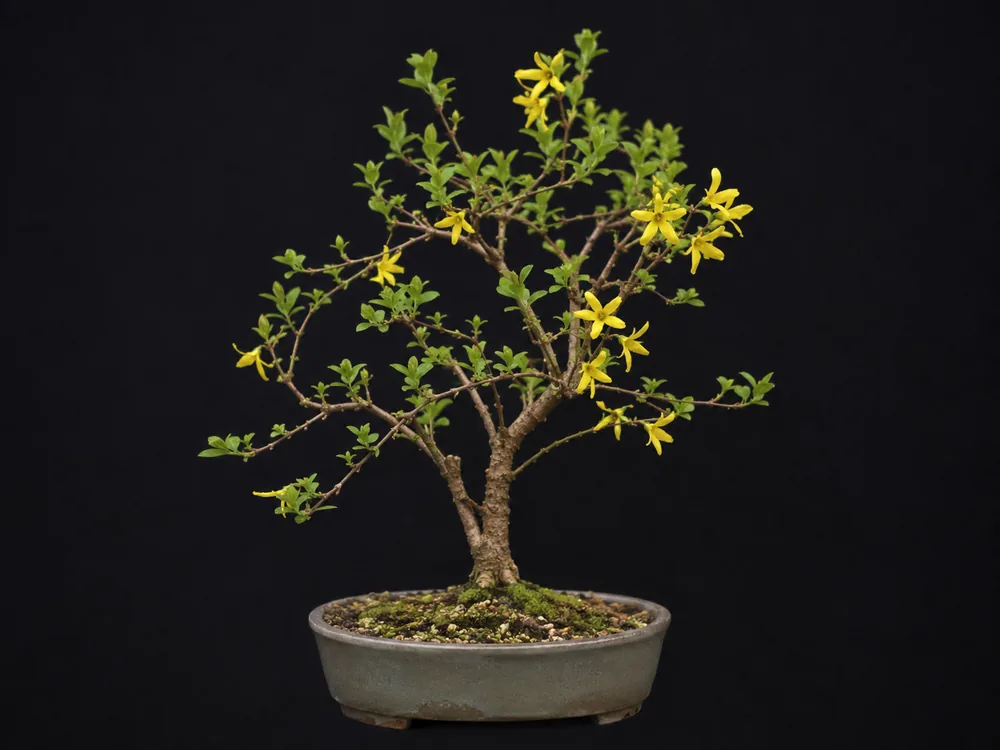
Forsythia Bonsai Care
Forsythia suspensa
Zones 5 to 8, outdoor. A hardy deciduous shrub grown as bonsai for its exuberant early-spring display. Most are lost to overwatering.
Oleaceae (olive family) · Deciduous flowering shrub
Forsythia quick reference
| USDA zones | 5–8 |
|---|---|
| Indoor / outdoor | Outdoor (deciduous; needs seasons and dormancy) |
| Light | Full sun — 6+ hours for heavy flowering |
| Water | Keep consistently moist — not waterlogged |
| Soil | Free-draining, moisture-retentive mix |
| Repot | Every 2–3 years, after flowering / early spring |
| Frost | Hardy to ~−10 °C; protect potted roots in hard freeze |
| Mature height (as bonsai) | Shrub to 3 m; 20-45 cm as bonsai |
| Growth rate | Fast |
| Season of interest | Bright yellow flowers before leaves in early spring |
| Leaf reduction | Good |
| #1 cause of death | Pruning off flower buds (wrong timing); root rot; brittle-branch breakage |
Overview & Character
Forsythia is a hardy deciduous shrub grown as bonsai for its exuberant early-spring display of bright-yellow bell flowers that smother the bare arching stems before the leaves emerge — one of the first and cheeriest blooms of the year. It has slender, often weeping shoots that suit cascade and informal styles.
It is easy and cold-hardy, wanting full sun, consistent moisture, and free drainage. The crucial point is timing: it flowers on the previous year's wood, so prune right after flowering to set buds for next spring — pruning later removes the flowers. Branches are somewhat brittle, so wire young, flexible shoots with care.
Identification
Foliage: Simple, opposite, ovate to lance-shaped leaves ~6–10 cm with a toothed upper margin, mid-green, turning yellow-purple in autumn; emerge after the flowers.
Bark & trunk: Grey-brown, with arching, often hollow-pithed stems; older bark develops fine warty lenticels.
Growth habit / form: Arching, sometimes weeping, multi-stemmed shrub; excellent for informal upright, weeping, and cascade styles.
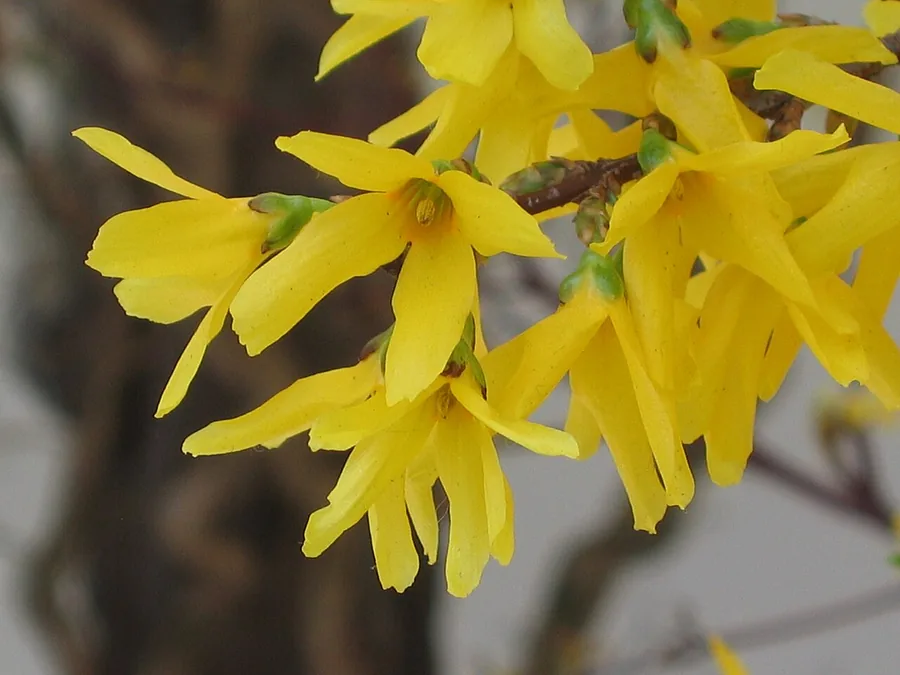
Flowers / fruit: The signature feature — masses of bright-yellow, four-lobed, bell-shaped flowers borne on the bare previous-year stems in very early spring, before the leaves.
Look-alikes & how to tell them apart: The early yellow four-lobed bells on bare arching stems are distinctive; resembles Winter Jasmine in bloom color/timing, but Forsythia has four-petalled flowers and simple opposite leaves, while Winter Jasmine has six-lobed flowers, trifoliate leaves, and green four-angled stems.
Climate & USDA Zone
Hardy in USDA zones 5–8 (fully hardy to about −10 °C). Deciduous and dormancy-needing, grown outdoors year-round; protect potted roots in hard freezes. A cold winter is needed to set its early-spring flowers.
Light
Full sun — at least 6 hours for heavy flowering and compact growth; it tolerates light shade but blooms far better in full sun.
Watering
Keep the soil consistently moist — but not waterlogged.
- Water thoroughly when the top inch feels dry, ensuring good drainage.
- It enjoys steady moisture in growth; avoid both drying out and standing water (root rot).
- Reduce somewhat in dormancy.
Soil & Root Care
Soil: A free-draining, moisture-retentive bonsai mix (akadama / pumice / lava).
Repotting:
- Frequency: every 2–3 years, ideally just after flowering (or early spring), to refresh soil and prevent pot-binding.
- Tolerates root-pruning well; reduce up to ~1/3.
- Aftercare: keep moist and sheltered while re-establishing.
Feeding
Feed fortnightly through the growing season; after flowering a general balanced feed supports the new wood that will bear next year's blooms. Ease off toward dormancy. Don't feed freshly repotted or dormant trees.
Pruning & Styling
- Flowers on old wood — prune right after blooming. Trim and shape immediately after the spring flowers fade so the new shoots have all season to set buds for next spring; pruning later sacrifices flowers.
- It back-buds and shoots vigorously; the arching stems suit weeping/cascade training.
- Wiring: the branches are somewhat brittle — wire only young, flexible shoots (early spring or late summer) and check often to avoid bite and breakage.
- Suits informal upright, weeping, and cascade styles.
Propagation & Cuttings
Ease: Very easy. Best methods: cuttings; layering.
Forsythia roots from almost any cutting — softwood in summer and hardwood in winter both strike readily with little effort — and its arching stems layer wherever they touch soil, giving instant rooted pieces. Seed is seldom used. For bonsai the early yellow flowers on bare wood are the appeal; cutting- or layer-grown plants flower young, thicken fast, and back-bud strongly after hard pruning, making forsythia easy, forgiving material.
Pests
- Aphids (on new growth)
- Spider mites (hot, dry conditions)
- Scale insects
- Weevils (notch leaves; larvae on roots)
Treat with horticultural oil, insecticidal soap, or appropriate systemics; catch infestations early.
Disease, Fungus & Infection
Generally healthy; main risks in damp/wet conditions:
- Root rot — from waterlogged soil.
- Powdery mildew / leaf spot — fungal issues in humid, stagnant, or overly wet conditions; improve airflow, avoid overhead watering.
Prevention: full sun, consistent-but-drained moisture, good air circulation.
Most Common Causes of Death
1. Pruning off the flower buds. It blooms on old wood — prune right after flowering, not later, or you lose next year's flowers. 2. Root rot from waterlogging. Keep moist but well-drained. 3. Breaking brittle branches when wiring. Wire only young flexible shoots; check the wire often. 4. Powdery mildew in damp, stagnant air. Give sun and airflow. 5. Unprotected potted roots in hard freeze. Hardy, but shelter the pot.
Seasonal Calendar
- Spring: Bright-yellow flowers on bare stems (very early), then leaves; prune right after flowering; repot option; begin feeding; full sun.
- Summer: Full sun; keep moist; let the pruned shoots run to set next year's buds; feed; wire young shoots carefully.
- Autumn: Yellow-purple color; taper feeding/water as it goes dormant.
- Winter: Dormant/leafless; flower buds set on the wood; protect potted roots in hard freeze; keep just-moist.
Close-up photo reference
Compare your tree against these to confirm the species and spot problems early.
_Forsythia_suspensa_-%E9%A6%99%E6%B8%AF%E8%8A%B1%E5%B1%95_Hong_Kong_Flower_Show-_(9213337301).jpg)
Sources
Growing a Forsythia bonsai
We don’t currently stock Forsythia trees. If you already have one — or you are sourcing one elsewhere — these are the supplies its care depends on:
- Bonsai Decorative Crushed Shale Top of Soil Dressing — $4.95
- Bonsai Zen Garden Grooming Rake — $8.95
- Metal Impression Tags Package of 4 — $2.95
Browse all bonsai trees, tools and soil or find a species we stock that suits your conditions.
- All species
- Shop bonsai trees, tools & supplies
- How to Water a Bonsai (Without Killing It)
- Bonsai Soil: What to Buy, What to Mix, and What It Costs
- Why Bonsai Die After Repotting: Diagnosing a Failed Repot
- Pruning vs. Pinching: Shaping Your Bonsai
- Overwintering Bonsai: Cold-Season Care
- Indoor Bonsai Light and Humidity: Making a Windowsill Actually Work
- Root Rot on bonsai
- Underwatering (Drought Stress) on bonsai
- Winter / Frost Damage on bonsai
- Powdery Mildew on bonsai
- Spider Mites on bonsai
- American Beech bonsai care
- Amur Maple bonsai care
- Beautyberry bonsai care
- Blackthorn bonsai care