Sweet Acacia Bonsai Care
Vachellia farnesiana
1 Sweet Acacia bonsai in stock, from $91.95 Shipped direct from our nursery partners, with a 48-hour live-arrival guarantee. See the trees
Zones 9a to 11, outdoor. Grown for two things: the feathery, finely divided foliage that gives it an almost fern-like. Most are lost to cold damage.
Fabaceae (pea family) · Semi-evergreen thorny shrub or small tree; fragrant late-winter flowering
Sweet Acacia quick reference
| USDA zones | 9a–11 outdoors year-round; container and winter protection elsewhere |
|---|---|
| Indoor / outdoor | Outdoors through the warm season; bring in as nights approach 45°F |
| Light | Full sun. High light indoors over winter |
| Water | Let it dry slightly between waterings. Drought-tolerant once established |
| Soil | Adaptable, including sandy and alkaline soils, provided it drains freely |
| Repot | Not documented for this species; every 1–2 years while young is general practice for a vigorous legume |
| Frost | Brief dips into the 20s°F cost it leaves and flowers. Shelter below 45°F |
| Mature height (as bonsai) | 15–35 ft in the ground; 20–50 cm as bonsai |
| Growth rate | Moderate to rapid in the ground; much slower in a restricted pot |
| Season of interest | Golden, intensely fragrant puff-ball flowers in late winter and early spring, repeating after growth flushes |
| Leaf reduction | Not documented; the bipinnate leaflets are naturally tiny |
| #1 cause of death | Cold — it drops leaves and flowers whenever it is chilled, and a potted specimen has no reserve |
Overview & Character
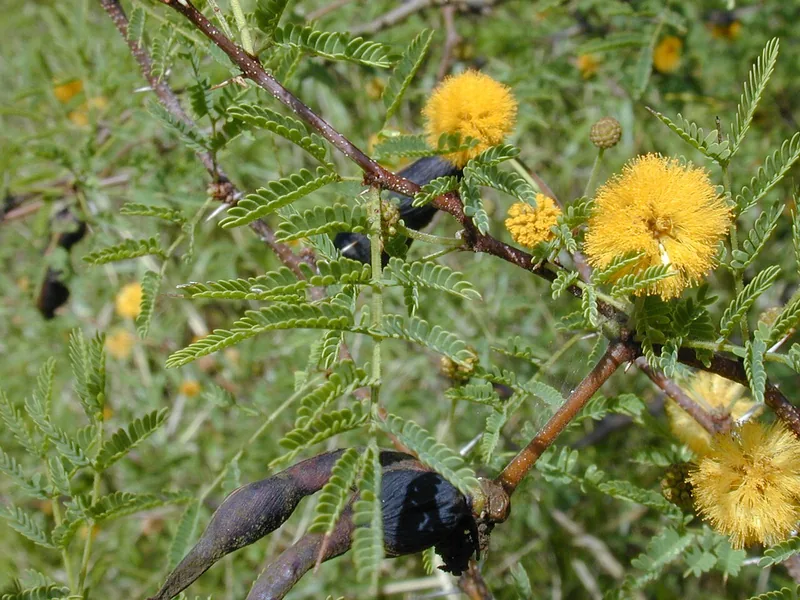
Sweet Acacia is grown for two things: the feathery, finely divided foliage that gives it an almost fern-like texture, and the flowers — small golden puff-balls, each made of dozens of tiny florets, carrying a perfume strong enough that the species was historically grown for the fragrance industry. They arrive in late winter and early spring, which is a genuinely useful time for a bonsai collection to have something in bloom.
The zig-zag branching and paired straight thorns give it real character, and there is a neat practical bonus in how the thorns behave — see the styling section.
Its weakness is cold. It is not delicate exactly, but it responds to chilling by dropping its leaves and flowers, and a potted tree does not have the reserves a ground-grown one does.
Identification
Foliage: Bipinnate — finely divided, feathery, soft green leaflets. Semi-evergreen; evergreen in warm climates, shedding in cold or drought.
Thorns: Paired, straight, sharp spines at the nodes. They form only on new growth and do not regrow on old wood once removed — an unusual and useful trait.
Bark & trunk: Smooth to finely fissured, brown-grey. Branches zig-zag distinctly between nodes.
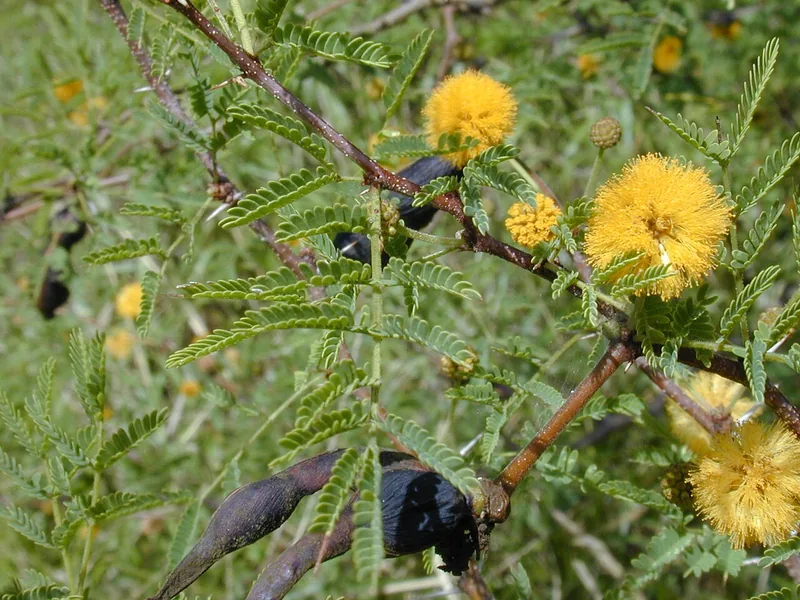
Flowers & fruit: Golden-yellow globose puff-balls of 33–95 tiny flowers, strongly fragrant, mainly late winter to early spring with sporadic repeats after each growth flush. Pods dark brown to black, cylindrical, 1.5–8.5 cm, not splitting open.
Look-alikes: Other Vachellia and Senegalia species. The combination of zig-zag branching, paired straight thorns, feathery bipinnate leaves and fragrant golden puff-balls is distinctive.
Climate & USDA Zone
Zones 9a–11 outdoors year-round. Elsewhere it is a container tree summered outside and wintered under protection. It tolerates brief dips into the 20s°F but drops leaves and flowers when chilled — bring a bonsai specimen in as nights approach 45°F rather than waiting for a frost warning.
Light
Full sun. It is a plant of open, hot, dry country and it wants the strongest light you can give it. Indoors over winter, the brightest available position.
Watering
Let it dry slightly between waterings. Moderate water, and genuinely drought-tolerant once established. Water thoroughly, let the surface dry, then water again. Avoid waterlogging — this is a species adapted to sharply drained ground.
Reduce watering considerably over winter, particularly if the tree has dropped its leaves after a chill.
Soil & Root Care
Adaptable — it copes with sandy and alkaline soils that many species will not — provided drainage is good. A standard free-draining bonsai mix suits it.
Honest gap: we found no documented repotting cadence for this species. Every one to two years while young, in spring, is reasonable practice for a vigorous legume; extend as it matures.
Feeding
Feed moderately through the growing season. As a nitrogen-fixing legume it does not need heavy nitrogen, and pushing it produces soft growth and fewer flowers. Stop over winter.
Pruning & Styling
The thorn trait is genuinely useful. Because thorns form only on new growth and do not return on cut old wood, you can progressively de-thorn a specimen by controlling which growth you keep. Over a few seasons that gives you a tree that is far more pleasant to handle and style.
Timing: flowers come mainly in late winter and early spring on wood formed the previous season, with sporadic repeats after each new flush. Prune after a flowering flush rather than in late autumn, or you will remove the buds that would have given you the main display.
Wear gloves. The thorns are sharp and paired.
Propagation & Cuttings
Ease: Moderate. Best method: scarified seed.
The seed coat is hard — in nature it is broken down by passing through an animal's gut. Mechanical scarification or a hot-water soak before sowing gives reliable germination. We could not confirm whether cuttings root reliably for this species.
Pests
Not documented specifically for this species in the sources we could find. Scale, mealybugs and borers are the general expectation for acacias and legumes; treat that as a watch-list rather than a documented susceptibility.
Disease, Fungus & Infection
Likewise undocumented for this species. Root rot in poorly drained conditions is the predictable cultural risk.
Most Common Causes of Death
1. Cold. The documented recurring failure — leaf and flower drop whenever it is chilled, and a container specimen has little in reserve. Shelter below 45°F. 2. Waterlogged roots. It is adapted to sharp drainage and resents the opposite. 3. Pruning at the wrong time. Not fatal, but it costs you the flowers, which are most of the reason to grow it.
Seasonal Calendar
- Winter: Main flowering period in warm conditions. Keep bright, frost-free and on the dry side.
- Spring: Prune after the flowering flush; repot if due; move outdoors once nights are reliably above 50°F; resume feeding.
- Summer: Full sun, moderate water, feeding. Growth flushes with sporadic repeat flowers.
- Autumn: Reduce feeding and water; bring in before nights approach 45°F.
Toxicity, Safety & Handling
Paired sharp thorns. This is a real hazard when repotting and wiring — gloves are not optional. Think about placement if children or pets share the space.
On toxicity: we could find no ASPCA or equivalent listing for this species. We are not going to claim it is safe or unsafe without that. The physical hazard from the thorns is documented and immediate; treat that as the practical concern.
Close-up photo reference
Compare your tree against these to confirm the species and spot problems early.

Sources
- Vachellia farnesiana (sweet acacia) — USDA PLANTS Database
- Sweet Acacia — UF/IFAS Gardening Solutions
- Vachellia farnesiana var. farnesiana: Sweet Acacia — UF/IFAS ENH-164/ST005
- Vachellia farnesiana — Wikipedia
Buy a Sweet Acacia bonsai
- All species
- Shop bonsai trees, tools & supplies
- How to Water a Bonsai (Without Killing It)
- Bonsai Soil: What to Buy, What to Mix, and What It Costs
- Why Bonsai Die After Repotting: Diagnosing a Failed Repot
- Pruning vs. Pinching: Shaping Your Bonsai
- Overwintering Bonsai: Cold-Season Care
- Indoor Bonsai Light and Humidity: Making a Windowsill Actually Work
- Root Rot on bonsai
- Winter / Frost Damage on bonsai
- Scale Insects on bonsai
- Overwatering on bonsai
- Underwatering (Drought Stress) on bonsai
- Bottlebrush bonsai care
- Buttonwood bonsai care
- Jamaican Raintree bonsai care
- Japanese Mock Orange bonsai care