Barbados Cherry Bonsai Care
Malpighia glabra
4 Barbados Cherry bonsai in stock, from $37.95 Shipped direct from our nursery partners, with a 48-hour live-arrival guarantee. See the trees
Zones 10 to 11, outdoor. One of the more rewarding tropical bonsai a beginner can own: it flowers freely. Most are lost to cold damage.
Malpighiaceae · Tropical broadleaf evergreen flowering and fruiting shrub; tender (indoor or protected in cold climates)
Barbados Cherry quick reference
| USDA zones | 10–11 outdoors year-round; indoor or greenhouse everywhere else |
|---|---|
| Indoor / outdoor | Outdoors through the warm season; must come in before nights reach 45°F (7°C) |
| Light | Full sun — 6–8 hours direct. A south window plus a grow light indoors |
| Water | Let the surface dry slightly, then water thoroughly. Never bone-dry, never soggy |
| Soil | Free-draining bonsai mix; it resents standing wet far more than brief dryness |
| Repot | Every 2–3 years, early spring before growth starts |
| Frost | None. Damage at about 30°F (−1°C); a light frost can kill it outright |
| Mature height (as bonsai) | Shrub to small tree, 2–3 m in the wild; 15–45 cm as bonsai |
| Growth rate | Moderate; can flower and fruit within a few years |
| Season of interest | Rose-pink flowers on and off nearly year-round in warmth, followed 3–4 weeks later by bright red edible cherries |
| Leaf reduction | Good — naturally small leaves and fine twigging |
| #1 cause of death | Cold — left outdoors too far into autumn. It is sold as an "indoor bonsai", which makes owners worry about light and forget about temperature |
Overview & Character
The Barbados Cherry is one of the more rewarding tropical bonsai a beginner can own: it flowers freely, the flowers actually become fruit, and the fruit is edible and famously high in vitamin C. It has small leaves, it twigs finely, and left unpruned the branches arch and weep — which is why it is so often sold trained as a cascade or weeping form.
It is also, quietly, one of the easier tropicals to kill in autumn. Everything about how it is marketed — "indoor bonsai" — steers owners toward worrying about light levels, when the thing that actually kills it is a cold night on a porch in October.
Identification
Foliage: Oblong to elliptic leaves, glossy dark green, with an entire or gently wavy margin. Not spiny, not holly-shaped — that is the reliable tell against M. coccigera.
Bark & trunk: Pale grey-brown, smooth on young wood, roughening with age. Trunks stay relatively slender and take on character slowly.
Growth habit: Naturally arching and pendulous if branches are left to extend — genuinely well suited to weeping and semi-cascade styling rather than being forced into it.
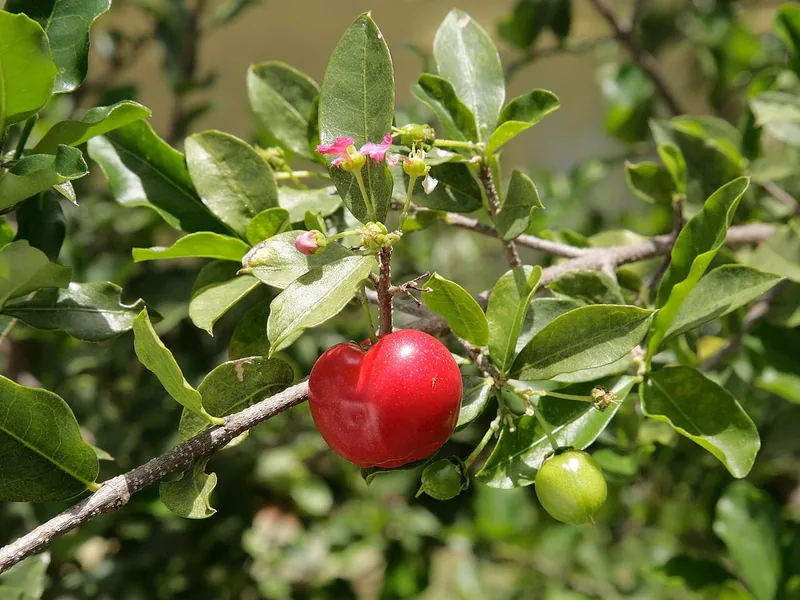
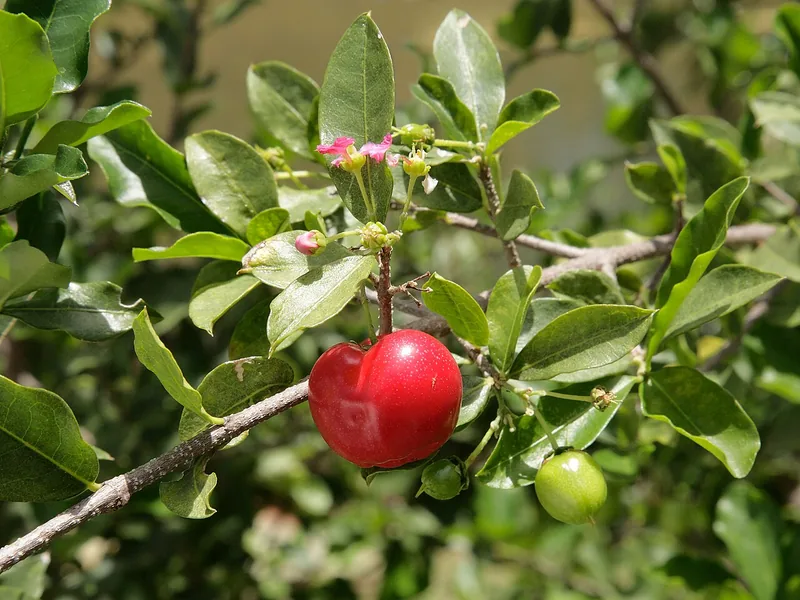
Flowers & fruit: Small five-petalled flowers in clusters of three to five, rose-pink to pale pink, produced in flushes through the warm season. Fruit follows about three to four weeks later: round, thin-skinned, bright red, with juicy orange pulp.
Look-alikes: Malpighia coccigera (spiny holly-like leaves, white flowers) is the one that matters. Any "Barbados cherry" with prickly little leaves is that species, not this one.
Climate & USDA Zone
Frost-free only — zones 10–11 outdoors year-round. Everywhere else it is a container tree that summers outside and winters in. It is comfortable between about 60°F and 90°F and should not be exposed below 45°F (7°C) for any length of time. Below roughly 30°F (−1°C) it dies.
Light
Full sun. Six to eight hours of direct light produces the compact growth, heavy flowering and fruit set the species is grown for. Indoors it needs the brightest window in the house and will usually still benefit from supplementary lighting through winter. In poor light it stretches, stops flowering, and becomes vulnerable to pests.
Watering
Slightly dry between waterings. Water thoroughly when the surface has just dried, let the excess run out freely, and do not water again until the surface dries once more. It is not a bog plant and it rots in a mix that stays saturated — but it is also not a succulent, and a fully dried-out rootball causes leaf drop and flower abortion. Reduce watering noticeably through winter when growth slows and light is short.
Soil & Root Care
A standard free-draining bonsai mix suits it — an inorganic base with a modest organic fraction to hold a little moisture. Repot every two to three years in early spring, before growth resumes, removing no more than a quarter to a third of the root mass in a single session. Keep it warm and lightly moist while it re-establishes.
Feeding
Feed through the growing season with a balanced fertiliser every two to four weeks, or a weaker liquid feed more often. If the tree is actively growing indoors under good light in winter, keep feeding lightly; if it is resting in low light, stop. Do not push it hard with high nitrogen — you will get soft growth and fewer flowers.
Pruning & Styling
Prune in early spring before the new flush. Through the season, pinch extending shoots back to build ramification; the species twigs well and rewards the effort with smaller leaves.
Wire only young, still-flexible shoots. Mature wood is brittle and will crack rather than bend, and wire marks scar the thin bark quickly — check wire often and remove it early. Because the natural habit is pendulous, weeping, semi-cascade and informal upright forms all sit comfortably on this species without fighting it.
Flowers appear on new growth in flushes, so regular light trimming does not cost you the display the way one hard annual cut would.
Propagation & Cuttings
Ease: Moderate. Best methods: softwood cuttings; seed.
Softwood cuttings taken in late spring or early summer, treated with rooting hormone and kept warm and humid, are the standard commercial route and preserve the form of the parent. Seed germinates but is slow and benefits from a 24-hour warm-water soak first. Cuttings are the sensible choice for bonsai.
Pests
Aphids, spider mites and whiteflies, all of them worse in dry indoor air over winter. Check leaf undersides weekly through the heating season. Insecticidal soap or neem handles all three if you catch them early; raising humidity and airflow does more to prevent mites than any spray.
Disease, Fungus & Infection
Powdery mildew in humid, still air with poor circulation. Root rot from overwatering or a mix that has broken down and stopped draining — the usual presentation is wilting despite wet soil. Correct the drainage and the watering rhythm before reaching for a fungicide.
Most Common Causes of Death
1. Cold. The single biggest killer. It has essentially no frost tolerance, and it is marketed in a way that makes owners think about light rather than temperature. Bring it in before nights hit 45°F. 2. Root rot from a saturated mix. Free-draining soil and disciplined watering prevent it entirely. 3. Complete dry-out. Less often fatal than rot, but it drops leaves and flowers and sets the tree back badly. 4. Winter pest collapse. Mites and whitefly in dry indoor air, unnoticed until the tree is badly weakened. 5. Low light indoors. Rarely kills outright, but produces a weak, stretched, flowerless tree that then succumbs to something else.
Seasonal Calendar
- Spring: Repot if due; prune for structure; resume feeding as growth starts; move outdoors once nights are reliably above 50°F.
- Summer: Full sun outdoors, generous water, regular feeding. Main flowering and fruiting period.
- Autumn: Bring indoors before nights approach 45°F — do not wait for the first frost warning.
- Winter: Brightest available position, supplementary light if you have it, reduced water, little or no feeding. Watch for mites.
Toxicity, Safety & Handling
The leaves and leaf stalks of this group carry minute stinging hairs that can irritate sensitive skin. It is a nuisance rather than a hazard, but worth knowing if children handle the tree. The fruit itself is edible and safe.
Close-up photo reference
Compare your tree against these to confirm the species and spot problems early.

Sources
- Malpighia glabra — Wikipedia
- Malpighia emarginata — Wikipedia
- Barbados Cherry bonsai care — Bonsai Empire
Buy a Barbados Cherry bonsai
- Small Barbados Cherry Bonsai, 4 Years Old (Malpighia pendiculata) — $37.95
- Medium Flowering Dwarf Barbados Cherry Bonsai, Weeping, 7 Years Old (Malpighia pendiculata) — $56.95
- Flowering Barbados Cherry Group Bonsai, Three Tree Forest, 4 Years Old (Malpighia pendiculata) — $74.95
- Large Flowering Dwarf Barbados Cherry Bonsai, Weeping, 12 Years Old (Malpighia pendiculata) — $143.95
- All species
- Shop bonsai trees, tools & supplies
- How to Water a Bonsai (Without Killing It)
- Bonsai Soil: What to Buy, What to Mix, and What It Costs
- Why Bonsai Die After Repotting: Diagnosing a Failed Repot
- Pruning vs. Pinching: Shaping Your Bonsai
- Overwintering Bonsai: Cold-Season Care
- Indoor Bonsai Light and Humidity: Making a Windowsill Actually Work
- Root Rot on bonsai
- Overwatering on bonsai
- Winter / Frost Damage on bonsai
- Insufficient Light (Etiolation) on bonsai
- Powdery Mildew on bonsai
- Buttonwood bonsai care
- Natal Plum bonsai care
- Bahama Berry bonsai care
- Brazilian Rain Tree bonsai care