Buttonwood Bonsai Care
Conocarpus erectus
1 Buttonwood bonsai in stock, from $2975.00 Shipped direct from our nursery partners, with a 48-hour live-arrival guarantee. See the trees
Zones 10b to 11, outdoor. One of the most prized tropical bonsai subjects in the world. Most are lost to cold damage.
Combretaceae · Tropical coastal broadleaf evergreen — heat- and sun-loving; indoor/protected in cold climates
Buttonwood quick reference
| USDA zones | 10b–11 outdoors year-round; must be protected/indoors below zone 10 |
|---|---|
| Indoor / outdoor | Outdoor sun-lover; in cold climates summer outside, protect or bring in for winter |
| Light | Full sun — the more the better. A true sun-worshipper that needs maximum light |
| Water | Moderate to moist — a coastal/swamp species that likes regular water and even tolerates damp soil, but the pot must still drain. Not a "let it dry hard" tree. |
| Soil | Free-draining but moisture-holding bonsai mix; tolerates sandy, salty substrate |
| Repot | Every 2–3 years; roots resent heavy disturbance — work gently |
| Frost | None — frost-tender; damage below ~50°F (10°C) |
| Mature height (as bonsai) | Tree to 12 m; kept 30-70 cm as bonsai |
| Growth rate | Slow-moderate |
| Season of interest | Year-round evergreen, dramatic deadwood |
| Leaf reduction | Good - reduces with defoliation |
| #1 cause of death | Cold/frost damage, and dieback after over-aggressive root work or repotting at the wrong time |
Overview & Character
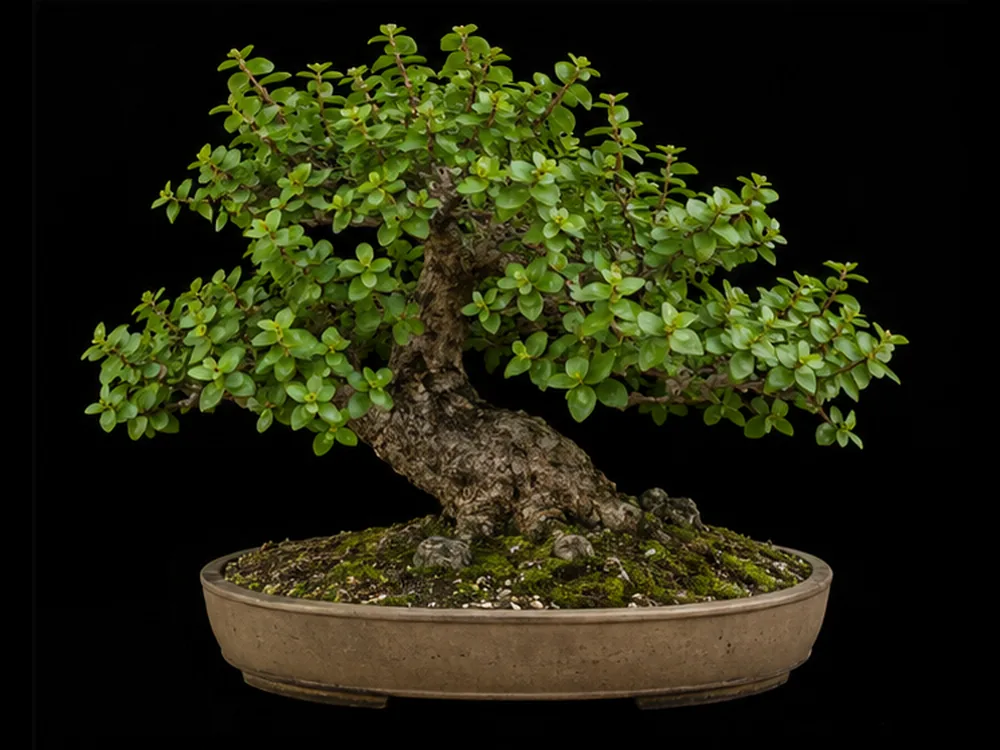
Buttonwood is one of the most prized tropical bonsai subjects in the world, and the signature collected species of South Florida. Native to coastal mangrove fringes and beaches throughout the tropical Americas, it is a tough, salt-loving, heat-craving survivor — and that hard coastal life produces exactly what bonsai artists covet: dramatic, gnarled, weathered deadwood. Old collected buttonwoods carry spectacular sun-bleached driftwood-like trunks (shari and jin) set against live veins and fine green foliage, a contrast few species can match.
This is fundamentally an outdoor, full-sun, hot-climate tree. It performs best in relentless Florida-style heat and light. In colder climates it can be grown but must be summered outside in maximum sun and protected through winter — it is genuinely frost-tender and will not tolerate freezing. It is less of a beginner houseplant than the Schefflera or Money Tree and rewards growers who can give it heat, sun, and patience.
A defining horticultural quirk: buttonwood resents heavy, sudden root reduction. Many losses come not from neglect but from over-enthusiastic repotting. Work the roots conservatively and at the right season.
Identification
FOLIAGE: Simple, alternate, leathery leaves — narrowly elliptical to lance-shaped, 2–4 inches long, with a pointed tip. The common form is glossy green; the highly ornamental **Silver Buttonwood (var. sericeus)** has leaves densely coated in fine silvery-grey hairs, giving a shimmering silver canopy. Two small gland dots sit at the leaf base.
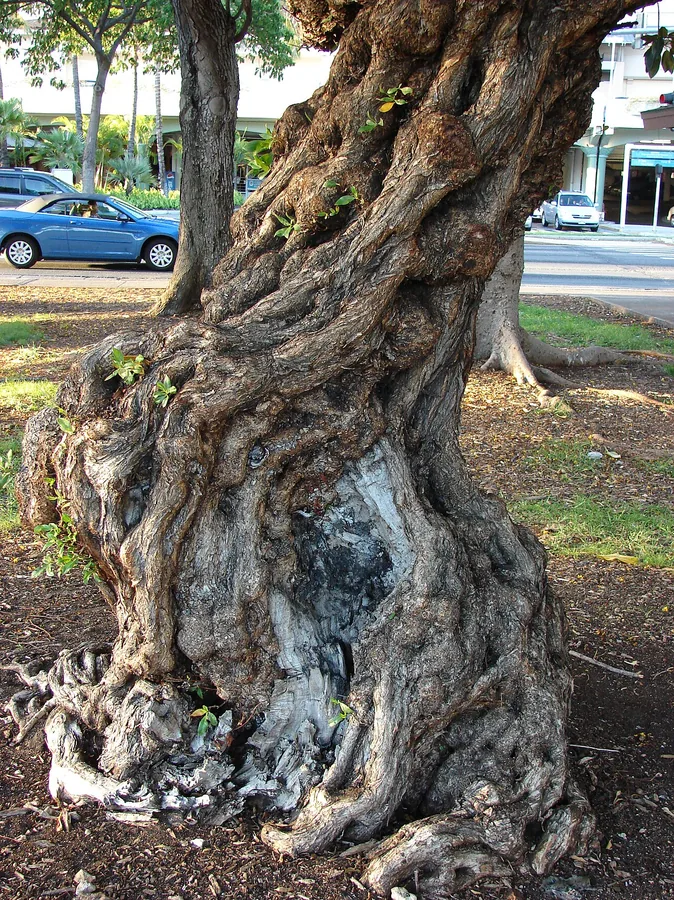
BARK & TRUNK: Brown to grey, ridged and furrowed bark on living wood; the standout feature is its naturally weathered, twisting trunk and the bleached, contorted deadwood (jin/shari) that develops as the tree ages or is collected from the coast. Old specimens look like living driftwood.
GROWTH HABIT/FORM: A large multi-stemmed shrub to small tree in the wild, often leaning and contorted by coastal wind and salt. Lends itself superbly to informal upright, slanting, windswept, and deadwood-feature styles.
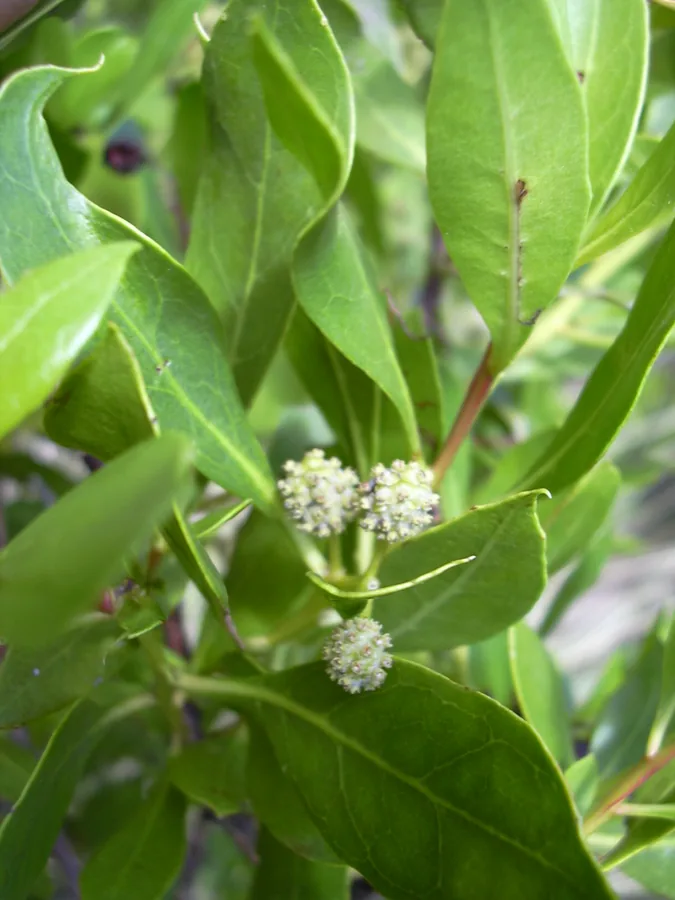
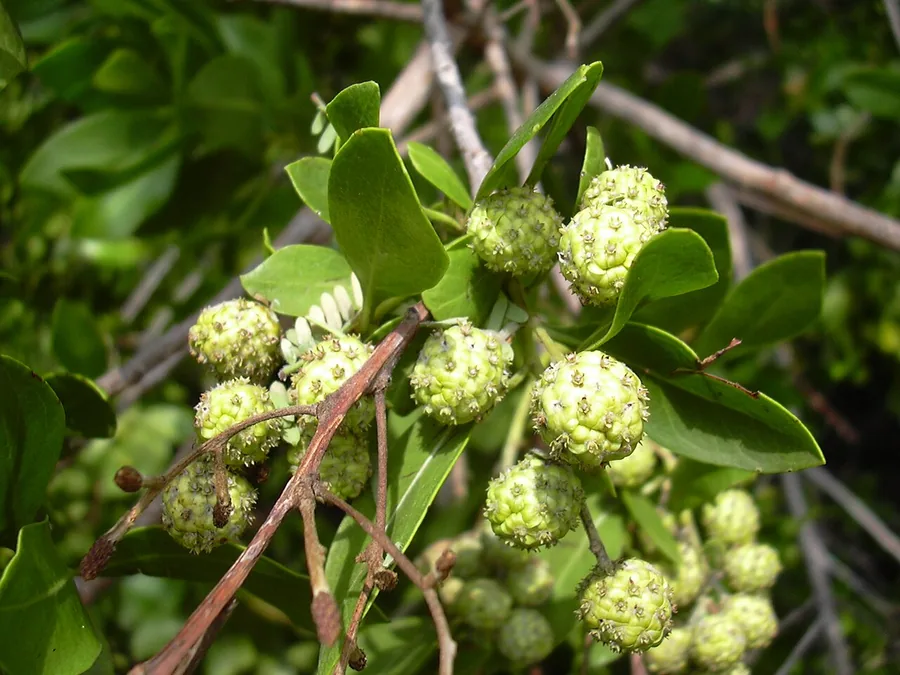
FLOWERS/FRUIT: Small greenish flowers in dense rounded heads, followed by the distinctive cone-like clusters of small "button" fruits that give the species its name.
Look-alikes & how to tell them apart: Often confused in the field with true mangroves (red, black, white mangrove), but buttonwood lacks prop roots and pneumatophores and grows on slightly higher, drier ground at the mangrove fringe. The button-shaped fruit clusters are diagnostic. The silver variety is unmistakable thanks to its hairy, silver-grey foliage — no common bonsai species matches that shimmer.
Climate & USDA Zone
Reliably hardy outdoors only in USDA zones 10b–11. It thrives in heat and high light and is exceptionally tolerant of salt, salt spray, sandy soil, and coastal exposure — qualities that make it a coastal landscape staple. It is frost-tender: keep it above 50°F (10°C); freezing temperatures will damage or kill it. In zone 9 and colder it must be containerized and protected — moved into a greenhouse, warm bright room, or sheltered space before winter cold arrives, and given the hottest, sunniest position possible in summer.
Light
Full sun, maximum exposure. Buttonwood is a sun-worshipper from open coastal habitat and wants as much direct light as you can give it; under-lighting produces weak, leggy, sparse growth. Outdoors, place it in the brightest spot available. If overwintered indoors, give it the sunniest window and supplement heavily with strong grow lights — ordinary indoor light is not enough to keep it vigorous. Insufficient light is a slow but real path to decline in this species.
Watering
Leans moist. Unlike most frost-tender bonsai, buttonwood comes from damp coastal and brackish habitat and likes regular, generous watering — it even tolerates consistently damp soil and short periods of "wet feet" that would harm a Money Tree. As a seashore plant it is also drought-resistant once established. Practically: water often (in Florida summer heat, frequently or even daily for lush growth), keep the soil moist but never stagnant, and ensure the pot drains. It is far more tolerant of moisture than of drying out hard. It also tolerates salty/brackish water better than almost any bonsai. Do not, however, leave it sitting in a saucer of standing water indefinitely.
Soil & Root Care
Use a free-draining bonsai mix that still holds some moisture; buttonwood is happy in sandy, gritty, even salty substrates. The critical point is root handling: buttonwood resents heavy, sudden root reduction and can die back badly after aggressive repotting. Repot only every 2–3 years, only in warm active-growth conditions (late spring/early summer in heat), and remove roots conservatively rather than bare-rooting or hard-raking. After repotting, keep it warm, shaded from harshest midday sun for a short recovery period, and do not let it dry out.
Feeding
Feed regularly through the warm growing season — a balanced fertilizer (liquid every 1–2 weeks, or slow-release organic) from spring into autumn. In a true tropical climate where it grows nearly year-round, light feeding can continue; reduce or stop feeding while it is cool, dormant, or recovering from repotting. Strong feeding plus full sun and heat is what produces the dense, fine foliage and vigor needed for deadwood-contrast designs.
Pruning & Styling
Buttonwood's claim to fame is deadwood artistry. Beyond conventional shaping it is carved into jin, shari, and hollows to mimic the sun-bleached, weathered look of wild coastal specimens.
- Pruning: Trim back new shoots to maintain shape; it backbuds and ramifies well in strong light and heat. Prune in the warm growing season so wounds heal vigorously.
- Deadwood carving: The signature technique — carve hollows, channels, and bleached spars into the trunk and major branches, then preserve with lime sulfur. The dramatic dead/live contrast is the whole point of the species in bonsai.
- Wiring: Branches can be wired while flexible; old wood is stiff and brittle, so guy-wires and careful bending suit thicker limbs. Watch for wire bite given the tree's vigor in heat.
- Timing: Do major work in warm weather when the tree is growing strongly and can recover fast.
Propagation & Cuttings
Ease: Moderate. Best methods: seed; cuttings; mostly collected.
Conocarpus grows from fresh seed (sow the cone-like fruit's seed warm; viability drops with storage) and from semi-hardwood cuttings in warm, humid conditions with hormone, though cuttings can be slow. In practice most prized buttonwood bonsai are collected (yamadori) from coastal Florida because the dramatic deadwood and driftwood trunks can't be grown quickly. Keep all propagation warm and salt-tolerant this species may be, but young plants still want frost-free conditions. For bonsai, collected material plus patience beats seed for character.
Pests
- Chilli thrips — the most devastating buttonwood pest. They attack soft new growth, causing deformed leaves and brown "rasping" streaking; they can ruin a flush quickly. Monitor new growth closely and treat promptly.
- Mealybugs — white cottony clusters in axils and on new growth.
- Scale insects — bumps on stems and leaf undersides with sticky honeydew.
Treat with appropriate insecticidal soap, horticultural oil, or a labeled systemic for thrips; act early, as thrips damage compounds fast.
Disease, Fungus & Infection
Buttonwood is relatively disease-resistant when grown in its preferred heat and sun. Problems are usually secondary: sooty mold growing on honeydew from thrips/scale/mealybugs (control the pests to clear it), and root or stem dieback following over-aggressive root work, cold injury, or chronically stagnant soil. Fungal root issues are far less common here than in the dry-loving tropicals because the tree genuinely likes moisture — but stagnant, airless soil with no drainage will still cause rot. The most "disease-like" failure is post-repotting dieback, which is a horticultural mistake rather than a pathogen.
Most Common Causes of Death
1. Cold / frost damage — frost-tender; freezing or sustained cold below ~50°F (10°C) is lethal. Prevention: protect or bring indoors before winter; never expose to frost. 2. Over-aggressive or ill-timed root work — heavy root reduction or bare-rooting causes severe dieback. Prevention: repot only every 2–3 years, in warm active growth, removing roots conservatively. 3. Insufficient light — this sun-worshipper weakens badly in low light, especially when overwintered indoors. Prevention: full sun outdoors; strong grow lights if kept inside. 4. Letting it dry out hard — despite drought tolerance, container trees in heat dry fast and crash if neglected. Prevention: water regularly and keep the soil moist in growing season. 5. Chilli thrips infestation left unchecked — can devastate growth. Prevention: inspect new flushes, treat early. 6. Stagnant, undrained soil — even a moisture-lover rots in airless, non-draining mix. Prevention: use a free-draining substrate and don't leave it in standing water. 7. Cold + wet combination — cool temperatures plus saturated soil rapidly cause root failure. Prevention: keep it warm and reduce watering whenever temperatures drop.
Seasonal Calendar
- Spring (Mar–May): As real heat arrives, growth accelerates. Best window to repot (conservatively) and to begin pruning/carving. Resume feeding. Move outdoors to full sun once nights are reliably warm (above ~55–60°F / 13–15°C).
- Summer (Jun–Aug): Peak season — full sun, heat, frequent watering, strong feeding, and the main period for styling and deadwood work. Watch for chilli thrips on new growth.
- Autumn (Sep–Nov): Slow feeding as temperatures cool. Bring indoors / into protection before any chance of cold nights; do not let it get chilled.
- Winter (Dec–Feb): Keep warm (above 50°F/10°C, ideally warmer) and as bright as possible under strong light. Reduce watering somewhat but never let it dry out completely. No major pruning, carving, or repotting.
Close-up photo reference
Compare your tree against these to confirm the species and spot problems early.
.jpg)
.jpg)
.jpg)
Sources
- University of Florida IFAS — Conocarpus erectus: Buttonwood (ENH338/ST179)
- Bonsai Tree Gardener — Buttonwood Bonsai Care Guide
- Bonsai Today — Conocarpus bonsai tree guide
- Bonsai Mary — Buttonwood Bonsai Care
Buy a Buttonwood bonsai
- All species
- Shop bonsai trees, tools & supplies
- How to Water a Bonsai (Without Killing It)
- Bonsai Soil: What to Buy, What to Mix, and What It Costs
- Why Bonsai Die After Repotting: Diagnosing a Failed Repot
- Pruning vs. Pinching: Shaping Your Bonsai
- Overwintering Bonsai: Cold-Season Care
- Indoor Bonsai Light and Humidity: Making a Windowsill Actually Work
- Underwatering (Drought Stress) on bonsai
- Winter / Frost Damage on bonsai
- Insufficient Light (Etiolation) on bonsai
- Scale Insects on bonsai
- Fungal Canker & Dieback on bonsai
- Jamaican Raintree bonsai care
- Sea Grape bonsai care
- Bahama Berry bonsai care
- Barbados Cherry bonsai care