Jamaican Raintree Bonsai Care
Brya ebenus
1 Jamaican Raintree bonsai in stock, from $81.95 Shipped direct from our nursery partners, with a 48-hour live-arrival guarantee. See the trees
Zones 10 to 11, outdoor. A small-leaved tropical legume with gracefully arching branches. Most are lost to drying out.
Fabaceae (pea family) · Tropical flowering legume tree; drought-tolerant, semi-deciduous to evergreen, very slow-growing
Jamaican Raintree quick reference
| USDA zones | 10–11 outdoors year-round; indoor or greenhouse everywhere else |
|---|---|
| Indoor / outdoor | Outdoors in full sun through the warm season; protected in winter |
| Light | Full sun. It flowers poorly or not at all in shade |
| Water | Let it dry between waterings — drought-tolerant once established, and it rots if kept wet |
| Soil | Fertile but very free-draining. Drainage is the non-negotiable part |
| Repot | Infrequently — every 2–4 years is ample for so slow a grower |
| Frost | Brief exposure to the low 30s°F; no real frost tolerance |
| Mature height (as bonsai) | 8–9 m in the wild; 15–40 cm as bonsai |
| Growth rate | Slow — genuinely slow, which is part of what you are paying for |
| Season of interest | Bright yellow pea flowers through the year, classically triggered a few days after rain |
| Leaf reduction | Naturally tiny leaves; no reduction technique needed |
| #1 cause of death | Overwatering. It is a drought-tolerant tree sold among tropicals that want steady moisture, and it gets watered like its neighbours |
Overview & Character
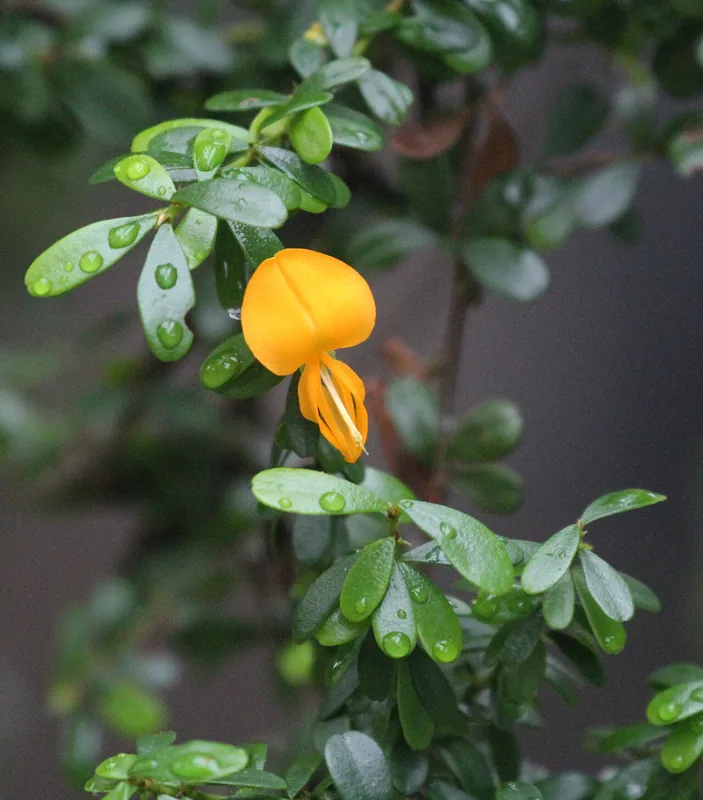
The Jamaican Raintree is a small-leaved tropical legume with gracefully arching branches, densely clothed in tiny waxy leaflets, that erupts into bright yellow pea flowers a few days after a good soaking. That habit — flowering in response to rain rather than to a calendar — is where the name comes from and it is genuinely charming to live with.
Its wood is ebony-dense and dark, historically valued as "cocuswood" for woodwind instruments, and mature trunks develop a hard, characterful quality that suits refined small bonsai.
Two things you should know before buying. First, it is slow. Not "tropical slow" — properly slow, which is why decent specimens are expensive and why a mature one is worth looking after. Second, and more important, it is drought-tolerant, which makes it the odd one out on most benches.
Identification
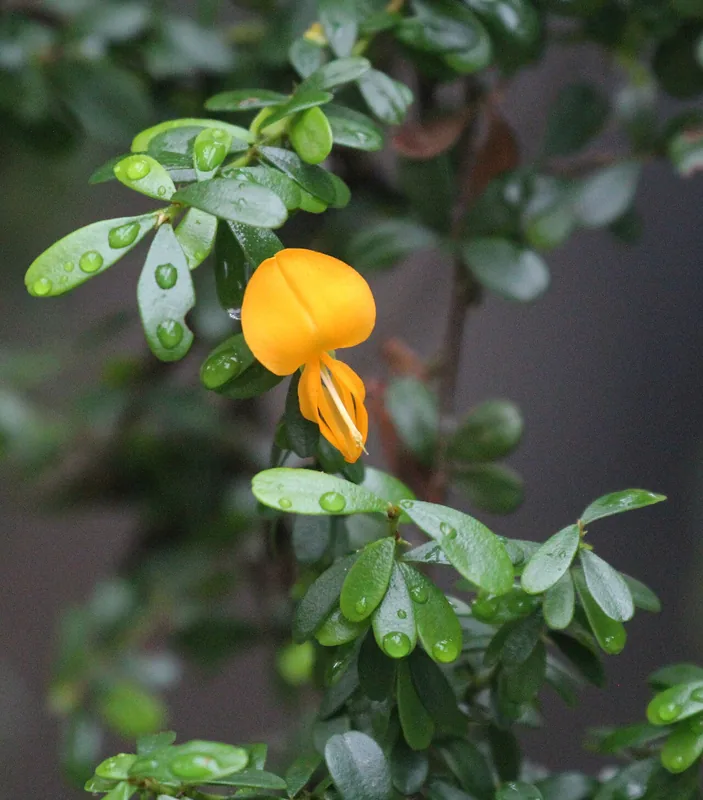
Foliage: Small, waxy compound leaves of two or three leaflets, often so reduced they look simple. Densely borne on short spurs along the stems, giving the fine-textured look the species is grown for.
Bark & trunk: Grey-brown, hardening with age into very dense, dark, ebony-like wood. Trunks take character slowly but hold it.
Growth habit: Gracefully arching to drooping branches — a natural fit for informal upright and semi-cascade work.
Flowers & fruit: Bright yellow, sometimes yellow-orange, pea-shaped flowers on short racemes, appearing sporadically through the year and reliably after rainfall. Fruit is a small legume pod.
Look-alikes: The combination of tiny two- or three-part leaves on short spurs, arching habit and yellow pea flowers is distinctive among tropical bonsai. Its density of wood is unusual enough to be a further clue on older material.
Climate & USDA Zone
Zones 10–11 outdoors year-round. Elsewhere, an outdoor tree in summer and a protected one in winter. It tolerates brief drops into the low 30s°F but has no meaningful frost tolerance, and it does not enjoy the humid shade that many tropicals accept.
Light
Full sun. This is not optional if you want flowers — the species is specifically documented as flowering poorly in humid shade. Outdoors, give it the sunniest spot you have. Indoors over winter, the brightest window, and accept that it will not flower much until it goes back out.
Watering
Let it dry between waterings. This is the most important line in this guide.
Brya ebenus is repeatedly described in the literature as drought-tolerant, needing only moderate water, and requiring very well-drained soil. If you water it on the same rhythm as a Ficus, a Fukien Tea or a Parrot's Beak, you will rot it. Water thoroughly, then wait until the mix has genuinely dried down before watering again. In winter, water sparingly.
If you keep it on a bench with other tropicals, mark this pot. It is the one that gets skipped.
Soil & Root Care
Fertile but very free-draining — lean harder on the inorganic fraction than you would for a moisture-loving tropical. Because growth is slow, root development is slow too: repotting every two to four years is plenty, in spring. Do not root-prune hard; there is little vigour in reserve to power recovery.
Honest gap: we found no authoritative repotting schedule specific to this species. The interval above is inferred from its documented slow growth rate.
Feeding
Feed lightly through the growing season. A slow-growing tree cannot use heavy feeding and will simply accumulate salts in the pot. A balanced fertiliser at half strength, monthly through spring and summer, then nothing over winter.
Pruning & Styling
Slow growth means pruning is occasional rather than constant. Trim to maintain the arching silhouette and to keep the short flowering spurs productive.
Honest gap: no source documents wiring tolerance or brittleness for this species. Given the exceptional density of the wood, treat mature branches as unlikely to bend and do your shaping on young growth by directional pruning where you can.
Propagation & Cuttings
Ease: Slow. Best method: seed.
Seed is the documented route. Given how slowly the species grows, propagation is a patience exercise rather than a practical way to produce bonsai stock. We could not confirm whether cuttings root reliably.
Pests
No pest profile is documented for Brya ebenus in any source we could find. Watch for the usual indoor-winter suspects — scale, mealybug, spider mites — but we are not going to claim documented susceptibility we cannot support.
Disease, Fungus & Infection
Likewise undocumented. The genuine risk is cultural: root rot from overwatering in a mix that holds water. That presents as wilting despite damp soil, and by the time it shows on a slow-growing tree the damage is usually well advanced.
Most Common Causes of Death
1. Overwatering. The defining risk for this species, and the reason it dies on benches full of otherwise healthy tropicals. It wants to dry out. Its neighbours do not. 2. Poor drainage. The same failure by a different route — a mix that has broken down and no longer drains, on a tree that will not tolerate it. 3. Cold. No real frost tolerance; brief low-30s°F is the limit. 4. Shade. Rarely fatal, but a shaded plant simply will not flower, which removes most of the reason to own one.
Seasonal Calendar
- Spring: Repot if due — infrequently; light feeding resumes; outdoors once nights are reliably warm.
- Summer: Full sun, water thoroughly but only when dry. Flowering flushes follow rain or heavy watering.
- Autumn: Reduce water; bring in before nights approach the low 40s°F.
- Winter: Bright, warm, and notably dry. Overwatering in a cold, low-light winter is how most of these are lost.
Toxicity, Safety & Handling
No toxicity is documented for this species, and no thorns or spines. Safe around children and pets as far as the available literature goes — though absence of documented toxicity is not the same as a positive safety finding, so we would not encourage anyone to eat it.
Close-up photo reference
Compare your tree against these to confirm the species and spot problems early.

Sources
- Brya ebenus — Wikipedia
- Brya ebenus — Useful Tropical Plants
- Brya ebenus (Jamaican Rain Tree) — Top Tropicals Plant Encyclopedia
Buy a Jamaican Raintree bonsai
- All species
- Shop bonsai trees, tools & supplies
- How to Water a Bonsai (Without Killing It)
- Bonsai Soil: What to Buy, What to Mix, and What It Costs
- Why Bonsai Die After Repotting: Diagnosing a Failed Repot
- Pruning vs. Pinching: Shaping Your Bonsai
- Overwintering Bonsai: Cold-Season Care
- Indoor Bonsai Light and Humidity: Making a Windowsill Actually Work
- Root Rot on bonsai
- Overwatering on bonsai
- Underwatering (Drought Stress) on bonsai
- Winter / Frost Damage on bonsai
- Spider Mites on bonsai
- Lime Prickly Ash bonsai care
- Buttonwood bonsai care
- Lavender Star Flower bonsai care
- Premna bonsai care