Vietnamese Blue Bell Bonsai Care
Trifidacanthus unifoliolatus
2 Vietnamese Blue Bell bonsai in stock, from $98.95 Shipped direct from our nursery partners, with a 48-hour live-arrival guarantee. See the trees
Outdoor. The flower colour. Most are lost to overwatering.
Fabaceae (pea family) · Tropical thorny flowering shrub; semi-deciduous, flowering in repeated flushes
Vietnamese Blue Bell quick reference
| USDA zones | Not formally documented; treat as 10–11 based on its tropical native range |
|---|---|
| Indoor / outdoor | Outdoors only when nights are reliably above 60°F; indoors the rest of the year |
| Light | Bright light to full sun, with shelter from harsh afternoon glare |
| Water | Evenly moist — let the top inch dry, then water thoroughly. Much less in winter |
| Soil | Granular, free-draining bonsai mix — specifically to prevent root rot |
| Repot | Not documented for this species; general practice is every 2 years in spring |
| Frost | None. No published threshold — treat any frost as fatal |
| Mature height (as bonsai) | 1–2 m in the wild; small and shohin sizes as bonsai |
| Growth rate | Grows in flushes rather than steadily — vigorous push, then inner leaf drop |
| Season of interest | Small purple-blue bell flowers in repeated flushes rather than one fixed season |
| Leaf reduction | Not documented; the leaf is naturally reduced to a single small leaflet |
| #1 cause of death | Cold exposure, with root rot from an over-generous reading of "evenly moist" close behind |
Overview & Character
The reason to own this tree is the flower colour. Small, bell-shaped, and genuinely purple-blue — a colour almost nothing else in bonsai produces. It flowers in flushes rather than one annual display, so a well-grown plant in good conditions gives you the colour repeatedly through the warm months.
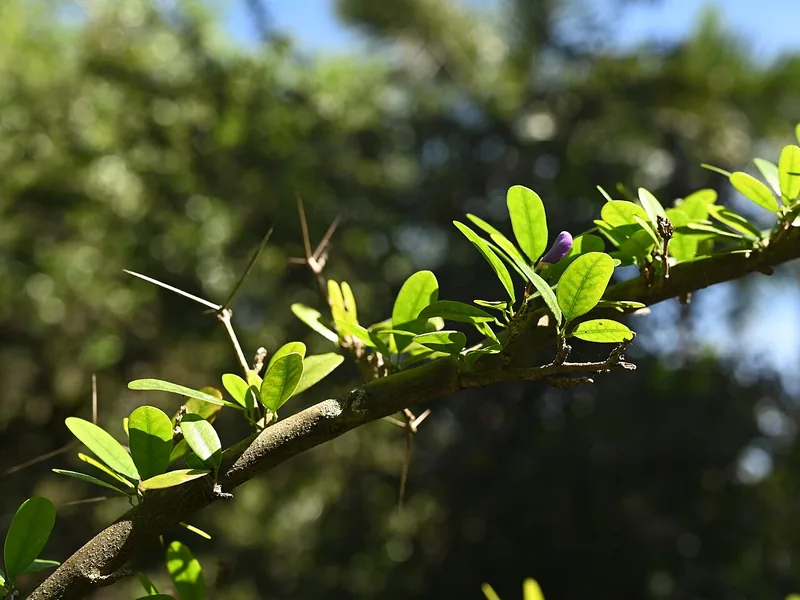
The second distinctive feature is the armament: hardened, three-pointed spines that develop from old flower stalks and inflorescence stems. That is where "Trifidacanthus" comes from, and it is the single most reliable way to identify the plant.
We should be straight with you about the evidence base. This is an obscure species. There is no university extension sheet, no botanical garden care guide, and no substantial bonsai technique article for it. The taxonomy below is solid — Kew and Gardens by the Bay both confirm it. Much of the cultivation advice is careful general practice for a tropical legume shrub, and we have flagged where that is the case rather than dressing inference up as fact.
Identification
Foliage: Leaves appear simple but are technically a compound leaf reduced to a single leaflet — hence the species epithet. Dark green, small.
Bark & trunk: Shrubby, developing woody structure with age.
Growth habit: Small shrub, 1–2 m in the wild. Grows in flushes: vigorous new extension after each flowering cycle, then some shedding of inner foliage.
Flowers & fruit: Small purple-blue bell-shaped flowers, roughly 1 cm, in repeated flushes. Flat thin seedpods 3–4 cm, typical of the pea family.
The identifier: distinctive three-pointed (trifid) woody spines formed from old, hardened inflorescence stems. Nothing else you are likely to own has these.
Climate & USDA Zone
Native to Vietnam, Hainan, the Philippines and the Lesser Sunda Islands — all tropical. No published USDA zone rating exists that we could find; treat it as zone 10–11 equivalent. Move it outdoors only when nights are reliably above 60°F and bring it in as nights approach the mid-50s.
We could not find a specific cold-kill temperature for this species anywhere. We are not going to invent one. Treat freezing as fatal and do not test the margins.
Light
Bright light to full sun. Sources differ slightly — one bonsai care sheet says bright indirect, another says full sun — which most likely means bright light with some protection from harsh midday and afternoon glare, particularly behind glass where heat builds.
Watering
Evenly moist. Let the top inch of the mix dry, then water thoroughly. Water generously through summer and cut back markedly in winter when the plant slows.
The risk here is that "evenly moist" is easy to over-apply, especially in a dense mix in a cool room. A granular, freely draining substrate is specifically recommended for this species to keep the roots aerated.
Soil & Root Care
A granular, free-draining bonsai mix. Repotting interval is not documented for this species; every two years in spring is reasonable general practice for a tropical shrub of this size, adjusted to how quickly it fills the pot.
Feeding
Feed moderately through the growing season with a balanced fertiliser. As a legume it is not a heavy nitrogen feeder. Stop over winter.
Pruning & Styling
Structural pruning in early spring before growth restarts; trim new shoots through the season to build ramification. It is commonly trained and sold as clump, multi-trunk and forest plantings, which suits its naturally shrubby habit.
Timing flowers is genuinely difficult with this species. Because it blooms in repeating flushes rather than one predictable season, the usual "prune right after flowering" rule does not map cleanly — experienced growers discuss the problem of forcing or timing flowers on this plant precisely because it is not obvious. Expect to trade some flowers for structure while you work out how your own plant behaves.
Mind the spines when wiring.
Propagation & Cuttings
Ease: Not documented. Best method: unknown.
We could find no reliable propagation information for this species. If you want more of it, buying is currently more realistic than propagating.
Pests
Aphids, spider mites and whiteflies are cited by general bonsai care sources. We could not corroborate this against a botanical or entomological authority specific to this species — treat it as plausible and keep an eye on leaf undersides in winter.
Disease, Fungus & Infection
Powdery mildew and root rot are flagged in general bonsai sources, both tied to poor airflow and overwatering. Again, not independently confirmed for this species. The cultural risk — wet, airless roots — is the one worth managing.
Most Common Causes of Death
1. Cold. Strictly tropical with no documented cold tolerance at all, and no fallback guidance in the literature if you get it wrong. This is the least forgiving species on the site in that respect. 2. Root rot. From reading "evenly moist" too generously, particularly in winter in a cool room. 3. Drying out completely. The opposite error; less commonly fatal but sets the plant back and costs you the flowering flush.
We have not found evidence isolating a single dominant killer for this species. The two above are the best-supported inferences, not documented statistics.
Seasonal Calendar
- Spring: Structural prune before growth restarts; repot if due; resume feeding.
- Summer: Outdoors once nights are above 60°F; bright light, even moisture, regular trimming. Flowering flushes.
- Autumn: Indoors as nights approach the mid-50s°F.
- Winter: Warm, bright, and noticeably drier. Minimal feeding.
Toxicity, Safety & Handling
The three-pointed woody spines are sharp, hardened, and form on exactly the older growth that bonsai styling encourages you to keep. Wear gloves for repotting and wiring, and think carefully about placement if small children or pets can reach the tree.
No ingestion toxicity is documented either way. Absence of evidence is not a safety finding — do not treat it as edible.
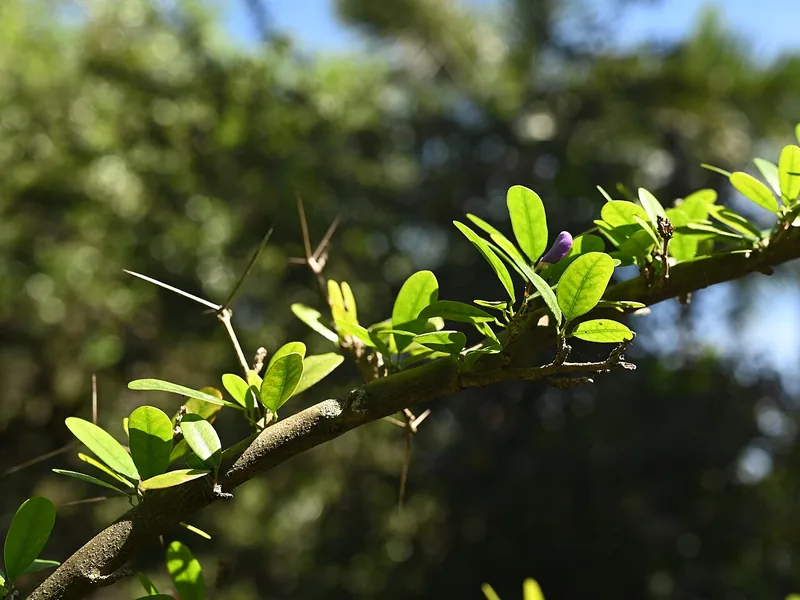
Close-up photo reference
Compare your tree against these to confirm the species and spot problems early.

Sources
- Trifidacanthus unifoliolatus Merr. — Plants of the World Online, Kew
- Vietnamese Blue Bell Tree (Trifidacanthus unifoliolatus) — Gardens by the Bay
- Trifidacanthus — Wikipedia
Buy a Vietnamese Blue Bell bonsai
- All species
- Shop bonsai trees, tools & supplies
- How to Water a Bonsai (Without Killing It)
- Bonsai Soil: What to Buy, What to Mix, and What It Costs
- Why Bonsai Die After Repotting: Diagnosing a Failed Repot
- Pruning vs. Pinching: Shaping Your Bonsai
- Overwintering Bonsai: Cold-Season Care
- Indoor Bonsai Light and Humidity: Making a Windowsill Actually Work
- Root Rot on bonsai
- Overwatering on bonsai
- Underwatering (Drought Stress) on bonsai
- Winter / Frost Damage on bonsai
- Powdery Mildew on bonsai
- Fig (Common / Edible Fig) bonsai care
- Jamaican Raintree bonsai care
- Black Olive bonsai care
- Brazilian Rain Tree bonsai care