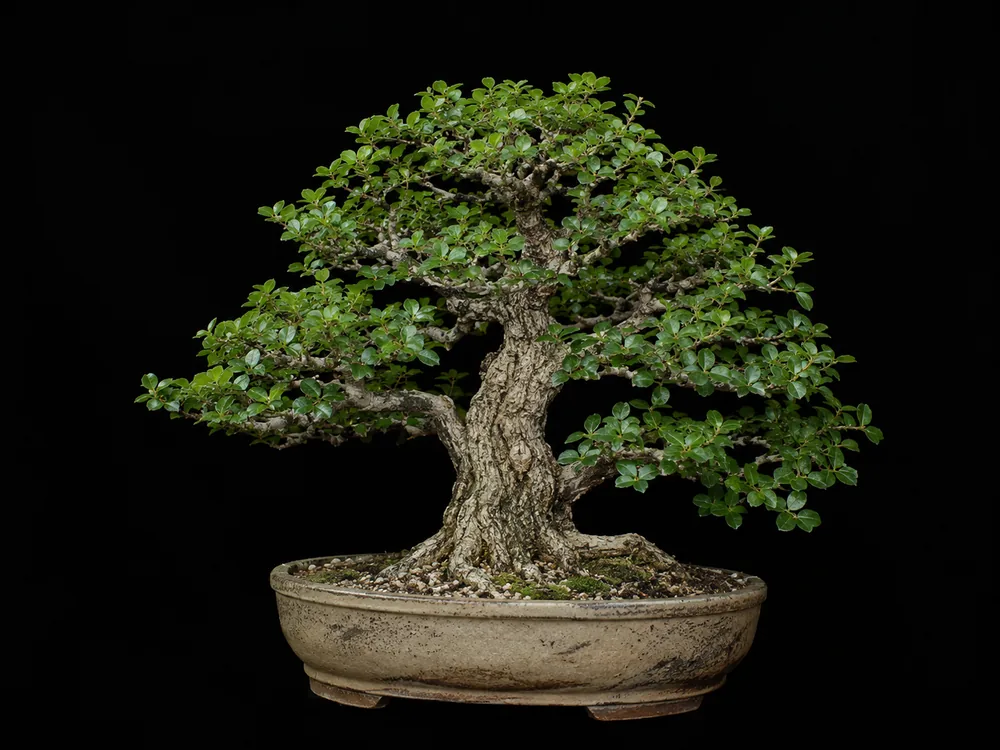
Premna Bonsai Care
Premna microphylla
Zones 8 to 11, outdoor. A vigorous tropical/subtropical broadleaf that has become a favorite. Most are lost to drying out.
Lamiaceae (formerly Verbenaceae) · Tropical/subtropical broadleaf evergreen (semi-deciduous in cool conditions)
Premna quick reference
| USDA zones | 8–11 (tropical/subtropical; not frost-hardy) |
|---|---|
| Indoor / outdoor | Outdoors in warm weather; indoors in cold climates — keep above 50°F (10°C) |
| Light | Bright light; a south-facing window indoors, full sun to part shade outdoors |
| Water | WET — vigorous and thirsty; needs plenty of water and must not dry out completely |
| Soil | Free-draining but moisture-retentive bonsai mix |
| Repot | Every 1–2 years (vigorous, produces abundant roots) |
| Frost | None — tender; keep above 50°F (10°C) |
| Mature height (as bonsai) | 3-8m wild; 20-50cm as bonsai |
| Growth rate | Fast; tropical, vigorous back-budding |
| Season of interest | Year-round; rugged deadwood and movement |
| Leaf reduction | Leaves reduce very well with defoliation |
| #1 cause of death | Cold damage (exposure below ~50°F) and letting the soil dry out completely; root rot from waterlogging is a secondary risk |
Overview & Character
Premna is a vigorous tropical/subtropical broadleaf that has become a favorite for bonsai — especially for shohin and mame (small to tiny) sizes — thanks to its beautifully textured, characterful trunk, fast development of fine ramification, and an exceptional ability to reduce leaf size. Leaves that reach around 9 cm (3.5") in vigorous growth can be brought down to roughly the size of a fingernail in a refined tree, giving very compact, dense foliage on a small bonsai.
The species grows strongly, produces masses of roots, and back-buds freely, so it develops quickly and forgives mistakes. Its nickname "the Stinky Lady" comes from the distinctive scent of its leaves when handled. Because it is tropical, it cannot take cold: in temperate climates it is grown outdoors in warm weather and brought indoors to a warm, bright spot for the cooler months. Keep it warm, keep it well-watered, give it strong light, and it will grow vigorously.
Identification
FOLIAGE: Bright to mid-green, opposite, ovate leaves with toothed or wavy margins (especially in serratifolia); aromatic/scented when handled. Glossy and soft. Highly reducible in leaf size under bonsai culture. Evergreen in warmth, may drop some leaves if held cool.
BARK & TRUNK: Pale gray to tan bark that develops attractive texture, flaking, and a corky, aged appearance relatively quickly — a major reason the species is prized.
GROWTH HABIT/FORM: Fast-growing shrub to small tree; bushy and vigorous with abundant back-budding, lending itself to dense, twiggy structure and small bonsai forms.
FLOWERS/FRUIT/CONES: Small clusters of inconspicuous greenish-white to yellowish flowers, sometimes followed by small dark drupes; flowers are minor and not the main ornamental feature.
Look-alikes & how to tell them apart: Premna is sometimes confused with other tropical broadleaf bonsai such as **Fukien Tea (Carmona/Ehretia) and small-leaved Ficus, but Premna has opposite, often toothed, scented leaves** and a characteristically corky, fast-aging trunk; Fukien Tea has small white flowers and dark berries with stiff dark-green leaves bearing tiny white dots, and Ficus exudes white latex when cut (Premna does not). The leaf scent ("stinky lady") and toothed opposite leaves help confirm Premna. Note that several Premna species (microphylla, serratifolia, obtusifolia) are sold interchangeably and have similar care.
Climate & USDA Zone
Suited to USDA zones 8–11. It is a subtropical/tropical plant that needs temperatures above 50°F (10°C) and has no frost tolerance. In warm climates it lives outdoors year-round; in temperate climates it spends the warm season outdoors and overwinters indoors (or in a warm greenhouse) in a bright, warm position. Cold is the chief danger — it should never be exposed to near-freezing temperatures.
Light
Premna wants lots of light. Outdoors, give it full sun to light part-shade in the warm season. Indoors, place it on a south-facing windowsill for maximum light (east or west exposure is the second-best option), aiming for at least 4–6 hours of direct sun. Combine bright light with warmth and good humidity indoors. Insufficient light produces weak, leggy growth and larger leaves.
Watering
Premna is a WET-side species. It grows very strongly and produces abundant roots, so it is thirsty and needs plenty of water. Water before the soil appears dry — never let the rootball dry out completely. In warm growing conditions it may need watering daily or more. As with all vigorous, well-watered trees, the mix must drain freely so the roots get water and air without sitting waterlogged, which would invite root rot. The balance: generous, frequent watering in a free-draining mix; consistently moist, never bone-dry, never stagnant.
Indoors, maintain humidity (humidity tray, grouping, occasional misting) to offset dry household air, particularly in winter.
Soil & Root Care
Use a free-draining but moisture-retentive bonsai mix (akadama/pumice/lava with some organic matter to help hold water for this thirsty species). Premna's vigor means it fills a pot with roots quickly, so repot fairly often — typically every 1–2 years — in late spring/early summer when it is in active growth and warm. It tolerates root pruning well and recovers fast. Because it is tropical, do major root work in the warm season, not in cool dormancy.
Feeding
Feed regularly and generously through the growing season to fuel its strong growth — a balanced fertilizer works well, and as a fast grower it can take steady feeding. If kept actively growing indoors over winter in good light and warmth, continue light feeding; if it slows or rests cool, reduce feeding accordingly. Steady feeding plus pruning is how you build the dense ramification this species is known for.
Pruning & Styling
Premna's vigor and free back-budding make it fast and rewarding to develop. Trim and pinch new shoots frequently through the growing season to build ramification and keep leaves small; the more you trim a healthy tree, the smaller and denser the foliage becomes — central to its value for shohin/mame. It back-buds readily on old wood, so it tolerates fairly hard structural pruning to rebuild. Wire young shoots while flexible; check often because fast growth means wire bites in quickly. Its corky, characterful trunk and small reducible leaves suit informal upright, broom, and twiggy small-bonsai styles. Defoliation/leaf reduction techniques work well on strong trees in the warm season.
Propagation & Cuttings
Ease: Easy. Best methods: cuttings; air-layering; collected.
Premna microphylla (and P. obtusifolia) root readily from semi-hardwood cuttings in the warm season with hormone under humidity, and air-layer well. In tropical Asia it is widely collected as characterful yamadori with rugged trunks. Keep everything warm (tender). For bonsai the small glossy leaves, fast fine ramification, and rugged bark are the appeal; cuttings and layers develop quickly, and the plant back-buds strongly and tolerates hard cutting-back.
Pests
Premna is relatively pest-resistant but, like most plants kept indoors, can attract:
- Scale insects — bumps on stems and leaf undersides.
- Spider mites — in hot, dry indoor air; cause stippling and webbing.
- Aphids — on soft new growth.
- Mealybugs and whitefly — occasionally, especially indoors in winter.
Treat with insecticidal soap, horticultural oil, or appropriate systemic; improving light, airflow, and humidity (especially indoors) reduces infestations.
Disease, Fungus & Infection
- Root rot — the main disease risk for this thirsty species if the soil is kept waterlogged in a poorly draining mix or in cold conditions. Prevent with a free-draining mix and warmth; water generously but ensure drainage.
- Fungal leaf spots / mildew — possible in stagnant, overly humid, low-light indoor conditions; improve airflow and light.
- Sooty mould — grows on honeydew from sap-sucking pests; control the pests to clear it.
Overall it is a tough, disease-resistant species when kept warm, bright, and well-drained.
Most Common Causes of Death
1. Cold / frost exposure — as a tropical it is killed or badly damaged below ~50°F (10°C). Prevention: bring indoors or into a warm greenhouse before temperatures drop; never expose to frost. 2. Letting the soil dry out completely — this thirsty, vigorous species suffers fast when the rootball dries. Prevention: water before the soil looks dry; check daily in warmth; never let it go bone-dry. 3. Root rot from waterlogging — constant sogginess (often combined with cold) suffocates roots. Prevention: free-draining mix, warmth, and good drainage even while watering generously. 4. Too little light indoors — weak, leggy growth and decline in dark rooms. Prevention: south-facing window, supplemental grow light if needed. 5. Dry indoor air in winter — low humidity stresses foliage and invites spider mites. Prevention: humidity tray, misting, grouping; keep away from heaters. 6. Cold, wet winter dormancy — the worst combination (cold + wet) rots roots. Prevention: keep warm and on the drier side of "moist" if it slows in winter. 7. Pest infestation while indoors — scale/mites/mealybugs build up unnoticed. Prevention: inspect regularly, treat early, maintain good light and airflow.
Seasonal Calendar
- Spring (Mar–May): As warmth returns, resume strong feeding and watering. Begin trimming and shaping. Move outdoors only once nights stay reliably above ~50°F (10°C). Best time to start repotting as growth accelerates.
- Summer (Jun–Aug): Peak growth — water generously (often daily), feed steadily, and pinch/trim frequently to build ramification and reduce leaf size. Repot and do major work now. Full sun to light shade outdoors.
- Autumn (Sep–Nov): As nights cool, bring the tree indoors to a bright, warm spot before any cold. Reduce watering and feeding somewhat as growth slows.
- Winter (Dec–Feb): Keep warm (above 50°F/10°C) and bright on a south window. Maintain humidity. Water carefully — moist but not waterlogged, never bone-dry. Light feeding only if actively growing; watch for indoor pests.
Sources
- Care guide for the Premna Bonsai tree — Bonsai Empire
- Premna Bonsai Care Guide — Miyagi Bonsai
- Care Guide for the Premna Serratifolia Bonsai Tree — Abana Homes
- Premna Microphylla Bonsai Tree Care Guide — Pinoy Bonsai
Where to buy a Premna bonsai
We don’t stock Premna at the moment. These species need similar care and we have them now — they are the closest match in our catalogue.
- Jamaican Raintree — similar care, in stock now
- Downy Jasmine — similar care, in stock now
- Lime Prickly Ash — similar care, in stock now
Browse all bonsai trees for sale or find a species matched to your climate and space.
- All species
- Shop bonsai trees, tools & supplies
- How to Water a Bonsai (Without Killing It)
- Bonsai Soil: What to Buy, What to Mix, and What It Costs
- Why Bonsai Die After Repotting: Diagnosing a Failed Repot
- Pruning vs. Pinching: Shaping Your Bonsai
- Overwintering Bonsai: Cold-Season Care
- Indoor Bonsai Light and Humidity: Making a Windowsill Actually Work
- Root Rot on bonsai
- Underwatering (Drought Stress) on bonsai
- Winter / Frost Damage on bonsai
- Insufficient Light (Etiolation) on bonsai
- Spider Mites on bonsai
- Jamaican Raintree bonsai care
- Brazilian Rain Tree bonsai care
- Downy Jasmine bonsai care
- Lime Prickly Ash bonsai care