Lime Prickly Ash Bonsai Care
Zanthoxylum fagara
1 Lime Prickly Ash bonsai in stock, from $195.00 Shipped direct from our nursery partners, with a 48-hour live-arrival guarantee. See the trees
Zones 9b to 11, outdoor. The real thing. Most are lost to cold damage.
Rutaceae (citrus family) · Subtropical broadleaf evergreen to semi-deciduous shrub or small tree; thorny. A genuine bonsai subject
Lime Prickly Ash quick reference
| USDA zones | 9b–11 outdoors year-round; protected in winter elsewhere |
|---|---|
| Indoor / outdoor | Outdoors in strong light through the warm season; bright and frost-free in winter |
| Light | Full sun to bright light; tolerates part shade at the cost of density |
| Water | Let the surface dry slightly, then water thoroughly. Drought-tolerant once established |
| Soil | Standard free-draining bonsai mix — akadama, pumice and lava, or equivalent |
| Repot | Every 2 years while developing, spring, before growth starts |
| Frost | Damage below about 28°F; survives brief 20°F with harm. Keep it frost-free |
| Mature height (as bonsai) | To 7 m in the wild; 20–60 cm as bonsai |
| Growth rate | Moderate to vigorous in warmth |
| Season of interest | Aromatic citrus-scented foliage year-round; small greenish flowers; black fruit with a tingling, Sichuan-pepper bite |
| Leaf reduction | Good — responds well to pinching, cutback and annual defoliation |
| #1 cause of death | Overwintering it too cold — it is subtropical stock sold into temperate collections |
Overview & Character
This is the real thing. Unlike several of its neighbours in this part of the catalogue, Zanthoxylum fagara is a genuine bonsai subject: a woody tree that back-buds reliably, tolerates wiring, builds proper ramification, and reduces its leaves in response to technique.
It is a citrus relative, and it smells like one — crush a leaf and you get a sharp lime scent that is one of the pleasures of working on it. The compound leaves have a distinctive winged rachis, the small black fruits carry the same tingling numbing quality as Sichuan pepper, and the bark roughens attractively with age.
It also has hooked, recurved thorns that catch skin and clothing, which is the price of admission.
Its better-known relative Zanthoxylum piperitum, the Japanese pepper, is a long-established bonsai species; much of the technique transfers, and where we have leaned on that we say so.
Identification
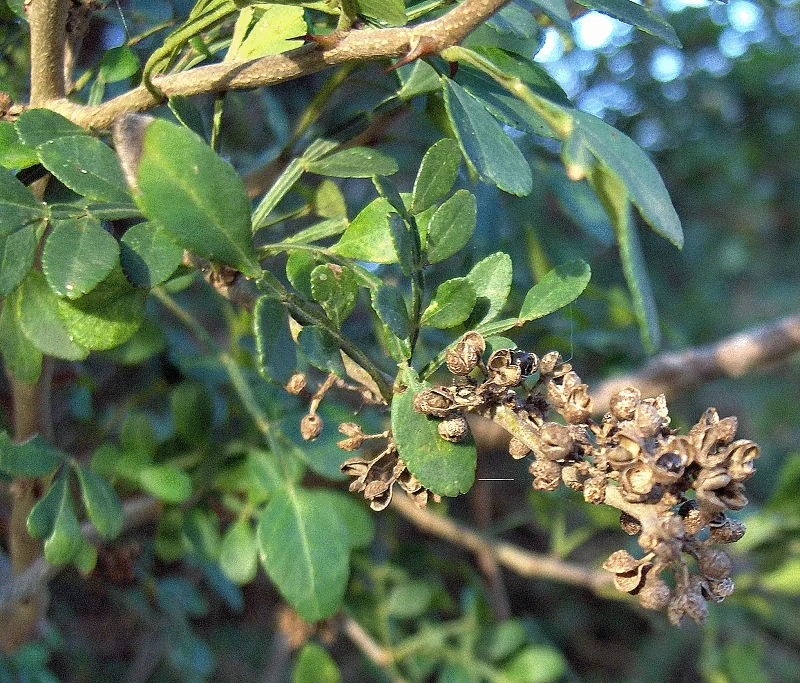
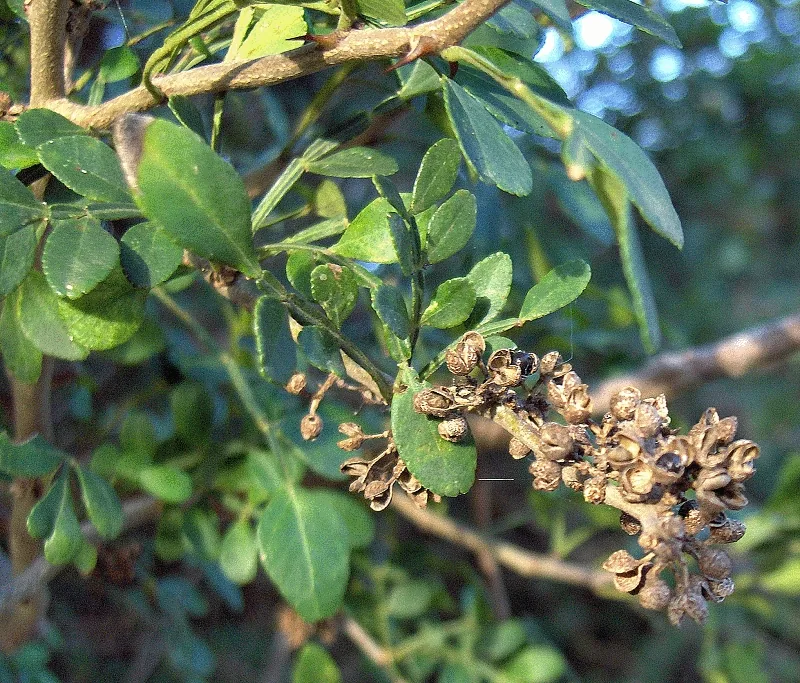
Foliage: Pinnately compound leaves around 5 cm, with a distinctly winged rachis — the leaf stalk between leaflets is flanged rather than round. Strongly citrus-scented when crushed. Evergreen to semi-deciduous depending on climate.
Thorns: Hooked and recurved, borne along irregular branches. Sharp, and genuinely hazardous when wiring.
Bark & trunk: Rough grey bark, developing good character with age.
Flowers & fruit: Small greenish-yellow flowers; small black fruit with a lemon-zest aroma and a numbing, tingling flavour.
Look-alikes: Other Zanthoxylum species, particularly Z. piperitum. True citrus species share the aromatic foliage but are unarmed or differently armed and lack the winged rachis.
Climate & USDA Zone
Zones 9b–11 outdoors year-round. In temperate collections it is grown outdoors in strong light through the warm season and moved to a bright, frost-free space — an unheated greenhouse, a cold conservatory, a bright cool room — for winter. Damage begins below about 28°F; it can survive brief drops toward 20°F but with harm.
Light
Full sun to bright light. It accepts part shade but grows more openly. Strong light gives the short internodes and dense twigging that make the species worth growing.
Watering
Let the surface dry slightly, then water thoroughly. Keep it evenly moist through active growth without ever letting the mix stay saturated. Once established it is reasonably drought-tolerant, which makes it forgiving of a missed day in summer. Reduce watering substantially in winter when it is cool and growth has stopped.
Soil & Root Care
A standard free-draining bonsai mix. Repot every two years while the tree is developing, in spring before growth starts, extending the interval as it matures. Root work is well tolerated.
Feeding
Feed through the growing season with a balanced fertiliser — this is a vigorous species in warmth and it uses what you give it. Stop feeding when you move it into winter quarters, and do not feed a tree sitting cool and dormant.
Pruning & Styling
This is where the species earns its place.
- Cutback: let branches extend to five to seven leaf pairs, then cut back to two during the growing season. That is the standard cycle and it builds ramification quickly.
- Defoliation: an annual defoliation during the growing season is used for leaf-size control on healthy trees. Do not defoliate a weak tree.
- Back-budding: reliable, including on older wood — one of the reasons it develops so well.
- Wiring: tolerated on younger growth. The thorns make this genuinely unpleasant; wear gloves and take your time.
- Styles: informal upright, slant, and clump or mounding forms all suit its irregular branching.
Structural work is best done after leaf fall or after a seasonal flush has hardened.
Propagation & Cuttings
Ease: Moderate. Best methods: seed; cuttings; air-layering; root cuttings.
Seed is sown in autumn. Cuttings can be taken from half-ripe wood in mid-summer or from harder wood in early winter. Air-layering works in summer, and root cuttings in late winter. It is one of the more versatile species here for propagation.
Pests
Aphids, scale, spider mites and mealybugs — the general Rutaceae set. Winter indoors under dry heat is when mites appear. Check leaf undersides regularly.
Disease, Fungus & Infection
Generally disease-resistant. Root rot in poorly drained soil is the main risk, with occasional fungal leaf spot in still, damp conditions.
Most Common Causes of Death
1. Cold. The commonest way this tree is lost — it is subtropical stock sold into temperate bonsai collections, and it needs a real winter plan, not a sheltered corner of the garden. 2. Root rot. From a mix that no longer drains, or from watering a cool dormant tree as if it were growing. 3. Defoliating or hard-pruning a weak tree. It responds well to technique when strong and badly when not.
Seasonal Calendar
- Spring: Repot if due before growth starts; move outdoors once frost risk passes; begin feeding.
- Summer: Full sun, regular water and feed, cutback cycles through the season. Defoliate once if the tree is vigorous.
- Autumn: Structural pruning and wiring after growth hardens; reduce feeding; move under cover before the first frost.
- Winter: Bright, frost-free, cool, and much drier. No feeding.
Toxicity, Safety & Handling
The hooked thorns are the real hazard — they catch and tear rather than simply pricking, and they make wiring genuinely uncomfortable. Wear gloves.
On toxicity we have to be honest: we could find no veterinary or poison-control entry for this species. Its leaves and bark are used as a culinary condiment in its native range and the fruit is eaten, which suggests low toxicity, but that is not the same as a documented pet-safety assessment, and we are not going to claim it is non-toxic on that basis.
Close-up photo reference
Compare your tree against these to confirm the species and spot problems early.
_001.jpg)
Sources
- Zanthoxylum fagara — Royal Horticultural Society
- Zanthoxylum fagara — Wikipedia
- Zanthoxylum fagara — Native Plant Society of Texas
Buy a Lime Prickly Ash bonsai
- All species
- Shop bonsai trees, tools & supplies
- How to Water a Bonsai (Without Killing It)
- Bonsai Soil: What to Buy, What to Mix, and What It Costs
- Why Bonsai Die After Repotting: Diagnosing a Failed Repot
- Pruning vs. Pinching: Shaping Your Bonsai
- Overwintering Bonsai: Cold-Season Care
- Indoor Bonsai Light and Humidity: Making a Windowsill Actually Work
- Root Rot on bonsai
- Winter / Frost Damage on bonsai
- Spider Mites on bonsai
- Scale Insects on bonsai
- Aphids on bonsai
- Jamaican Raintree bonsai care
- American Elm bonsai care
- Premna bonsai care
- Brazilian Rain Tree bonsai care