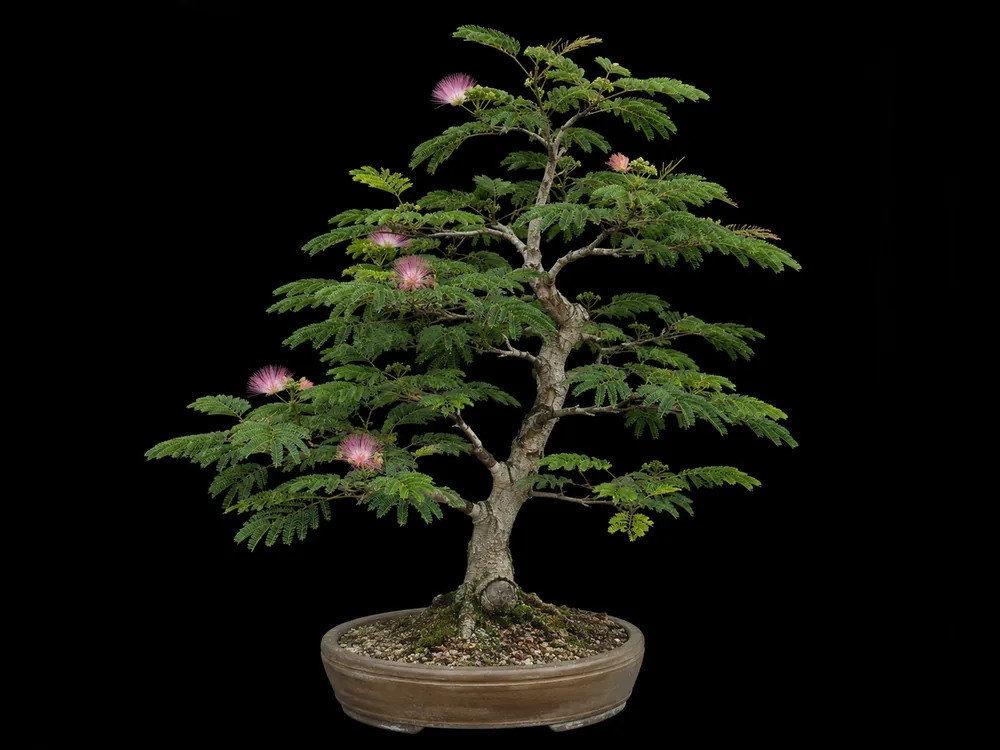
Mimosa / Silk Tree Bonsai Care
Albizia julibrissin
Zones 6 to 9, outdoor. Grown for its almost tropical-looking foliage and its extraordinary flowers, fluffy, pink. Most are lost to overwatering.
Fabaceae (legume / pea family) · Deciduous, fast-growing flowering tree
Mimosa / Silk Tree quick reference
| USDA zones | 6–9 (hardy to zone 6); protect potted trees in winter |
|---|---|
| Indoor / outdoor | Outdoor — a temperate tree that needs a real dormancy |
| Light | Full sun; light afternoon shade in extreme summer heat |
| Water | Moist but well-drained — water freely in growth, never waterlogged |
| Soil | Well-draining bonsai mix; tolerates a range but must not stay wet |
| Repot | Every 2–3 years in early spring before bud-break |
| Frost | Hardy in the ground to zone 6; container roots need winter protection |
| Mature height (as bonsai) | 6-12m wild; 30-60cm as bonsai |
| Growth rate | Fast; brittle coarse growth |
| Season of interest | Pink powder-puff summer flowers; ferny leaves |
| Leaf reduction | Compound leaves hard to reduce; big for size |
| #1 cause of death | Fusarium wilt (lethal vascular disease), then waterlogging / root rot |
Overview & Character
The Silk Tree is grown for its almost tropical-looking foliage and its extraordinary flowers — fluffy, pink, powderpuff blooms that appear in summer and give the tree its romantic common name. The leaves are large, fern-like and bipinnately compound, and like many legumes they fold closed at night and in response to touch or stress, giving the canopy a sensitive, animated quality.
It is a vigorous, fast grower, which makes it satisfying for developing trunks and structure quickly, though that same vigour means it needs frequent attention to keep growth tight. The very large compound leaves are difficult to reduce, so Albizia is usually styled at a larger size where the foliage scale reads naturally, and it shines in informal, broad-canopied designs that echo its spreading habit in nature. It is a beautiful but somewhat short-lived and disease-prone species, which is the main caveat for anyone investing years into one.
Identification
Foliage: Large, feathery bipinnate compound leaves — each leaf divided into many pinnae, each lined with numerous small oblong leaflets, giving an almost tropical, fern-like appearance. Like many legumes, the leaflets fold closed at night and in response to touch or stress (nyctinastic/seismonastic movement), animating the canopy. Leaves are notably large and difficult to reduce for bonsai.
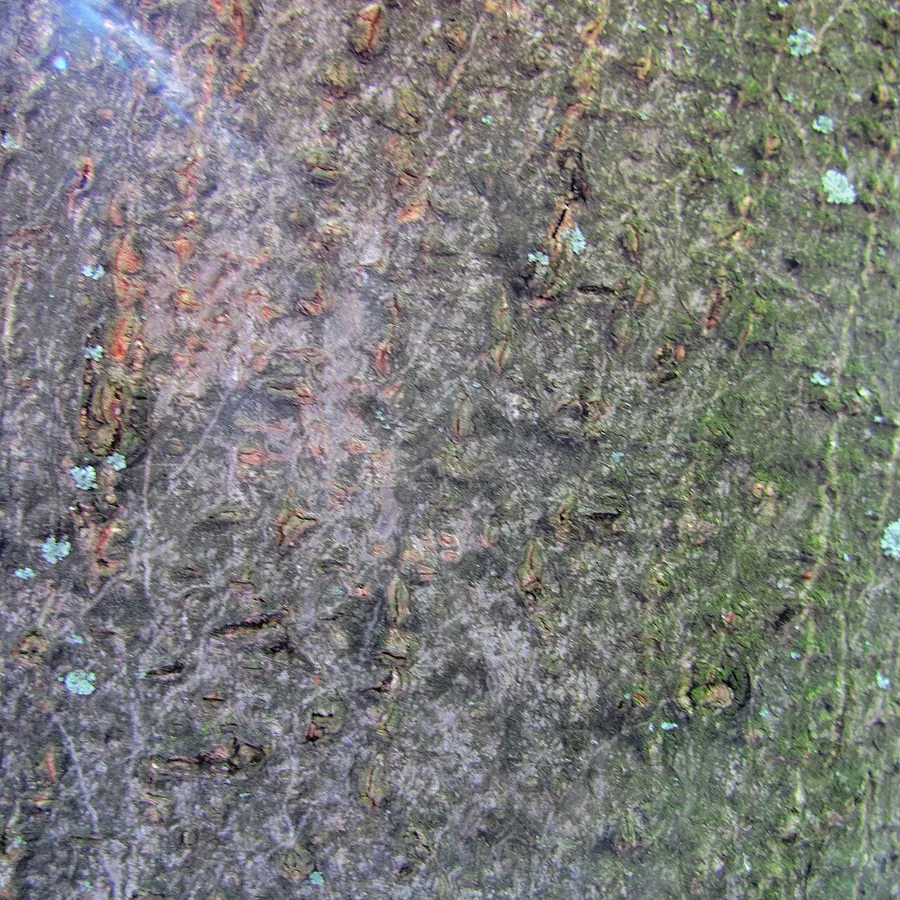
Bark & trunk: Smooth, grey-brown bark on young trunks, becoming lightly fissured with age; the tree has a characteristic low, broad, spreading, umbrella-like crown.
Growth habit / form: Fast, vigorous grower with a wide, vase-to-flat-topped silhouette — a spreading habit that bonsai designs echo with broad informal canopies.
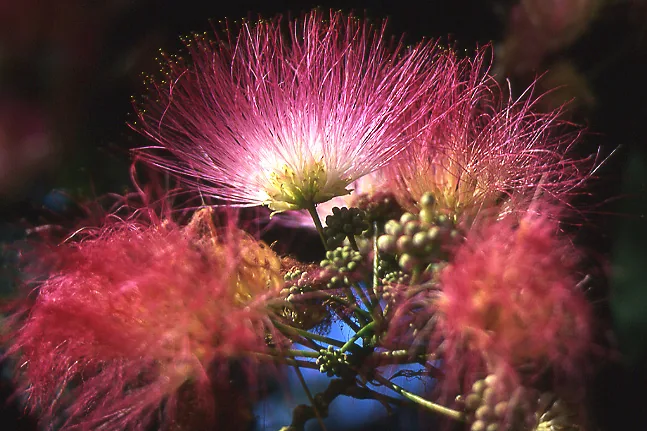
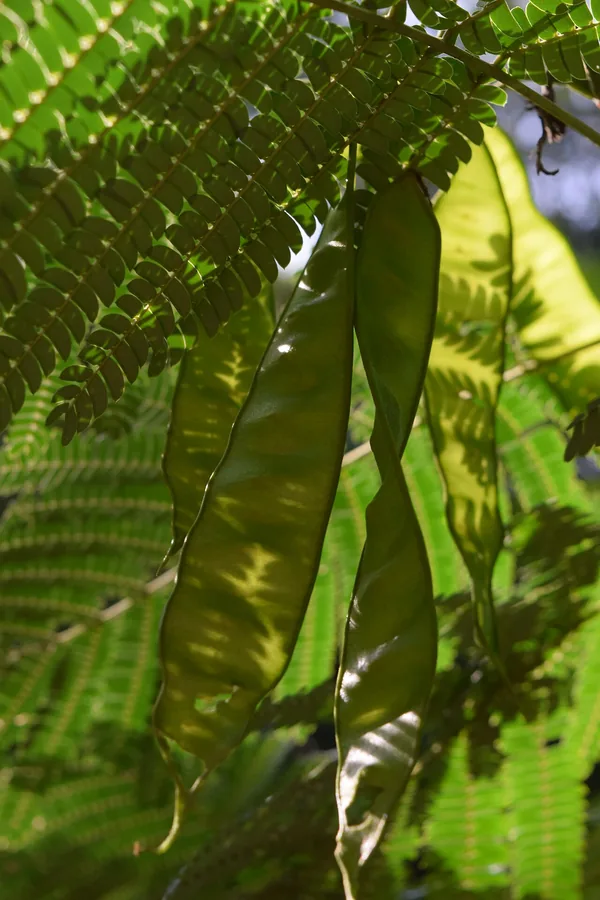
Flowers / fruit: Unmistakable fluffy pink powderpuff flowers (silky pink stamens, hence "silk tree") in summer; followed by flat, papery bean-like seed pods typical of legumes.
Look-alikes & how to tell them apart: The feathery bipinnate leaves + pink powderpuff flowers + flat seed pods combination is diagnostic. Versus Brazilian Rain Tree (Chloroleucon tortum): Albizia has far larger leaves, pink (not white) flowers, flat (not corkscrew) pods, and lacks the zig-zag thorny branching and fluted trunk. Versus Jacaranda or Honeylocust: those have different flowers (purple trumpets / inconspicuous) and Albizia's powderpuff bloom is unique among common landscape trees.
Climate & USDA Zone
Albizia julibrissin is a temperate deciduous tree, hardy in the landscape across USDA zones 6–9. It needs a genuine winter dormancy and should be grown outdoors, not as a houseplant. As a bonsai in a pot, however, the exposed root ball is far more vulnerable to cold than a tree in the ground, so protect it over winter — an unheated greenhouse, cold frame, or mulched/heeled-in position sheltered from hard freezes and drying wind. It enjoys hot summers and is well suited to warm-temperate and southern climates, where it grows with abandon.
Light
Give the Silk Tree full sun. Strong light keeps growth compact, drives flowering and maintains vigour. The tree is happiest in an open, sunny position sheltered from strong wind (which damages the delicate foliage). During extreme summer heat waves a little afternoon shade can prevent leaf scorch, but in general more sun means a healthier, better-flowering tree.
Watering
Albizia likes to be kept moist but well-drained. Through the growing season it is thirsty and benefits from generous, regular watering — a fast-growing tree in full sun can dry out quickly. The critical caveat is drainage: the species suffers in waterlogged, soggy soil, which invites root rot. Water thoroughly whenever the surface begins to dry, let the excess run off freely, and never let the pot stand in water. Reduce watering markedly in autumn and winter when the tree is leafless and dormant, keeping the root ball just barely moist.
Soil & Root Care
Use a standard, free-draining bonsai soil. Albizia is not especially fussy about soil composition and tolerates a range, but good drainage is non-negotiable because of its sensitivity to waterlogging. A mix such as akadama with pumice and lava, or a quality commercial bonsai mix, works well.
Repot every 2–3 years in early spring, just before or as the buds begin to swell, while the tree is still dormant. The roots are vigorous, so moderate root pruning is well tolerated. Crucially, use clean, sterilised tools and fresh soil — because Fusarium is soil-borne and so damaging to this species, root-zone hygiene matters more here than for most bonsai.
Feeding
Feed regularly through the growing season to support the tree's fast growth and summer flowering. A balanced fertiliser from spring through midsummer is appropriate; as a nitrogen-fixing legume the tree is not heavy-feeding for nitrogen, so avoid over-fertilising with high-nitrogen products, which only encourages soft, oversized leaves. Ease off feeding in late summer and stop for winter dormancy.
Pruning & Styling
The Silk Tree's vigour makes it responsive to pruning, and it back-buds reasonably well on younger wood. Develop structure with hard pruning in late winter or early spring before growth resumes; refine with shoot trimming through the growing season to keep the silhouette in check. Be aware that the large bipinnate leaves resist meaningful reduction, so accept a larger overall design and prune for structure and movement rather than expecting maple-fine ramification.
Wiring works on young, flexible shoots; older branches stiffen and are best directed by pruning and clip-and-grow. Avoid major wounds in summer heat or humid conditions, which can be entry points for disease.
Propagation & Cuttings
Ease: Easy from seed. Best methods: seed; root cuttings.
Albizia julibrissin grows easily from seed — scarify the hard coat (nick or hot-water soak) and sow warm; germination is fast and strong. Root cuttings sprout readily, and the tree suckers. Stem cuttings root poorly. For bonsai the ferny bipinnate leaves and powder-puff flowers are the draw, though the large leaves reduce only somewhat; seedlings are vigorous and develop quickly, and the species back-buds and suckers strongly after cutting-back.
Pests
Albizia can be bothered by a number of pests, most of them manageable:
- Mimosa webworm — caterpillars that web and skeletonise the foliage; remove webbing and treat with Bacillus thuringiensis (Bt).
- Spider mites — in hot, dry conditions; rinse foliage and treat with miticide or neem.
- Scale (including cottony cushion scale) — treat with horticultural oil or a systemic.
- Shot-hole borer — wood-boring beetle; keep the tree vigorous and avoid stress, which attracts borers.
Disease, Fungus & Infection
The defining health problem of this species is Fusarium wilt, a vascular disease caused by Fusarium oxysporum that is widespread, especially in the southern US, and is frequently fatal. It plugs the tree's water-conducting tissue, causing wilting, yellowing, branch dieback and often death within a season or two; there is no cure once a tree is infected. Management is preventive: avoid wounding roots unnecessarily, use sterile tools and fresh soil at repotting, keep the tree vigorous, and never reuse soil from a tree that has died of wilt.
The species is also susceptible to Armillaria root rot and general root rot in wet soil — another reason drainage and careful watering are essential. Some resistant landscape cultivars exist and are worth seeking out if available as bonsai stock.
Most Common Causes of Death
1. Fusarium wilt. The lethal signature disease — a soil/vascular fungus causing wilting and dieback with no cure; use clean soil/tools and remove infected trees (seek resistant strains). 2. Waterlogging / root rot. Keep moderately moist but free-draining; avoid constantly wet soil. 3. Drying out. Vigorous grower with high summer demand; don't let it bone-dry. 4. Winter root freeze. Hardy ~zones 6–9 but shelter potted roots in hard freezes. 5. Pests. Mimosa webworm and borers, plus aphids — treat early; keep vigor up against borers.
Seasonal Calendar
- Spring: Repot if due (early); resume feeding; feathery leaves emerge late — be patient.
- Summer: Full sun; water generously; pink powderpuff flowers; watch for webworm.
- Autumn: Taper feeding/water; seed pods form; leaf drop.
- Winter: Dormant/leafless; protect potted roots; structural pruning while dormant.
Close-up photo reference
Compare your tree against these to confirm the species and spot problems early.


![[email protected]](https://commons.wikimedia.org/wiki/File:Albizia_julibrissin_w_fruit_-_48115279122.jpg)
Sources
Where to buy a Mimosa / Silk Tree bonsai
We don’t stock Mimosa / Silk Tree at the moment. These species need similar care and we have them now — they are the closest match in our catalogue.
- Blueberry — similar care, in stock now
Browse all bonsai trees for sale or find a species matched to your climate and space.
- All species
- Shop bonsai trees, tools & supplies
- How to Water a Bonsai (Without Killing It)
- Bonsai Soil: What to Buy, What to Mix, and What It Costs
- Why Bonsai Die After Repotting: Diagnosing a Failed Repot
- Pruning vs. Pinching: Shaping Your Bonsai
- Overwintering Bonsai: Cold-Season Care
- Indoor Bonsai Light and Humidity: Making a Windowsill Actually Work
- Root Rot on bonsai
- Underwatering (Drought Stress) on bonsai
- Winter / Frost Damage on bonsai
- Leaf Scorch / Sunburn on bonsai
- Spider Mites on bonsai
- American Beech bonsai care
- Amur Maple bonsai care
- Beautyberry bonsai care
- Blueberry bonsai care