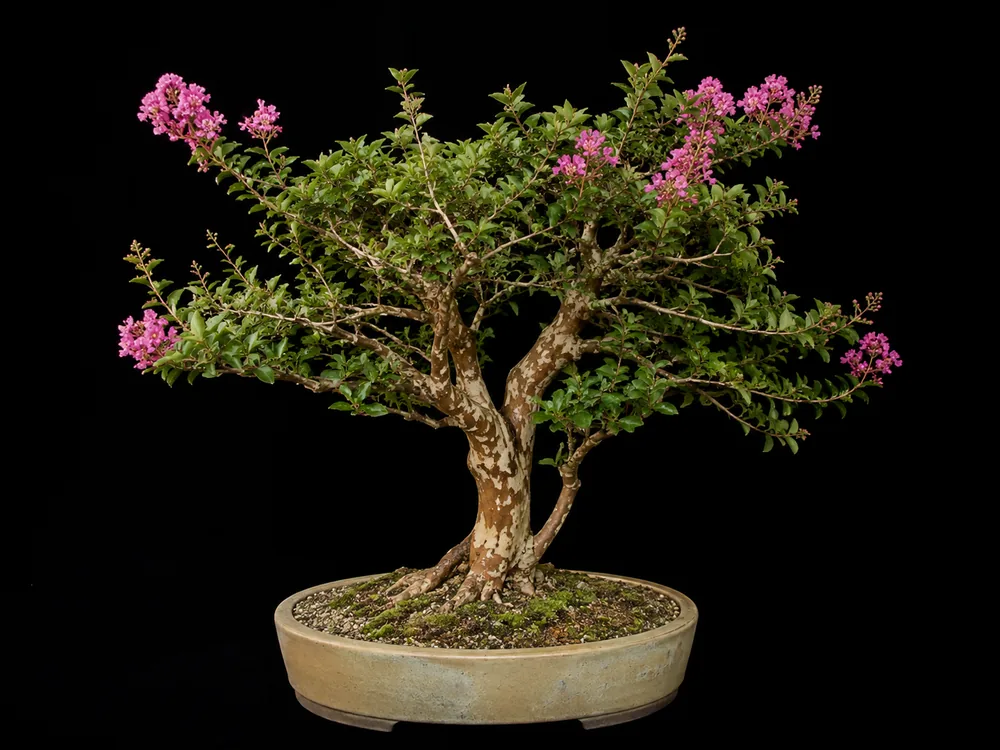
Crepe Myrtle Bonsai Care
Lagerstroemia indica
2 Crepe Myrtle bonsai in stock, from $74.95 Shipped direct from our nursery partners, with a 48-hour live-arrival guarantee. See the trees
Zones 7 to 9, outdoor. Prized in bonsai for two features: spectacular summer flowers, crinkled. Most are lost to overwatering.
Lythraceae · Deciduous flowering tree/shrub
Crepe Myrtle quick reference
| USDA zones | 7–9 (some cultivars to 6 with protection) |
|---|---|
| Indoor / outdoor | Outdoor (deciduous; needs sun and dormancy) |
| Light | Full sun — 6–8 hours is required for flowering |
| Water | Moist during growth; let surface dry slightly between waterings |
| Soil | Free-draining, slightly moisture-retentive bonsai mix |
| Repot | Every 2–3 years |
| Frost | Moderately hardy; protect potted roots in cold winters |
| Mature height (as bonsai) | Tree to 8 m; kept 30-70 cm as bonsai |
| Growth rate | Moderate to fast |
| Season of interest | Summer flowers, mottled bark, autumn colour |
| Leaf reduction | Good with pinching |
| #1 cause of death | Powdery mildew weakening + winter root freeze; overwatering root rot |
Overview & Character
The Crepe Myrtle is prized in bonsai for two features: spectacular summer flowers — crinkled, crepe-paper-like clusters in white, pink, red, lavender, or purple — and stunning bark, which exfoliates to reveal a smooth, mottled, muscular trunk in shades of cream, tan, and cinnamon. It also gives good autumn leaf color (orange/red/yellow) before dropping.
It is a vigorous, fast-growing deciduous tree that responds well to development, making it rewarding for building trunks and ramification relatively quickly. Its two recurring headaches are powdery mildew (a fungal disease it's quite prone to) and the need for lots of sun to bloom. It's an outdoor tree that needs full sun and a winter rest.
Identification
Foliage: Small, simple, oval to elliptic leaves about 2–7 cm long, smooth-edged (entire margins), glossy dark green, arranged in opposite or sub-opposite pairs. New growth often flushes bronze-red; autumn brings warm orange, red, and yellow color before the (deciduous) leaves drop.
Bark & trunk: The signature feature — smooth, sinewy, mottled exfoliating bark that flakes off in patches to reveal a muscular trunk in cream, tan, grey, and cinnamon tones. Trunks are often multi-stemmed with elegant, fluted musculature.
Growth habit / form: A vigorous, fast-growing deciduous shrub/small tree, frequently multi-trunked; suits informal upright, broom, and clump styles.
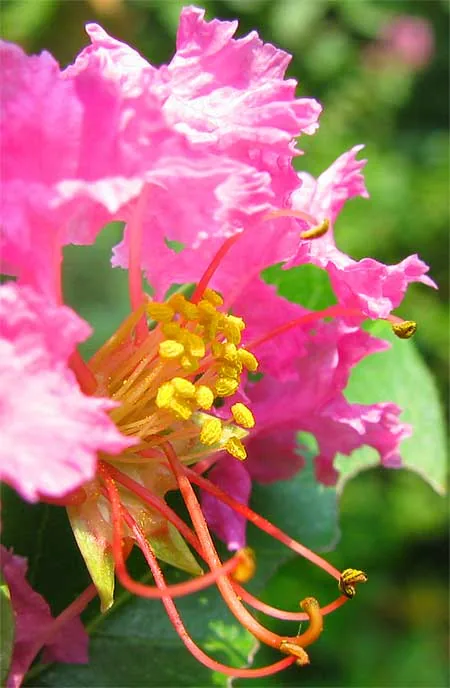
Flowers / fruit: Blooms in summer (and into early fall) — large terminal panicles of crinkled, crepe-paper-textured flowers with ruffled, clawed petals in white, pink, red, lavender, or purple, borne on current-season growth. Followed by small round brown woody seed capsules that persist into winter.
Look-alikes & how to tell them apart: Most often confused with other smooth-barked small trees such as stewartia or some myrtles, but the combination of summer crepe-textured flower panicles plus mottled patchwork exfoliating bark is diagnostic; the single quickest tell is the crinkled, crepe-paper flower petals on new-wood panicles — nothing else in the bonsai trade flowers quite like it.
Climate & USDA Zone
Hardy in USDA zones 7–9 (heat-loving; some newer cultivars tolerate zone 6 with protection). It thrives in warm, sunny climates and is heat- and humidity-tolerant. As a deciduous tree it requires winter dormancy, so it must be kept outdoors through the seasons — but as a potted plant in colder zones its roots need winter protection from hard freezes. In marginal zones, overwinter the pot in a cold frame, unheated garage, or heeled into the ground with mulch.
Light
Full sun is essential — aim for 6–8 hours of direct sunlight daily. Flowering depends on it: trees grown in partial shade produce far fewer blooms and become much more susceptible to powdery mildew. Maximize sun for both flowers and disease resistance. (In extreme heat it tolerates full sun fine; this is a sun-lover.)
Watering
Likes consistent moisture during active growth, but let the surface dry slightly between waterings — and ensure free drainage.
- Water thoroughly until water runs from the drainage holes, saturating the whole root ball, then allow the soil surface to dry slightly before watering again.
- In summer, especially while flowering, it is thirsty and may need daily watering; don't let it dry out completely during bloom or it will drop flowers and buds.
- Reduce watering in autumn and keep just barely moist in winter dormancy.
- Avoid waterlogging — constant sogginess rots roots.
- Where possible, water at the soil rather than wetting the foliage late in the day, since damp, shaded foliage encourages mildew.
Soil & Root Care
Soil: A free-draining bonsai mix with some moisture retention (e.g., akadama / pumice / lava, optionally a little organic matter) suits its vigorous, thirsty growth while preventing waterlogging.
Repotting:
- Frequency: every 2–3 years (it grows vigorously and fills pots with roots fairly quickly; younger trees may need it every 2 years).
- Timing: early spring before bud break.
- It tolerates fairly standard root pruning; remove up to ~1/3 of the roots and reduce as needed to fit the pot.
- Aftercare: shelter, keep moist (not wet), resume feeding after growth restarts.
Feeding
Feed regularly through the growing season to fuel its vigorous growth and flowering. Use a balanced fertilizer in spring; many growers shift to a higher-phosphorus / lower-nitrogen feed in early/mid summer to encourage abundant blooms (excess nitrogen drives leafy growth at the expense of flowers and can worsen mildew). Stop feeding as it heads into dormancy. Don't feed freshly repotted or dormant trees.
Pruning & Styling
- Flowering habit: Crepe Myrtle blooms on new (current-season) growth, so pruning to encourage new shoots increases flowering. Trim back after a flush/bloom to promote more blooms and ramification.
- Vigorous growth means frequent pinching/trimming in the growing season to keep it compact.
- Bark: handle the trunk carefully — the smooth, exfoliating bark marks and scars easily; wire bite and rough handling leave lasting blemishes on this signature feature.
- Wiring: young shoots are flexible; older wood stiffens. Wire when needed but protect the delicate bark and remove wire promptly to avoid scarring.
- Suited to informal upright, broom, multi-trunk/clump, and flowering styles.
- Do major structural pruning in late winter/early spring before bud break.
Propagation & Cuttings
Ease: Easy. Best methods: hardwood and softwood cuttings; seed.
Lagerstroemia is easy to root: hardwood cuttings in late winter and softwood cuttings in summer both strike readily with hormone, and it suckers and layers freely. Seed germinates easily (surface-sow fresh, warm) but cultivars won't come true. For bonsai the smooth, mottled, sinuous bark and summer flowers are the draw; cutting-grown plants flower young and thicken fast, and the species back-buds strongly after hard pruning, so ramification builds quickly.
Pests
- Aphids (common; cluster on new growth and flower buds, excrete honeydew that leads to sooty mold)
- Crepe myrtle bark scale (a notable pest in some regions — white/gray felted scale on bark, causing black sooty mold)
- Japanese beetles and other leaf feeders
- Spider mites in hot, dry conditions
Treat with insecticidal soap, horticultural oil, or appropriate systemics; control aphids/scale early to prevent sooty mold.
Disease, Fungus & Infection
- Powdery mildew (the signature disease) — a white, powdery fungal coating on leaves and shoots, thriving in humidity, shade, and poor airflow. It distorts new growth, reduces flowering, and weakens the tree. Management: maximize sun and airflow; remove heavily infected leaves; treat with neem oil, a baking-soda/water spray (~1 tsp per quart), or organic fungicides containing sulfur or potassium bicarbonate; choose mildew-resistant cultivars where possible.
- Cercospora leaf spot — fungal spotting causing yellowing and premature leaf drop in wet conditions; improve airflow, remove fallen leaves, fungicide if severe.
- Sooty mold — black coating growing on the honeydew left by aphids/scale; not a direct infection of the tree but a sign of a pest problem — control the insects to clear it.
- Root rot — from waterlogged soil/poor drainage.
Prevention across the board: full sun, strong airflow, dry foliage going into night, and prompt pest control.
Most Common Causes of Death
1. Powdery mildew left unchecked. Chronic mildew (worse in shade/poor airflow) weakens the tree and ruins flowering; give full sun, airflow, and treat early; choose resistant cultivars. 2. Winter root freeze on potted plants. Top growth is hardier than the potted roots; overwinter the pot protected in zones 6–7. 3. Overwatering / root rot. Use a free-draining mix; let the surface dry slightly between waterings; never standing water. 4. Drought during bloom. Heavy summer/flowering water demand; a dry-out drops buds and flowers. 5. Too little sun. Shade means poor flowering, more mildew, and overall weakness.
Seasonal Calendar
- Spring: Repot if due (before bud break); structural pruning; resume feeding; full sun; watch for aphids/early mildew.
- Summer: Full sun, water generously (daily in heat/bloom); shift to higher-phosphorus feed; trim after flushes; monitor mildew.
- Autumn: Enjoy fall color; taper feeding/water; clean up fallen leaves to reduce overwintering fungus.
- Winter: Dormant/leafless; protect potted roots; water sparingly; major structural pruning late winter.
Close-up photo reference
Compare your tree against these to confirm the species and spot problems early.
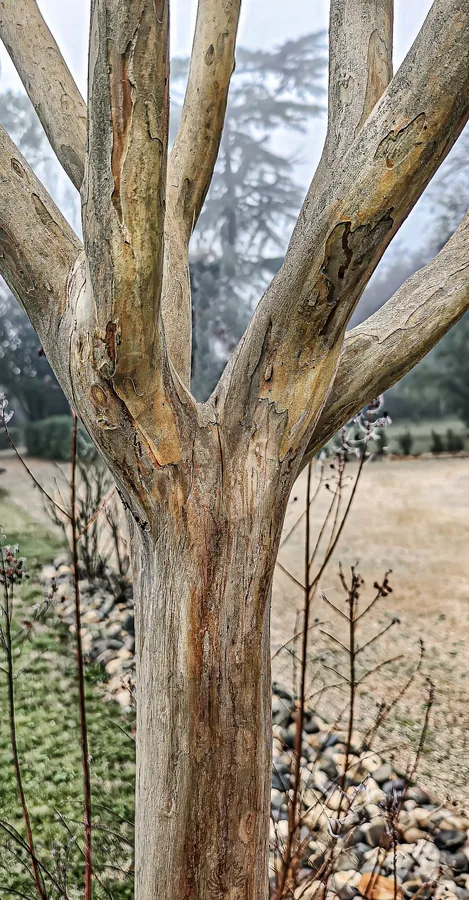
_Lagerstroemia_indica_-_Bark_in_winter.jpg)

Sources
Buy a Crepe Myrtle bonsai
- All species
- Shop bonsai trees, tools & supplies
- How to Water a Bonsai (Without Killing It)
- Bonsai Soil: What to Buy, What to Mix, and What It Costs
- Why Bonsai Die After Repotting: Diagnosing a Failed Repot
- Pruning vs. Pinching: Shaping Your Bonsai
- Overwintering Bonsai: Cold-Season Care
- Indoor Bonsai Light and Humidity: Making a Windowsill Actually Work
- Root Rot on bonsai
- Overwatering on bonsai
- Underwatering (Drought Stress) on bonsai
- Winter / Frost Damage on bonsai
- Powdery Mildew on bonsai
- Amur Maple bonsai care
- Beautyberry bonsai care
- Cedar Elm bonsai care
- Chinese Pistache bonsai care