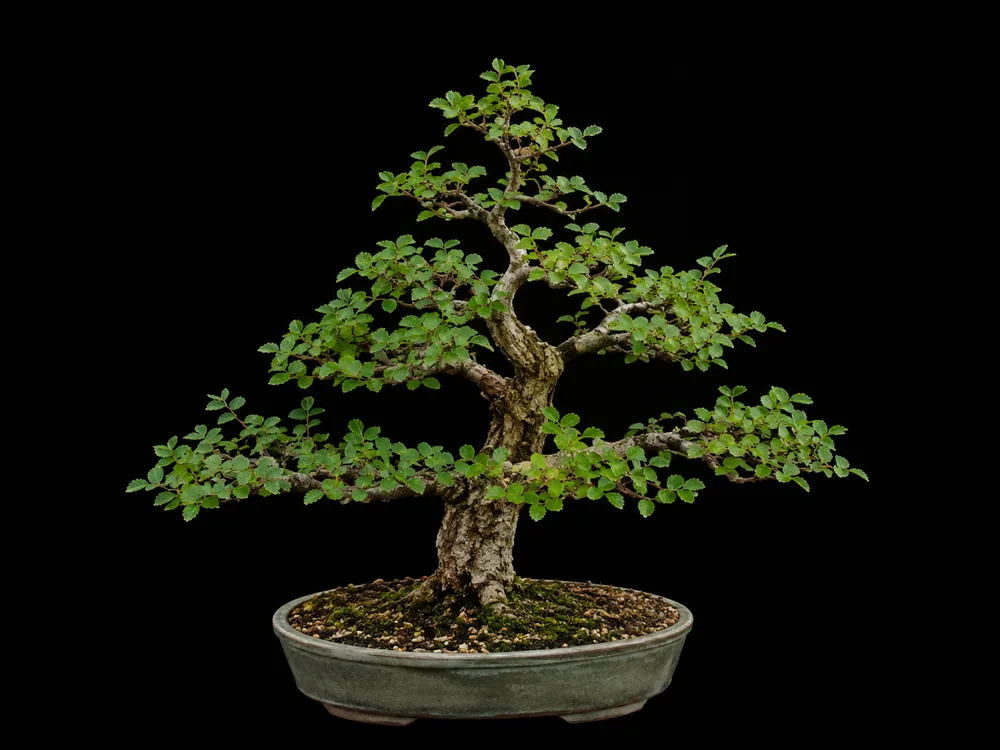
Winged Elm Bonsai Care
Ulmus alata
Zones 6 to 9, outdoor. A tough, fast-growing southeastern US elm named for the corky 'wings' that run along its twigs. Most are lost to overwatering.
Ulmaceae (elm family) · Deciduous broadleaf tree
Winged Elm quick reference
| USDA zones | 6–9 |
|---|---|
| Indoor / outdoor | Outdoor (deciduous; often semi-evergreen in mild zones) |
| Light | Full sun (tolerates some shade) |
| Water | Thirsty in growth — generous water, but not wet feet |
| Soil | Free-draining, organic-rich mix |
| Repot | Every 2–3 years, early spring |
| Frost | Hardy; protect potted roots in hard freeze |
| Mature height (as bonsai) | Tree to 20m in nature; bonsai often 20-50cm. |
| Growth rate | Moderate to fast. |
| Season of interest | Year-round corky winged twigs; fine ramification. |
| Leaf reduction | Good; small leaves reduce well with defoliation. |
| #1 cause of death | Overwatering when dormant; root rot from poor drainage |
Overview & Character
The Winged Elm is a tough, fast-growing southeastern US elm named for the corky 'wings' that run along its twigs. Like other elms it is forgiving, back-buds freely, takes heavy pruning, develops small leaves and fine twiggy growth in a pot, and even air-layers reasonably well — an excellent, durable subject for building ramified deciduous bonsai relatively quickly.
It thrives in full sun, drinks heavily in the growing season, and ramifies with frequent trimming. Because of the corky wings, growers favor clip-and-grow over wiring to avoid damaging them. The main risk is wet, cold soil during dormancy.
Identification
Foliage: Small, alternate, elliptic leaves ~3–6 cm with a doubly-serrate margin and a slightly lopsided base (typical of elms); smooth, dark green, yellow in autumn; often holds leaves late or semi-evergreen in mild winters.
Bark & trunk: Grey, fissured bark; the diagnostic feature is the pair of irregular corky 'wings' (ridges) running along opposite sides of the twigs and young branches.
Growth habit / form: Fast, vigorous, upright; forms fine twiggy growth and smaller leaves in a pot. Suits informal upright, broom, and clump styles.
Flowers / fruit: Small reddish flowers in early spring before the leaves, followed by small hairy winged samaras.
Look-alikes & how to tell them apart: The corky twig wings separate it from most elms; **Cedar Elm (Ulmus crassifolia)** also has corky wings but smaller, very rough sandpapery leaves and autumn flowering — Winged Elm has smoother leaves and spring flowering.
Climate & USDA Zone
Hardy in USDA zones 6–9. Deciduous (semi-evergreen in mild winters), grown outdoors year-round; protect potted roots in hard freezes. Heat- and drought-tolerant and very durable.
Light
Full sun for compact, twiggy growth and small leaves; it also tolerates some shade but is best and tightest in full sun.
Watering
Drinks heavily in the growing season — water generously, but don't let it sit wet.
- Elms like a lot of water in growth; water as the surface dries, often daily in summer. Use a free-draining substrate so it can drink without waterlogging.
- It may hold leaves into/through winter; be careful not to overwater while dormant — cold wet soil rots roots.
Soil & Root Care
Soil: A free-draining mix that stays cool and slightly moist — elms appreciate some organic content; akadama / pumice / lava with a little organic matter works well.
Repotting:
- Frequency: every 2–3 years, early spring.
- Tolerates root pruning well; reduce up to ~1/3.
- Aftercare: keep moist and sheltered; it re-establishes fast.
Feeding
Feed regularly through the growing season (every ~2–4 weeks) to support its vigor and ramification; ease off toward dormancy. Don't feed freshly repotted or dormant trees.
Pruning & Styling
- Clip-and-grow preferred: it back-buds and grows fast, so directional pruning and frequent trimming build ramification — and avoid wiring damage to the corky wings.
- Trim shoots back to 1–2 leaves often; takes heavy pruning and bud selection well.
- Wiring is possible but watch the wings and remove wire promptly (fast thickening causes bite). Air-layers reasonably well.
- Suits informal upright, broom, and clump styles.
Propagation & Cuttings
Ease: Easy. Best methods: seed; cuttings; root cuttings.
Ulmus alata is an easy elm — it seeds in spring and, sown fresh at once, germinates quickly with little dormancy. Softwood and semi-hardwood cuttings root well with light hormone, and root cuttings from suckers work. For bonsai the small leaves and distinctive corky wings on the twigs are the draw; the species is vigorous and tough, thickens fast, and back-buds strongly, so cutting- or seed-grown stock develops quickly and tolerates hard pruning.
Pests
- Elm leaf beetle
- Aphids and whitefly
- Scale insects and sooty mold
- Spider mites (hot, dry conditions)
Treat with horticultural oil, insecticidal soap, or appropriate systemics; catch infestations early.
Disease, Fungus & Infection
Durable; issues mostly cultural:
- Root rot — from waterlogging, especially overwatering in dormancy.
- Dutch elm disease — possible but Winged Elm is less commonly devastated than American elm; sanitize tools.
- Black spot / leaf spot of elm — fungal spotting in damp conditions; improve airflow, clear fallen leaves.
Prevention: full sun, free drainage, careful dormant watering, sanitation.
Most Common Causes of Death
1. Overwatering during dormancy. It may keep leaves but still slow down — cold wet soil rots roots; reduce water. 2. Root rot from poor drainage. Use a free-draining mix. 3. Damaging the corky wings / fast wire-bite. Prefer clip-and-grow; remove wire promptly. 4. Drought in peak summer. Heavy drinker — don't let it dry out in growth. 5. Unprotected potted roots in severe freezes. Shelter the pot in extreme cold.
Seasonal Calendar
- Spring: Repot if due; flowers then leaves; resume feeding; full sun.
- Summer: Water generously (daily in heat); trim often for ramification; clip-and-grow.
- Autumn: Yellow color; taper feeding/water; may hold leaves late.
- Winter: Dormant (semi-evergreen in mild zones); water sparingly; structural pruning; protect potted roots.
Sources
Where to buy a Winged Elm bonsai
We don’t stock Winged Elm at the moment. These species need similar care and we have them now — they are the closest match in our catalogue.
- Chinese Elm — similar care, in stock now
Browse all bonsai trees for sale or find a species matched to your climate and space.
- All species
- Shop bonsai trees, tools & supplies
- How to Water a Bonsai (Without Killing It)
- Bonsai Soil: What to Buy, What to Mix, and What It Costs
- Why Bonsai Die After Repotting: Diagnosing a Failed Repot
- Pruning vs. Pinching: Shaping Your Bonsai
- Overwintering Bonsai: Cold-Season Care
- Indoor Bonsai Light and Humidity: Making a Windowsill Actually Work
- Root Rot on bonsai
- Overwatering on bonsai
- Underwatering (Drought Stress) on bonsai
- Winter / Frost Damage on bonsai
- Spider Mites on bonsai
- American Elm bonsai care
- Cedar Elm bonsai care
- Siberian Elm bonsai care
- Chinese Elm bonsai care