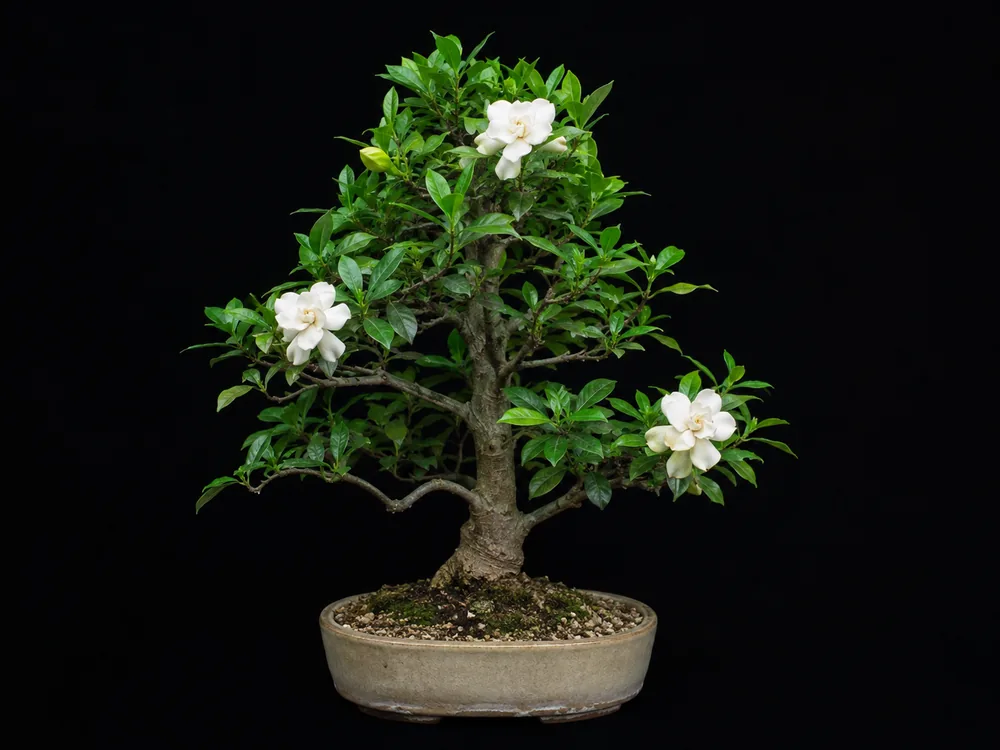
Gardenia Bonsai Care
Gardenia jasminoides
Outdoor. Grown above all for its intensely fragrant, waxy white flowers set against glossy, deep-green evergreen foliage. Most are lost to overwatering.
Rubiaceae (Coffee/Madder family) · Broadleaf evergreen flowering shrub; tender, warmth-loving; indoor/outdoor depending on climate
Gardenia quick reference
| USDA zones | Roughly 7–11 (best in warm, humid conditions; tender to cold) |
|---|---|
| Indoor / outdoor | Outdoors in warm climates; elsewhere indoors in bright light, outside only in warm months |
| Light | Bright indirect light or up to ~4 hours direct sun daily |
| Water | Keep slightly moist — evenly damp, never soggy and never bone dry. Drainage essential; use rainwater |
| Soil | Strongly acidic (pH ~5.0–6.5); azalea/ericaceous mix (kanuma, pine bark, perlite, a little sphagnum) |
| Repot | Every 2–3 years, spring, into fresh acidic mix |
| Frost | Tender — protect from cold; dislikes cold roots and cold drafts |
| Mature height (as bonsai) | Shrub to 2 m; 15-35 cm as bonsai |
| Growth rate | Slow to moderate |
| Season of interest | Fragrant white summer flowers |
| Leaf reduction | Limited - prefers glossy evergreen leaves |
| #1 cause of death | Root rot from wet/cold feet, plus chlorosis-driven decline from alkaline soil/water; bud drop from stress |
Overview & Character
Gardenia is grown above all for its intensely fragrant, waxy white flowers set against glossy, deep-green evergreen foliage. The perfume is among the most prized of any flowering plant. It is, however, a genuinely fussy subject: it is an acid-loving, warmth-loving, humidity-loving plant that resents cold feet, alkaline water, sudden change and over-watering. Get the conditions right and it rewards you with blooms and scent over a long season; get them wrong and it sulks with yellow leaves and dropped buds.
For bonsai, Gardenia makes a handsome small flowering evergreen, but it is best regarded as a plant that demands attentive, consistent care rather than a beginner's "tough" species.
Identification
Foliage: Glossy, leathery, dark-green lance-shaped to oval leaves, evergreen, arranged in opposite pairs or whorls, with a smooth margin and prominent veining.
Bark & trunk: Smooth, pale gray-brown bark; trunks remain relatively slender and are slow to develop heavy character.
Growth habit / form: Dense, rounded evergreen shrub, well-branched, holding foliage year-round.
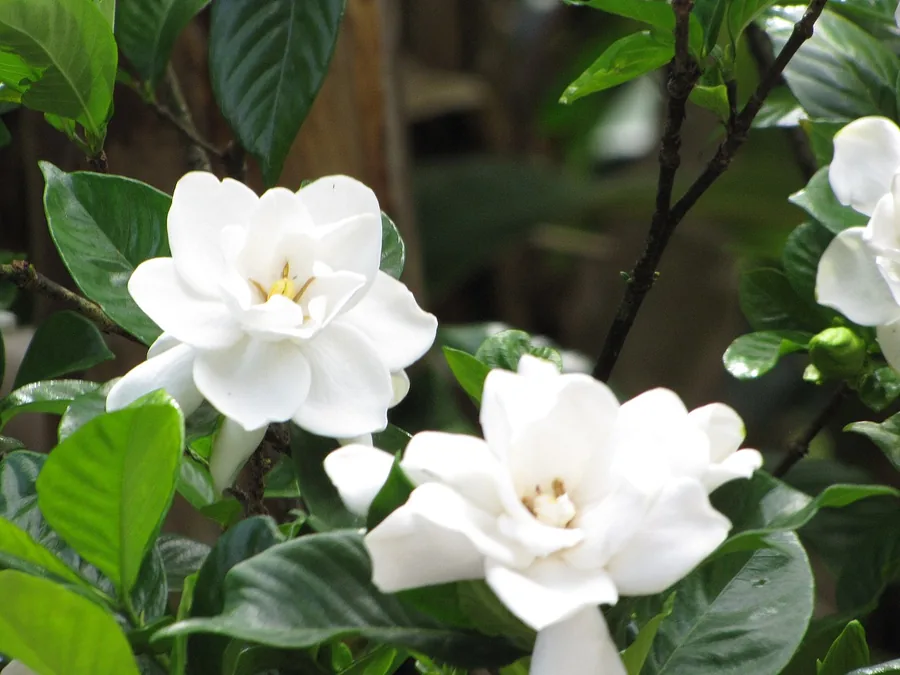
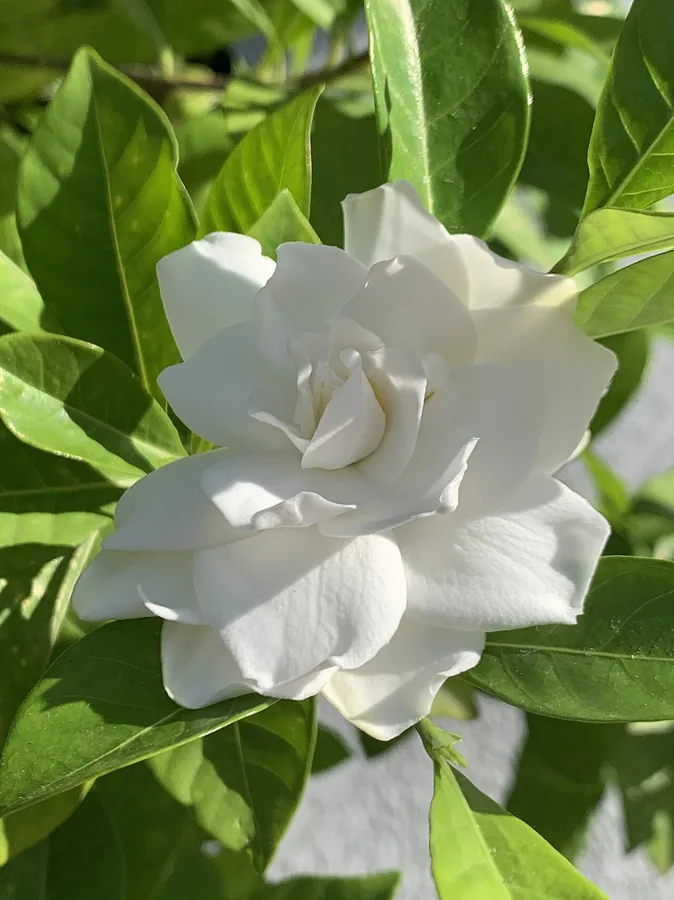
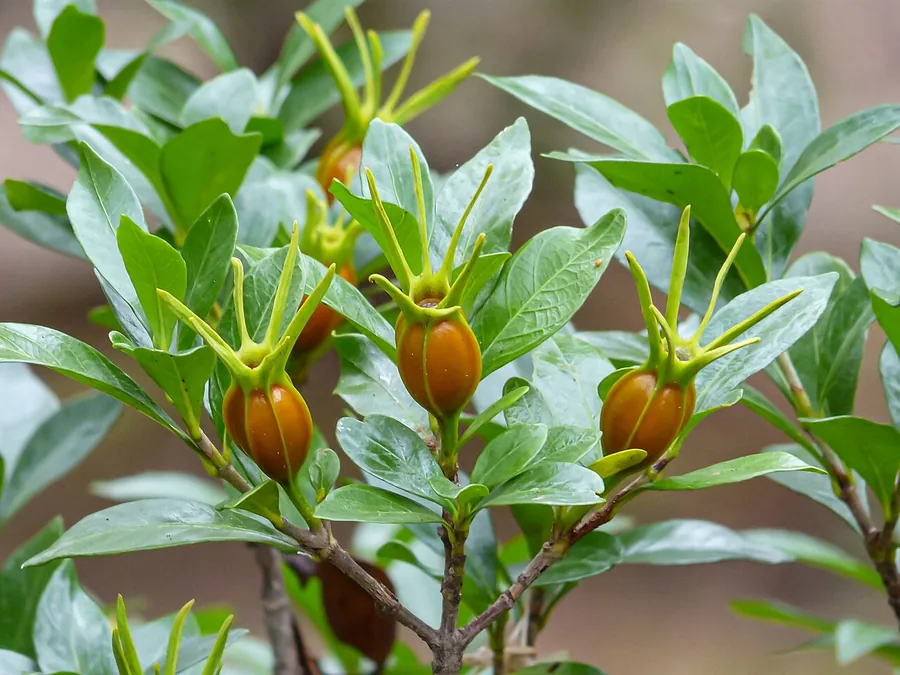
Flowers / fruit: Showy, waxy, pure-white flowers (single to fully double, rose-like in double forms), powerfully fragrant, fading to creamy yellow with age. Borne over a long warm-season period. Fruit is an orange, ribbed berry, uncommon on indoor specimens.
Look-alikes & how to tell them apart: Often confused — by name and scent — with true jasmines (Jasminum), and with other glossy white-flowered evergreens like Murraya (orange jasmine). Tell Gardenia apart by its thick, glossy, leathery opposite/whorled leaves and large, solitary, intensely fragrant waxy white flowers with many overlapping petals — true jasmines have smaller, often clustered star-shaped flowers and thinner leaves; Murraya has compound (pinnate) leaves quite unlike Gardenia's simple glossy ones.
Climate & USDA Zone
Gardenia is hardy in roughly USDA zones 7–11 and performs best in warm, humid conditions. It is frost-tender. In warm climates it can live outdoors year-round in a sheltered, partly sunny spot. In cooler climates it is grown as an indoor bonsai in bright light, summered outdoors once nights are reliably warm and brought back in before cold returns. Daytime temperatures of about 70–85°F (21–29°C) and nights of 55–65°F (13–18°C) during the growing season suit it. Cold roots and cold drafts cause stress and bud drop.
Light
Provide bright light — bright indirect light indoors, or up to about four hours of direct sun daily; some morning sun with protection from harsh midday heat is ideal. Insufficient light reduces flowering and is a common cause of bud drop. When grown indoors, the brightest available window (south or west, with some diffusion) is best.
Watering
Keep the soil slightly moist — evenly damp at all times, but never soggy and never fully dry. Water when the top inch of soil begins to feel dry, and always ensure the water drains away freely to prevent root rot. Use rainwater or lime-free water — Gardenia, like other acid-lovers, is harmed by hard alkaline water, which raises soil pH and causes iron chlorosis. The plant also loves humidity: mist regularly with lime-free water or stand it on a humidity tray, particularly indoors where heating dries the air. The watering balance is delicate — both over-watering (rot) and under-watering (stress and bud drop) cause trouble.
Soil & Root Care
Gardenia requires a strongly acidic, well-draining medium with a pH around 5.0–6.5. Use a soil for acid-loving plants — kanuma (azalea soil) is ideal, or a mix of pine bark, perlite and a small amount of sphagnum moss. Avoid lime and alkaline components entirely.
Repot every 2–3 years in spring into fresh acidic mix. Root-prune moderately; Gardenia dislikes heavy root disturbance and cold, wet roots after repotting, so keep it warm and sheltered while it re-establishes.
Feeding
Feed during the growing season with a fertilizer for acid-loving plants (ericaceous/azalea feed), which supplies nutrients and helps maintain low soil pH. Iron and magnesium supplementation helps keep foliage deep green. If leaves yellow between green veins (iron chlorosis), apply iron chelate and correct soil pH and watering. Avoid feeding a stressed or dormant plant.
Pruning & Styling
Gardenia flowers on new growth, so light pruning to shape after a flush of bloom encourages further branching and flowering. Pinch and trim new shoots to build ramification, but avoid heavy pruning while the plant is setting or carrying buds, as disturbance readily triggers bud drop. Wire young, flexible shoots carefully; mature wood is stiffer.
The most important styling reality is that Gardenia hates change — moving it, repotting it, or pruning it heavily at the wrong moment commonly causes the buds to drop just before they open. Make changes gradually and keep conditions stable.
Propagation & Cuttings
Ease: Moderate. Best methods: semi-hardwood cuttings; air-layering.
Gardenia jasminoides roots from semi-hardwood cuttings taken in late spring to summer, wounded and dipped in IBA, kept warm and humid in acidic, airy mix; rooting takes several weeks. Air-layering works in the warm season. Seed is viable (sow fresh) but slow and variable. Keep everything on rainwater and ericaceous media to avoid chlorosis. For bonsai, cuttings preserve the flower form and let you build the dense, glossy canopy; gardenia dislikes root disturbance, so repot gently.
Pests
- Aphids — cluster on soft new growth and buds; rinse off or treat with insecticidal soap.
- Scale insects — on stems and leaf undersides; treat with horticultural oil.
- Mealybugs — white cottony masses in leaf axils; treat with oil or soap.
- Spider mites — common in dry indoor heat; stippled leaves and fine webbing — raise humidity and treat.
- Sooty mold — black coating that grows on the honeydew excreted by aphids, scale and mealybugs; control the insects and the mold clears.
Inspect closely once a month, especially leaf undersides, since indoor Gardenias are particularly prone to aphids and spider mites.
Disease, Fungus & Infection
- Root rot — from over-watering, poor drainage or cold wet roots; the most dangerous problem. Prevent with acidic free-draining soil, careful watering and warmth.
- Iron chlorosis — yellow leaves with green veins from high soil pH; not an infection but the most frequent disorder. Correct with acidic soil/feed, rainwater and iron chelate.
- Bud drop — the classic Gardenia complaint: buds fall just before opening, caused by improper temperatures, insufficient light, low humidity, drafts, or over/under-watering. Prevent by keeping conditions warm, bright, humid and stable.
- Leaf-spot and fungal blights — reduced by keeping foliage healthy, improving airflow, and avoiding constant wet leaves in cool conditions.
Most Common Causes of Death
1. Root rot from wet and/or cold feet. Over-watering, poor drainage or cold roots kill it quickly. Prevention: acidic free-draining mix, careful watering, keep roots warm and never waterlogged. 2. Alkaline soil/water causing chlorosis and slow decline. Prevention: water with rainwater/lime-free water, use ericaceous soil and feed, supplement iron. 3. Cold exposure and drafts. This tender plant is damaged by cold and reacts badly to temperature swings. Prevention: keep above its comfort range, away from cold windows and drafts, and bring indoors before cold weather. 4. Letting the rootball dry out. Under-watering causes stress, leaf yellowing and bud/leaf drop. Prevention: keep evenly moist; check regularly. 5. Bud drop spiraling into decline. Repeated stress (low light, low humidity, moving the plant, watering swings) exhausts it. Prevention: keep conditions bright, humid and stable; don't relocate a budding plant. 6. Low humidity in heated rooms. Prevention: mist with lime-free water and use a humidity tray indoors. 7. Untreated pest infestations (aphids/scale/mites) plus sooty mold. Prevention: monthly inspection of leaf undersides and prompt treatment.
Seasonal Calendar
- Winter (Dec–Feb): Indoors in bright light for most growers; keep warm, humid and only slightly moist; no feeding; watch for spider mites in dry heat; avoid cold drafts.
- Spring (Mar–May): Growth resumes; repot if due into fresh acidic mix; begin ericaceous feeding; increase watering; move outdoors only once nights are reliably warm.
- Summer (Jun–Aug): Peak growth and flowering; keep evenly moist with rainwater, feed regularly, maintain humidity and bright light with protection from fierce midday sun; light prune after flushes; watch for aphids, scale and mealybugs.
- Autumn (Sep–Nov): Flowering tapers; reduce feeding as growth slows; bring indoors before cold arrives; keep conditions stable to avoid bud drop.
Close-up photo reference
Compare your tree against these to confirm the species and spot problems early.
.jpg)


Sources
- Care guide for the Jasmine Bonsai tree (Gardenia) — Bonsai Empire
- Care Guide Gardenia Bonsai — Jackson & Perkins
- The Ultimate Gardenia jasminoides Care Guide — Bonsai Craft
- Grow and Care for Gardenias — Gardenia.net
Where to buy a Gardenia bonsai
We don’t stock Gardenia at the moment. These species need similar care and we have them now — they are the closest match in our catalogue.
- Chinese Elm — similar care, in stock now
- Sea Grape — similar care, in stock now
Browse all bonsai trees for sale or find a species matched to your climate and space.
- All species
- Shop bonsai trees, tools & supplies
- How to Water a Bonsai (Without Killing It)
- Bonsai Soil: What to Buy, What to Mix, and What It Costs
- Why Bonsai Die After Repotting: Diagnosing a Failed Repot
- Pruning vs. Pinching: Shaping Your Bonsai
- Overwintering Bonsai: Cold-Season Care
- Indoor Bonsai Light and Humidity: Making a Windowsill Actually Work
- Root Rot on bonsai
- Overwatering on bonsai
- Underwatering (Drought Stress) on bonsai
- Winter / Frost Damage on bonsai
- Insufficient Light (Etiolation) on bonsai
- Chinese Elm bonsai care
- Rosemary bonsai care
- Sea Grape bonsai care
- Bahama Berry bonsai care