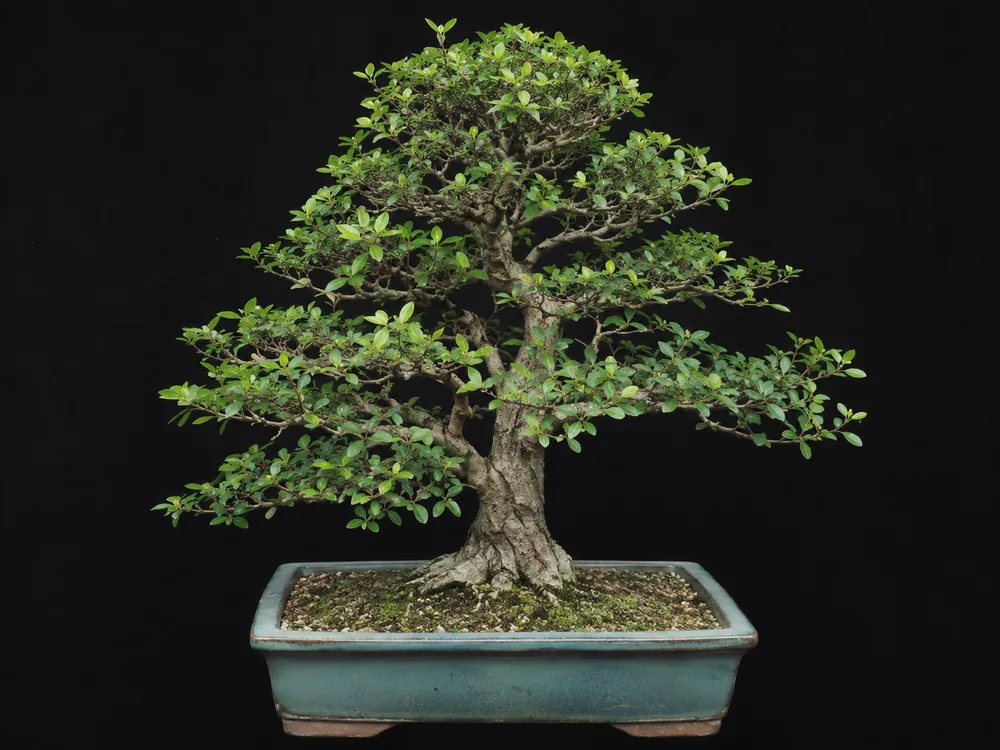
Chinese Privet Bonsai Care
Ligustrum sinense
One of the toughest, most forgiving, and fastest-growing of all bonsai subjects. Most are lost to overwatering.
Oleaceae (olive family) · Semi-evergreen to deciduous broadleaf shrub/small tree; hardy temperate (with tender treatment in coldest zones)
Chinese Privet quick reference
| USDA zones | Roughly 6–10 (fully hardy; protect roots below ~14°F / –10°C in a pot) |
|---|---|
| Indoor / outdoor | Best outdoors; *L. sinense* is also sold as an indoor bonsai and tolerates indoor life better than most |
| Light | Bright; direct sun for at least part of the day |
| Water | Evenly moist — water thoroughly when soil surface dries; let it dry slightly but never bone-dry |
| Soil | Standard free-draining bonsai mix; very tolerant |
| Repot | Every 1–2 years (young), 2–3 years (older), early spring |
| Frost | Hardy; in a pot protect roots below ~14°F (–10°C); leaf drop in hard cold is normal and harmless |
| Mature height (as bonsai) | Shrub-tree to 10 m; 20-50 cm as bonsai |
| Growth rate | Fast |
| Season of interest | White summer flowers, semi-evergreen |
| Leaf reduction | Good - small leaves reduce readily |
| #1 cause of death | Root rot from waterlogged soil; for indoor specimens, decline from too little light |
Overview & Character
Privet is one of the toughest, most forgiving, and fastest-growing of all bonsai subjects — a genuine "beginner's tree" that also rewards advanced work. It takes all the standard bonsai techniques superbly: heavy pruning, hard cutbacks, wiring, and aggressive root work. It back-buds readily on old wood, develops attractive pale-grey bark with age, produces fragrant white flower clusters in summer, and can carry small dark berries afterward. Small leaves and dense twigging make it excellent for ramified, refined canopies.
Ligustrum sinense (Chinese Privet) is the species most often sold as bonsai and, unusually for a temperate shrub, it tolerates indoor cultivation comparatively well — which is why it frequently appears as an "indoor bonsai." It still prefers life outdoors, but it is far more forgiving of a windowsill than a maple or a pine. Note that Chinese Privet is highly invasive in parts of the southeastern United States; never plant it in the ground or discard cuttings outdoors there.
Identification
Foliage: Opposite, simple oval-to-elliptic leaves with smooth (untoothed) margins, roughly 2–6 cm long, mid-to-dark green and semi-glossy — softer and thinner than the leathery Ficus leaf. L. sinense is semi-evergreen to deciduous depending on climate; the opposite leaf arrangement is a key check.
Bark & trunk: Smooth pale grey bark dotted with fine lenticels, developing attractive pale-grey rugged character with age. Wood is pale and fast-thickening.
Growth habit / form: Fast, soft, vigorous growth; back-buds readily on old wood and twiggs densely, making it quick to ramify. Upright shrub-to-small-tree habit.
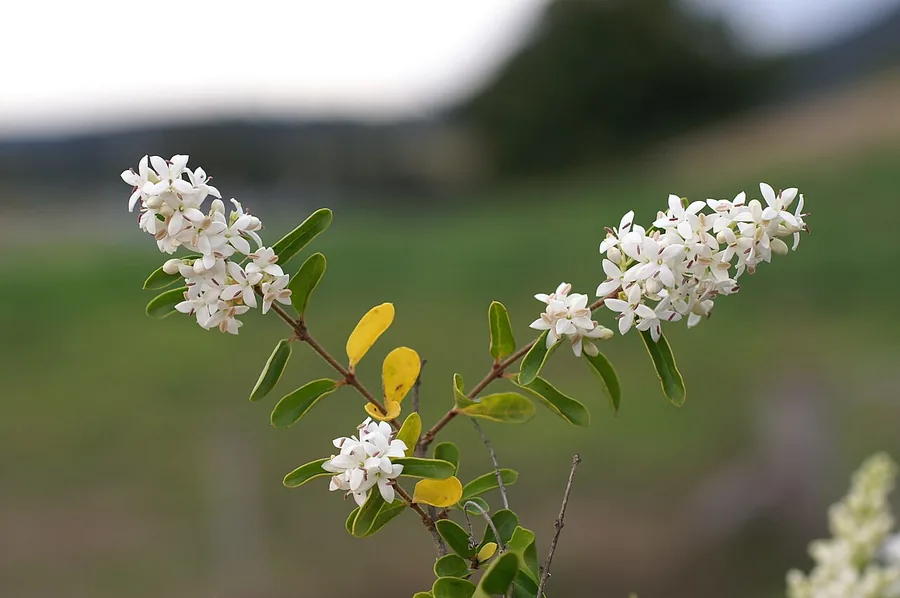
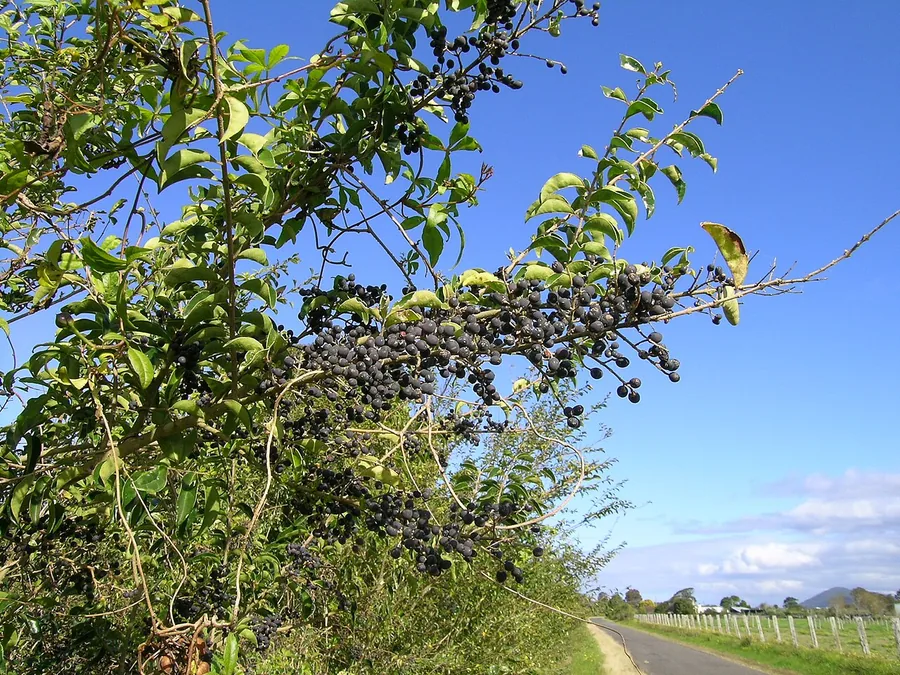
Flowers / fruit: Clusters (panicles) of small fragrant creamy-white flowers in summer, followed by small berries ripening from green to dull purple-black.
Look-alikes & how to tell them apart: Look for fast, soft growth with opposite oval leaves and panicles of white flowers giving way to black berries. No milky latex distinguishes it from Ficus; larger, smooth, soft leaves and white flower panicles separate it from the tiny white-dotted Fukien Tea. It is thornless and its berries are black, not the red/orange clustered berries of the thorny Rosaceae — Cotoneaster (small leaves, red berries, herringbone branching), Pyracantha (thorns + orange/red berry clusters), and Hawthorn (lobed leaves, thorns, red haws).
Climate & USDA Zone
Privet is a hardy temperate plant, comfortable outdoors across roughly USDA zones 6–10. As a bonsai in a shallow pot, the roots are more exposed than in the ground, so provide frost protection (cold frame, unheated greenhouse/garage, mulched and sheltered) when temperatures fall much below about 14°F (–10°C). In colder winters privet may drop some or even all of its leaves — a natural response that causes no lasting harm; the tree re-leafs in spring. If grown as an indoor bonsai, keep it inside once night temperatures drop toward 45°F (7°C).
Light
Privet wants a bright position with at least part of the day in direct sun; full sun outdoors produces the most compact, dense growth and best flowering. Indoor specimens need the brightest available window and benefit from supplemental light in winter. Too little light produces weak, leggy shoots and sparse foliage.
Watering
Keep the soil evenly moist, leaning neither soggy nor parched. Privet is thirsty in warm weather and on hot days needs thorough watering as soon as the surface dries. Let the soil dry slightly between waterings, but never allow the rootball to dry out completely. In winter, water less but do not let the rootball go fully dry. The main watering danger is the opposite extreme: standing water and constantly saturated soil cause root rot. Free-draining soil plus "water thoroughly, then let the surface dry slightly" is the right rhythm.
Soil & Root Care
Privet is undemanding about soil — any good free-draining bonsai mix works well. It is vigorous and root-bound quickly, so repot young trees every 1–2 years and older specimens every 2–3 years in early spring as buds swell. It tolerates substantial root pruning without complaint, which makes it ideal for building good nebari and developing trees quickly.
Feeding
Privet is a heavy feeder that puts on strong growth. Feed regularly through the growing season — a solid organic fertilizer roughly every 4 weeks, or a balanced liquid feed weekly. Generous feeding supports its fast growth and flowering. Reduce or stop feeding in winter, particularly for outdoor trees that go dormant; lightly feed indoor trees only while they are actively growing.
Pruning & Styling
Few species respond to pruning as enthusiastically as privet. It back-buds vigorously on old wood, so hard cutbacks reliably produce new shoots, making it forgiving for developing structure and recovering poorly placed branches. Let shoots extend, then cut back to maintain shape and build ramification; trim continuously through the growing season. It wires well, though it thickens fast, so watch wire closely to avoid scarring. If you want the fragrant summer flowers, ease off trimming on some shoots before bloom. Most styles suit privet, from informal upright to multi-trunk and group plantings.
Propagation & Cuttings
Ease: Very easy. Best methods: cuttings (all types); seed.
Ligustrum sinense roots from almost any cutting — softwood, semi-hardwood, or hardwood — at high rates with minimal fuss, which is part of why it's invasive. Seed from the black berries germinates freely (a short cold stratification helps). It also layers and suckers. For bonsai this means effortless propagation, rapid thickening, and strong back-budding; cutting-grown privet builds ramification fast and tolerates hard pruning, making it excellent practice stock.
Pests
Privet is robust but can attract the usual broadleaf pests: aphids on soft new growth, scale insects, spider mites (in hot, dry conditions), and whiteflies. Treat outbreaks with insecticidal soap, neem oil, or a suitable systemic. A light preventive spray every month or two helps keep indoor trees clean. Good light and airflow reduce pest pressure.
Disease, Fungus & Infection
The most serious problem is root rot from waterlogged soil — soft, blackened roots and sudden wilting or yellowing. Privet can also show leaf spot fungal diseases, generally where foliage stays wet with poor air movement, and is occasionally affected by powdery mildew. Most issues are cultural and resolve with better drainage, correct watering, and improved airflow. Hard-cold leaf drop is not a disease — it is normal seasonal behavior.
Most Common Causes of Death
1. Overwatering / root rot. Keep evenly moist but free-draining; constantly soggy soil rots the roots. 2. Indoor neglect / low light. Tolerates indoors but needs bright light and airflow; weak, dim conditions cause decline. 3. Drying out. Fast soft growth wilts quickly if it dries — don't let the pot go bone-dry in heat. 4. Winter root freeze. In cold zones shelter potted roots; many privets are only borderline hardy. 5. Pests / sooty mold. Aphids, scale, and whitefly bring sooty mold — treat early and keep airflow.
Seasonal Calendar
- Spring: Repot if due; resume feeding; prune hard — it back-buds vigorously and ramifies fast.
- Summer: Bright light; water when surface dries; frequent trimming; white flower panicles appear; watch aphids/scale.
- Autumn: Taper feeding/water; black berries form; structural pruning.
- Winter: Cooler rest; outdoors protect roots from freezes; indoors keep bright and cooler.
Close-up photo reference
Compare your tree against these to confirm the species and spot problems early.


Sources
Where to buy a Chinese Privet bonsai
We don’t stock Chinese Privet at the moment. These species need similar care and we have them now — they are the closest match in our catalogue.
- Glossy Privet — similar care, in stock now
- Chinese Elm — similar care, in stock now
Browse all bonsai trees for sale or find a species matched to your climate and space.
- All species
- Shop bonsai trees, tools & supplies
- How to Water a Bonsai (Without Killing It)
- Bonsai Soil: What to Buy, What to Mix, and What It Costs
- Why Bonsai Die After Repotting: Diagnosing a Failed Repot
- Pruning vs. Pinching: Shaping Your Bonsai
- Overwintering Bonsai: Cold-Season Care
- Indoor Bonsai Light and Humidity: Making a Windowsill Actually Work
- Root Rot on bonsai
- Overwatering on bonsai
- Underwatering (Drought Stress) on bonsai
- Winter / Frost Damage on bonsai
- Insufficient Light (Etiolation) on bonsai
- Glossy Privet bonsai care
- Japanese Privet bonsai care
- Chinese Elm bonsai care
- Brazilian Rain Tree bonsai care