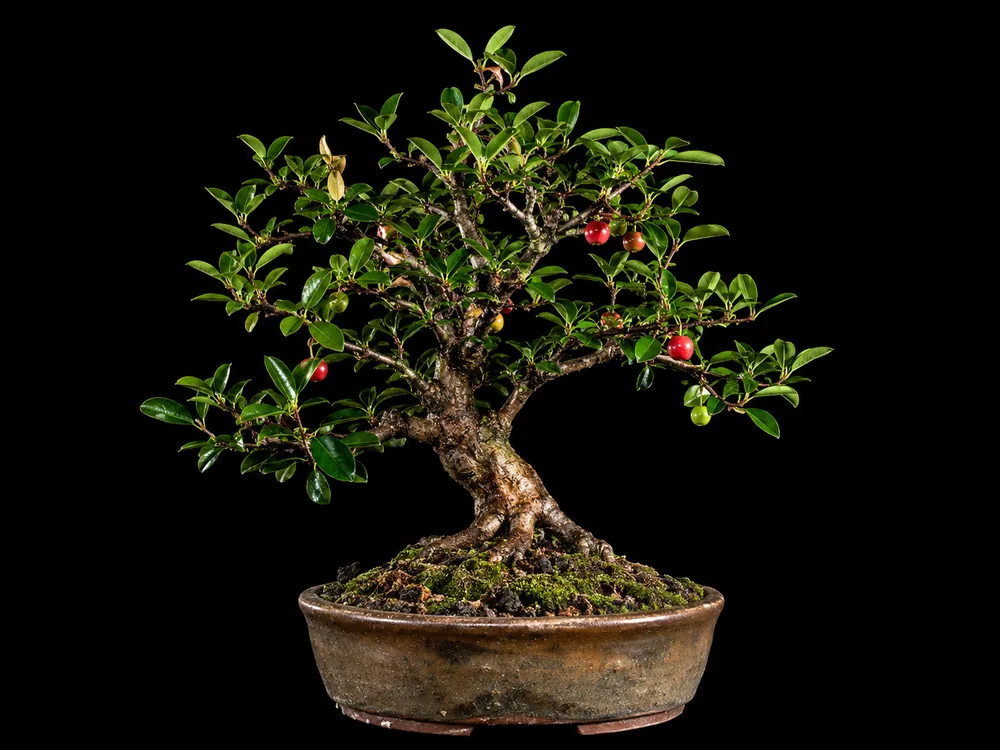
Surinam Cherry Bonsai Care
Eugenia uniflora
1 Surinam Cherry bonsai in stock, from $143.95 Shipped direct from our nursery partners, with a 48-hour live-arrival guarantee. See the trees
Zones 9b to 11, indoor or out. A tropical/subtropical evergreen from South America, grown for small, glossy. Most are lost to cold damage.
Myrtaceae (myrtle family) · Evergreen broadleaf tree/shrub
Surinam Cherry quick reference
| USDA zones | 9b–11 (grow indoors / under glass in cooler zones) |
|---|---|
| Indoor / outdoor | Indoor-capable — outdoors in warmth, protected from frost |
| Light | High light — 4–6+ hours; full sun outdoors |
| Water | Keep evenly, slightly moist — dislikes both drought and sogginess |
| Soil | Free-draining, slightly acidic bonsai mix |
| Repot | Every 2–3 years, in spring |
| Frost | Low — protect below freezing; brief light frost only |
| Mature height (as bonsai) | Shrub to 8m in nature; bonsai usually 20-50cm. |
| Growth rate | Moderate (tropical, buds well). |
| Season of interest | Year-round glossy leaves; red ribbed fruit; coppery new growth. |
| Leaf reduction | Good; small leaves reduce well with pinching. |
| #1 cause of death | Leaf drop & decline from inconsistent watering; cold damage |
Overview & Character
The Surinam Cherry is a tropical/subtropical evergreen from South America, grown for small, glossy, aromatic leaves that emerge bronze-red, fragrant white powderpuff flowers, and distinctive ribbed, pumpkin-shaped edible fruit that ripen orange to deep red. It is dense, twiggy, and responds well to frequent trimming, producing fine ramification — a rewarding broadleaf often grown as an indoor bonsai in cooler climates.
It likes even moisture (it tends to drop leaves if allowed to swing between soaked and bone-dry) and warmth, with no real frost tolerance. Given consistent water, warmth, and bright light it is vigorous and forgiving.
Identification
Foliage: Small, opposite, ovate leaves ~2–4 cm, glossy and deep green, flushing coppery-red when new; aromatic/resinous when crushed (a myrtle trait).
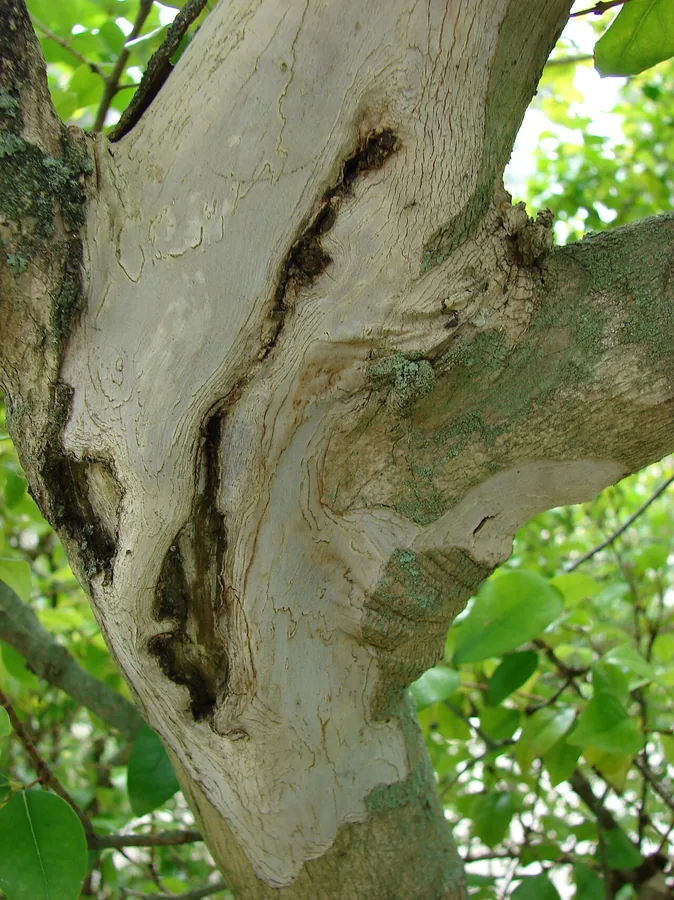
Bark & trunk: Smooth, pale grey-brown bark that flakes lightly with age, revealing a mottled, mature-looking trunk.
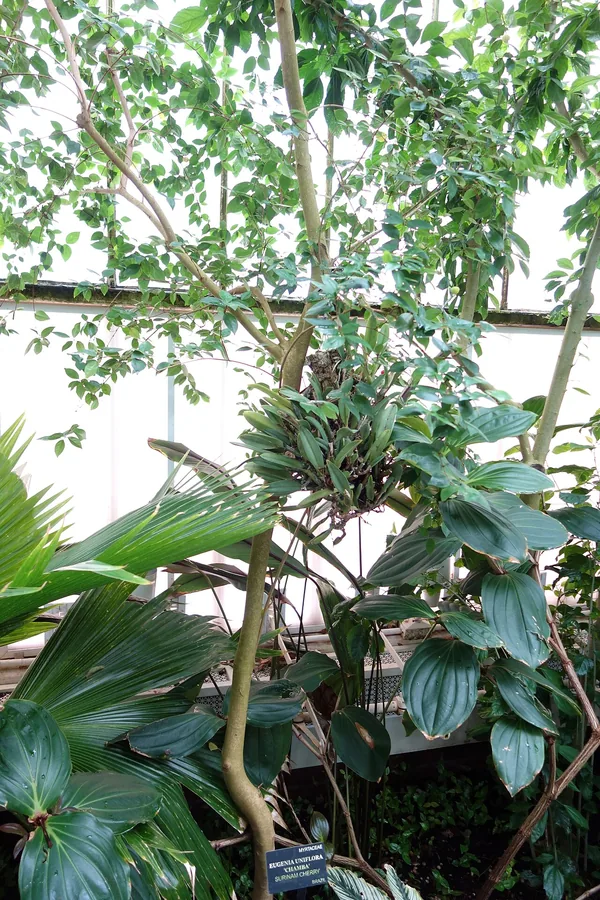
Growth habit / form: Dense, twiggy, upright evergreen shrub/small tree that ramifies readily; suits informal upright, broom, and multi-trunk styles.
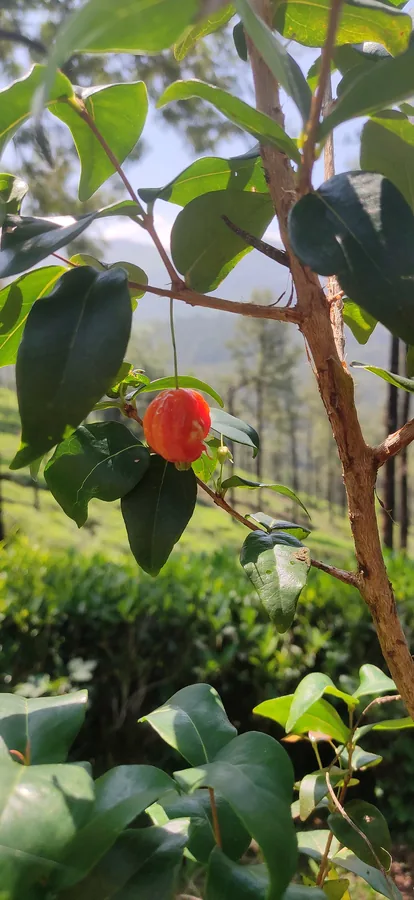
Flowers / fruit: Small white, many-stamened powderpuff flowers, followed by the diagnostic deeply ribbed, 7–8-lobed "pumpkin" fruit (~2–4 cm) ripening orange-red to dark crimson, edible and tart-sweet.
Look-alikes & how to tell them apart: Closely resembles **Brush Cherry (Syzygium paniculatum) — the decisive difference is the fruit: Surinam Cherry's is conspicuously ribbed/lobed** (pumpkin-shaped), whereas Brush Cherry's is a smooth oval berry. The coppery new growth and powderpuff flowers are shared myrtle traits.
Climate & USDA Zone
Hardy outdoors in USDA zones 9b–11. It tolerates only brief, light frost and is otherwise frost-tender, so in cooler zones it is grown as an indoor/greenhouse bonsai — summered outdoors and brought inside before cold nights. It thrives in warmth and humidity.
Light
High light — at least 4–6 hours, full sun outdoors. Strong light keeps growth tight, foliage colored, and encourages flowering and fruit. Indoors, give the brightest south-facing window (east/west second best) and supplement with grow lights in a dark spot or in winter.
Watering
Keep the soil evenly, slightly moist — it dislikes both drying out and waterlogging.
- Water before the surface dries; this species resents variation and tends to drop leaves if the soil dries out.
- Equally, avoid constant sogginess — provide free drainage.
- Reduce somewhat in cool weather but keep lightly moist.
Soil & Root Care
Soil: A free-draining, slightly acidic bonsai mix — e.g. equal parts akadama, pumice, and lava — gives drainage while holding enough moisture for steady growth.
Repotting:
- Frequency: every 2–3 years, in spring, when roots fill the pot.
- Prune roots moderately (up to ~1/3); tolerates root work well.
- Aftercare: keep warm, lightly shaded, and consistently (not excessively) moist.
Feeding
Feed at least monthly through the growing season (skip deep winter unless actively growing indoors); responds well to occasional foliar feeding. Use a balanced fertilizer or one for acid-loving plants. Don't feed freshly repotted or stressed trees.
Pruning & Styling
- Trimming: Pinch and trim new growth back to 2–3 leaf pairs to build dense ramification; it back-buds readily.
- Flowering/fruit: blooms on new growth; ease off shearing if you want flowers and fruit to set.
- Wiring: young shoots are workable; older wood stiffens — wire carefully and watch for bite, protecting the smooth bark.
- Suits informal upright, broom, and multi-trunk styles.
Propagation & Cuttings
Ease: Easy from seed. Best methods: seed; cuttings.
Eugenia uniflora grows readily from fresh seed sown warm — clean from the ribbed red fruit and sow at once, as it doesn't store; germination is good and often multi-shooted (polyembryonic). Semi-hardwood cuttings root at moderate rates in warm, humid conditions with hormone, and it air-layers. Keep tropical-warm/frost-free. For bonsai the tiny glossy leaves (bronze when new), white flowers, and fruit are the draw; seedlings and cuttings develop well, and the plant back-buds strongly and shears densely.
Pests
- Aphids and scale
- Mealybugs
- Spider mites (hot, dry indoor air)
Treat with insecticidal soap or horticultural oil; maintain humidity indoors to deter mites.
Disease, Fungus & Infection
Generally robust; issues are mostly cultural:
- Leaf drop — from drying out, cold, or sudden change (stress, not infection).
- Root rot — from waterlogged soil/poor drainage.
- Fungal leaf spot — in damp, stagnant, low-airflow conditions; improve airflow, remove affected leaves.
Prevention: even moisture, warmth, bright light, and airflow.
Most Common Causes of Death
1. Leaf drop & decline from inconsistent watering. The top issue — keep evenly moist; avoid soaked-then-bone-dry swings. 2. Cold / frost damage. Frost-tender; protect below freezing and avoid cold drafts. 3. Low light indoors. Weak, leggy growth and decline; give the brightest spot. 4. Waterlogging / root rot. Keep moist but well-drained. 5. Environmental shock. Sudden light/temperature swings trigger leaf drop; acclimate gradually.
Seasonal Calendar
- Spring: Repot if due; resume feeding; trim to build structure; move outdoors after frost.
- Summer: Full sun/warmth; keep evenly moist; feed; flowers and fruit.
- Autumn: Taper water/feeding; bring indoors before cold nights.
- Winter: Bright, warm spot indoors; keep lightly moist; minimal feeding.
Close-up photo reference
Compare your tree against these to confirm the species and spot problems early.
.jpg)


Sources
Buy a Surinam Cherry bonsai
- All species
- Shop bonsai trees, tools & supplies
- How to Water a Bonsai (Without Killing It)
- Bonsai Soil: What to Buy, What to Mix, and What It Costs
- Why Bonsai Die After Repotting: Diagnosing a Failed Repot
- Pruning vs. Pinching: Shaping Your Bonsai
- Overwintering Bonsai: Cold-Season Care
- Indoor Bonsai Light and Humidity: Making a Windowsill Actually Work
- Root Rot on bonsai
- Underwatering (Drought Stress) on bonsai
- Winter / Frost Damage on bonsai
- Insufficient Light (Etiolation) on bonsai
- Spider Mites on bonsai
- Chinese Elm bonsai care
- Dwarf Umbrella Tree (Dwarf Schefflera) bonsai care
- Fukien Tea bonsai care
- Gardenia bonsai care