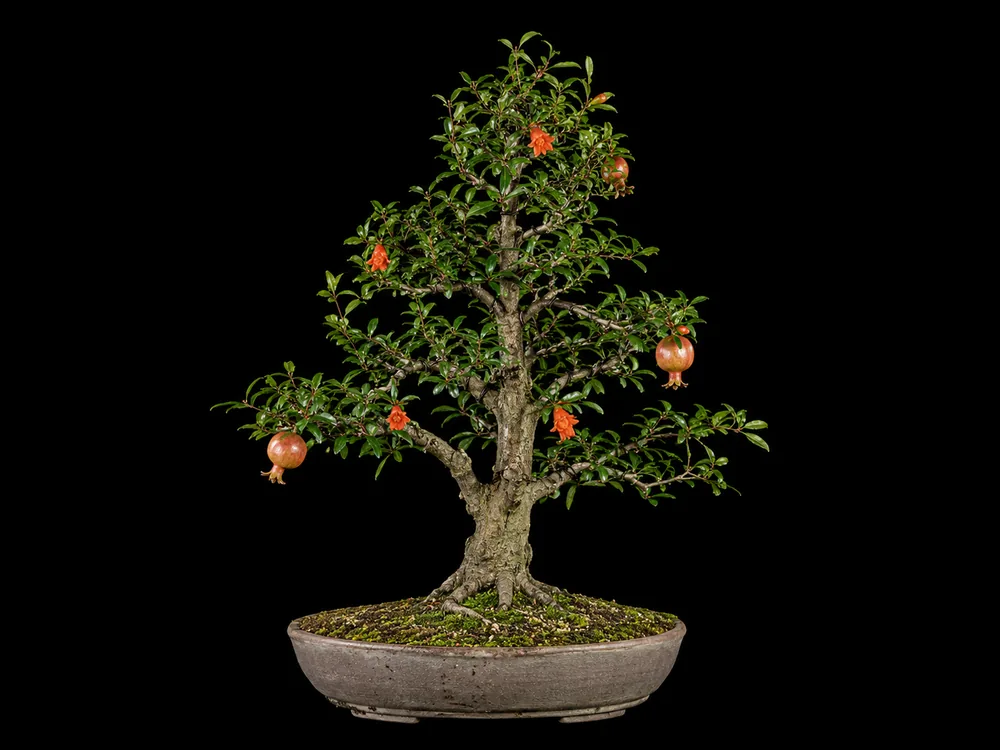
Pomegranate Bonsai Care
Punica granatum
1 Pomegranate bonsai in stock, from $43.95 Shipped direct from our nursery partners, with a 48-hour live-arrival guarantee. See the trees
Zones 7 to 11, outdoor. A superb flowering-and-fruiting bonsai with everything going for it: a naturally gnarled, fluted. Most are lost to overwatering.
Lythraceae (formerly placed in its own family Punicaceae) · Deciduous (semi-evergreen in mild climates), flowering and fruiting Mediterranean shrub/small tree; outdoor bonsai
Pomegranate quick reference
| USDA zones | 7–11 (commonly cited as 8–10; 'Nana' is the hardier, more bonsai-friendly form) |
|---|---|
| Indoor / outdoor | Outdoor (full sun and warmth); can be wintered in a frost-free cold space, not a permanent indoor tree |
| Light | Full sun — the more the better; 6–8+ hours direct daily for growth, flowers, and fruit |
| Water | Evenly moist when growing (water when surface dries); slightly moist in winter. Drains well, dislikes soggy roots |
| Soil | Free-draining bonsai mix; tolerates a range but must not stay waterlogged. Avoid hard/calcareous water |
| Repot | Every 3–4 years, late winter/early spring; tolerates repotting well and roots back vigorously |
| Frost | Loves heat (>100°F fine); takes brief frost to ~25°F but prolonged hard freeze damages container roots |
| Mature height (as bonsai) | 5-8m wild; 25-60cm as bonsai |
| Growth rate | Moderate; twisted trunk with age |
| Season of interest | Orange-red summer flowers; autumn fruit; gold leaves |
| Leaf reduction | Small leaves reduce well with pinching |
| #1 cause of death | Overwatering / root rot (sensitive to wet soil); compounded by cold, wet winter roots |
Overview & Character
The pomegranate is a superb flowering-and-fruiting bonsai with everything going for it: a naturally gnarled, fluted, often twisting trunk that takes on great age character; glossy small leaves with a coppery flush when new; brilliant orange-red trumpet flowers in summer; and, in warm climates, miniature fruit. The dwarf form 'Nana' is the workhorse for bonsai — smaller leaves, smaller flowers and fruit, earlier and more reliable blooming, and better cold tolerance than the full-size species.
As a Mediterranean plant it is tough, heat-loving, and forgiving of hard work — it repots well, back-buds readily, and recovers vigorously. Its main vulnerabilities are wet feet (it is genuinely sensitive to overwatering) and cold, wet winter conditions in a container. Note that flowering is common in cooler regions but actual fruit-set often fails where summers are too short to ripen the blooms — abundant sun and a long, hot summer are what produce fruit.
Identification
Foliage: Small, narrow, glossy, oblong-to-lance-shaped leaves, smooth-edged, borne oppositely or in clusters on short shoots. New growth flushes a distinctive coppery-bronze before maturing to bright glossy green; deciduous (semi-evergreen in mild climates), turning yellow in autumn. The dwarf 'Nana' has notably tiny leaves.
Bark & trunk: Grey-brown bark; the trunk is naturally fluted, ridged, and often spirally twisting, taking on superb aged character — a hallmark of pomegranate as bonsai. Short shoots are sometimes spine-tipped.
Growth habit/form: A dense, twiggy, somewhat spiny deciduous shrub or small tree that back-buds readily.
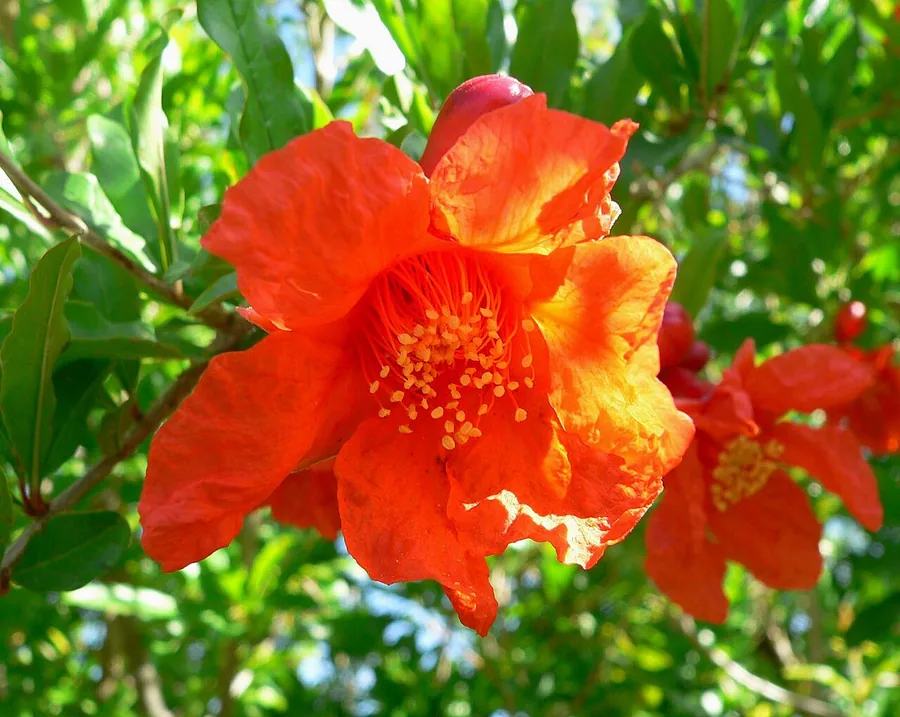
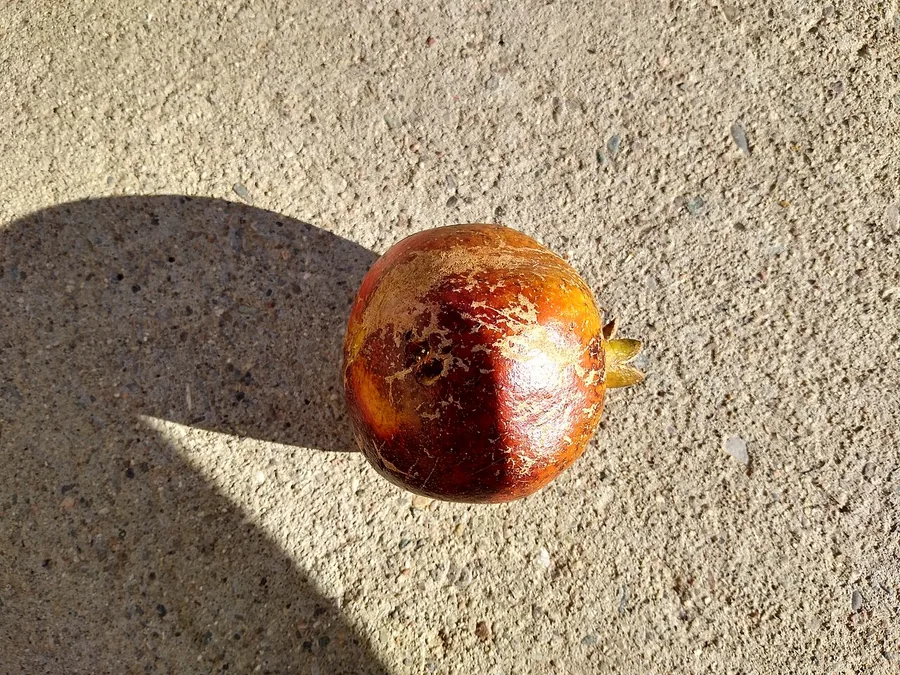
Flowers/fruit (key ID feature): Vivid orange-red (occasionally white or variegated), tubular-to-trumpet-shaped flowers with crumpled petals emerging from a distinctive thick, leathery, waxy red-orange calyx (the urn-shaped tube), borne at the tips of new shoots in summer. The fruit is the unmistakable leathery-skinned, crown-tipped (persistent calyx) red-orange globe packed with seeds — a definitive ID feature even in miniature on 'Nana'.
Look-alikes & how to tell them apart: The thick leathery flower-calyx and the crowned, leathery fruit separate pomegranate from any look-alike. Versus flowering quince (also red-orange spring flowers), pomegranate blooms in summer at shoot tips on new wood with a waxy tubular calyx and glossy narrow leaves, whereas quince flowers in early spring on bare old wood and bears a hard apple-like pome.
Climate & USDA Zone
Best in USDA zones 7–11; many sources cite 8–10 for the species, with 'Nana' being the hardier, more forgiving form. Pomegranate thrives in heat — it shrugs off temperatures well over 100°F (38°C) — and tolerates brief frosts down to roughly 25°F (-4°C). Prolonged or hard freezes below that will damage the roots and cause dieback in the exposed environment of a bonsai pot. In zones at the cold end, overwinter in a frost-free but cool, bright space such as a cold frame or unheated greenhouse held around 35–46°F (2–8°C), which gives the dormancy it wants without freezing the roots.
Light
Full sun, and lots of it. The pomegranate is one of the most sun-hungry bonsai — place it in the brightest, hottest spot available. A minimum of 6–8 hours of direct sun daily is needed for strong growth, vibrant flowering, and any chance of fruit. Insufficient light produces weak, leggy growth and few or no flowers. This sun requirement is also why it is not a true indoor tree; a windowsill rarely supplies enough light.
Watering
Evenly moist in the growing season, slightly drier in winter — and always free to drain. Water when the soil surface starts to dry, soaking thoroughly. Demand rises sharply when the tree is flowering and through hot summer weather, when a shallow pot may need watering once or even twice a day. The aim is consistent moisture with oxygen still in the soil — evenly damp, never waterlogged.
In winter, when the deciduous tree is leafless and dormant, cut back to keeping the soil only slightly moist; a wet, cold rootball is dangerous. Avoid calcareous (hard, limey) water, which causes chlorosis over time — use rainwater or soft water where possible. Despite being drought-tolerant by nature, the pomegranate's chief cause of death in cultivation is overwatering, so err toward "moist but draining" rather than "constantly wet."
Soil & Root Care
Use a standard free-draining bonsai mix (akadama/pumice/lava or similar). The pomegranate is not fussy about soil type but is fussy about drainage — the medium must shed excess water freely to avoid root rot. As a Mediterranean species it tolerates repotting very well and typically responds with prolific new roots. Repot every 3–4 years in late winter or the very start of spring, pruning the roots only moderately. Check drainage and refresh soil at each repot.
Feeding
Feed regularly through the growing season. For young trees in development, a balanced feed builds vigor. For mature trees you want to flower and fruit, switch to a low-nitrogen, higher-phosphorus-and-potassium fertilizer to promote blooms and fruit rather than leafy growth. Avoid overdoing nitrogen, which pushes foliage at the expense of flowers. Feed from spring through summer and into early autumn, then stop as the tree goes dormant. Iron supplementation helps if chlorosis appears from hard water.
Pruning & Styling
The pomegranate flowers at the tips of new (current-season) shoots — this is the single most important pruning fact. Because the flower buds form at the ends of new growth, if you trim the new shoots before flowering, you cut off the flowers. So, for a flowering display, leave new shoots alone until after they have bloomed.
Practical approach:
- Major structural pruning is best done in winter dormancy when the bare branches are easy to see.
- During the growing season, if you are developing structure rather than chasing flowers, pinch/trim new shoots back once they reach about 4–6 inches (10–15 cm). But if you want blooms that year, hold off trimming those shoots until after flowering, then cut back.
This creates the classic tension between refinement (frequent pinching) and flowering (letting shoots extend) — choose per tree and per season. The pomegranate back-buds readily, so hard pruning is well tolerated. The wood is somewhat brittle; wire carefully and protect the bark.
Propagation & Cuttings
Ease: Easy. Best methods: hardwood and semi-hardwood cuttings; seed.
Punica granatum roots readily — hardwood cuttings in late winter and semi-hardwood cuttings in summer both strike well with hormone, and this keeps fruiting/flowering forms true. It suckers, giving rooted pieces. Seed germinates easily (surface-sow fresh, warm) but won't come true and is slower to flower. For bonsai the flaky, twisting trunks, orange flowers, and fruit are the draw; the dwarf 'Nana' is grown from cuttings, flowers young, and back-buds strongly after hard pruning.
Pests
Generally pest-resistant when healthy and grown in proper full-sun conditions, but a weakened or wrongly sited tree (e.g., kept indoors) can attract aphids, scale, whitefly, and mealybugs. Treat with insecticidal soap, neem, or an appropriate pesticide, and — crucially — fix the underlying growing conditions, since pests usually move in on stressed plants.
Disease, Fungus & Infection
The main disease threat is root rot from overwatering and poor drainage (see causes of death). In wet spring climates it can suffer leaf-distorting fungal problems (leaf curl / leaf spot) on new foliage. Chlorosis (yellowing leaves) is common and is usually a nutritional/water-quality issue from calcareous water rather than an infection — correct with soft water and iron. Good airflow, full sun, and not overwatering prevent most fungal trouble.
Most Common Causes of Death
1. Overwatering / root rot. The main killer; heat-lover that wants free drainage — water when the surface dries, never soggy. 2. Winter cold damage. Frost-tender in cold zones; shelter from hard freeze (cool but frost-free dormancy is ideal). 3. No bloom from wrong pruning. Flowers at the tips of new shoots — don't shear off all the shoots you want to bloom; prune selectively. 4. Drying out in heat. Strong summer demand; a dry-out drops flowers/fruit. 5. Pests. Aphids and whitefly on new growth — treat early.
Seasonal Calendar
- Spring: Repot if due (after frost); resume feeding; new growth flushes (often bronze).
- Summer: Full sun and heat; water when surface dries; orange-red flowers on new wood; light selective pruning.
- Autumn: Fruit develops; taper feeding/water; enjoy fall color.
- Winter: Cool, frost-free dormancy (deciduous); minimal water; protect from hard freeze.
Close-up photo reference
Compare your tree against these to confirm the species and spot problems early.


Sources
Buy a Pomegranate bonsai
- All species
- Shop bonsai trees, tools & supplies
- How to Water a Bonsai (Without Killing It)
- Bonsai Soil: What to Buy, What to Mix, and What It Costs
- Why Bonsai Die After Repotting: Diagnosing a Failed Repot
- Pruning vs. Pinching: Shaping Your Bonsai
- Overwintering Bonsai: Cold-Season Care
- Indoor Bonsai Light and Humidity: Making a Windowsill Actually Work
- Root Rot on bonsai
- Overwatering on bonsai
- Underwatering (Drought Stress) on bonsai
- Winter / Frost Damage on bonsai
- Insufficient Light (Etiolation) on bonsai
- Brazilian Rain Tree bonsai care
- Chinese Elm bonsai care
- Chinese Privet bonsai care
- Cotoneaster bonsai care